
How to Focus While Working From Home
Using remote work as an opportunity rather than a distraction
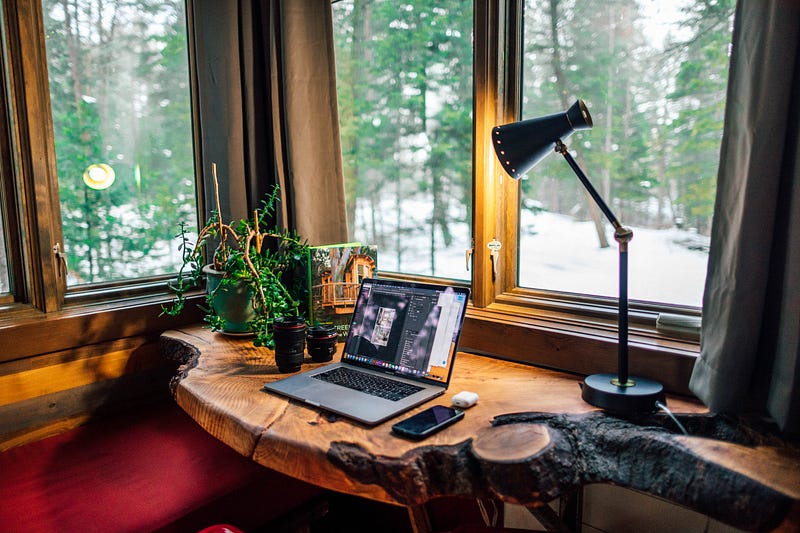
Working from home sounds like quite the picnic basket. I mean, who hasn’t fantasized about how much better they could work with the freedom and comfort of their home?
It doesn’t last, though. The first few days are great, then you start to get bored. The lack of a stable schedule begins to wear on you. Distractions like the food pantry or television beckon. Procrastination begins.
Here’s the thing — it doesn’t have to be this way. Working from home really can be everything you dreamed it could be.
I’ve spent a lifetime figuring out how to work remotely. From homeschooling to working as a writer, I’ve learned a ton of tips and tricks for optimizing focus without a rigid schedule.
On top of this, I am also a biohacker — someone who uses biology and science to optimize mind and body — and there are powerful ways to boost your brain with simple and free health habits.
In short, this is how to maintain top-notch focus while working from home.
Wake Up at the Same Time Every Morning
The first and foremost component of focusing while working at home is to have a consistent sleep schedule, especially regarding when you wake up in the morning.
Sleep is an incredibly important biological process, particularly for mental function.
If you sleep less than eight hours a night, your brain will begin to function as though you are drinking alcohol. One study found that staying up for more than 17 hours at a time can result in impairment similar to having a .05 blood alcohol content. If you’re getting seven hours of sleep a night—just one hour less than the commonly accepted eight hours—you’re in this zone. Stay up even later and you’ll quickly start functioning like someone who is legally too drunk to drive.
But so what? Why does any of this mean you should get up at the same time every morning as long as you get your full eight hours? Studies of shift workers have found that constantly changing sleep schedules are more detrimental than either lack of sleep or weird hours. Going to bed at constantly changing times negatively affects hormone function, which can increase risks for disease like heart disease and obesity, but is also detrimental to the brain.
Once you have a stable sleep routine, achieving superpowered focus is about what you do after you wake.
The Morning Ritual and Deep Work
The morning ritual and deep work block are my most powerful secret weapons for productivity. This one-two combo is the knockout punch I use to blast through tough work on a consistent and daily basis.
Basically, the morning ritual is a multi-part two-hour period I use to prep my body and mind for a healthy, powerful, and focused day. The techniques I use during that time are designed to activate my biology for energy, tune my mind towards my goals, and induce a sense of gratitude.
After this phase, I sit down behind my desk with a stopwatch and a timer that is set for three hours. Then I get to work. This is my deep work block for the day, and I do not leave the room until that timer goes off.
These are the two things—the morning ritual and the deep work period—you should do to achieve focus while working from home, and I recommend keeping as many elements of these tools as you can when you start working in an office again.
The Morning Ritual
My morning ritual is sacred to me. I’ve found that the morning can make or break your whole day.
Even hungover, sleep-deprived, or burnt out, I have yet to find a scenario that my ritual didn’t improve. On many occasions, I was pleasantly surprised to be feeling energized and in-the-zone after this process despite waking up feeling beat-up and groggy.
Gratitude journaling
The first thing I do every morning upon waking is to write in a journal. I answer the following set of question on a notepad I keep by my bed:
- What are three things you are grateful for?
- What are you excited about doing today?
- What is your purpose?
- What thing can you do today to move the dial in the direction of your dreams?
- Who can you reach out to and serve today?
- Are your goals still aligned with your purpose?
These questions are from Mark Divine’s book: The Way of The SEAL, and this is also the book where I first learned to meditate, write a business/mission plan, do a morning ritual, and define my personal purpose in life. I strongly recommend it, even if you have no interest in the military.
Regardless, I think the most important theme of my journal is the first question: What are three things you are grateful for today?
Gratitude is, in my opinion, the most important emotion. Researchers have found that intentional gratitude through writing can improve mental health. Coffee may boost your focus now, but for me, gratitude is why I can stay the course and love life while working in the long run.
For this reason, sitting with a pen and paper and expressing your gratitude is a great place to start for a morning ritual.
The outdoors
After this, I get up, go downstairs, and if the weather is nice, go outside. From this point forward I do everything in my morning ritual outdoors with as little clothing on as possible if the weather is nice.
This is because sunlight and a barefoot connection to the earth both offer health benefits that are relevant for your brain. Research shows that early-morning exposure to blue light causes your body to release the sleep hormone melatonin earlier at night. Full-spectrum sunlight has more blue light than most indoor lighting. Furthermore, vitamin D from the sun is an essential building block for other hormones and neurotransmitters. One study found that Vitamin D from sunlight helped improve brain levels of serotonin, a neurochemical that improves mood.
As I mentioned I also try to be barefoot during this process. The thinking around this is that when you stand outside barefoot, you have electrically grounded yourself. The earth has an electrical charge, and ions can run from your body into the earth when you are barefoot, which changes your electrical charge. Seeing as life on earth didn’t evolve with rubber-soled shoes, it would stand to reason that it is evolutionary healthier to be grounded to the earth than not to be, and some feel that the science backs this up (though there isn’t trustworthy peer-reviewed research on this yet; most research, including this meta-paper, has been done not by academics, but by business or special-interest groups.)
I don’t force myself to be outside if the weather is poor; I just try to get out there as often as possible to reap the benefits detailed above. If you just aren't into it, feel free to do your ritual indoors.
15 minutes of mobility and stretching
Once I start my ritual, I begin with 15 minutes of stretching and soft-tissue mobility work. You can read a very extensive article on how to do this over at How to Master Your Mobility in 15 Minutes a Day, but if you are strapped for time, a shorter video may be better. Dr. Kelly Starrett, whose principles are the basis for the article above, runs a site called The Ready State. There you can view and follow high-quality mobility routines that require little more than a lacrosse ball or cheap foam roller to get started.
Don’t have gear? No worries — try the 5 Tibetan Rites, a set of stretches thought to improve longevity and happily available on youtube.
Soft tissue work, stretching, slow light exercise, and movement all help to not only prevent injury and release tension but also to improve your brain. In a study in The Journal of Sports Medicine, physical mobility was identified as protective of brain health.
So not only is this mobility good for all the other reasons stretching is a good habit, but it keeps your brain healthy too.
Coffee and a book
After these 15 minutes, I sit down and read for 30 minutes, or approximately two chapters depending on whatever book I’m in. As a writer, learning is the name of the game, and I am always moving through some kind of book.
Life often gets in the way though, and as much as I want to read at least a book a week, I can end up going days without opening the pages. This is why I delegate reading to the morning, and I’ll do more later if I can.
I also find that reading is a great way to get my mind running without stressing it out. It requires enough focus to wake me up, as well as stimulating me with interesting new material, but without the stress of work-related deadlines or attempting to solve a puzzle.
This is also a great time for coffee or a hot drink like tea. I am sensitive to caffeine, so I usually drink bone broth, but sipping a cup of joe and reading something is a great way to relax and wake up at the same time.
Fasting
I personally do not eat until lunch. I find that I can focus much better if I am not digesting food. However, I do consume a small number of healthy fats in the morning to stave off hunger. I just mentioned coffee. A great way to get some healthy fats in your diet and stave off hunger is to blend grass-fed butter and coconut oil into your coffee.
If you’ve never done this, I recommend starting small; otherwise, you can get an unfortunate scenario known as disaster pants. Start with one tablespoon of unsalted, grass-fed butter (I use the Anchor brand, as well as Kerrygold) and one tablespoon of extra virgin coconut oil. You can increase up to two tablespoons of butter and two of coconut oil.
Meditation
When this is done, I do a 5 to 20-minute meditation. Most often this is a simple box-breathing exercise. I inhale for 5 seconds, hold my breath for 5 seconds, exhale for 5 seconds, and hold for 5 seconds. This goes on for at least 15 cycles (5 minutes total) up to 60 cycles (20 minutes), all while sitting comfortably and with my eyes closed.
For me, box breathing has the effect of removing mental clutter from my head and improving focus. If my thoughts are slow and sluggish, I find that this meditation helps to speed them up. If my thoughts are scattered and worried, then it organizes and calms them.
The end feeling is one of calm clarity, though I try not to judge the end result regardless. Meditating for 20 minutes straight can be difficult, and if you are new to meditation, try simply doing 5 cycles (about 2 minutes.)
Jump rope or light exercise
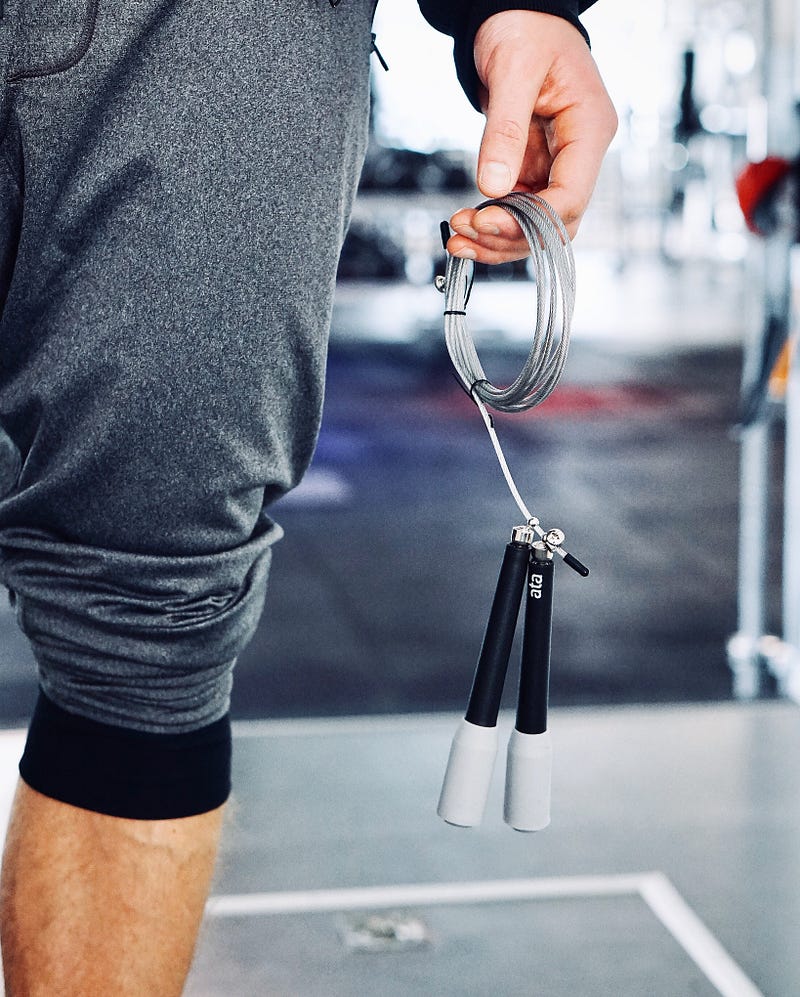
In the morning, I want to be sure to get in some real movement that will increase my heart rate, oxygenate my blood, and activate my lymphatic system.
In short, I need to shake my body.
The simplest and most time-efficient way to do this is to jump rope. The vibrations from jumping rope get your lymphatic fluid moving.
What is that, and why is it important? The lymphatic system is one of the ways your body eliminates toxins from your body. It consists of tubes of fluid that run throughout your body like your circulatory system, but there is no heart to move the fluid.
Instead, lymph fluid relies on your body movement and muscle contractions to flow through the lymphatic vessels. This is just another reason why movement is important.
There is also some evidence that exercise that requires coordination, such as jump rope, has benefits for the brain.
Considering that lymph vessels have been found in the central nervous system and the brain, I believe it is good for one’s mind as well as one’s health to get your lymph flowing early.
Another option I really like is to just walk my dogs without my phone. Sometimes, this might even be a substitute for my meditation. A brisk 10- to 20-minute walk without your phone is a phenomenal way to clear your mind as well as get your body moving. It is also decidedly accessible for young and old alike, whereas jump rope may not be an option if you have injuries.
Cold shower
Finally, after all of this, I take a cold shower or an alternating hot-to-cold shower.
Cold showers have become popular for reported benefits ranging from fat loss to improving mood. Fellow Better Humans writer May Peng wrote a great article on it: How to Get The Unquantifiable Benefits of Cold Showers.
In my experience, the best benefit of cold showers is the powerful endorphin rush and mood high. I always feel powerfully energized and happy, which is perfect for starting my work for the day.
I have a long morning ritual, and that is intentional. I feel that delegating multiple hours just to beginning my day gives me the feeling that I’m ready to conquer the world. However, if you work in an office or are a late riser, this may not be practical. But we all have time to shower (or so I would hope). Modifying your shower by taking it cold is an incredible way to boost your focus later.
My recommendation is to take a shower where you spend ten seconds with the water set to hot, then switch it to cold for 20 seconds. Do five to ten rounds of this, ending on cold, and then start your day.
You don’t have to do your morning ritual exactly like mine, but it’s best if you can at least include some form of the following:
- Gratitude journaling
- Movement (mobility, stretch, jump-rope/exercise, or a walk)
- Cold shower
I think it’s great if you can meditate and spend some time learning, too, like I do, but you can find ways to make other parts of your ritual meditative. A simple walk without your phone can cover both movement and meditation in one swoop, for example.
As far as learning, you could easily listen to an audiobook or podcast while doing other parts of your ritual. Heck, I often do exactly that while stretching as a way to alleviate boredom.
Regardless, once you are done with your personal ritual, whatever it may be, it’s time for some deep work.
Deep Work
Deep work, flow states, being “in the zone,” whatever you want to call it — there is a mental space you can enter where you perform at the next level. It is my aim to enter this state on a daily basis, as consistently as possible.
We’ve already detailed my morning ritual. That whole two-hour block of time is dedicated to inducing the best mental state I could possibly have when I finally sit down behind my laptop to begin work for the day.
For the next three hours, I am going to work, and I’m not leaving the room until that three hours is up. Now, you might say “but Keenan, I work full time, surely three hours is not enough to finish my whole workday?”
Maybe not, but don’t sell yourself short. This isn’t your typical three hours. It is dedicated, focused, and undistracted work. I find that when I really monitor the time, even on a six- to eight-hour workday, I really only work three to five hours.
The rest of the time consists of short breaks, being distracted, eating lunch, or dealing with reactive work that doesn’t require much brainpower.
If you need more time for work, don’t worry, you can still do it later, but I want you to treat these first three hours like it’s the only time you have to get the most important things done. This alone can help optimize your efficiency, causing you to prioritize the most important things first rather than procrastinating.
However, I also use a combination of productivity and biohacking techniques to make sure this work block is highly efficient and powerful, every single day.
Cut out distractions, including your phone
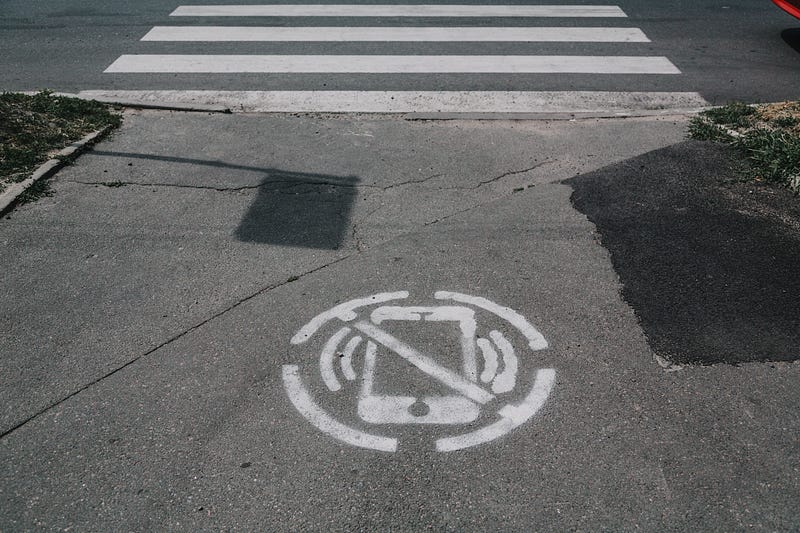
I have a dedicated space for my work, and you should, too. The theme of this space is that it should be low in distractions. My personal office contains these items, and no more:
- Desk
- Chair
- Candle
- Container for pens
- Journal
- One book
- Foam roller
- 20-lb medicine ball
- Laptop
- Bose mini-link speaker
- Bosu ball
There is literally nothing else in the room except for these items. I have no shelves of books, no filing cabinets, no TV, and most importantly, no phone. Yep, I leave my phone on Do Not Disturb in another room, usually somewhere on the first floor of my house as far from my office as possible.
The only thing I use my phone for is that before leaving it downstairs, I set a timer for three hours and also start a stop-watch. If I do go downstairs or take a break early, due to burnout and a true inability to get any work done, I will stop both of these timers.
My rule is that I must hit three hours on that stop-watch by the end of the day. The reason I also set a timer is just so that if I do work for three hours straight, the alarm will let me know I’m done.
If I am really in the zone, I’ll put headphones on and ignore the alarm until I decide to stop, but just as often I am perfectly ready to stop.
The alarm keeps me from going downstairs to check the stopwatch. Plain and simple, if it hasn’t gone off, then I’m not done.
But what if I need my phone?
If you work in an industry that requires phone access, there are still ways to make your time more focused. For one thing, change your work contacts all to emergency contacts and then put your phone on Do Not Disturb.
The emergency setting will bypass the Do Not Disturb function, meaning work calls will still make your phone ring.
Then, leave your phone outside your office. I think you will be surprised to find how little you really need access to your phone, especially by transferring most of your communication to email, but if you do get a work text or call, you’ll hear it.
Then you can go get your phone, use it to the extent that you need it, and then go put it back in another room and return to your office.
Obviously this method will not apply to everyone, but I really am a fan of getting rid of the phone as much as you can while doing your main set of work.
Alternative workspaces
As much as I can, I try to work at home in my office. For one thing, I can start working immediately following my morning ritual. However, I believe strategic variety is highly effective for consistent work over the long term.
For this reason, I will work somewhere else at least once a week. Most of the time this just means working in my backyard on a nice weather day. I can get more sunlight benefits and enjoy a little bit of nature.
However, if I notice I am distracted even in other parts of my house, I love to go to a local coffee shop. At the time of this writing, that is not an option due to the COVID-19 quarantine, so instead, I go to a bike path about two miles from my house. There are many park benches throughout this area and it is next to a beautiful river.
The change of scenery is energizing and I often get some of my best work done by doing this.
I also believe in breaking your routine every four to six weeks and trying something that feels new. I will take two to four weeks, as long as it is productive, where I only work at coffee shops or outdoor parks. This lets me recharge without taking a break from work, and by the time I start working at home again, it feels like a welcome change of pace.
So if you’re feeling a bit burnt, try an unorthodox location to work. This can be as simple as moving from your designated office to your kitchen counter for a day, or if that doesn’t work, heading to an outdoor setting a few miles from home.
Write a focus plan
The first thing I do once I’ve sat down to work is to write down a focus plan. This plan simply identifies the one most important thing I want to do today, as well as the next four things I’ll do after that if I finish.
This is especially important because the whole three-hour block of time is dedicated to finishing the one thing.
To identify the one thing, I like to ask myself this simple question: “What work-related thing am I most uncomfortable about doing?” I’ll write down the first five things that come to mind. Usually, the most important one is in the first one or two spots.
I have found this question to be an absolutely invaluable productivity stimulator, and it often reveals when I’ve gotten in a rut of busy work because my answer will be something I’ve put off for weeks.
The cave you fear to enter contains the treasure you seek — Joseph Campbell
Upon identifying my one thing and listing the next few tasks I’ll work on if I finish it (which are the next things from my discomfort list) I open my laptop, close all old browser tabs, and start.
Binaural beats
Binaural beats are a tool I use to get my mind into a better focus state while working.
Research has found that binaural beats, which are soundtracks that imitate the frequency of desired brain-waves, can be used to increase cognitive abilities significantly.
Upon sitting down, I open Brain.fm and start a focus brainwave track. Brain.fm is my favorite source of binaural beats so far, but it’s a subscription-based service. You get access to binaural beats for focus, relaxation, studying, sleep, and even guided meditations.
I personally think it’s well worth the small monthly fee or the larger lifetime price (pay $60 once and have access for life), but binaural beats are readily available for free. Try a YouTube search for “binaural beats for focus” and you’ll find several multiple-hour tracks to support your focus.
As a bit of a musicophile, I also enjoy listening to songs in languages that I can’t understand. English can become distracting, as I’ll start to think about the words, but I’ve found it surprisingly easy to focus while hearing songs that are in a tongue I am foreign to.
A particular favorite of mine is The Hu, a Mongolian folk metal band that came to popularity recently. Another great artist is Senegalese singing legend Baaba Maal.
Stand every 30 minutes, exercise every hour
When you sit for long periods of time, your health declines. Research by NASA has found that prolonged stagnation, meaning maintaining a fixed posture for long periods of time, causes detrimental effects for your health that are not fixed by daily exercise.
I wrote extensively about this topic in my article Solving Sitting: A Guide to Optimizing Your Movement for Health, Longevity, and Performance, but the shorthand version is that sitting for too long is bad for your health and for your brain. Thankfully, all you need to do to solve this problem is to stand up.
NASA scientist Dr. Joan Vernikos has found that standing up 30 times throughout the day completely negates the consequences of sitting all day. For an eight-hour workday, this translates to standing up once every 15 to 30 minutes.
I find that standing every 15 minutes is a bit distracting, and I also spend a lot more time on my feet than in a chair, so I stand every 30 minutes during my work block.
All you have to do is stand up, then sit back down.
However, on the hour, I do a short set of exercises, based on the work of Pavel Tsatsouline, a trainer who ran soviet Spetznaz fitness programs and is credited with introducing the kettlebell to the U.S. and uses a unique training program called grease-the-groove.
Grease-the-groove training basically involves doing five to ten reps of an exercise every hour, throughout the day. This method is used specifically for increasing strength without getting sore. In fact, Pavel believes it is detrimental to get sore and you should only do a few reps each time you exercise.
I find that grease-the-groove training is a great way to both build strength and also get light aerobic benefits throughout the day. Every hour, right about the time when I’ll typically get bored of working, I get up and do five to ten squats on a Bosu ball (those half yoga ball things you see at the gym) while holding a 20-lb medicine ball.
If I feel the need for a larger break, I will also do some mobility work. My favorite is to do two minutes of foam-rolling for my back or for my lats (the muscles that connect your ribs to your shoulders) as well as a heinous stretch called the couch stretch, which opens up the hips and quads that get notoriously tightened by sitting.
You can find many mobilizations like these on YouTube or on The Ready State that I mentioned for the morning ritual. I already have all the tools I need in my office beforehand, and I do not leave the room for any of this.
Keep a book handy for burnout
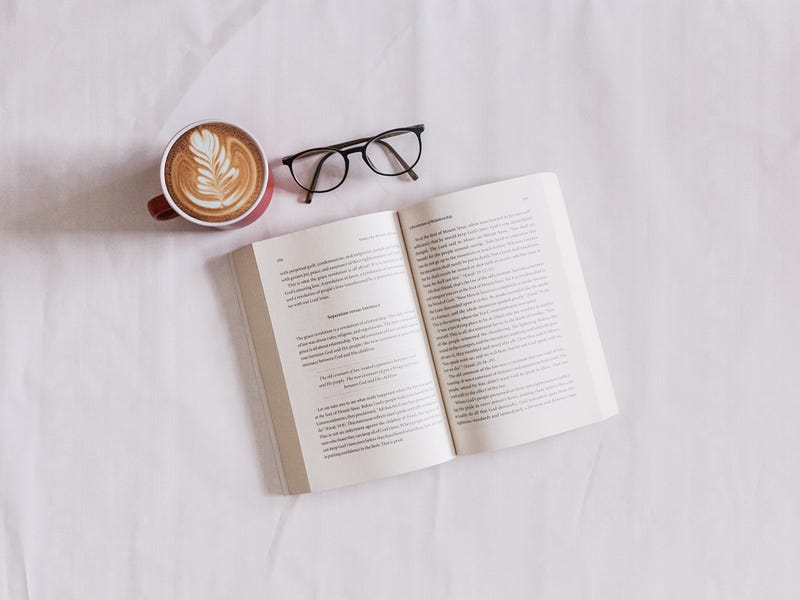
I mentioned earlier that I keep one book in my office. This is almost always a book related to learning. Even though I am supposed to be working for my entire three hours, I am no stranger to burnout.
Sometimes, around the two-hour mark, even after doing my squats and some foam rolling, I just can’t bring myself to focus on work. If this happens, instead, I open up my book and read for up to 30 minutes.
I still count this as work time, since the books I read pertain to learning more health material that I could write about or are business books for increasing my financial stability.
After 30 minutes, usually now with less than an hour to go before my work block is done, I re-open my laptop, turn on a new binaural beat, and sprint to the finish.
I like to tell myself the mantra “anyone can work for 30 minutes” as I tackle that last stretch of time. Usually, I’ll surprise myself by re-entering the zone, and I’ll hear my timer go off downstairs long before I expected to.
At this point, I’ll either put on headphones and keep working until I truly feel like stopping, or I’ll get up, go downstairs, and start making lunch. Often I’m amazed at having accomplished in three to four hours what might have taken a week when I first started working from home.
Bonus: Reactive Work, Siesta Nap, and Power Hour
At this point, I bet you still have work to do. Sure, you probably got an incredible amount of work done, especially regarding deep projects and the most important things for your job.
However, if you’re like me, you still have some amount of reactive work to do. This is stuff the requires communicating with people, setting up meetings, sending emails, etc.
This work is typically not what pops up on my focus plan as the “most important thing to do,” but it is nonetheless necessary. I save this stuff for during and after lunch.
While cooking my first meal of the day, I check emails and respond to necessary texts. If calls are in order, I either schedule them for later in the day or, if they are important, for my deep work block the following day (using zoom so I don’t have to use my phone.)
The siesta nap

For my part, lunch usually involves mainly protein and fat, with some green vegetables. I adhere to a cyclical ketogenic diet, which does have research backing for brain health (your brain is made primarily of fat), but I won’t get into nutrition too much here.
Regardless of your diet, I find that after lunch is a great time for a nap. Many people find that a mid-day nap allows them to get an “extra” REM cycle of sleep during the day, which can allow you to sleep a little less time at night.
What I find especially beneficial about the siesta, though, is the recharging effect for my brain. Usually by the time I’ve worked three hours and finished lunch, my brain is done. I may still have energy and be able to do reactive work, but you couldn’t ask me to sit down and focus on something deep even if my life depended on it.
With the siesta, however, this all changes. After a 20- to 40-minute nap, I find I can go another 30 minutes to an hour doing deep work. Often this is also my best work of the day.
To biohack my siesta nap, I use sleep binaural beats from Brain.fm and I wear a very comfortable sleep mask. The mask I personally use is the Mindfold sleep mask, which is $12 on Amazon. Not only is it affordable, but I also find it to be the most comfortable and least distracting sleep mask I’ve ever used.
Between the binaural beats and the complete darkness of the mask, I find I will slip into dreams within ten minutes of laying down even if I don’t feel too tired.
I recommend setting a timer on your phone for 45 minutes for your nap. I have found that if I nap for more than 45 minutes, I will feel groggy upon waking. My theory is that this is because my body is trying to complete a full sleep cycle which would ideally require a few hours.
Often I will only sleep for 20 minutes and feel plenty refreshed. That is fine, even ideal. I don’t try to sleep more if I wake up before my timer; the timer is just to stop myself from entering a phase where I’d need two hours of sleep to not be groggy.
You can play around with it, but while you’re stuck at home anyway I really recommend siesta naps.
If you get really good at napping, you may be able to even take this habit back to the office with you. Back when I used to work in a corporate job, I’d just eat lunch at my desk and then go nap in my car during my hour-long lunch break.
Power hour
Upon waking from my siesta nap, I immediately meditate with five minutes of box breathing and then go back to my office. I don’t set any timers, I just sit down and start working wherever I left off on my focus plan.
Usually, this results in about an hour of really solid work that puts me ahead of schedule and gives me that awesome feeling of really having accomplished something for the day.
This whole period of time from the siesta nap onward is optional. If I have errands for the day, I often don’t get to my nap or power hour, but when I do, the benefits really are astounding.
From here on, usually around three or four in the afternoon, I stop working. This begins the process of recharging for the next day, as well as allowing me some time where I truly don’t feel the need to think about work.
You can set up your day however you want, but I highly recommend having a set end time. From this time until bed, don’t think about work.
This works best, of course, if you’ve really accomplished what you need to for the day by using the techniques in this guide. It is always easier to relax when you feel like you are ahead of schedule rather than behind.
Conclusion
COVID-19 has given us a unique situation where many people are working from home for what may be the first time in their lives. While this sounds like a dream come true, without a schedule it can quickly become a nightmare of boredom, procrastination, and distraction.
Working from home really can be everything you’d ever hoped for, though. With a good schedule and a few self-care techniques, you can prime your mind for powerful deep work that puts you way ahead of schedule.
The first step is a stable sleep schedule to optimize mental function and create a structure for your day. Beyond that, a morning ritual is how I get all my mental batteries supercharged before I sit down to work.
I take advantage of being my own boss to spend up to two hours doing this, using the outdoors, journaling, stretching, reading, meditation, exercise, and cold showers to make sure my mind is happy, alert, and ready for the tasks of the day.
Then it’s time to work. I have a minimal distraction office where I sit down and do the most important work of my day for three hours. I do this by setting a timer, leaving my phone in another room, and asking myself “What one thing am I most uncomfortable about getting done?”
Whatever thing is the answer to that question, I work on for the three hours.
I then use techniques like binaural beats, music that is in a foreign language I don’t understand, and short exercise breaks every 30 minutes to maintain my focus and mental energy.
If I get a true and solid three hours of work done, I find that I have often accomplished what normally takes the whole day. Still, I like to take a nap after lunch to recharge and then get in one more hour of charged work.
I also save reactive work for when I’m making lunch. These are things like responding to emails or texts and setting up calls for later in the week.
By the time I finish all of this, I have worked four to five hours tops for the whole day and accomplished more in that time than I did in a week when I first began working from home.
As you can see, you have a unique opportunity to build powerful habits while working from home. I hope these techniques help you make this time one of opportunity rather than one of distraction.
As always, thank you so much for reading and good luck on your health, fitness, and life journeys!
Disclosure: This article contains one or more Amazon affiliate links. These links make Better Humans a small amount of money, but more importantly, help us understand which books are popular with our readers.