
How to Fit A Spiritual Practice Into Your Daily Schedule
Introducing the 3 P’s
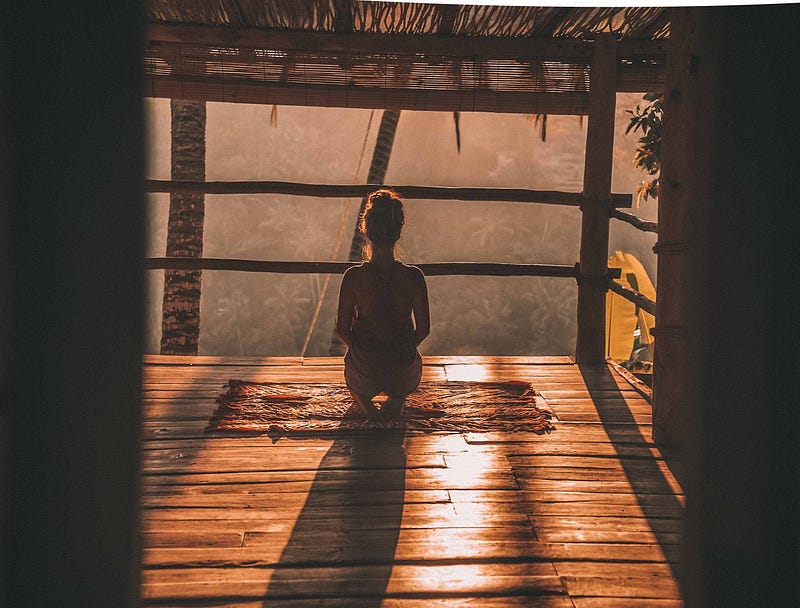
For the last five years, my spiritual practice has been a 20-minute breathwork session created by Soma Breath.
Before that I tried Vipassana meditation, practicing different forms of yoga, waking up at 5am, chanting, and a whole bunch of things in between.
It was only when I simplified my needs, got clear on my priorities, and made a plan that I found a way to incorporate a spiritual practice into my daily schedule.
As much as the self-help gurus carry a lot of wisdom, much of what they share is applicable to them and their needs. It takes fine-tuning, tweaking, and adaptation to make it work for you and me.
So, after many years of trial and error, I landed on the three P’s:
- Prioritise
- Practice
- Persevere
In the modern world, time is a precious commodity
On my more spacious days, I still meditate, chant, and do some stretching before and after breathing. But as a householder, partner, friend, cat parent, and full-time writer and content creator, sometimes 20 minutes is all I have. So, that’s my number one priority.
Anything beyond that is a bonus.
An old Zen saying argues, “You should sit in meditation for 20 minutes a day. Unless you’re too busy, then you should sit for an hour.”
As much as I agree with this statement, in the modern world it’s not always easy. That’s why I commit to 20 minutes a day and make it my spiritual practice because it’s manageable. And because it’s manageable, I’ve been able to stick with it for years.
Those 20 minutes are my peace, solitude, and daily ritual.
Before the three 3 P’s
If you’re on a spiritual path (or thinking of one), I can recommend experimenting with a bunch of different teachers and techniques before committing fully to one.
This gave me the freedom to pick and choose what I needed, when I needed them, and how I needed them, and that took time.
I also found there can be a lot of dogma and competition among certain spiritual communities so to avoid this, I allowed myself time to explore and see what resonated with me and what didn’t. I then created a system that worked for me.
This is a very personal part of the journey so there is no right or wrong. You can even go down one path for some time and then switch it up if it ever stops serving.
There are no rules here. So, although I would recommend committing to at least one practice down the road, in the beginning, there’s plenty of time to play and explore.
That’s a part of the fun.
After the 3 P’s
Once a pathway has become clear and a technique, teacher, or practice resonates, the next step is to prioritise it.
Once it becomes a priority, then you can practice and play with it.
After practicing and playing with it for a while, be sure to persevere as it’s not always going to be easy. After the “honeymoon period” starts to fade, it takes a great deal of dedication, patience, and compassion to keep it up and be gentle and kind to ourselves.
However important perseverance is, no one wants to live under a dictatorship. So, I often lean on curiosity, continuous learning, and daily gratitude to keep things fresh and not take myself too seriously.
This helps to keep a sense of wonder and awe alive too.
This is what works for me, though. As always, find your way, connect to your truth, and honour your needs.
Lastly
Spirituality is less about doing and more about being. So, in a sense, a spiritual practice can be anything.
As long as there’s presence and awareness, spirit is alive. And if spirit is alive, the divine can dance. And if the divine can dance, life is usually a magical place to be.
So, don’t worry about the practice itself. Some of the most profound spiritual experiences I’ve had have been while I’ve been washing the dishes, listening to my cat purr on my chest, watching the stars at night, staring into a flower, making love, scuba diving in the ocean, and walking in the mountains.
Whatever brings you into the present moment, makes you come alive, and helps you find the wonder and awe in life — that’s all that matters.
“The chance to be part of this happens briefly. The invitation is not to show how inventive and imaginative you are but how much you can notice what you’re already part of” — Burgs
To listen to more of my thoughts on this topic, you can find me on YouTube below: