
How to Find Stability in a Shifting World
Surround Yourself with Positives
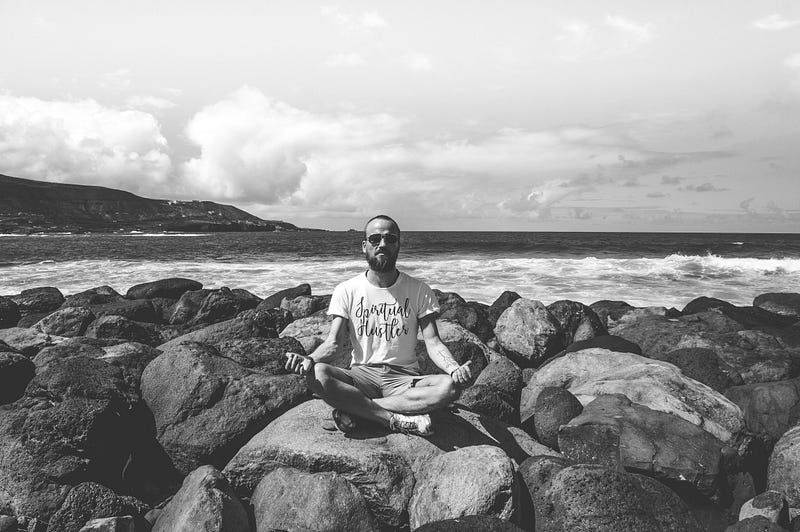
When adverse events occur, I become emotionally unbalanced. It feels like I am standing on a pile of shifting rocks with the knowledge that an earthquake — just a small tremble — can cause me to fall and simultaneously bury me alive.
Feelings of being out of control are unsettling; however, I’ve discovered strategies to establish equilibrium in my life and believe everybody can summons sustained peace by identifying what inspires happiness. We hold the power to generate harmony by surrounding ourselves with positives that relax our minds and decrease physical stress.
The trick is to identify what produces positive feelings and an optimistic mindset. Kindness and acceptance supply the weights to keep my emotional and physical self in balance.
Kindness
This strategy is easy; you simply do something kind for someone else. It doesn’t have to be expensive or time consuming. Many acts of kindness are simple: hold the door open, send a note, say thank you, give a compliment, help carry a load, extend a helping hand.
One of my favorite books is a children’s story that relates a valuable message for adults. It sits on my bookshelf, within reach, accessible for times I need a reminder of the power of kindness. It shares two lessons. First that by giving not only can I inspire others, but I increase the happiness quota in my own life. Second, as the world changes, if I am willing to sit down, look around and shift my perspective, I can be transformed for the better.
Acceptance
Psychiatrist Daniel Amen teaches the 18/40/60 rule.
“At the age of 18: You worry about what everybody is thinking of you. Other peoples opinion of you matter more than anything.
At the age of 40: You do not care what anyone thinks of you. People’s opinions of you no longer matter.
At the age of 60: You finally realize that nobody has been thinking about you at all. Most people only care about themselves and what is going on with them.”
Amen suggests you start thinking like a 60 year-old today and save yourself a lot of grief.
The message I take away is to accept myself. The following verse is bookmarked on my computer for days I doubt myself. It is my positive affirmation.
Always Remember… I am unique, precious and worthy. I am not more or less worthy than others. Be in the now and be conscious. People do what seems logical to them at the time they are doing it. I have no authority to judge others. I am responsible for the way I behave and for my feelings and thoughts. I can choose to change how I feel by choosing to change how I think or behave. Let go and give it to your higher power. Life is too short to waste it being miserable — Author Unknown
Then on days when a simple verse doesn’t slap me into reality because perfectionism whispers negative thoughts into my brain, I keep this ancient Chinese story close at hand.
An elderly Chinese woman had two large pots, each hung on the ends of a pole which she carried across her neck. One of the pots had a crack in it while the other pot was perfect and always delivered a full portion of water. At the end of the long walk from the stream to the house, the cracked pot arrived only half full. For a full two years this went on daily, with the woman bringing home only one and a half pots of water. Of course, the perfect pot was proud of its accomplishments. But the poor cracked pot was ashamed of its own imperfection, and miserable that it could only do half of what it had been made to do.
After 2 years of what it perceived to be bitter failure, it spoke to the woman one day by the stream. “I am ashamed of myself, because this crack in my side causes water to leak out all the way back to your house.”
The old woman smiled, “Did you notice that there are flowers on your side of the path, but not on the other pot’s side? That’s because I have always known about your flaw, so I planted flower seeds on your side of the path, and every day while we walk back, you water them.”
“For two years I have been able to pick these beautiful flowers to decorate the table. Without you being just the way you are, there would not be this beauty to grace the house.”
I am human; I am flawed; but I have value. So do you! Enough said.
My Balancing Act
Life is forever changing and filled with continual challenges. It took me until the age of 60 to accept this fact and learn to find balance on the forever shifting sand. I used to say, “When life gets back to normal. . .” or “When things slow down . . .”
I’ve got news for you. This is normal. Things never slow down.
Once I learned to accept the world, myself and others, in the present and stop wishing for a changed future, I learned to accept change as a positive constant.
The Stability of Change
By Brenda Mahler
Without Change Garbage smells Diapers leak Life is dreary
Without Change Schoolchildren can’t trade tuna for peanut butter
Transformers are trapped as cars Never available to save the world
Sometimes, bad things force positive results
Sometimes “life-ending” events become “life-changing”
Variety produces spice Revolutions correct atrocities
Alterations to a wedding dress Unite the past with the present Breathing old traditions into a new life
Amend the mistakes Modify inaccuracies Adjust misunderstanding Energize the weary Repair the broken Heal the sick
The tides of life constantly Shift the sand beneath our feet
Increasing awareness
Freeing the mind a
Releasing the spirit


