
How to Find an Editor
And have a great author/editor relationship!
I often see authors getting frustrated over finding an editor and getting pricing.
“Just tell me how much editing will cost!” They cry, annoyed at vague or incomplete answers.
The editors are sitting on the other end of the email chain despairingly grumbling, “How long is your book? What kind of editing do you need?”
As an editor, an author, and an employee of a publishing firm, I think I can clear this right up.
Authors:
There is no “set” cost for editing.
Editing depends on many factors, but the two main ones are:
- Word count (length of the book)
- Type of editing desired (there is more than one)
These two things are extremely important. A 30,000-word book will take far less time to edit than a 100,000-word book, which is why there are price differences.
As with any service you get from someone, their time is valuable and worth money, so most of the time, the cost of the service is based on many factors — including how long it will take to complete the task.
Generally, the cost of editing comes down to how much TIME it will take the editor to completely edit your book.
One way to calculate cost is by estimating the number of hours for the project, then multiply that by their hourly fee, and that’s your price. Another way is to do a set per-word pricing, so the price depends only on the word count. Per-word pricing is often determined in a similar way — by seeing how long the project will take, then taking their hourly rate and breaking that down into a per-word price.
There are Two Main Types of Book Editing
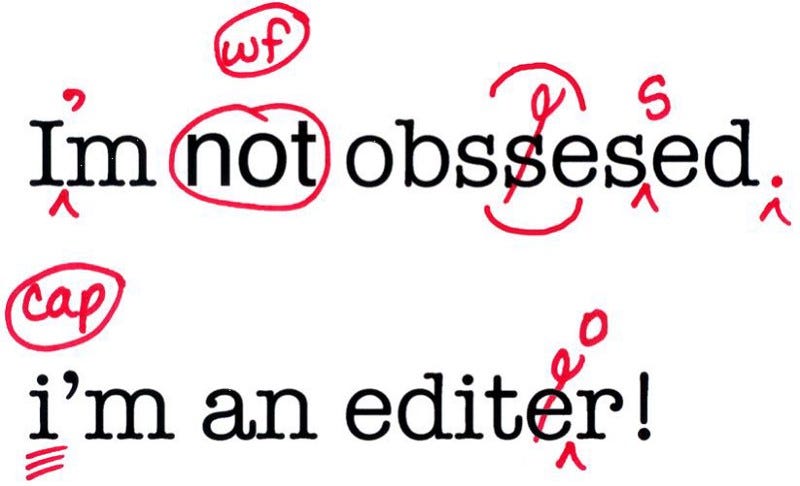
- Copyediting: This is more than just proofreading, but does include it. Correcting spelling, grammar, punctuation, syntax, and word usage while preserving the content, meaning, and voice of the author. Copyediting includes checking for overall clarity and consistency of format and style. Sometimes this is referred to as a “line edit” or “proofreading,” but really that is a half step less than copyediting.
- Substantive/Developmental Editing: Sometimes these words are used interchangeably. This is a more in-depth edit, including checking for plot holes and inconsistencies, asking questions or looking specifically for places where more or less detail would be important, looking for general consistency in tone, content, and messaging, suggestions on word changes, restructuring paragraphs or sections, asking questions of the author to create better clarity of the story, and can even include consulting on titles, cover design, and more.
How to Find an Editor
If you plan to publish traditionally, the publisher typically takes care of the editing for you, so your choices are limited. But if you plan to self-publish, you get the opportunity to interview and choose your own editor.
There are websites like Reedsy and even Fiverr which have editor profiles on them.
However, I have found the best editors by word of mouth.
Ask anyone you know who has written a book if they can recommend an editor. Join a writing group on Facebook, LinkedIn, or other platform and ask for recommendations.
Google “editors in my area” and research people. Ask for writing samples or examples of books they have edited.
Now, Speaking to Editors:
Authors don’t understand editing as well as you do, have patience. They are also incredibly nervous about handing over their book — a piece of their soul — to someone and not knowing what will happen next.
How can you alleviate their fears?
First, be open and clear about your process. Tell the authors exactly what they can expect from you, how your process works, the number of check-ins and progress updates you’ll do throughout.
Second, take the time to really discuss the different types of editing with your authors and your timeline and deadlines. Manage expectations!
Thirdly, remember how it was for you, and be open to answering a million questions and getting to know your author. Ask questions, be honest, and really be a part of the process of their book, not just a side quest.
Try to be collaborative. I like to edit in a Google doc so the author can pop in and out, make suggestions, answer questions from me, and be constantly aware of anything happening to their book.
This has served me well and allowed a symbiotic author/editor relationship. It also makes sure that the author is not surprised by any changes I make, as they can see it happening and make the final call.
Your editing is great, but the final product needs to be something the author is excited about and proud of, too.
Notes to You
Authors: You are allowed to say no to editor suggestions (though not if it is a grammatical error. We feel strongly about those.). When it comes to style and wording, your preference wins. Don’t be afraid to state your preferences or needs! Editing is very important to a book’s success, but editors are not dictators. Stand up for your content when something feels right.
Editors: Authors are allowed to say no to suggestions in style and wording, and you’re not allowed to feel bad or take it personally. Their book, their story, their voice. Remember that it is THEIR book, not yours. It is extremely important that editors are working WITH the authors, not dictating changes to tone or style based on personal preference.
Is this helpful? Do you have questions? What is your relationship with your editor like?
Become a Medium member for only $5 per month and get access to ALL of my posts (and a bunch of other amazing writers)!
Check out my book Concept to Conclusion: How to Write a Book and learn how to conceptualize, outline, write, publish, and market a nonfiction book. Or check out my newest release, an anxiety journal: But…what if? A Journal For Anxious People.
You can also sign up for my mailing list for (rare) writing and freelancing news and information if you want.
Other stories you may like:


