
How to Find 6 Months of Popular Content Ideas with ChatGPT + Semrush
The process takes 20 minutes or less.

“Content is like a bag of M&Ms. You read one line. Then the other … and before you know it, you’ve consumed the whole bag.”
That’s what Jesse Bak recently said on LinkedIn.
But finding “M&M” content ideas isn’t always easy. And coming up with them repetitively can lead to burnout.
So, when I heard about combining Semrush and ChatGPT to create data-backed content ideas, I thought it was brilliant.
Semrush is a popular SEO research tool that collects data on what searchers want to know about specific topics. When you combine it with ChatGPT, you can leverage that data to create several months of data-backed content ideas.
Want to give it a try? Here’s the four-step process.
1. Find Trending Topics with Semrush
Semrush has a topic research tool that allows you to search for trending topics by niche. If you don’t already have the free version, you can grab it here. Then, launch the topic research tool and plug in your topic.
For my experiment, I used “entrepreneurship,” but use whatever word fits your niche best.
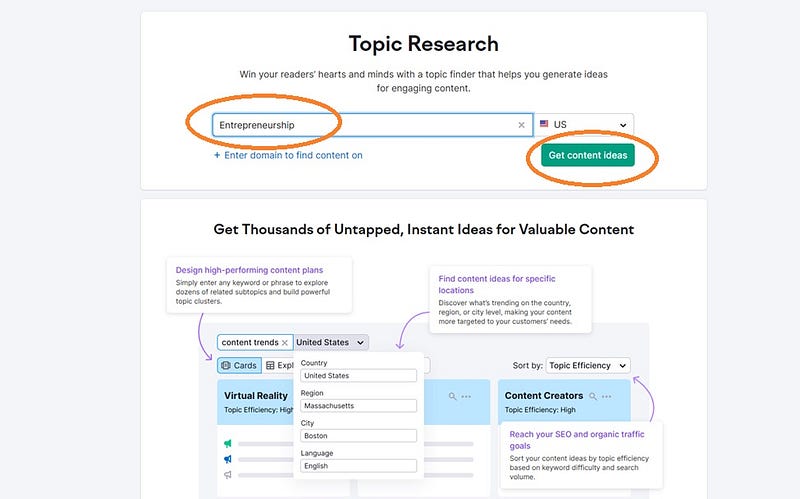
Click on the “Get content ideas” button, which provides results for several different content areas. For this example, a few of the options include business ideas, entrepreneurship development, and entrepreneurial success.
I decided to pick “entrepreneurial success.” Once you select a category, click the “Show more” button.
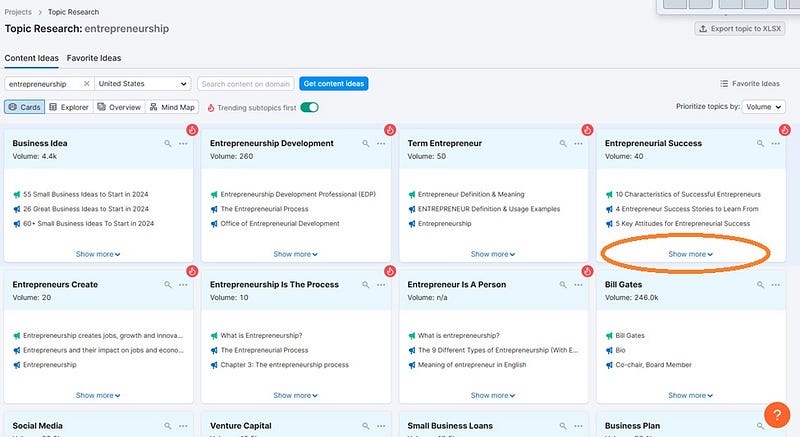
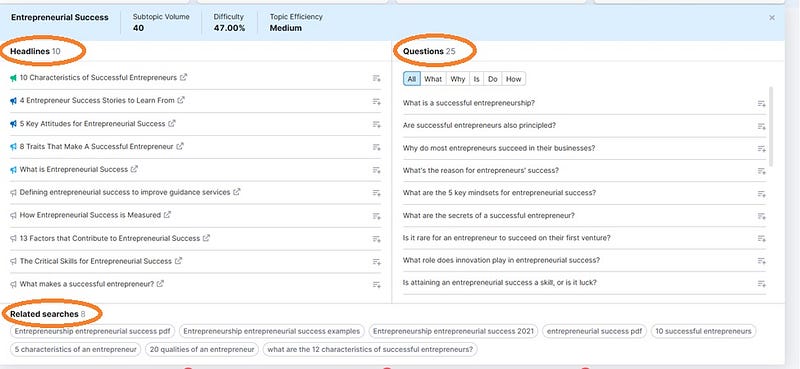
Clicking the “Show more” button gives you three types of data:
1. Top headlines for the topic
2. Top questions
3. Related searches
These are the topics, questions and search terms your audience most wants to know about the content area.
2. Copy the Relevant Data from Semrush
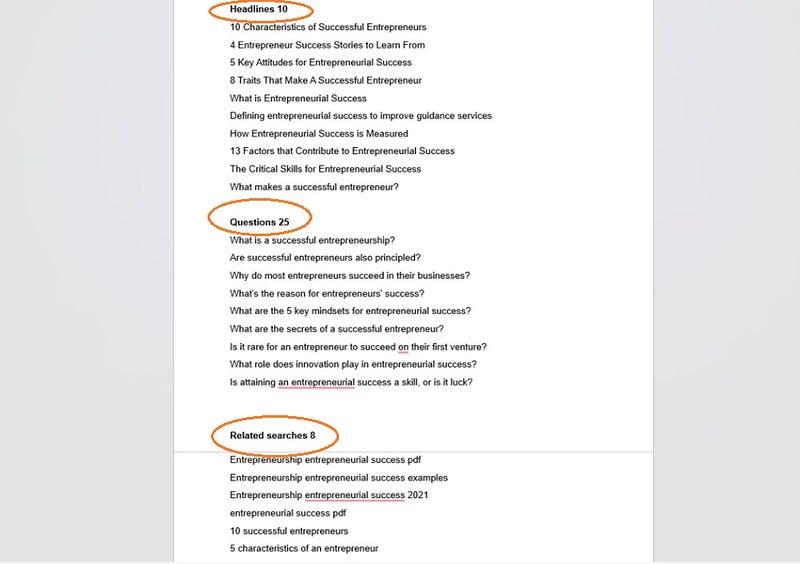
Highlight and copy the data from all three sections, headlines, questions, and related searches. Then paste the data into a Word document or similar.
This is the information you’ll plug into ChatGPT to fill your content calendar full of fresh new topics. If you don’t have a free ChatGPT account, you can set one up here.
3. Use ChatGPT to Come Up with Trending Content Ideas
Using a prompt, you’re going to ask ChatGPT to come up with {Your desired number} of content ideas about your topic. For this example, I asked for 20, but you could easily ask for whatever number is needed to fill your content calendar for several months.
You’ll also ask the tool to break the ideas into content types.
Here’s the prompt I used:
Please provide 20 content ideas about entrepreneurship by content type organized in a table.
The current types of content I produce include blog posts, LinkedIn posts, newsletters, and infographics.
Here are the top headlines, questions, and related searches people ask on search engines about entrepreneurship. Please use only this data to create the ideas.
{Paste results from your Word document below the above prompt}
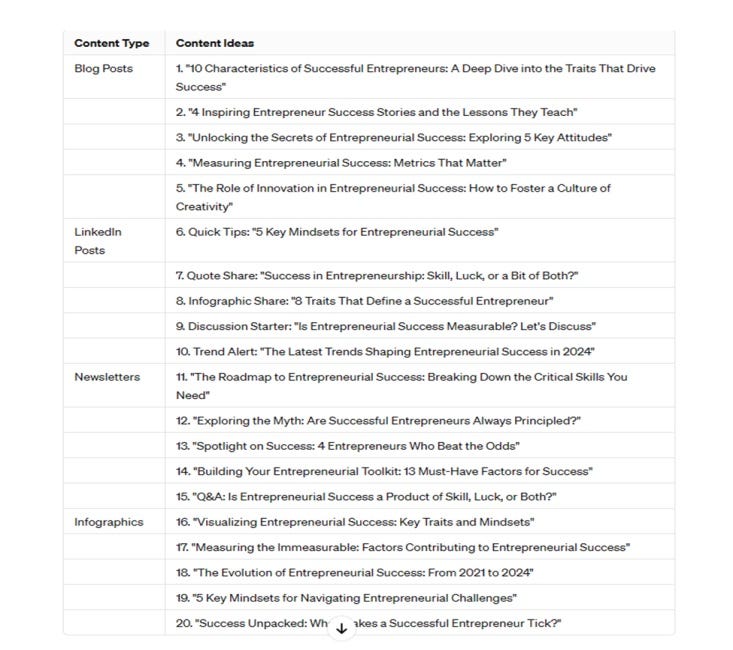
After I hit enter, the tool provides a beautiful chart with 20 ideas categorized by recommended content type.
4. Expand to Include New Topics and Repurpose Your Best Performers
At this point, you have a couple of options depending on how much content you want to create over the next several months.
- You can repeat this process with some of the other content areas found in the Semrush tool. For this example, a couple of the other categories that came up during our search included business ideas and entrepreneurship development. You could generate fresh content ideas for each.
- You can test your first set of ideas and repurpose the best performers into new types of content. A high-performing LinkedIn post could become a blog post. A blog post that does well could expand into an eBook. A newsletter that receives high open rates could become a LinkedIn post.
Once you have several months of content ideas, make them your own as you finalize your calendar. Here’s an example:
ChatGPT suggestion: Measuring the Immeasurable: Factors Contributing to Entrepreneurial Success
My rewrite: 5 Surprising Traits of the Highest-Earning Entrepreneurs Under 30
Study headlines of the top creators in the channels where you plan to publish (Medium, LinkedIn, etc.). It’s likely these creators evaluate their internal data and know what headlines perform best. When you study their content, you can benefit from this data too.
And remember, it’s all about your audience. With every idea, ask:
What problems does this solve for my audience?
Why do they care about this topic?
Semrush and ChatGPT give you a framework, but you’ll always want to pass it through your human filter.
Do you want to grow your audience through content?
Check out my 3-Steps to Rock-Star Content Ideas guide. It’s designed to help you get more out of everything you produce.
Want more marketing tips and tricks? Subscribe to the Better Marketing newsletter The Marketing Memo here.


