
How to Finally Get Enough Sleep (Even If You See It as a Waste of Time)
Sleep is a skill, not a nuisance.
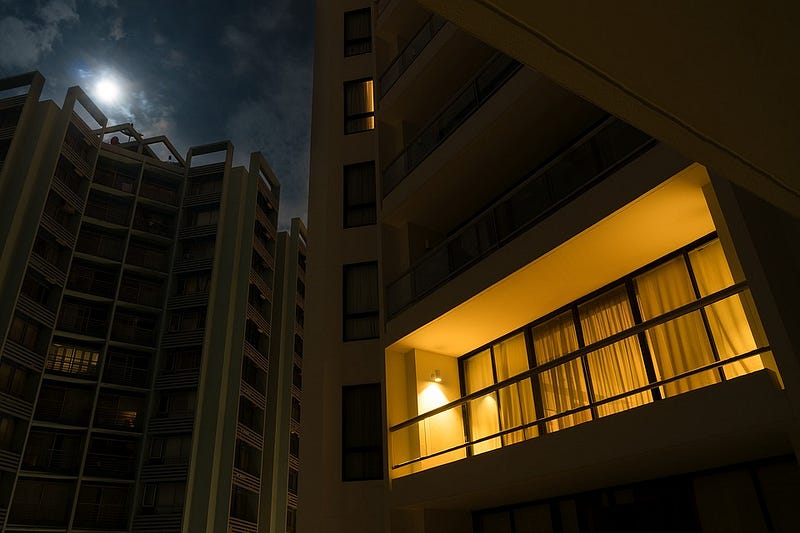
Last week, I reached a milestone that I had tried to reach for years. I managed to turn the lights off and fall asleep at midnight, every night. This might not seem extraordinary to most of you, but I honestly cried tears of joy on the inside.
I used to hate sleep. I couldn’t get my head around the fact that I had to pass out for eight hours every day just to function. Eight hours. Do you know how much you can do in eight hours? Fun things. Work things. Sexytime things. Read a whole book. Imagine how much time we had if we didn’t need to sleep.
Naturally, my teenage (and young adult) self hated it. I saw it as a complete waste of time. I mean, I wasn’t getting anything done while I was sleeping after all. This resulted in me staying up super late every night because I had the feeling that once I went to bed, I wasted my time. Needless to say that playing computer games until you pass out on the keyboard at 3 am wasn’t exactly a productive use of my time either. But I just could not get myself to go to bed early.
So for years, I made attempts to cheat the system. I have tried pretty much everything there is to cut down on sleep. Weird sleeping schedules, power naps, excessive caffeine consumption (peaking at 1g/day, the equivalent of roughly ten cups of coffee), bi- and polyphasic sleep, pulling all-nighters.
Guess what: None of those working in the long run. Sure, I could sleep an hour or two less every night if I popped caffeine pills like smarties but as soon as I stopped taking them on the weekends I’d sleep for twelve hours straight. Plus I’d feel like crap during the day.
This was a hard pill to swallow for me, as I hated sleep with a passion. I hated the wasted time. It took me a while but I eventually got my head around this:
Sleep and rest are essential and beneficial to your performance, and there is no way around them.
So how did I change my relationship with sleep? How did I make the transition from a sleep-hating 3 am a zombie to lights out at midnight and embracing eight hours of sweet slumber every night?
How to stop hating sleep
How much sleep you need is different amongst individuals (my dad doesn’t really venture into dreamland for more than five hours on any given night), but you cannot cheat the system in the long run. Sleep loss and deprivation will lead to a decline in mental and physical performance, ultimately offsetting the extra hours gained. Plus you feel miserable while you are low on sleep.
What you can do, however, is to change your relationship with sleep. If you are like me and have despised it as a waste of time, let me give you a different perspective.
Have a reason to get up
First things first. If your goal is to get a better relationship with sleep and finally enjoy it, you first have to have a reason to get up in the morning. Without this, it will be a million times harder to go to bed on time.
Whenever I didn’t feel like going to bed, I started visualizing what I was looking forward to the next day. Having breakfast, lifting weights at the gym, writing articles or meeting up with a friend. Then I imagined myself being fit and well-rested versus being exhausted and cranky while doing these things.
Ask yourself “Why am I getting up in the morning?” and find a strong answer to this question. Once you have this, you will have it way easier to hit the sack because you have something you’re doing it for.
Sleep is a skill
A lot of top athletes today use sleep-tracking devices to boost their sleep performance. They have figured out that in order to reach peak performance, they need to be on top of their rest and recovery game.
The problem with us humans is that we don’t like to be told what to do. We don’t like someone to point their finger at us and say “You there! You stop doing all the fun stuff and go to bed now because you have to sleep!”
We humans like to be in control. We like to make our own decisions. And if we look at the concept of sleep from another angle, we can do that.
Sleep and recovery are a skill, not a nuisance.
If you stop looking at sleep as something you have to do but rather as something you can get really good at, it will completely change your view of the subject.
When you have to do something, you feel like you are controlled. Someone else is making the game rules and you have to subordinate yourself to them without being asked. This causes resentment and rebellion.
But when you get to do something and have the opportunity to become good at it — well, that changes the game completely. All of a sudden it is not “do this or you will be punished” anymore but “here’s your chance to excel.”
It is empowering. You are the one in charge.
This makes you look at the concept of sleep from a completely different angle.
So that’s my suggestion to you, my fellow sleep-haters and voluntary insomniacs: Treat sleep, rest and regeneration like a skill, not a nuisance.

How to become a sleeping pro
There is a myriad of articles on how to improve your sleep, but I want to give you a quick overview of a couple of factors that you can influence easily and that has made the biggest difference for me.
- Sleep duration No-brainer, really. Even if the quality of your sleep is exceptional, if you don’t get enough of it, you’ll feel like you’ve been steamrolled by a herd of Gnus. The National Sleep Foundation recommends 7–9 hours per night for young adults and adults (18–64 years of age), but your individual requirements may vary. I usually am fine with anything between 7.5 and 9 hours of sleep, depending on how much I work out and eat.
- Sleep timing Chances are you have heard of our Circadian Rhythm and how it influences our sleep-wake cycle. However, this process is not the only thing influencing how awake and productive we are. During the last years, there has been an increasing body of research dealing with different chronotypes, such as night owls and early birds. Michael Breus, Ph.D., has developed a quiz in which you can sort yourself into one of four chronotypes (I am a bear), which then gives you recommendations about when your best time to sleep and the most productive hours are.
- Sleep environment Three words: Cold, dark, quiet. That’s what seems to work for most people. I don’t have blinds so I help myself with a sleeping mask and during the hot summer months, I use a fan to keep cool. Play around and see what works for yourself.
- Pre-sleep hours This is where you can probably make the biggest improvements, especially if you have trouble falling asleep in the first place. Try to stay off the TV and smartphone about an hour or two before you go to sleep so the light emitted from the screen doesn’t mess with your sleep cycle. Calm yourself down, take a walk or read a good book instead.
At the end of the day (pun intended) we are all adults. We all have to make our own decisions and live our own life. So I am not here to tell you what to do or how much to sleep. I rather want to ask you some questions, which you have to answer for yourselves.
Is an extra hour of awake time really worth feeling crappy and tired all day?
Does the added time really make up for my loss of productivity?
Can I really be in a good mood if I am tired or does my mood suffer from it?
Is it worth to sacrifice my long-term health for an hour of awake time?
Ask yourself these questions and check if a change in your relationship with sleep (from seeing it as a nuisance to seeing it as a skill that you can work on) might bring you more joy.
I was trying to find a witty end for this article for quite a long time, but I think I’ll end it with the words of the author of the incredible Iliad and Odyssey and one of the earliest poets of the occident.
“There is a time for many words, and there is also a time for sleep.”
— Homer, The Odyssey
~Moreno


