
How To Figure Out What Your Customers Want To Read
Here’s 1 ridiculously easy way

The other day my husband opened the door to chat to a charity salesman. Whenever we get a knock on the door and we’re not expecting anyone, we tiptoe to the bedroom window near the door. Peek through the blinds. And if it’s not a delivery dude, we assume it’s a salesperson and ignore them. But the door was open and it was obvious we were home. So he felt like he had to chat to the guy. How often do you ignore salesy emails and posts from a business who only shares salesy stuff? For example, the last email I got from my printer supplier was: FINAL DAYS — End of Financial Year Sale Every mail I get from them is about a product or a sale. But I don’t unsubscribe because I know the people behind the business and like them. What would make me consider buying more from them more often? If they wrote about something other than what’s on sale or what new product they have — I’d open their emails more often. I’d remember them more fondly if they give me useful tips, answer questions I may be curious about, or even make me think or smile. I’d want to buy from them — even if I have to go out of my way. Or even if I don’t actually need something. I’d want to buy just because they are so bloody helpful I will look for any reason to give them more business. How can you give your customers content they want to read — and sell more by selling less? Here’s 1 ridiculously easy way:
- Throw a keyword or key phrase into Google
- Pick a phrase
- Look at the “People also ask” list
- Record the list of questions
- Write answers to them: use a photo, write 1 line, write a couple of paragraphs, or make a quick video
For instance, if you sell printers: Look up: “how to make printer ink last” or “what printer to buy for small business” Google informs us that people ask questions such as: Which printer is best for small business? Which printer has the cheapest ink? How long should printers last? How can I make my ink cartridges last longer? Can I use any paper in my printer? If you teach people how to draw: Look up: “drawing ideas” or “how to draw” People ask questions such as: Can anyone be good at drawing? How do you draw a face for beginners? What is the best pencil for sketching? How do I get inspiration to draw?
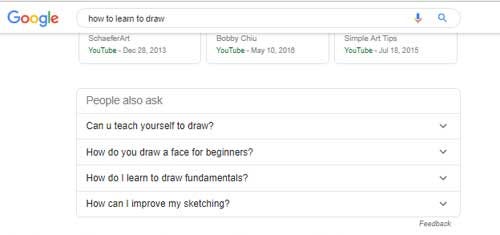
Photo: Search results for phrase “how to learn to draw”. Source: Google.
If you handmake ceramic kitchen items: Look up: “benefit of ceramic mugs” or “are ceramic teapots” People ask questions such as: Are ceramic mugs safe to drink from? Why are ceramic mugs used for coffee? Why you need to drink coffee from a ceramic mug Can you use a ceramic teapot on the stove?
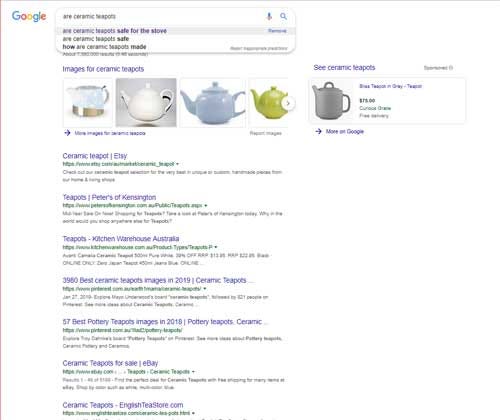
Photo: Search results for phrase “are ceramic teapots”. Source: Google.
If you make sweat proof, iron-free men’s shirts: Look up: “sweat proof shirts” and “non iron shirts” People ask questions such as: Do undershirts help with sweat? Are non iron shirts dangerous? How do you dry a non iron shirt? Are wrinkle free shirts really wrinkle free?
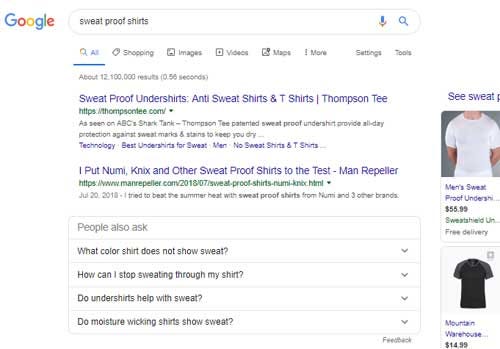
Photo: Search results for phrase “sweat proof shirts” and “non iron shirt”. Source: Google.
If you are a graphic designer: Look up: “graphic design logo” or “design business cards” People ask questions such as: Why is graphic design important for advertising? What are the benefits of good design? What are five characteristics of a good logo? Are double sided business cards a good idea? See how easy it is to do this — whatever type of business you run? A few extra tips about keywords and phrases: If using a phrase, you could add: “How to / What / Where / Can / Which / Why” at the start to see the dropdown of suggested phrases. This is how people usually begin asking questions. To figure out what keywords or phrases to type in, think about common questions from your prospects and customers. About problems you’ve faced. Or insights you’ve gained that your customers may find helpful.
Summary: Give your customers what they want to read
Writing constant sales posts about your business products and services can turn off your customer or prospects. Instead, do a quick search on Google to find out what questions people usually have — and answer those questions. You can put this information into:
- Social media posts
- Emails
- FAQ page
- Blog posts
- Medium articles
- Videos
- Infographics
- Ads: Google ad, facebook ad, radio ad
This is how you can give customers what they want to read — and how to sell without selling. Give it a go and see how easy it is.


