
How to Fall Asleep For Anxious People
I used to lie awake in bed for hours. Last night I fell asleep in ten minutes.

I tossed and turned in bed for 6 hours this Sunday. I fell asleep at around 5:14 AM and had to wake up soon for work.
I knew exactly how to fall asleep, yet I made every mistake in the book.
- I drank HK milk tea (caffeine) at 9 PM, even though I knew that caffeine has a half-life of up to 5 hours.
- I watched Netflix and YouTube videos on my bed before I went to sleep, overstimulating my senses.
- I couldn’t stop thinking about the upcoming week. My brain wouldn’t shut up.
- I started worrying about not being able to fall asleep. Then I started worrying about my worries.
Thankfully, I did everything in this article last night and slept like a baby.
I hope this helps you sleep well.
How Anxiety, Boredom, and Stress Destroys Sleep
I love habits and routines because I’m naturally lazy and unstructured. I want to be healthier, more productive, and more effective at the things in life that I care about.
Poor sleep habits consistently destroyed my efforts. I read all the self-help books. I got my goals and habits in order. And then I failed miserably.
It doesn’t matter what keystone habits you have if you can’t stay awake to perform them.
Everybody knows it’s a bad idea to use your phone before bedtime. Smartphones emit blue-light, suppressing melatonin production.
I know it’s bad, but I do it anyway — Why?
Because I’m anxious. I’m bored. I’m stressed.
I hate the thoughts swirling in my head — am I going to miss something important? Is there anything new happening on social media? Why do I hate boredom so much?
According to the Harvard Business Review,
Why does anxiety about needing to stay in contact negatively impact sleep?
First, those who are anxious about staying connected are more likely to use their technology right up until bedtime.
We now know that the blue wavelength light from LED-based devices (phones, tablets, computers) increases the release of cortisol in the brain, which makes us more alert, and inhibits the production of melatonin, which is needed to fall asleep.
I tried melatonin sleeping pills, blue light filter apps, and sleep trackers. They’d work for a while. But after a stressful week, I’d check my phone compulsively before bed and relapse into the netherworld of “I-can’t-sleep-because-I-can’t-sleep”.
I leveraged my laziness to my advantage.
Now I sleep better than ever. You can too.
Sleep Well Tonight
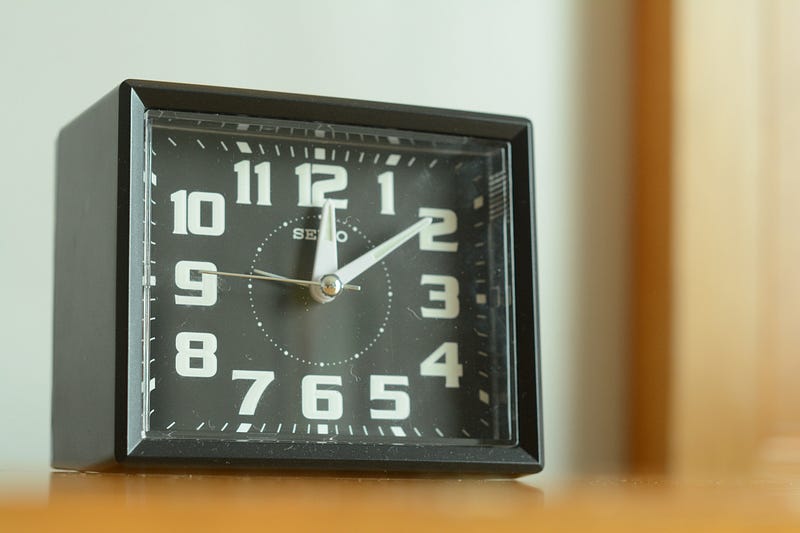
- Buy an analog alarm clock. Make sure you get one with a silent sweeping hand. No ticks! I tried using an IKEA DEKAD ticking-alarm clock and thought I was trapped in a Christopher Nolan film.
- No phones allowed in the bedroom. Prime your body to associate the bedroom with sleep.
- Charge your phone somewhere else. I put it in my living room. Silent mode. Vibrate off. I’m paranoid, so I set my phone alarm 15 minutes after my analog alarm. Better safe than sorry.
It used to take me an hour or two to fall asleep. Now, I’m asleep within 10 to 15 minutes.
I’m so bored that all I can do is sleep.
Like a recovering addict, I still want to use my phone all the time. But now, I’d have to get up and walk to my phone.
No thanks.
I like analog alarm clocks because setting an alarm feels more tactile. It feels real. Setting the alarm every night feels like a little ritual — “it’s sleep time!”
With digital alarm clocks, I compulsively check the time because I’m so bored. My analog alarm clock doesn’t even have light. So I’m sleeping.
No snooze, either.
Even if I try to snooze, my phone will eventually go off in the living room. I have to get up, walk over, and turn it off.
The sun says “good morning” and I’m awake.
Sleep tight.