
How to Embrace Winter as a Concept
Because the idea of winter is way more useful and way less cold than actual winter.
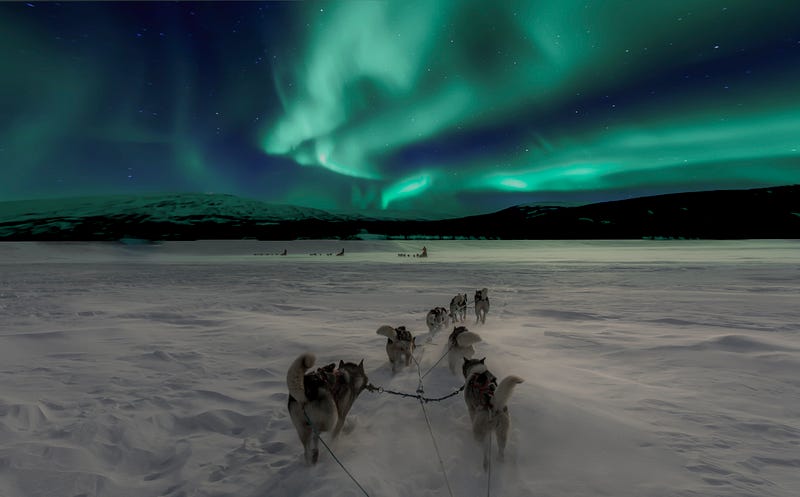
What’s your favorite thing about winter?
Here’s my favorite thing about winter: EVERYTHING.
I’m not kidding, I love the five-degree days, the knee-deep snow, and the beautiful sunsets that just happen to occur at 4 pm. When other people are getting cozy with Netflix and fuzzy socks, I’m strapping on snowshoes and a headlamp to explore the moonlit woods.
I get it though, most people aren’t drawn to the cold like I am.
But even if you don’t love actual winter, there’s still a lot to gain from embracing the concept of winter.
Since I’m a teacher, I can’t resist the opportunity to talk about the seasons. There’s a famous video where a bunch of Harvard grads are asked to explain what causes the seasons and they all fail miserably. So chances are, you’re not sure either.
You probably know that the earth orbits around the sun. One lap takes a full year. A lot of people think it’s cold in winter because the earth is further from the sun and it’s warm in summer because the earth is closer to the sun. It’s ok if you think that, but you should also know that you’re wrong.
The real reason for the seasons is that the earth is tilted on its axis. That means that for part of the time, the northern hemisphere — where I live — is tilted towards the sun. We call this part of the trip summer and it’s pretty hot.
The earth’s tilt doesn’t change though, so as we orbit the sun, the northern hemisphere tilts away from the sun for a while too. So even though we’re still the same distance from the sun, this part of the trip is dark and cold — AKA winter.
It’s important that you understand this concept for a few reasons. One, it’s just good to be an informed person. Two, you won’t embarrass your college, your kids, or your country when you get interviewed for a youtube video, and three, you can find new health and happiness by applying this concept to many areas of your life.
Change How You Think About Winter
First, you need to stop thinking about winter as a season and start thinking about it as a concept. Instead of thinking about ice and wind, think about winter as a period of reduced activity. It’s a period of rest, recovery, and living off stored energy. It’s a predictable pause that precedes a time of furious productivity: spring.
Animals and plants are experts at capitalizing on the idea of winter to thrive.
For example, trees use the long, sunny days of summer to collect as much energy as they can. Each leaf is a solar panel, storing energy from the sun in tiny little carbohydrate molecules. When fall comes, the days shorten, and trees drop their leaves in preparation for winter. By the time the first snow flies, the trees are bare, ready for the heavy snow and high blizzard winds of winter.
Animals have similar adaptations to make it through the winter.
Lots of mammals go into a state called torpor, which is when they lower their body temperature, drop their heart rate, and suspend many bodily functions. They don’t poop, pee, digest food, or shiver. It’s the closest to death they can be without actually dying. This extreme form of rest allows them to survive at very low temperatures with little or no food.
Then there are frog species that can freeze solid in the winter. Their hearts don’t beat, their kidneys don’t function. But then in springtime, they thaw out and get busy having crazy sex and making babies.
So what does this mean for you?
I’m not saying you need to follow my lead and feel giddy every time a snowflake icon shows up in the weather forecast.
But if you start thinking about winter as a temporary period of restriction, you can apply it to many aspects of life.
Here’s how.
Embrace a Creative Winter
Years ago, I had a student who was a talented musician. He played several instruments, wrote song lyrics, and gigged with a few different bands. We were all in awe of his drive and creativity.
But we also saw him struggle and feel like a failure when his creative energy dipped.
If you’re a creative person, nothing feels better than the excitement of new ideas coming to fruition. And sometimes the painting, drawing, writing, crafting, building comes so easily. But then something happens and the well dries up.
You can call it writer’s block, a drought, the end of an era, or a failure.
But you’re better off thinking of it as a creative winter. When you feel it coming on, don’t fight it. Instead, intentionally reduce your output. Relieve yourself of the expectation to come up with new ideas. Wrap up the loose ends of your old, unfinished projects. Rest and don’t think of anything at all.
Focus on doing the bare minimum and doing it well. A bear’s heart only beats once every three seconds during winter, but that’s enough to keep it alive. Identify your creative heartbeat — the thing you need to do to stay alive — and do only that thing. Let everything else go.
Do this while remembering that winter always ends. And when it does, spring comes. And spring brings a frenzy of activity. In nature, this means eating, fighting, having sex, having babies.
For you, the end of creative winter might be a whole flurry of new ideas. Or it might be the birth of one major great idea.
Creative winter can mean a lot of different things to different people. But what it’s not is a failure, the end, or a weakness. So lean in and let it happen. You don’t even need a parka.
Embrace a Metabolic Winter
For most of human history, actual winter was inescapable. It was a time of cold, starvation, and suffering. But now, thanks to the industrial revolution, and Patagonia, we barely have to experience winter at all.
Our houses, cars, and workplaces are warm and cozy year-round. We can eat raspberries and pineapple 365 days a year and our down comforters let us sleep in dreamlike comfort in every season.
As a result, we are fatter, sadder, and unhealthier than ever.
We live in a false panacea, where we expect to never be cold, never be hungry, never do without. And it’s terrible for us!
Throughout history, doing without wasn’t a choice. It was an external condition, forced on us by the inevitable change in seasons.
But since we’ve innovated our way out of this situation, we now are faced with the responsibility of creating our own self-imposed periods of metabolic winter.
I’ve written about the Whole30 diet, which is somewhat of a metabolic winter. It’s taking a break from indulgences like sugar, alcohol, and cheese. But there are other ways to recreate the metabolic winters of our ancestors too. You could practice intermittent fasting, or cook only at home for a month.
Reducing or restricting your diet for a while will reset your metabolism and let your treats taste like treats again. It takes some willpower, but just remember: spring always comes!
Embrace a Professional Winter
I have a job that I love and I hope you do too. There are times when I crush it at my job. But then there are also times when I do just ok.
It would be great if every day at work was more exciting than the previous one and every day marked the start of a new initiative, a promotion, an award, an accomplishment.
But that’s a fantasy that will never happen. To anyone. Everyone has days, weeks, or months where work is a bummer. It doesn’t make you a failure or a fraud and it doesn’t mean you need to quit your career immediately and go back to clown school.
Taking a professional winter is when you focus more on other aspects of your life than you do your job. It’s doing a good enough job, but not taking on extra responsibilities. It’s a sustainable break from the grind that will prevent you from burning out in glorious fashion. It’s using your vacation time, leaving right at the end of the day, and not checking your work email from home.
A professional winter isn’t an excuse to drop the ball or be a slacker. You still need to do your job, earn a paycheck, and keep up with your responsibilities. You can just do it with a little less gusto. Give yourself a break and breathe. Especially if you’re someone who likes to carry a heavy load all the time. Give someone else a chance!
The best thing about a professional winter is when it’s over and you’re ready to lean back in, you’ll either feel invigorated with fresh ideas and energy or you’ll realize it’s time for you to make a change. Either way, you’ll be better off than you would have been on the proverbial professional treadmill, with someone bumping up the speed every few minutes.
Embracing a Financial Winter
A financial winter is a period of time where you temporarily cut back on your spending. It can last a few weeks or a few months.
If you’ve never tried it, you should. Yes, you will save money and have more money in the bank when you are done.
But that’s not the real value in holding yourself to a financial winter. Instead, you’ll gain insights about yourself, your values, and your habits.
When I first decided to experiment with putting myself into a money lockdown, I felt I had broken through to a new dimension.
I saw that very few of us spend our money based on our needs or our values. We spend money based on what other people, ads, and incredibly precise marketing campaigns think we ‘should’ buy.
We ‘should’ buy new towels for the bathroom, a new cleaning product line for the kitchen, a new air freshener for the pantry.
We ‘should’ buy an air-fryer, a Hot-Pot, a Bullet, a Ninja.
We ‘should’ buy two-for-one pants, 60% off shirts, BOGO shoes.
When I stopped buying all these things, I saw how external forces convince us to give up our money in exchange for things we barely even like, let alone need.
It was empowering to say no to all of these things and see that my life stayed pretty much the same. I could still dry off after my shower and I still had plenty of clothes to choose from in my closet.
Embracing Social Winter
Well, we’ve all gotten pretty good at this one huh?
No parties, no cookouts, no family dinners for six months. And for the most part, it’s been terrible.
Bear with me though, and ask yourself these questions:
- Who are the people you’ve kept in touch with since March?
- Who are the people you haven’t texted, called, or emailed since March?
- Who do you miss seeing the most?
During regular times, it’s easy to get wrapped up in spending time with people because they live near you, because your schedules match up or because your kids play sports together.
These people might be fine, but they also might not be the same group of people that you want to surround yourself with in your ideal world.
A social winter, like we’re in right now, is a time when you clear your calendar of all your engagements. Then you slowly let it fill back up, making sure to give priority to the people you really care about, not the people who are merely convenient.
When you embrace a social winter, it gives you a moment to pause and intentionally decide who you want to spend time with. Instead of feeling FOMO because you’ve decided to stay home for a night, you can relax and enjoy doing something on your own.
Even now, you’ve probably identified a few close friends that you want to keep by your side no matter what. And you’ve probably realized some people bring you down. Negative people, people who gossip too much, people who drink too much.
Guess what? You don’t have to welcome those people back into your life. I’m an optimist, so I believe that this forced social winter will end. And when it does, you get to choose who you see. You get to spend time with people that delight and amuse you. I often tell my students that one good thing about being an adult is that you get to choose your friends.
So make sure you choose carefully!
Winter is the Best
Whether literal or figurative, winter can be awesome. There are hard things about every type of winter. It takes character and determination to intentionally slow down, pause, reduce, restrict, and sometimes suffer. But the slow, dark times are what make the bright, sunny times all the more fun.
So even if you hate the snow, this year, give winter a chance.
Also, if you really were just hoping to learn more about actual winter, here you go: