
How to Eat: Facts and Fallacies about Healthy Food
Chew on these science-based, common-sense ways to eat better
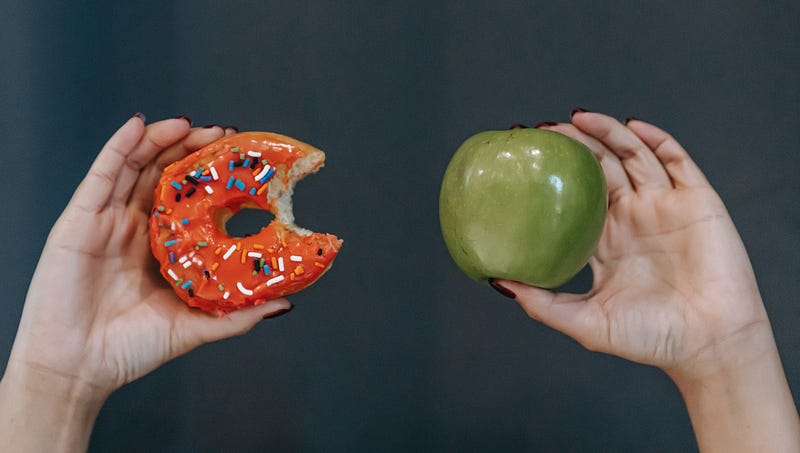
Nutrition advice is a bewildering brew of helpful and terrible information, steadily stirred by conflicting new studies, click-bait headlines to misleading articles, and the food industry’s colossal marketing efforts aiming to simply sell, sell, sell.
Amid all the confusion, however, is a strong expert consensus on the key aspects of healthy eating. So let’s sort through the stew of solid nutrition science and harmful food fallacies and glom onto some helpful, common-sense ways of eating. These simple guidelines will improve your odds of living years longer and staying physically healthy and mentally well.
Oh, and if you wish to argue about any of this — and I know some of you will — please first see the final paragraph.
Facing food facts
Most diets are not good for most people. Certain medical conditions require specific diets, under the supervision of a medical professional. But otherwise, most diets — especially those marketed for money and/or promising fast and amazing weight loss — range from unproven to incomplete to outright unhealthy. Whether it’s Atkins or keto, paleo or a juice cleanse, there’s one ultimate truth about diets: Most of them are too narrowly focused to provide ideal nutrition for most people.
Fruits and vegetables offer hidden benefits. Produce packs essential vitamins, minerals, fiber and other nutrients—that much we all should know. But people who eat more fruits and veggies likely consume less bad stuff, says Alice Lichtenstein, a professor of nutrition science and policy at Tufts University. Indeed, a 2021 study in the journal Circulation found that people whose diets are high in fruits and vegetables eat better overall, get more physical activity, and smoke and drink less—and live longer. “It is not critical to parse out which factor had the greatest effect,” Lichtenstein tells me of this study. “The important message is to identify the fruits and vegetables you enjoy, buy them (fresh or frozen) and eat them.” Especially if you’re serving as a role model for kids, she suggests.
Superfoods are overhyped. Sure, spinach and blueberries and salmon are good for you, but you need a variety of nutrients from a variety of foods. No single overhyped superfood will make you Superman or even keep you out of the hospital all by itself. Importantly, all fruits and vegetables and most nuts and beans offer significant nutrition benefits, and they’re always better choices than highly processed foods, so go nuts on whatever whole foods you like, just don’t be monogamous about it. As Harvard nutritionists put it: “Variety in our diet is important not only to gain the benefit of eating a wide array of essential vitamins and minerals, but also to prevent one from eating too much (or too little) of a particular nutrient.”
A lot of food is barely food. Processed meats like salami or hot dogs, or highly processed anything with loads of added sugar, salt and various unpronounceables, barely qualifies as food. This stuff shortens lives and ups the odds that your remaining years will be miserable with health problems. A great rule of thumb here is to avoid packaged and processed foods that contain more than a handful of ingredients, and even better, emphasize non-packaged food that don’t even require an ingredient list.
Change your eating mindset
Eating in healthy and responsible ways starts with awareness, education and some simple tactics anyone can consider.
Acknowledge what you consume. If you were born and raised in a Western country, particularly the United States, you’ve quite possibly grown used to a plateful of poor choices, whether it’s lots of red meat, gobs of sugar, ungodly amounts of salt, and the highly processed barely-food in colorful, slickly marketed boxes and bags. You also may have been led to believe that all fruits are in season all the time. Actually, those strawberries in winter may have been transported thousands of miles — bad for their freshness, flavor and nutrition profile, and packing a hefty carbon footprint, too.
Read the labels. Food labels can be alarmingly revealing. The best foods don’t need a label — they have just one ingredient. With packaged foods, aim to avoid any that have more ingredients than you can count on one hand. Also, note that a favorite trick of manufacturers is to include multiple sweeteners — perhaps sugar, then brown sugar, then honey — so that none of them are propelled to the top of the list. But add them up and they might be the №1 or №2 ingredient, thus more like dessert than a meal.
Buy locally grown or organic produce if you can. If you are fortunate enough to have access to quality food — millions of Americans do not — don’t squander your luck. The flavor difference of high-quality produce alone just might blow you away — which means you and anyone you buy food for is more likely to eat it. Some research suggests organic food is more nutritious, but the science isn’t clear on this point. Locally grown produce does tend to be more nutritious, in part because the time from pick to purchase is less. Less transportation is better for the environment, too.
Dish up smaller portions, chew more, eat slower. These strategies have been found to help people eat less and reduce overall calorie intake. In turn, cutting back on calorie intake — especially in conjunction with some physical activity — increases your odds of living longer and avoiding diseases, other research finds.
Avoid juice. This holds true especially for children: Juice is not healthy food. Many juices on the market barely have any actual fruit juice. But even those that are 100% juice have, by virtue of squeezing them out, lost most or all of the fiber and many of the nutrients in whatever fruit they were made from, leaving behind mostly sugar. Water, by the way, is 100% water — the only liquid you really need.
Lean into a healthy ‘way of eating’
Let’s get specific. The healthiest way of eating, for most people without specific medical concerns, is not a specific diet, but any variation of a Mediterranean style of eating, which emphasizes plant-based foods, though not exclusively. It’s touted by pretty much every major objective organization that cares about this stuff — from the WHO to the CDC to the American Heart Association, Mayo Clinic, Harvard Health, and on and on.
The latest guidelines go like this:
- Choose a wide variety and eat plenty of fruits and vegetables to get a full range of nutrients from food rather than supplements.
- Choose whole grains over, say, white bread or white rice.
- Include healthy sources of lean and/or high-fiber protein such as plant proteins (nuts and legumes), fish or seafood, low-fat or nonfat dairy, lean cuts of meat, and limit red and processed meats. (Learn more)
- Use liquid non-tropical plant oils such as olive or sunflower oils.
- Choose minimally processed foods rather than ultra-processed foods as much as possible. (Learn more)
- Minimize intake of beverages and foods with added sugars.
- Choose or prepare foods with little or no salt.
For more detailed instructions on this approach, or if you have high blood pressure or other health problems, check out the DASH eating plan.
Avoid food fights
Arguing over the perfect way to eat is like arguing which way the toilet paper roll should face. And let’s admit it: None of us is perfect, and frankly it’d be weird to eat perfectly (whatever that might entail) or never have a treat.
I love a good steak on rare occasion (medium-rare, actually). I’m a sucker for salt (though I’m cutting way back due to high blood pressure). On road trips, donuts become suddenly, inexplicably irresistible, even though I know my stomach will rebel after the initial endorphin rush.
Some people are much better at making smart food choices, and I applaud them. Others, due to illnesses, have no choice but to be highly vigilant about their intake and should listen to the advice from doctors and nutritionists. Without stressing too much, I follow the science and aim to eat reasonably well, without being so persnickety that I stress out.
If you disagree with any of this, the comments section is open. But don’t expect any food fights — arguing over dubious “eat only this” or “never eat that” advice gives me more indigestion than donuts.
I’m the author of Make Sleep Your Superpower: A Guide to Greater Health, Happiness & Productivity (paperback or Kindle version). Your support makes my health writing possible. You can sign up for emails when I publish on Medium, or join Medium to directly support me and gain full access to all Medium stories. Find me on YouTube, Instagram, Twitter, Linkedin. — Rob


