
How to Easily Implement Any Habit in Your Life in 2021
Use the principle of music loops.
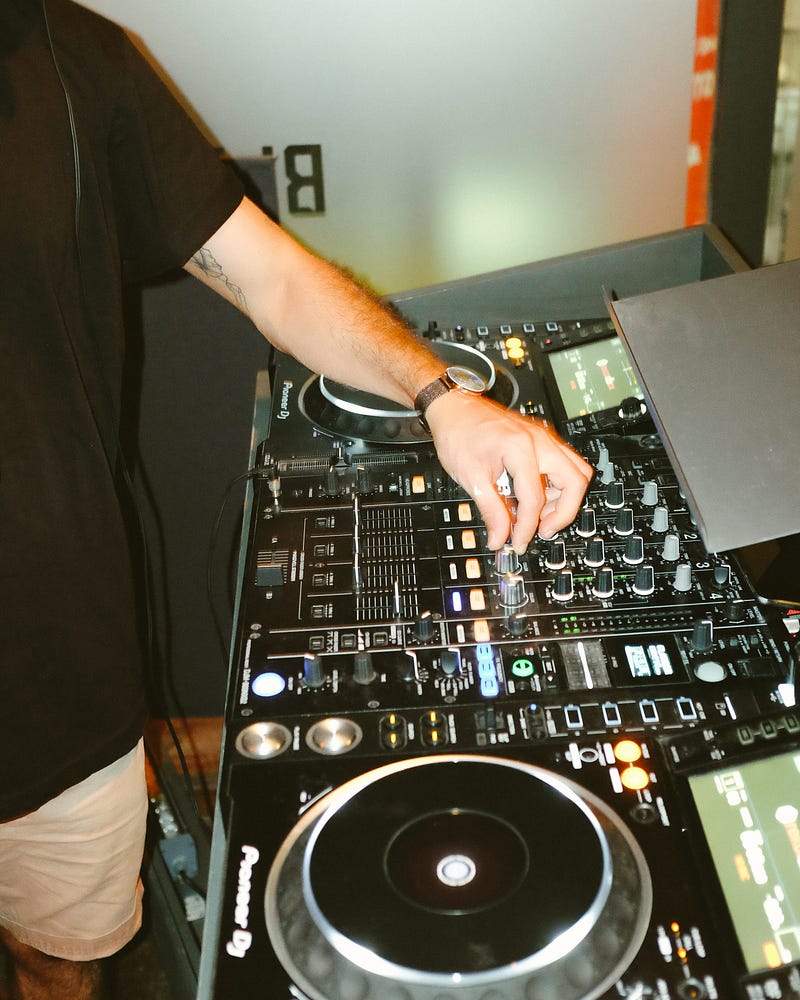
Just like last year and the year before, New Year’s Eve rhymes with new habits and the greatest hopes of finally transforming your life, which fade away before you’ve even finished digesting your last meal of the year.
Favorite resolutions include getting in shape, eating healthier, quitting smoking, reading more books, starting this or that long-term project, or not biting your nails anymore (that’s mine).
I was a pro at making resolutions that are quickly forgotten. Until last year. 2020 was the year I discovered how to transform my life for the better. I got in shape, I stopped drinking alcohol (most of the time), I read a lot, I started intermittent fasting, I got better at intuitive eating, I eliminated all my social media, I found my work rhythm and I cured my relationship with my e-mails.
How have I changed all this in one year? Simple. I applied the same principle as that of music loops.
It’s all about tiny rhythmic changes that create harmony.
Tash Sultana creates whole songs on her own. She doesn’t need musicians. Her first pieces were born in her room, thanks to the principle of music loops. The same one that you will use to stick to your resolutions.
First, she takes the guitar and plays an excerpt. She presses a pedal to start the recording and interrupt it. When she’s done with the guitar, the sample she just recorded continues to play in a loop. She then sits behind the drums and, while listening to what she has just produced live, she adds beats. Same thing for the other instruments, then her voice, and so on.
After a while, all the different parts come together and create a song. It’s pretty magical to see it live. Take a look at it:
There are two fundamental principles behind that of music loops: create small excerpts, and build a song by putting them together one after the other.
1st principle: Small excerpts, small changes
Changing something in your life is done by fooling your brain. It likes tidy routines. A tsunami of changes frightens it. What you need to do is pick very small changes that you apply regularly. They accumulate, and before you notice, a new habit is born. That’s the power of repetition.
Let’s take an example. I spent 6 years trying in vain to get back into working out. I felt lethargic and limp. Every 3 months or so, I would get a sudden determination and start an intense program. I had the highest hopes that I would finally change. After a week, I would give up. The program was horrible, a real chore.
In October 2019, I looked at the problem from a different angle.
I decided to do 2 or 3 sessions a week, 10 to 20 minutes each, according to my desire, following the instructions of an application (Fitify), on the mat between my bed and my wardrobe in my small apartment.
What are 10 minutes in a day? It’s a ridiculous goal, impossible to miss. It worked pretty well. I got a taste for it. Even when I didn’t feel like it, I knew it was only a matter of 10 minutes.
The habit slowly changed by itself: I switched to 30-minute sessions, and then they became almost daily. Now I move for about 40 minutes a day, 6 days a week.
Why did it work?
I applied the most basic principle to everything: start slowly, so slowly that it feels like it’s useless. You can’t not stick to something that requires only 10 minutes twice a week. It’s too small a goal to miss. So you’re succeeding. Day after day. And you build momentum.
There comes a day when you don’t feel like it, but you don’t want to break the long chain of accomplishment that’s behind you. So you do it. It’s only 10 minutes after all.
A new habit is now established.
2nd principle: One thing after the other
Don’t fall into the second trap, the mistake you make most often: you’re so tired of this feeling of stagnation that when you feel ready to change, you try to transform everything at once.
If Tash Sultana tried to play everything at the same time, she would still be in her room. Not on the most famous stages in the world.
Remember: build it like a loop, one after the other.
It was only when I felt that this habit was well established that I changed my focus and tackled other aspects of my life. I changed my breakfast. Then I experimented with intermittent fasting. And so on with all my other new habits.
It’s hard to change a well-established routine. It requires reflection, investment, and focus. If you try to change everything at once, the change will be too violent, you will scatter your efforts, and drop everything quickly. By adding one brick at a time, you can build something solid. It takes more time, but valuable things are rarely done quickly.
To sum up
There are two rules to remember when trying to change something in your life:
- Change happens through tiny things applied on a regular basis…
- …one after the other. Wait until you’re comfortable with your new habit before you tackle another one.
If you apply this rule in 2021 with everything you’ve always wanted to implement in your life, I guarantee you that your life will not be the same in a year’s time. The changes will accumulate and lead to huge results.
Don’t try to change everything in the blink of an eye. It just doesn’t work. You’ll end up in the same place, but demotivated. It’s all about small changes added one by one. That’s how artists create harmonious beats.