How to Do Proper Research?
As we mention research, it will be basically a Model UN-based research we are talking about. But even if you are out of domain, feel free to read it and drop your suggestions in the comments below. Don’t know what MUN is?- Then have a read-
Research in MUN is something which even puts pro-MUNners on hold. Any MUNner, even today, gets confused about what exactly to research. MUN is not an ordinary speaking competition. You are validated on the points you make and the impact you create. Research is what will help you perform better like a professional diplomat who is crisp with his, numbers and facts. There are two types of Knowledge — Static and Dynamic. Static includes facts, figures and your main points, dynamic includes countering others claims, calling for POIs, and POOs.
Here on MUNner’s daily, we’ll be explaining some simple tips and tricks which may help you next time when you go for a MUN.
The biggest problem you will face is information overload, the agenda is obviously vast. The materials available on the internet are countless. So how do we proceed?
- Decode the agenda Let me take an example- The Refugee crisis in the Middle East. The first thing you check out is What does each word in the agenda signify. Here we have three keywords- Refugee, crisis, Middle East. Learn about refugees. We obviously know what crisis is. The Middle East is a geographically important region and we must have heard about it a lot in the news. Now you have got the idea. Let's combine the keywords- Refugee crisis to be a single word and the Middle East is second. Google them out separately. Now you encounter that Refugee crisis is a special case of many of Refugee crisis happening across the globe. So thus we have decoded the agenda.
- Understand the agenda It is not easy at it sounds. Have a book especially for MUN related stuff, where you down important things like ROP, Preambulatory and Operative Clauses etc. In the same, you note down what is basically the agenda. Start Googling any site which tells you about the history of something significant or the timeline or even the ground reality. Say like the War in Yemen and you in need to know what happened in the past. Start searching for its ground reality. Sites like BBC, CNN, Al Jazeera do have a timeline on various global issues. Note down important points in the research diary-like important stakeholders, leaders, countries involved etc.
- Getting the materials This is a daunting task. You may not enough time to go through the entire timeline or even gather enough materials. As many of MUNners, who actually don’t even read the Background guide, you may not have enough time to go through the downloaded materials as well. So have a laptop or tab where you can store and use as many materials as you can, which you can refer during the committee time. As many MUNs don’t allow the usage of the Internet, it's better to keep downloaded stuff ready beforehand.
- Filtering the materials Like anything you will download from the internet or a book you refer, you may find it not useful after you read through the first few paragraphs. So you just delete it. Just like that filter out important files before you go to the venue. This will save much of your committee time. How do you know if the material is good or not? The first and easy method is to know whether the link or the PDF is from a valid MUN source or not. We will come to what are valid sources later. Another method is to glance at important points and if those points don’t have much connection with the agenda ignore the pice. Last option is to individually go through each piece carefully, note down valid points and if there is nothing substantial or are redundant, then filter.
- Converting content to speeches It is important that your speech is full of quality stuff. Have your opening statements written beforehand so that you can utilise committee time for asking POI and calling for POOs. Each sub-topic you encounter is a potential Moderated Caucus. So be ready to call them at the appropriate time. Align the facts and figures with your foreign policy before making speeches.
- Analysis of Facts It is important that the facts you present must be logical, and relevant. You can’t simply copy-paste from the internet and not actually know what you have learnt. You need to make logical conclusions from your facts. Eg- Russia has been helping the Syrian government through Airstrikes, weapon deals, aid etc. But it's just a fact. The conclusion is that Russia wants proper leverage in the Middle East, so it is trying to expand itself in the Mediterranean sea, this is what the US is looking to stop.
How do I know if a source is credible or not?
Unlike a conference or a Meeting, where you can present any facts without checking the source, MUNs are different. The source is equally important as the fact. The major reason is because of the ambiguity and conflict associated with a source. For example- If I say that X is valid because for me, because X publishes information according to my benefit, while Y says that he won’t accept it as X is biased against him. You see that usage of X may prove beneficial for me but may hurt others. So now understand in the UN where you have 193 members and you have 193 different sources, which one will be accepted?
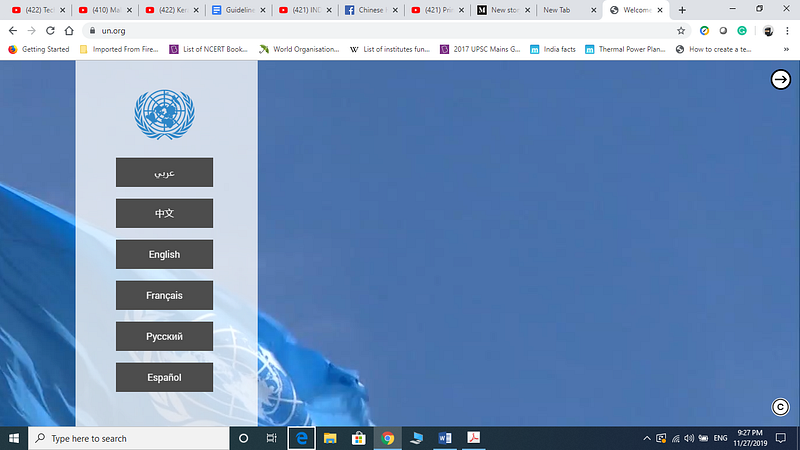
There are significant criteria for accepting a source. The Biggest, the Best unbiased source will be any UN report. Simple as it is put, any UN resolution, a UN speech, a UN news cutting etc is the best source. Why? Because the UN is acceptable to all the members and the UN is far more unbiased. Where would you get them? — un.org and select ‘English language’. Easy to remember right!
UN site is far the biggest individual website on earth, having countless UN resolutions, documents, speeches etc. It has different wings like news.un.org. and docs.un.org. It also contains international treaties, UN charter, conventions etc.
Other credible sources are International Organisation Reports like from NATO, Amnesty, OIC, Arab League, OPEC etc.
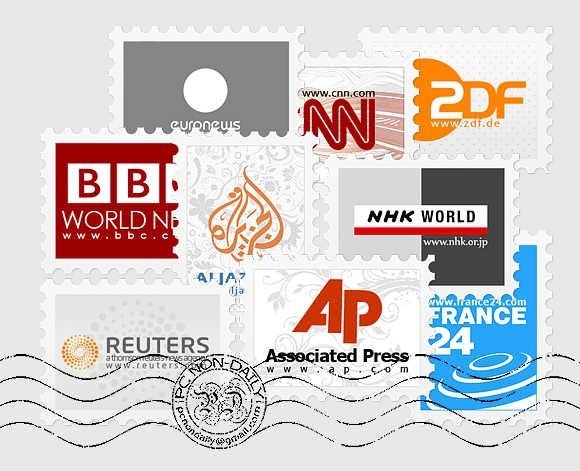
The next on the list will be the Reuters News Agency. It is a news agency based in London. You can download their app or follow their Telegram Channel. Disclaimer- Reuters is not accepted by any of Arab Nations and Majority of Asian and African countries including India. After Reuters, you have Al Jazeera which is prefered for reports on Asian, African and the Middle East. It is a well funded and well run Govt. of Qatar enterprise, a vocal critic of the Saudi led coalition. It has an app, telegram channel and youtube channel for sharing info. It has is a 24x7 run news channel too.
Then you will have one of the most important: State News Agencies- The primary Government-owned news organisations which produce the news in favour of your country. Most notable state news agencies are PTI of India, IRNA of Iran, RIA of Russia, AFP of France, BBC of UK etc. There are still restrictions on usage of these sources, when there are a lot of UN reports against your country or when some other countries are against your stance.
Last but not least, some other news organisations like AP, FOX, CNN, NDTV, DD, The Guardian, etc. — their usage is fully on the discretion of the EB.
Summarising on the credible news part- The order of decreasing weightage of credible news-
- UN source
- International Organisations
- Your own State-Owned Newsagency
- Reuters/Al Jazeera
- Local News
Remember-
- Wikipedia is not accepted as a valid source of information unless you have proper citations
- Quoting from any source during the speech, accusing each other is allowed
- You can deny the Reuters reports if it violates your foreign policy (Like India has been rejecting its studies on women’s safety and Kashmir)
- Have enough materials kept downloaded
- Better to cite sources then and there
- For Indian committees: All Govt — central and state reports are valid
- Reports of RBI, NITI AAYOG, etc can be used in Indian committees
How to know your country’s Foreign Policy?
Foreign policy is indeed a tough nut and is the core of MUN. You owe to defend your country even in the worst circumstance. So the best way to understand is by checking out your country’s past voting stance in the UN and the speeches made by its diplomats. Also, listen to the public stance taken by the country. Trump has taken action against JCPOA and the Paris Deal, which is the official stance of the US.
You will also get opinion based PDFs or news articles on the various stance taken by the countries.
The role of the United Nations is to set the mental clocks of the world leaders from past problems to the present opportunities and from local power mindset to global welfare mindset. — Rohith Santhosh, the prominent Chair for AIPPM in South India
How to make a resolution?
Documentation or making a resolution is very much important. It will contain the hard work of your entire committee time in a small document. Documentation can be of two types- Position Paper and Resolution. Here, you make a resolution, which contains solutions. Those solutions which side your stance is preferred. Solutions are individual ideas which help in solving the issue. You will get those ideas from past resolutions or you can think something innovates from the existing framework like- Deploying a UN mission, sending a UN team, a ceasefire etc. Try to make resolutions easy to understand and short. Add points from PDFs, of various NGOs which have worked on the ground to solve the situation or from some research paper. For preambulatory clauses- Work purely based on past UN resolutions.
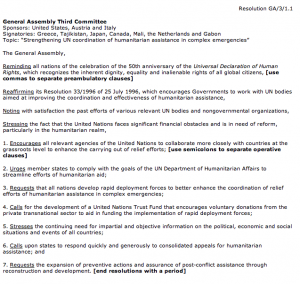
For position paper, your background research on the agenda, as well your country foreign policy is enough. Look into things like Communique, Press Release, Directive etc for Crisis Committee. Working Paper is a popular document which is to be submitted prior to DR.
Read more on documentation-
Extra tips
Model UN is a good app which has ROP, details of various conventions, factbook, NGOs, etc. Be sure to download it. Use laptops for this, the phone is cumbersome in all this.
Also, a site named bestdelegate.com is ideal for a newbie/first-timer.
For IP journalists, have an idea of all the committees, have questions prepared beforehand, learn to write op-eds and reports as well. Better to have digital reports, so carry in a laptop.
Try to quote from reports and have a connection of it with the UN Charter every time you make a speech. You get good points for the same. Try to ask maximum POIs, based on your initial research as well as your dynamic knowledge.
Always read the Background Guide for understanding the agenda and knowing what the Executive Board expects out of the committee.
Chits do have their own weightage, but making the same point on the chit and speaking the same thing have a different impact on the committee, so try to make strong points via speech.
If MUN is a dish then reasearch is the key ingredient for a successful receipe. - Nebu Titus, Prominent MUNner in the Kerala circuit
A must-carry to MUN every time
- A copy of the UN Charter
- A copy of the Indian Constitution for Indian committees
- CIA Factbook
- ROP guide
- List of Preambulatory and Operatory Phrases (Available in our blog)
- Website of your UN council
- Speeches of your country in UN councils and of Parliament or Press conferences for Indian committees
- Apps/guides
- Written chits with POIs
Try to move beyond what is mentioned in the Background Guide. Utilise every second which you get for research. Have prior knowledge about the agenda and sub-topics; call more motions. Have the materials, filtered and ready. Note down important points, highlight important points in PDFs and most importantly be confident and perform well.
.
.
.
Follow us on medium for more for International events, news, MUN guides and detailed analysis. Follow us on Social media to stay in the loop- Facebook| Instagram|Telegram Channel |Youtube|Twitter. We also invite guest writers to publish their material via this blog!