
How To Do Nothing
“We live in a world that has been pulled over our eyes.” — The Matrix
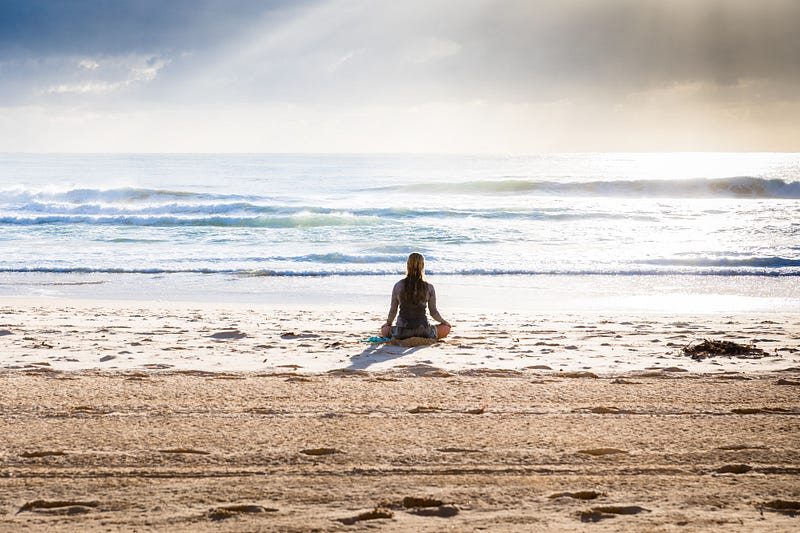
Among all the things we do, the hardest is to do «nothing». Not think, read, or distract yourself, but simply sit and do nothing.
This is not your fault. The role of religion is slowly diminishing in our society, but the role of belief is, as always, strong. The role of science is now more important than ever.
I remember watching the Apple keynote as an annual ritual when I was 10. I would sit on the carpet in our small condo near Stanford campus and watch the already frail Steve Jobs walk live on stage, in his black turtleneck and holding his fingers together, like a mad genius (which he was). He was a true showman. Even if you were a kid with no money to your name, you’d still watch and learn everything about the latest gadget the fruit company had to offer.
Steve Jobs is not here anymore, and the annual keynote is not what it used to be. But the idea that next year is going to be better is still here. We’re still — even if with less eagerness — waiting for the new gadget to come out. For the new iOS update. For the new app. For the new new thing.
And we believe that progress is what drives humanity.
If you look at the old 80s and 90s computer ads, you’ll see that their key promise is to make work easier. As if, ‘do more with less.’ (After all, isn’t that the goal of progress?) Forty years since, computers did make the work easier. Easier to work from anywhere, easier to be connected all the time, and easier to get rid of work-life boundaries, and here we are, working all the time.
You see this with the current pandemic, too. It’s easy to feel those boundaries when you come to the office at 9 and leave at 5. But when you’re working from home? You end up working every waking minute.
It’s the same for everybody. You drift from school to college to internships to jobs after graduation, always waiting for a raise and a promotion. And nobody ever questions that general idea that governs our lives: more = better. More money is better than the same amount of money and much better than less money. More responsibility is better. More followers is better. More, more, more. Always more.
More risks, too. It used to be that only the capitalist, the investor, took risks. Today, people are urged to become ‘CEOs of their lives’. Everyone — even if you’re an employee — is an entrepreneur, the ‘captain’ of their life. And if we are entrepreneurs, then our lives are businesses. Relationships are contracts. Time is our main asset. Cash flow is what keeps us alive.
We don’t have friends anymore, we have ‘connections’. We don’t hang out, we ‘network’. We don’t have a reputation, we have a ‘personal brand’. And we treat the only scarce resource we have left to ourselves — time — as capital, by ‘investing’ our time and trying to get ROI.
You can’t spend time doing “nothing”. The ROI of nothing is 0. It’s not ‘practical’.
I think that’s disgusting.
In the words of the modern-day philosopher John Gray, “apart from science, progress is a myth.” Christianity may be taking a step back in western society, true. But we replaced it with a stronger religion — humanism. The belief that the Universe revolves around the human animal. And the belief that progress is the path to salvation and eternal happiness.
Progress is our new religion.
And like with any religion, it’s deeply ingrained in our social dynamics. We feel guilt when we don’t work enough hours. We are ostracized if we stop paying our dues to progress. Try relaxing just for a second, and people will label you a ’slacker’ and say you’re wasting your life.
This has never happened before in human history. As John Gray writes, in all history and pre-history of humanity, excessive work was seen as a vice. Only slaves worked themselves to the bone. Today ‘hustle’ is a virtue. Just take a look at that deeply depressing Fiverr ad.
It’s progress that’s causing global warming, melting ice caps, political drama, extinctions, trade wars, burnouts, inequality, organized crime, mental illnesses, and general unhappiness of the population. If progress is supposed to make us happier, richer, and better as a collective — why aren’t we there yet? Why are we working more than we used to but having less our ‘us’ to ourselves? Why is more GDP better than the same amount of GDP? Why do you need to make more money next year, even if you have enough to keep your family fed and under a roof?
Because progress leads not just to better tools, gadgets, and standards of living, but to more people. And to sustain that increasing population (and debt) we need to grow. Constantly. John Gray said that the only way to stop the progress of humanity is to limit its numbers. And that, of course, won’t happen. The worst thing about progress is not that it’s a myth, but that it’s endless.
I am not a philosopher, nor a politician. It’s not my job to know what’s best for society. My job as a writer is to notice things and to write about those that are worth it. And when it comes to progress, I think it’s not about political agenda, but personal choices. We need to wake up, look around, and see that we’re living in a Matrix.
You live in a world that has been pulled over your eyes.
Progress is just another human belief. It’s a relatively new belief too, so it actually might be wrong. We need to reconsider how we live our lives. We need to find a new purpose than simply to have everything — from GDP to our bank accounts — grow. As epidemiology and microbiology teach us, if something grows unchecked it’s either cancer or a virus.
There are two obvious ways to go about handling progress on an individual level. The first is to shut away from society and become a hermit. To give a resounding ’fuck you!’ to progress. (That would be nice.) The second is to keep participating in it and continue living in denial.
But there’s also a third way.
Instead of shunning yourself from society, or keeping things the way they are, you can still participate, but in the ‘wrong way’. You can make personal lifestyle choices that will help you live a more sane life, and inspire others by your example. True rebellion is not in running away, but in staying and actively refusing.
This is where minimalism and slow living teachings come in. But you don’t have to sell your house and live in a tent drinking green tea with your 50 belongings. It’s OK to be honest and understand what’s enough.
How much is enough?
When you know what’s enough, you become aware of moments when substance and deeper meaning give way to mindless pursuit of more. You let go of guilt when you take a break. You start taking care of your body. You read books instead of tweets. You find ways to battle boredom and anxiety. You take advice from Plato and make your meaning of life contemplation — understanding the nature of things. You do yoga. You breathe. You learn to see.
And unlike most people who rush towards an illusionary future, you learn to stop, think, reflect, and, finally, do nothing.


