
How To Dismantle The Racial Hierarchy V: Mental Health
We must view delusional behavior by large groups, and the unflinching political encouragement of such, through the lens of desperation; a frantic grasp to preserve the Racial Hierarchy by any means. The massive disconnect from reality underscores, all the more, the indisputable truth that the manipulative power of the Racial Hierarchy will never be exhausted because its vigor supersedes prudence; it is a legacy of evil that relies on the lever of human emotion.
The moment you declare yourself a member of any racial group, you fall prey to the Racial Hierarchy.
The psychological and behavioral ramifications of living with a “racial identity” creates victims out of all who ascribe to it, regardless of skin colour. If you are white and identify with the superior position on the hierarchy, you are easily manipulated to support a politic whose only allegiance is to sustain family wealth behind corporate conglomerates. These politicians use the emotional appeal of the Racial Hierarchy to garner your support. At the same time, you bear the psychological costs of your racial identity with a potential for paranoia, social phobia, anti-social and delusional behaviors compounded with chemical addiction and sustained poverty. A state of psyche-dysfunction is prevalent.
Similarly, if you are non-white and consider yourself a member of a racial group, then you too have placed yourself on the Racial Hierarchy and live with an identity defined by “racial subordination” to the superior racial group. Recall in a previous installment of this series that the language of the Racial Hierarchy is white supremacy and the language of white supremacy is race in all its iterations. Living with an identity defined by “racial subordination” carries significant psychological baggage which may also lead to psyche dysfunction, assimilation, genocidal and homicidal acts, depression and anxiety disorders; mainly trauma and chronic stress, self-medication and ultimately neurophysiologic compromise (see the seminal work of Dr. Jules P. Harrell here and here). See the discussion of Racial Trauma below.
In essence, the benefits derived from dismantling the Racial Hierarchy extend far beyond more apparent sociopolitical and economic borders to further encompass constellations of chronic and devastating mental health issues that impact all groups irrespective of skin colour and assigned placement on the hierarchy.
The third installment of this series defined racism as white supremacy in action or as an identity endogenous to superior placement on the Racial Hierarchy. In this fifth installment of How To Dismantle the Racial Hierarchy, racism is further deconstructed as the behavioral manifestation of a white “racial” identity where ones identification with a white “racial” group presumes a prevalence of superiority in all forms of interaction with other “racial” groups.
White racial group membership compels psychological projection and the Racial Hierarchy informs the projective content. White supremacist, in particular, manifest an identity that projects inner beliefs, attitudes, presumptions and fears onto distinct others. These individuals are vulnerable to episodes of cognitive (racial) dissonance and surrealism when the behaviors of distinct others do not compute with their pre-judged expectations. The Racial Hierarchy allows them to fill the dissonant void by creating an alternative reality to counter what can not be accepted as real (e.g. Obama did not get a degree from Harvard or all Black’s with college degrees only got them because of Affirmative Action).
In this regard, the cognitive response to racial dissonance enables a pattern of false beliefs, aka delusions; judgment is impaired because the internal process of re-establishing psychological equilibrium is contingent on converting the irrational into something that is falsely rationale.
Anti-racism, to be effective, translates into disavowing white racial group membership through a therapeutic process that re-defines ones identity (more about this later). Effective anti-racism also includes recognizing the persistent state of group inequity as a function of allegiance to the Racial Hierarchy. The initial step in the therapeutic process is acknowledgement; the Racial Hierarchy must be re-cast for what it is, what it represents, and the manner in which it permeates human life from the cradle to the grave.
The behavioral manifestation of white “racial” identity conforms to a confluence of modern psychiatric nosology for Social Phobia, Paranoia and Antisocial Personality Disorders. These selected criteria are merged and modified to form clinically applicable nomenclature under the proposed heading of: Racial Pathology.
Racial Pathology is defined as a pattern of pervasive distrust and suspiciousness of ethnically diverse others such that their motives are interpreted as malevolent. Individuals with this disorder demonstrate a pattern of disregard for, and violation of, the rights of others from population groups distinct from their own. Additionally, these individuals frequently lack empathy and tend to be callous, cynical, and contemptuous of the feelings, rights, and sufferings of others.
These individuals tend to be attracted to authoritative figures whom they view as parental surrogates. Their fixation on these figures renders them highly susceptible to manipulation and cult-like psychological fantasia.
Individuals with Racial Pathology exhibit a strong need to establish complete control in interactions with ethnically diverse others and assume a self-justified empowerment that entitles their right to constantly question and challenge the whereabouts, actions, and intentions of these others.
These individuals also tend to have an inflated and arrogant self-appraisal and may be excessively opinionated, self-assured, or cocky.
Individuals with Racial Pathology express belief in racial pseudoscience that is most frequently articulated as justifiable fact or knowledge. This behavior is relied upon to reinforce stratification on the Racial Hierarchy particularly when the individual perceives a “distinct other” as a threat to their state of “racial” status and well being.
A fundamental aspect of Racial Pathology is that these individuals assume that others, from population groups distinct from their own, will exploit, harm, or deceive them, even if no evidence exists to support this expectation. They suspect, on the basis of little or no evidence, that these others are plotting against them and may attack them suddenly, at any time and without reason.
Individuals with Racial Pathology often feel that they have been deeply and irreversibly injured by ethnically diverse others even when there is no objective evidence for this. They minutely scrutinize the actions of ethnically diverse others for evidence of hostile intentions, and any perceived slight serves to support their underlying assumptions.
Because they are constantly vigilant to the harmful intentions of ethnically diverse others, they very often feel that their character or reputation has been attacked or that they have been slighted in some other way.
They are quick to counterattack and react with anger and aggressive acts (including violence) to perceived threat or insults. Individuals with this disorder may be pathologically jealous and may gather trivial and circumstantial “evidence” to support their jealous beliefs.
An essential feature of Racial Pathology is a marked and persistent fear of ethnically diverse others. These individuals experience an excessive or unreasonable fear when in the presence of, or when anticipating an encounter with, ethnically diverse people. There often appears a positive correlation between the intensity of the fear and gradations of skin tone (i.e., the darker the skin the greater the fear).
While mature adults recognize that the fear is excessive or unreasonable, the associated diagnoses of Delusional Disorder is added for adults who do not mature to recognize that their fear is excessive and unreasonable. In some people, insight into the excessive or unreasonable nature of the fear tends to increase with age.
With regard to associated features, individuals with Racial Pathology tend to have a self-imposed sense of superiority, which serves to justify their need to have a high degree of control. But at the same time, this ‘sense of superiority’ is artificial and serves as buffer to actual feelings of low self-worth or self-esteem.
When around ethnically diverse people, individuals with Racial Pathology are often rigid, critical, and unable to collaborate. They have great difficulty accepting criticism and tend to blame ethnically diverse others for their own shortcomings.
Individuals with Racial Pathology seek to confirm their preconceived negative notions regarding ethnically diverse people or situations they encounter, attributing malevolent motivations to others that are projections of their own fears and insecurities.
They may exhibit thinly hidden, unrealistic grandiose fantasies, are often attuned to issues of power and rank, and tend to develop negative stereotypes of the population groups distinct from their own.
Attracted by simplistic formulations of the world, they are often wary of ambiguous situations. They may be perceived as “fanatics” and form tightly knit “cults” or groups with others who share their paranoid belief systems.
Racial Pathology may appear as the premorbid antecedent of Delusional Disorder. Individuals with Racial Pathology may also develop Major Depressive Disorder and may be at increased risk for Agoraphobia and Obsessive-Compulsive Disorder. Alcohol and other substance abuse or chemical dependence frequently occur.
The most common co-occurring personality disorders appear as Anti-social, Narcissistic, Avoidant, Schizotypal and Borderline.

Recognizing the prevalence of the Racial Hierarchy and the consequences of a “racial” identity endogenous to the superior position, re-conceptualizes racism (i.e. white supremacy in action) as a form of mental illness that operates at both individual and systemic levels.
A designation of Racial Pathology allows lawmakers to recast consideration of policy through filtering an absence or presence of pathological elements inherent to the policy under examination.
A designation of Racial Pathology also allows mental health providers a platform for research and development of therapeutic intervention in clinical practice not only for those who manifest this disorder, but for non-white victims suffering Racial Trauma as well.
There exists a paucity of research and interventions designed for the non-white victims of Racial Trauma. At the forefront of research in this area is the exemplary work of clinical psychologist, Dr. Juliette McClendon.
In addition to the blunt, in your face, racist acts that lead to Racial Trauma, the present installment opens another avenue of inquiry. That is, considering the effects of the Racial Hierarchy on human behavior, it would seem that individuals most vulnerable to suffer malignant Racial Trauma are those that see themselves as bi-racial, multi-racial, trans-racial, or those whose identity incorporates any non-white racial group bearing. This is because the indelible presence of the Racial Hierarchy, fused with a non-white “racial” identity, can only be deleterious to self-esteem.
Self-esteem is a fundamental human need at all stages of development that affects one’s level of achievement, ability to adjust to environmental demands, and general state of well-being. Self-esteem refers to the perception the individual possesses of their own worth.
Self-perception as a member of a non-white racial grouping, places, by default, that individual on the Racial Hierarchy. This self-imposed stratification on the hierarchy allies with an identity that is subordinate to the superior position. In this manner, by any claim of racial group membership, the individual self-indoctrinates the dehumanizing, denigrating properties of the Racial Hierarchy; a most insidious psychological process.
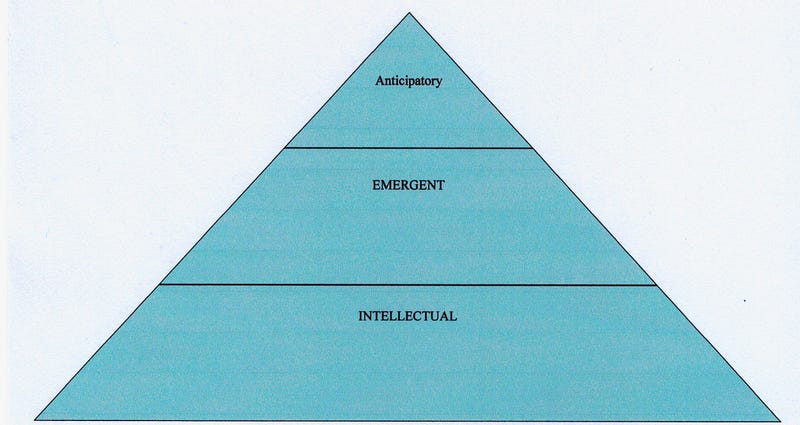
Mental health issues that stem from the Racial Hierarchy require metacognitive therapeutic interventions designed to re-define ones identity; that is, transition from an identity steeped in the artificial construct of race that, by its manufactured nature, is pathological by design, to an organic identity rooted in anthropologic reality under professional therapeutic guidance. From a clinical therapeutic perspective, the search for ones organic identity is a process of transition from intellectual to anticipatory realms of individual awareness.
Preserving the Racial Hierarchy Rises Above Preserving American Democracy:
At present there are nearly 300 disorders listed in the Diagnostic And Statistical Manual of Mental Disorders Fifth Edition (DSM-5). Not one of them address racism. As the DSM-5 represents the vanguard for the current state of guidance for professional mental health practice, its medium reflects total disregard for the most pressing and chronic behavioral malfeasance the world over.
Because psychiatric nosology does not include nor recognize any form of behavioral aberrance caused by the Racial Hierarchy, clinicians that work with under-served Racially Traumatized populations must find guidance elsewhere, as professional mental health organizations remain ill-prepared to address the affects upon mental health wrought by this man-made scourge.
This unfortunate state of human despair will not find relief on a global scale until professional mental health organizations finally muster the courage to acknowledge, recognize and expose the Racial Hierarchy as centerpiece to an effective centuries old method of psychological perversion; as a sustained course of human annihilation accomplished through wretched mind control.
This makes all the more relevant the compelling insight of the late African-American psychologist and Howard University Professor Curtis W. Banks regarding the revolution of science:
- When the state of the art in a discipline is overturned, the ensuing crisis inevitably finds most of its practitioners napping. This is in part because the state of the art is normally quite advanced before its failures accumulate sufficiently to compel its decline. By that time its conventional modes of practice have become so commonplace that its adherents hardly pay attention anymore; and if they are caught unaware by its overthrow, it is as much because the old conventions are so boring as because their demise is so sudden.
Thank you for reading.
Next: How To Dismantle The Racial Hierarchy VI: Resolution.
© 2021 Andrew P. Brown III, PhD. All rights reserved.