
How To Deal With Your Mixed-Race Child’s Hair
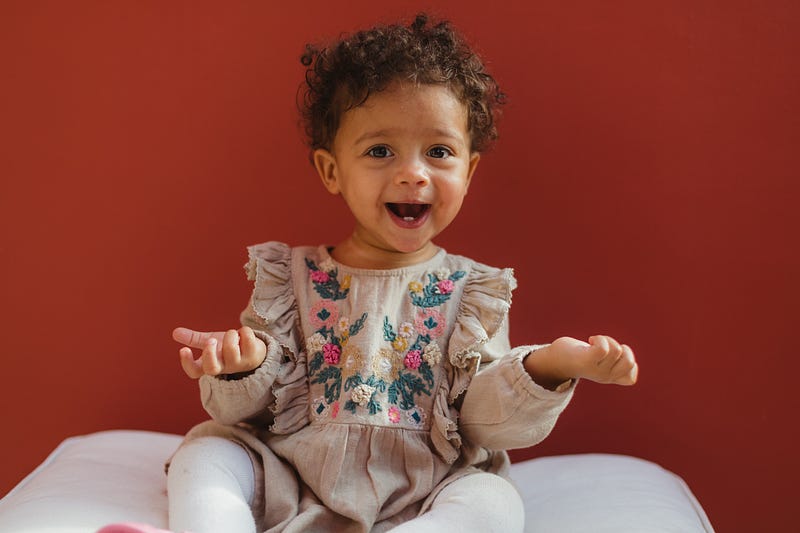
Whenever I meet up with the parents of mixed-race children, the question of hair always comes up in the conversation. It does sound a little odd that given the millions of things going on in the world, hair is a main topic of conversation, but you would be surprised at the ways in which the hair of mixed-race children can become a source of concern, frustration and even conflict for many interracial couples.
So why all the fuss? If your child has loose, silky flowing curls, no need for you to read any further. They’ve inherited the “good hair” gene as some of my black girlfriends call it. It as though your child has won the lottery. They’ll be lots of lots of professional options to get your child’s hair taken care of. Don’t worry. You’ve got this.
Does your child have tight afro curls?
If your child has tight afro curls, that’s another story. White hairdressers will flat outright tell you that they do not have the skills to cut and style that texture. And that in itself is frustrating.
I mean black and mixed-race people have been around since the dawn of time. We are not a new specifies. So how is it that white hairdressers still haven’t acquired the skills to cut our hair? Even from a purely economic standpoint, it would make more business sense for them to cater to a black or mixed-race clientele, but sadly, a majority of them do not.
As a black or mixed-race person, you need to do thorough research before approaching a white hair salon
The simple convenience of walking into a hairdressing salon to get a quick trim of your loose ends is something that most black or mixed-race people cannot do without loads of robust Ph.D. style research and investigation about the salon they are walking into. It’s a tad bit ridiculous when you think of it.
Let’s come back to our initial topic of mixed-race children’s hair. If your child has a tighter afro curl, black hairdressers will often advise texturizing the hair to make it softer with a looser curl, straightening the hair with a hot comb for easier manageability, or putting the hair into braids.
For some parents, texturizing may not be an option due to the chemicals it might expose your child to. Using a hot comb on an agitated baby or toddler simply isn’t advisable, and braids may be too tight and painful for the sensitive skull of young children. So what options does one really have?
I had to find my own solutions to manage their hair
As the parent of mixed-race children, I have taken it upon myself to self-educate on their different hair textures — which is very different from each other and from my own by the way. I have had to find my own solutions to manage their hair.
Afro texture hair is dryer than caucasian hair so I tend to wash and condition their hair once a week. I use products that contain naturally softening and rehydrating agents like cocoa butter, argan oil, shea butter, or almond butter. I always use a conditioning or leave-in detangler after shampooing because I find that tight curls are much more knot-prone than loose curls. Consistent detangling then makes the hair easier to comb and style.
Loose braids can keep hair easily manageable for days
I’ve spent a lot of time researching brands that can soften and elongate tight curls without all the chemicals. Carol’s Daughter, Shea Moisture, and The Body Shop have some very interesting organic options that deliver excellent results time and time again. But be sure to test these products on a little patch of your child’s skin first — many of these products are nut-based and can trigger serious allergies.
I also find that putting the hair into loose braids every evening can keep it soft, hydrated, and easily manageable for days.
As my children have gotten older, and now more often than not take care of their own hair, I often wonder why when they were younger, managing their hair fell on our shoulders as an interracial couple. Few white parents bare that responsibility.
Why do interracial couples have to carry this burden?
I mean I do have some beautiful memories of my husband struggling to manage my daughter’s tight afro curls as we rushed out the door most mornings, but jokes and memories aside, why was this our burden to carry?
I know that when one refers to systemic racism, one speaks about the structures in society that work to oppress black and brown people. Say for example, if you don’t live in a good neighborhood with schools that prepare students for the college entrance SAT exams, chances are your child won’t perform well in his/her SATs and will not easily get into an Ivy League School.
And yes this is far graver than not getting a hairdresser to cut your hair, but that feeling of being excluded or uncatered for is still the same.
White society caters to the needs of white people
As a black person living in the Northern hemisphere, you are a lifelong spectator in a society where white people are treated better than black and brown people — where white society caters to the needs of white people and the rest of us can go become makeshift hairdressers or dermatologists if we’d like. Don’t even get me started on the topic of dermatologists for black or brown people. There is a truckload of content there for a whole new post.
But really seriously, why is something as basic as getting a haircut so damn complicated. And aside from this, what is the underlying message: black hair is a black person’s problem, so they need to manage it. But why should that be the case? If a business provides a service, it should be able to provide that same service to everyone regardless of race. If being a hairdresser is your calling, then learn how to cut different textures of hair. If you’re going to be a dermatologist, then learn to diagnose conditions on all types of skin color.
Hair is important, it’s a part of someone’s identity
Hair is part of someone’s identity — and caring for someone’s hair is important in how that person builds that identity. If hair care is a constant hassle, it makes you think negatively about your hair. It makes you feel that you are different, that you don’t belong. It makes you feel excluded.
The difficulty in finding easy, convenient solutions to manage afro hair leads many to despise their hair and in a way, a part of themselves.
As an interracial couple, it is important to get your child to love his/her hair. Yes, it may have a different texture, structure, and curl pattern, but it is still an inherent part of them that they must learn to love.
As parents, we have an important role to play in this process by building positive routines around hair care in the home and refraining from complaining about the manageability of certain hair textures. Our children need to love themselves — hair included.