How To Deal with Weapons of Mass Distraction

You now have free and instant access to all of humanity’s knowledge in your cell phone and on your screens.
You follow countless geniuses, entrepreneurs, thought leaders, celebrities, investors, and philosophers who constantly share their insights and wisdom with you.
You are witnessing a Cambrian explosion of intelligence where everyone is a blogger, video maker, entrepreneur, teacher, storyteller, and content creator.
Yet, everything feels exhausting and your attention span is now shorter than a monkey’s. You are surrounded by “weapons of mass distraction” that threaten your mental wellbeing, productivity, creativity, and wealth.
You see the worrying signs everywhere:
- You receive hundreds of emails every day, and your phone is prompted with updates, notifications, calendar alerts, meeting reminders, and messages every God damn minute. You end up checking your phone 100+ times every day. 100+ distractions that actually cost you a fortune.
- You have more than 80 tabs open on your Chrome browser, and you are always lost among them.
- You are tempted by too many Medium articles (with bombastic titles), best-seller books, online seminars, training programs, workshops, talks, and lectures than you can keep up with.
- You would like to catch up on 100+ novel films, videos, and series on Netflix, Disney+, Hulu, HBO Max, and YouTube, and you are experiencing FOMO when your friends mention things you have never heard of.
- You are distracted when you are in the bathroom, when you are about to sleep, when you wake up, commute, and even when you walk on the street. Look around you — this is an epidemic: More than half of other pedestrians are also buried in their phones.
- When you are tired and vulnerable, you start with a bit of Netflix and you find yourself binge-watching an entire season of your favorite drama.
- You then do a bit of scrolling on Instagram, and you have spent 35 minutes before you know it.
- A bit of TV, Facebook, news, Internet, Twitter, YouTube, LinkedIn, gaming, and WhatsApp. Even if each takes 10 minutes, you end up spending an hour already.
- The worst offender is TikTok because its algorithm devours you and you are completely buried in it for 45 minutes without even realizing it. Your attention span is now shorter than a monkey and your brain now wants more dopamine, distractions, fun, weirdness, surprises, and joy than a monkey. You are completely defeated by the monster of TikTok — what were you doing by the way?
Hello, I am Fahri. I am addicted to my phone and computer. My brain is saturated with an endless stream of feeds fueling my compulsive need for dopamine. I reach for my phone the moment I am alone, bored, or anxious. When I try to limit my use, I relapse after a day or two. My phone is no longer something I enjoy, instead, I am virtually compelled to use it. Honestly, I have difficulty falling to sleep and I feel depleted most of the time.
I cannot be the only one who is addicted to his cell phone and screens. Do you experience similar things?
We are living in an age of:
- information overwhelm, knowledge explosion, and acceleration,
- FOMO (fear of missing out) and social media craze,
- FONKU (fear of not keeping up) and constant anxiety,
- Decision fatigue (too many choices),
- Dopamine addiction and infinite scrolling (there is just too much),
- Nomophobia (the fear of going without your phone) and phantom vibrations (the feeling that your phone alerts you when it does not), and
- Attention deficit and endless distractions
This is quite a blizzard, unlike anything else we witnessed in the history of humanity. It is quite natural that you feel overwhelmed, anxious, and dizzy. Well, let me give you the bad news: You will witness even more acceleration and overload of knowledge in the next couple of years. How do you cope with such noise, overload, and insanity?
Practical Strategies for Dealing with Weapons of Mass Distraction
In the remainder of this article, I will share with you my personal strategies and practices to cope with weapons of mass distraction. Using the strategies below, I have been able to both keep my sanity and increase my productivity.
1. Spend 5 minutes on meditation, relaxation, and mindfulness.
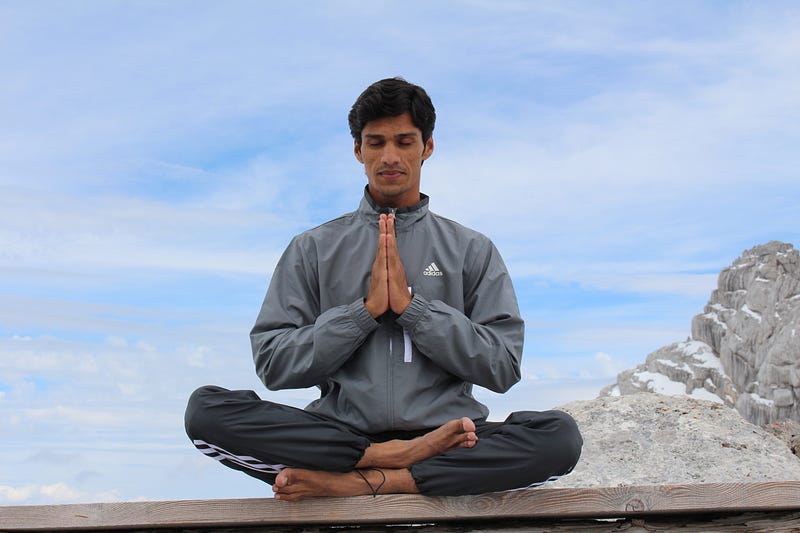
Spending just a couple of minutes on deep breathing, relaxation, and mindfulness will do wonders for you. It will improve your mood, creativity, and productivity at the same time.
Find a quiet place where you will not be disturbed. If you have access to a garden or an outdoor space, even better. Look at the sky and take the deepest breaths that you can take. Breathe as if each breath you take is the most precious thing that you can have. Inhale for 6 full seconds, hold your breath for 4 seconds, exhale the air slowly for 6 seconds, and get rest for 4 seconds. Repeat this exercise 6 times for 2 minutes. You can continue longer as you wish.
Improve your posture. When you breathe, make sure your belly is moving up and down, be mindful of what goes on in your body, and acknowledge your thoughts. When your mind moves away with thoughts, gently bring your focus back to your breath. Be grateful for each of your breaths, and think of each breath as a gift to you.
Flex your arms and legs fully to feel more alive, and then relax them completely. Apply the same flexing and relaxing strategy to different parts of your body, such as your face, your shoulders, your stomach, and your feet.
Notice all sensations, feelings, and thoughts that you are experiencing. Label them without judging them or trying to change them. Whenever you realize that your mind is no longer focused on the present, turn this into a moment of awareness and shift your attention back to your breathing.
If you have the opportunity, take a mindful walk and give your full attention to the practice of walking. How do you feel the ground beneath? What are the things that you observe around you? How is the weather? Notice the sights, sounds, and smells as you move.
Whenever you are overwhelmed, focus on the present moment only. Take it one slice at a time. Do not think about the past or the future. Try to be more present and attentive. Think about what you need to do right now and in the next few minutes. Even if you are facing an enormous challenge or you are working on a very difficult project, you can break it down into small pieces. Focus on what you can do right now and start by tackling the smallest task in front of you. After you start, focus on the critical few tasks that really matter. If you survive today, then celebrate yourself and start again tomorrow. What can you do to increase your focus on the present? Identify small actions and write below.
2. Have laser-focus on your strategic priorities, and ignore everything else.
With so many distractions around, you need to be absolutely clear on what your true priorities are. Always prioritize your action: What is the top one thing that you need to focus on right now? What is your most important and urgent priority? What would you do if you had only two hours to work instead of 9-to-5? Focus on that urgent and important matter — ignore everything else. Do what is in front of you — eat that frog first thing in the morning. What is the most important thing? Why? Focus on that one thing only.
Do not multitask since this is not good for your brain. It is impossible for the human brain to multitask the act of paying attention. When you have more than one thing to pay attention to, your brain shifts attention between the multiple tasks. Your subconscious attention processes environmental information outside of your awareness, but this is costly to your mental wellbeing, focus, and productivity.
Learn to say no. You do not need to accomplish everything. Do not waste your time on things that are not a good fit for you. Ask yourself: Is this really a must? Can you let it go? Why? Choose tasks or projects where you can capitalize on your strengths and shine. How can you use your best skills, talents, and curiosities? Let your enthusiasm and passion drive you.
You need to learn how to subtract the inessential from your life. Eliminate mental clutter and replace it with mental clarity. What is most critical? Why? When you start your workday, do not have ten things to do. Identify your true priorities. Do not have more than 3 priorities.
After specifying your true priorities, you need to take prompt action. If you feel anxious about too many choices and possibilities, you need to start from somewhere even if it might not be the perfect solution. Any action is better than no action — you need to take some risks and conduct some experiments. Mistakes and failures are OK — as long as you learn from them. If your ambition is too big, always break it into parts and make a to-do list. Start with small actions to make progress on each part. When you feel paralyzed, get out of your ruminations. Get out of your head, focus on the task on hand, and do something real.
3. Build a failproof environment and system for yourself to prevent distractions.

You need to design your environment for focus, productivity, and success. This means making sure you have everything you need close to you while eliminating any factors which may distract you. Clear away all the things that would compete for your attention, and close the extra tabs that you do not need.
Establish a system to be creative and productive, and try to create positive work habits. One of the biggest killers of productivity is weapons of mass distraction, and you are surrounded by them (YouTube, email, Facebook, Instagram, TikTok, LinkedIn, and many more). Consider using timers or the Pomodoro technique to schedule your writing and creative practice. Where and when do you work best? Create a workstation or a work environment that you feel comfortable with. You can cultivate creative and productive habits in the comfort of your own house.
Remember that creativity is situational, and it can be cultivated. I recommend you to create 20 new and fresh ideas about money, career, work, or your future every day. Write them down. Make this exercise a positive habit. Your brain loves puzzles. Approach your work from fresh angles and borrow from unrelated fields, practices, and domains. Surprise yourself.
Do not wait for inspiration, force yourself into a mode of instant creation. Start your work of art in five seconds — you will lose your focus and sharpness if you don’t. Remember: One crappy sentence you have already written is better than 10 perfect sentences you will write one day. One small action you have already taken is better than the 10 detailed plans you make. The secret is in instant action and creation — be ready to jump in cold water and immerse yourself in uncertainty or chaos.
Try 2 minutes of deep intentional breathing before diving into work. Work for 35 minutes, then take a 10 or 15-minute break. During these 35 minutes, your goal is to achieve deep work, total immersion, and flow. During the break, switch off completely and do not look at your screens. Effective breaks are essential to your productivity, focus, and creativity.
Put your phone in airplane mode and disable all notifications whenever you are writing or creating something new. Remove time-consuming apps from your phone, and limit your Instagram or TikTok use to once a day. Consider having a digital detox for one or two hours every day, and increase this time gradually. You will start with small positive changes, and compound them over time with a growth mindset.
Keep your phone away from your bed at all times. Make it easy for yourself to read or write in your bed, by placing books and notebooks at your bedside.
Do not expect to get everything right, as you will relapse and find yourself on TikTok without even realizing it. This is OK, as long as you learn from this experience, increase your awareness, and reduce your social media use over time.
4. Recognize that managing your attention is your hardest and most significant job. Learn how to focus and direct your attention.
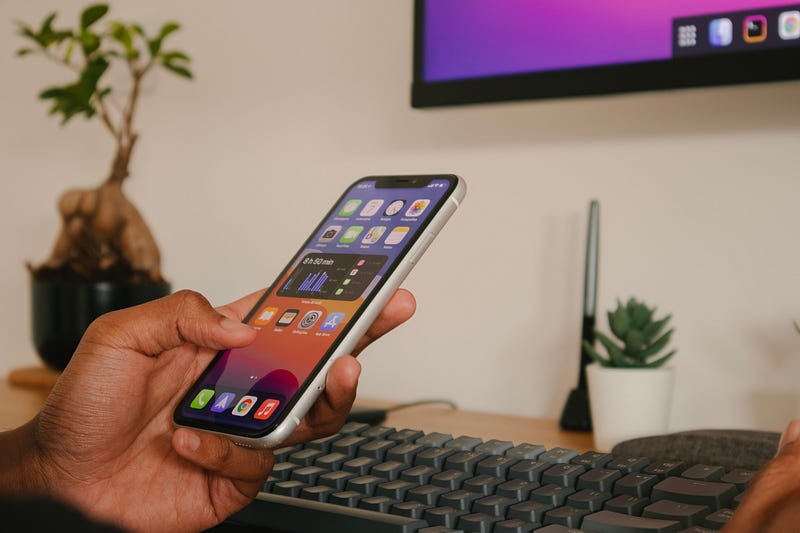
Recognize that attention is your most precious resource, and it can be depleted easily. In fact, your attention is more expensive, scarce, and precious than ever.
Do not waste it on multitasking (trying to listen to a podcast, write an e-mail, scan an article, and eat at the same time, while being distracted by social media alerts and interrupted by a phone call).
Be thoughtful about these distractions: What are you doing? Why are you doing this? For example, go to Netflix only if you know what to watch, go to Instagram only if you know what to check, etc. Stop mindless scrolling.
Your attention is a limited resource and you need to pay attention to one thing: Your top priority goal for the day. Ignore everything other than this goal. Pay attention to why you are excited about this goal, who will benefit from it, and how to turn this goal into a game, and you will be naturally pulled into it by intrinsic motivation. In this way, you will not rely on willpower, as you already have passion and curiosity. After you reach your goal, make sure you take a proper break so that you can rest, recuperate, and revitalize yourself.
Change the wiring and conditioning of your mind: Even if you have 20 minutes, you can make meaningful progress on your goal. You do not need long hours, you just need to make the most of short, but intensive sessions involving immersion and deep work. You need to learn how to achieve deep work by increasing the quality of your focus.
Even if you have lost a lot of time on a given day, you still have agency and control over the remainder of this day. It is never too late to recover and bounce back. I remember creating miracles even after 23. It is a matter of perspective: You can achieve flow even in half an hour. You can create and write effectively if you avoid perfectionism and incorporate fun into your process.
In the crazy TikTok age that we are living in, it is very difficult to control and direct your attention to create or write. When you are writing or creating, you will feel bored and anguished. Your mind nowadays is the mind of a squirrel or a monkey — it will try to escape from the difficult task at hand. The process of writing can be soul-crushing if you do not find strategies to playfully trick your brain into writing and turn writing into a game. Hang in there even if you hate it and it gets difficult or painful.
If you cannot direct the ship of your own mind, others will do it for you and you will be constantly sucked into agendas of others (Silicon Valley tycoons, advertisers, influencers, content creators, filmmakers, storytellers etc.). If you are mindful of your choices, that is absolutely fine. If not, you need to kindly reclaim your hijacked attention.
Be mindful of your compulsive need for dopamine and instant gratification. What distracts you begin to define you, so be careful. How can you channel this need for dopamine into your high-priority work? How can you trick your brain into creating fresh and fun ideas for your work?
Why do you find yourself so eager to be distracted? Is there something deep that bothers or scares you? Are you trying to escape from something uncomfortable or hard? Develop a deeper awareness of your inner self and your emotional landscape so that you will reduce your need to scroll, text, tweet, swipe, or post endlessly.
Go on intermittent fasting on the news and social media — you can decide how long. Accept that you will miss a lot of the news, trends, gossip, fads, fashions, or latest updates. It is OK, and missing out might even increase your mental wellbeing and the quality of your life. Accepting this will calm your nerves, improve your focus, and enhance your mood.
Do not feel guilty about ignoring extra information. When you receive hundreds of emails every day, it is natural that you will miss some of the bits. Not all information is equal — you are better off if you ignore some of it. So you need to filter emails ruthlessly — prioritize and focus only on what matters.
Be very deliberate and mindful about how to invest your time and energy. In the same way, you monitor your diet and avoid junk food, you need to regulate your information diet. You need the wisdom to decide which knowledge is critical and useful, and what is junk and noise. Remember that knowledge becomes obsolete even in a very short amount of time. Use your critical perspective, questioning, fresh ideas, and imagination to design new possibilities. Focus on just a few high-value decisions, actions, or projects. Be clear on what you intend to accomplish and why this matters.
Take a break when you need to. Make sure you get enough sleep and rest. When you are stressed out, try to calm down and take good care of yourself. Cancel one of your tasks on your to-do list and swap it with something relaxing or inspiring. What will help you best? Exercising, meditating, walking, cooking, eating healthy food, dancing, getting a nap, taking a shower, immersing yourself in a hobby… Do whatever will help you feel better. Develop hobbies that feed your soul. Replace the games and social media apps with hands-on, real-world activities, like meeting up with friends, creating music or art, or doing volunteer work.
When you feel overwhelmed, stop and take a deep breath. Focus on the present and develop your mindfulness. Open your notebook or diary and capture your stream of consciousness. Write for 10–15 minutes — go on until you feel better. If you cannot resolve the issues, take a long walk or a relaxing bath.
Takeaways:
- Spend 5 minutes on meditation, relaxation, and mindfulness.
- Have laser-focus on your strategic priorities, and ignore everything else.
- Build a failproof environment and system for yourself to prevent distractions.
- Recognize that managing your attention is your hardest and most significant job. Learn how to focus and direct your attention.


