
ADHD| Clutter management| Decluttering strategies
How to Deal with Clutter if You Are an Adult with Untreated ADHD
Tips for decluttering with ADHD
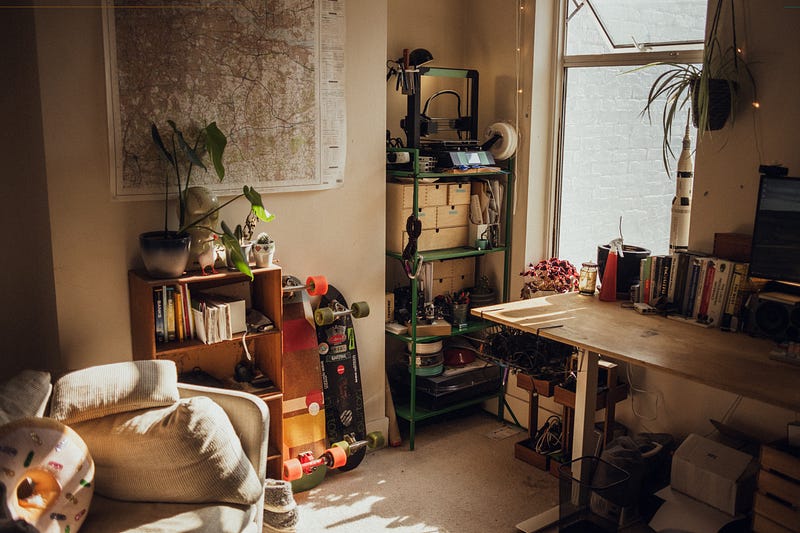
As an adult, I struggled significantly with clutter. It is a common phenomenon to have ADHD without being aware of it, and without awareness, it is challenging to ‘treat’ it. My home was often in a terrible state, with clothes scattered everywhere, unwashed dishes in the kitchen, and random items all over the place.
While I thoroughly enjoy being in a clean environment, I couldn’t maintain a tidy home no matter what I did. Frustration is a frequent occurrence in such situations.
I realized that I probably had ADHD a few months ago, but I didn’t have the financial means to seek a diagnosis. I know this is the reality for many others, which is why I decided to share how I manage to keep my home as organized as possible.
At the first opportunity, you have to get a diagnosis, do it — it will change your life.
To deal with clutter, you first need to consider what causes it.
There are two types of clutter: the clutter that exists in every home where people live, the clutter in motion, and the clutter in stasis.
Let’s take our living room, for example. If you like to read a book in the morning while eating breakfast and drinking coffee, we’ll find three things on the living room table that don’t belong there: a coffee cup, a plate, and a book. This is the clutter in motion, which is typical in every home. However, if, after finishing your breakfast, you don’t put things back in their place, then the clutter in motion becomes clutter in stasis.
You begin to behave as if the clutter isn’t there, as if you don’t see it, and this can happen because your things don’t have a place for you to put them back where they belong.
So, the first step is to buy some boxes, stick labels on them, and start decluttering. My boxes have the following labels: Random items I don’t need but don’t want to throw away, items I need but don’t have a “home” yet, donations, and trash. Now that we’ve prepared our boxes let’s set them aside for a moment, and we’ll use them shortly.
Before we begin the decluttering process, we need to learn how to declutter as adults with ADHD. There are numerous methods, but I’ll share what has worked for me.
After endless hours of watching YouTube videos, reading articles, and trying various approaches, I concluded that what works for me is focusing on one room at a time, more specifically, one area of the room, setting a timer to give myself a ‘promise’ that I can stop after a certain amount of time and stimulate my brain with an audiobook or podcast along the task. Let’s break it down a bit further.
Break it down into smaller manageable areas
The mere thought of having to declutter an entire house or even a whole room can trigger overwhelming feelings and lead to ADHD paralysis. Focusing on a small part of a room can help maintain motivation since completing it won’t take much time. Let’s take the bedroom, for example. Before I begin, I take a piece of paper and a pen, listing down the areas of the room that need decluttering. For me, it usually includes the desk, closet, floor, and bookshelf.
Use a timer
Now that we have identified the areas of the room to declutter, we’ll set a timer for 10 or 15 minutes for each section. I usually go for 15 minutes. The timer helps us focus more on the task at hand because we know we can stop relatively quickly.
When the timer goes off, we have two options. If we haven’t finished decluttering but already feel overwhelmed by that specific area, we can stop and take a break or move on to another area of the room. However, if we still have enough energy to continue, we can set another 15-minute timer. You’ll be amazed at what you can accomplish in such a short period.
Stimulate your brain
If you want to focus while organizing, you can stimulate your brain by listening to audiobooks, podcasts, or music. These aids help maintain concentration during the decluttering process by preventing boredom. Associating ‘boring’ tasks with positive elements can create a positive connection in our brains with the act of decluttering. Besides audiobooks, podcasts, and music that work for me, I’ve heard of many people who call a friend or a family member during the process as a form of stimulation.
Now that we’ve done all these steps, there’s one last step to follow. Very often, when we tidy up a room, we come across items that don’t belong in that particular room. This can lead us to leave the room we’re currently organizing to put that item back in its place. However, this can distract us and lead to failure in completing the task at hand.
To prevent this, we’ll create a physical barrier between ourselves and the rest of the house by placing a box or basket in front of the door. We’ll place all items that don’t belong in the room we’re decluttering inside this box. When we finish the decluttering process and put all items in their place or in the boxes we made earlier, we’ll take the box we placed in front of the door and walk around the house to put everything inside where it belongs.
After doing that, we’ll take the box labeled ‘items I need but don’t have a “home” yet’ and find a place for those items. If there’s no suitable place, we’ll leave them in the box until we create or find a spot for them. We’ll repeat this process for all the rooms in the house.
Now that we’ve cleared our home, how can we keep it that way for as long as possible?
Initially, a mistake I made was adopting an ‘all or nothing’ attitude. However, this only leads to frustration. Setting aside just half an hour in a day to tidy up one-third of the room is perfectly fine. Your future self will appreciate even the small effort you put in. So, quit the ‘all or nothing’ attitude. Set your timer, play your audiobook or podcast, and get started.
Something that changed my life is a hack I saw on TikTok: ‘Don’t put it down, put it away.’ Whatever it is, if you try to place it directly in its designated spot, its ‘home,’ your life will become much more manageable. This is why creating a ‘home’ is essential, even for the smallest items you own.
The last piece of advice might be unpleasant, but throw away or donate as many things as you can. The fewer items you have in your home, the fewer chances for chaos. Embracing a minimalist lifestyle can significantly change your life.
Disclaimer: I am not an expert in the field, and the advice provided in this article is based solely on my personal experiences and information gathered from YouTube videos and articles I’ve come across. While these insights may be helpful, consulting with professionals or seeking expert advice is essential.