
How to: Creating better habits.
Habits are your personal island in a sea of external influence.
If fact-based health, fitness, food, rest, sleep, recovery, and nutrition are of interest, and you enjoy audio-based podcasts then it is time to head on over to our Spotify podcast because STYRKA has launched on Spotify.
This article is available in its entirety on Spotify as episode two.
URL to our Spotify podcast.
External influence.
There will always be external contributors of harmful stress and other poor health outcomes, such as air, water, and food pollution which we have no direct control over.
This is the harsh reality for all of us.
But, it is equally true that we can all mitigate some of that impact through our own habits and daily choices. It is, of course, impossible to stop widespread air and water pollution or a worldwide lockdown as an individual.
Making it next to impossible to completely reverse or mitigate all of the health impacts from these examples of external contributors as an individual. But, a person who is living a healthier life, and has learned to maintain those daily fact-based choices as well as is possible will suffer from less stress, anxiety, and depression from a COVID lockdown for instance.
The same thing goes for the detrimental health outcome of pollution, stress, lackluster food islands, sedentary workplaces, poor sleep, and daily vehicle transportation which will all be less if you are living a healthier lifestyle. Some of these things might still have a detrimental impact, but it will be less severe.
Ergo.
The bad news is that no matter how healthy you are you can’t bulletproof yourself from all bad health outcomes. Coach Mike
But we have plenty of good news to look forward to.
The good news however is that you can and will reduce poor health outcomes by maintaining ( or picking up ) a healthier lifestyle. Sometimes even reversing that poor health outcome entirely.
Sure, medications and other advanced developments can provide additional health benefits, that will further augment the substantial benefits of a healthier lifestyle.
Or at least make up for some of the disadvantages if you are not living a particularly healthy lifestyle, Ozempic is a great, current-day example of this, which I will come back to later in this article.
But the importance of fostering healthier personal habits is immense, and without a doubt more important than ever in history.
So the question remains, how do you go about creating healthier fact-based habits when we are all living in a world of poor health and bad external influences?
Well, that is what I am about to tell you, best of all, every person on the planet can do it.
In the video below Layne Norton talks about the importance of behavior change, I am including it because the fact-based outcome from making science-driven health, food, and fitness choices is what we want to achieve, and we reach those fact-based outcomes by changing our habits.
https://youtu.be/3Q7qRw9j_lQ?si=SIgMyfvI631-zhwZ
When we change our behavior from doing things randomly or from making less fact-based choices with outcomes that are on average far worse, or even detrimental, we create a positive progression that only needs time and repeated consistency in order to create a meaningful outcome.
Forming better habits is a lifelong step-by-step process.
We are all impulsive to a certain degree, and that is a good thing. Humans need both structure and spontaneity. But forming healthier habits demands repetition, either by your own cognitive choice or through a coach, team, or digital service, such as the STYRKA app.
This is in other words where the basics of human psychology come into play. For most people, it is not enough to know about the better fact-based outcome and the choices that lead to that progression.
Most people need a gentle guide that leads them down that road of fact-based progression in order to form better and new habits.
I am one of those who does not need external cues from a teacher, coach, or app if I want to change the way I train or eat, sleep, rest, recover, or live, it is just a choice away for me. Further, I make my choices based on the scientific knowledge we currently have, no matter if we are talking about fitness, strength training, food, recovery, or sustainability.
What can I say, I love science, I love health, fitness, nature, sustainability, human behavior, and creating a fact-based and lifelong lifestyle. I also love helping people.
All combined this is what drove me to eventually become a fact-based coach.
But most people need more than just the fact-based knowledge, they need their coaches, teachers, parents, and apps to provide them with a structured, fact-based road forward.
Yes, I know. Some of you are rolling your eyes by now, and that inner voice ( or perhaps it is that person who is sitting right next to you that´s voicing their opinions) of yours is already saying that you lack all forms of self-control so you can never stick to any change for more than a week or two, no matter how good it is for you.
Now, you are not alone in thinking and feeling this way.
A lot of people feel the exact same way. The thing to keep in mind however is that the process of forming healthier habits is not a one-and-done choice. It is a perpetual process and the first step usually feels like the most daunting one to even try.
This applies pretty much the same to everyone. Be it their alcohol consumption, sleep habits, lack of fitness, or already set-in-stone fitness habits. Food choices, sedentary habits, obesity, overweight, food disorders, endless stress, and perpetual thoughts that runs amok at midnight.
Learning martial arts, yoga, or a new language, changing your job, or just the weekly Friday dinner meal can feel impossible when you consider it.
But its no more or less than a string of small baby steps and you can fail as often as it happens because perfection is not required.
With the above headline in mind, consider this. Displaying healthy amounts of self-control correlates with quite a few positive outcomes: You will usually do better in school, experience less stress, and depression, possibly have better relationships, and on average have better health outcomes, much fitness status, and body composition and experience less episodes with binge eating and sustenance abuse.
This is of course on average because outliers always exist. The main point however is that we can all create that positive change.
The science does not change. So you are not a scientific anomaly. If you are adding excess body fat you are consuming too much nutrition in total relative to what your body and activities need.
But why are you consuming excess amounts of nutrients?
And the answer to that question is the science of human behavior and psychology.
The same thing applies to strength training or weekly yoga progression. The scientific reality that tells you how to eat to build strength and fat-free muscle mass is the same for everyone. But perhaps it is an external influence that makes it too boring to go to the gym.
Or perhaps your partner turns your healthy habits into a conflict zone instead of supporting you.
Perhaps your failure is not that you do not know what to eat. But perhaps it is the simple fact that you always visit the food store after a stressful work day on Friday evening when all you want is to go home, recover, rest, and be all snuggly at home. Which drastically increases the chances of buying snacky indulgent and far worse foods and snacks.
Or perhaps you are living in a household where your partner or family members always buy soda, cookies, cake, and ice cream, and I mean, it is just there in the kitchen waiting for you with its siren song when you get that snack urge while watching Tokyo Vice on Max.
And all this relates to human behavior.
If we have poor food choices readily available at home we will all end up eating it sooner than later. So in order to make it less likely to happen, just don’t buy it in the first place. Or buy less of it, or tell your siblings, parents, or partner to not buy it. And if that example of going to the store after work on Friday rings true, just don’t do it. Try to find a less stressful time of the week to do your weekly food runs.
Perhaps you need a gym buddy who can drag you to the gym or cheer you on. Perhaps a gym class or app that keeps you on track is what you need to not abandon your gym, food, fat loss, and health journey after three months.
For some this is what paying a coach automatically creates, because having your own strength and nutritional coach all year round creates almost like a contract signed and sealed by you with yourself.
It is like you have been recruited by a pro team and you just don’t want to fail your team. Simple human behavior science which we can apply to ourselves, or our clients.
Coffee is the same thing.
We love coffee, we humans that is. Some more than others, but on average people love their caffeinated drinks, and no wonder. Coffee works, it has a fact-based impact on the human body and our mind too, and unlike alcohol and other recreational drugs coffee actually boosts our mood, physical capacity, and cognitive functions too.
But, did you ever consider the basic facts of your coffee consumption?
Perhaps you suffer from poor sleep and always wake up in the middle of the night. And just perhaps you are of the opinion that you can fall asleep 5 minutes after drinking coffee at 22.00.
If so you are without a doubt right.
But, even if you can fall asleep right after ingesting that big badass black cup of coffee it will still disrupt the quality of your sleep.
Boom, right there is a fact-based correlation to you waking up in the middle of the night or not feeling rested even after sleeping a perfect 7 hours per night.
No, I am not saying it’s all about that late-night cup, poor sleep can be the result of a wide range of reasons. But I am pointing out that there is a fact-based correlation between drinking coffee ( consuming anything that is caffeinated ) to late in the day and lower sleep quality.
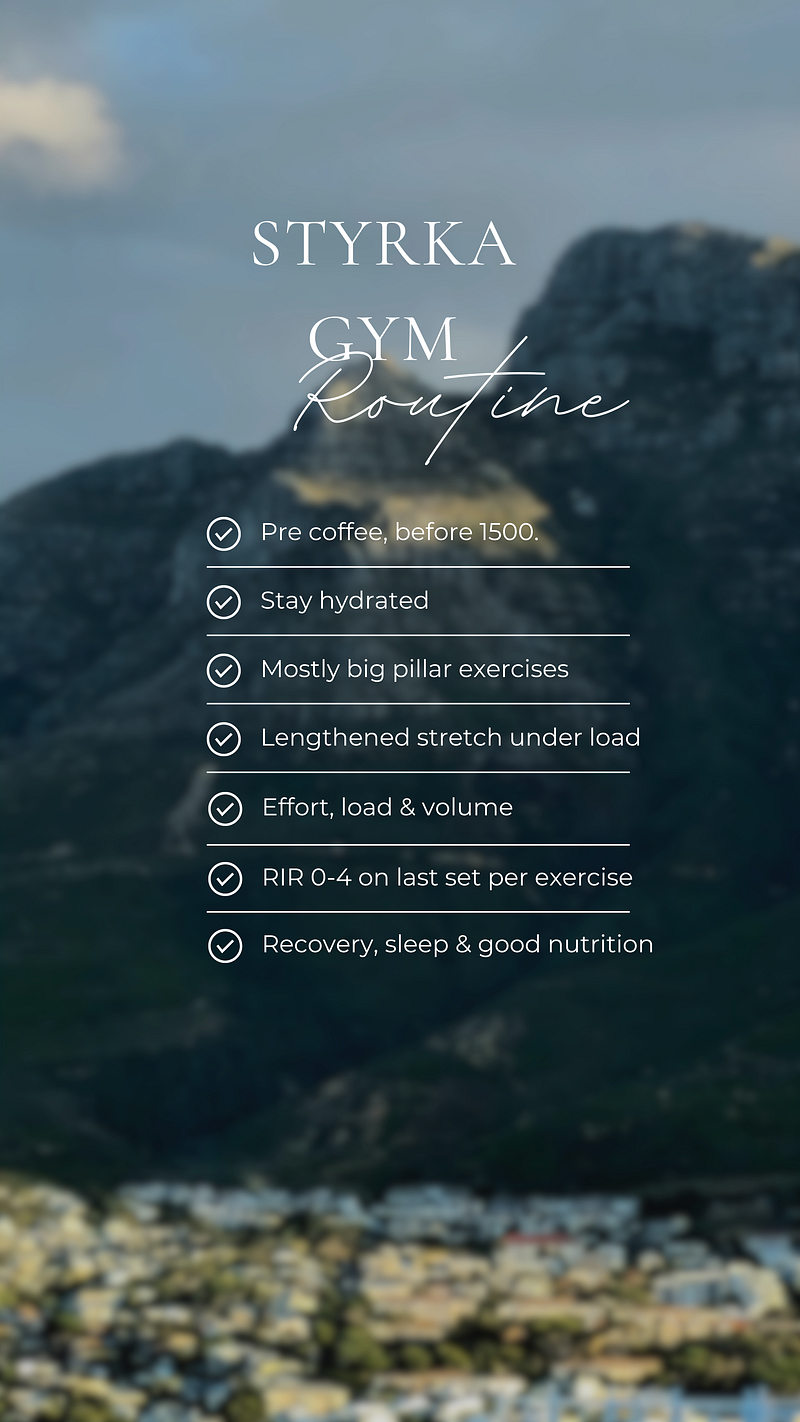
The solution, in this case, is not to stop drinking coffee ( because coffee is associated with a long range of beneficial health outcomes ) but to teach yourself to drink all your coffee and consume all your caffeinated products before 14 or 1500 in the day.
This is the wonderful art of fact-based knowledge and human behavior walking hand in hand, and in time creating better, healthier lifelong habits for you.
This way of doing things is a step-by-step process that will last for all of life because it’s really just a range of daily choices that we have to repeat every day for all of life. More than that we can also fail as often as needed and you never have to feel that if you do not do it perfectly you can just stop doing it.
Another great example of this is the common misconception that doing a diet and fitness challenge to cut your excess body fat never works because most people will at one point regain a lot of that body fat.
The above part is true in the sense that most people will at one point in their lives choose to stop working out, and they will choose to stop eating healthier foods in a a balanced or slight deficit.
What do they do instead? At that point, most people will choose to become more sedentary as well as start indulging in poorer nutritional choices which most likely will lead to an excess nutritional intake.
Which in turn will lead to excess body fat once again building up, together with a loss of lean muscle mass and physical capacity.
Now, none of this is strange. It’s nothing more than the fact-based outcome of being less physical and eating nutritionally poorer foods and too much of it.
But what we humans so often do is confuse what created the outcome we do see. You see, despite obese bodies being primed to store more fat, eat more, and feel less inclined to hit the gym, and process and absorb the nutrients we eat in a less efficient way every obese person on the planet can successfully drop the excess body fat. So that’s, not the issue and it doesn’t matter that sedentary ( or overly active ) people reduce neat or that people on a deficit reduce their BMR.
All these things are true. But what matters is that once you stop being active in the gym. Or you stop eating at a balance ( or slight deficit ) and start eating again with an excess nutritional intake you will regain excess body fat.
And it matters because it is the same for all of us. So we once again come back to human behavior.
Because it is human behavior that will let us create new habits that last for all of life ( imperfect days included ) and it is human behavior that will allow some people to just carry on with their new food and fitness habits for the rest of their life. Just as how it is human behavior that leads some people to give up on their healthier lifestyle.
Human behavior is the problem and the solution.
As I stated earlier, most people need external input to keep their healthier habits going for all of life. Be it an app, gym buddy, an active partner, healthy food habits at home from a willing partner, or a perpetual all-year-round coach that understands both fitness and nutrition and human behavior as well as the science of it all. Or anything else that works for you.
Some people just need the team sport approach. This is why we far too often see former pro-team sports athletes go absurdly out of shape and unhealthy once they give up their careers.
If this is you, join a gym class. Get your partner to train with you, and or pick up an app that lets you get not just fact-based food and fitness plans but meaningful human coaching and perhaps even other app users to compare yourself with.
For others, they might need the aiding hand of medications. Such as Ozempic. There is nothing wrong with this either.
But please understand that if you are taking medications because of the unhealthy impact of your ongoing lifestyle then you will never change the real issue, which is your unhealthy habits.
On the other hand, if you accept this and you take Ozempic to combat underlying health issues or your excess fat mass ( because you do acknowledge that you just eat way too much ) but you do this in combination with learning how to eat and live and be physically active in a healthier and fact-based way, then you will not just get even better results and health outcomes, you will also at some point be able to quit taking Ozempic without going back to your old and unhealthy lifestyle.
Either way, your takeaway should be this.
Changing your habits is a lifelong process and it’s made up of daily baby steps. You can take a step to the side or backward as long as you keep moving forward over time because progression does not require perfection, it’s not linear and it is not perfect, instead, it’s a lifelong S curve, and it is our behavior that drives us forward in whatever direction we are going.
So if you are moving in the wrong direction, do not tell yourself that you are flawed for eternity. Start changing your habits, step by step.
Enjoy your day and stay healthy fit👊☕️.
Boom.
Coach Mike.
PS. You can also read this article in our app or website.
Or tune in to our Fact-based Spotify Podcast.