
How to create successful DALL-E AI images
Exploring the multi-prong definition of the prompt
The idea
Combine a modernist, abstract sculptor with the hero persona of a rabbit
DALL-E pulls references from open source image digital image libraries, called image datasets, containing millions of images of all styles. It also pulls data from associated contextual descriptions and labels.
These contextual descriptions can include anything from the name of the object in the picture, the name of the artist, references to art movements, colors, composition, artistic style, textures, location, time of day, expressions, positions, focal points, directions, and generative style references.
Even though the output is a pixel-based image, language prompts are the foundation for AI image creation. Thus, sculptural style attributes lend themselves well for defining the shape and render of the hero persona/object.
The modern sculptural world
Sculptors and their creations are all around us. Go to any park, big city public space, lobby, or train station, and you will, in all likelihood, see many beautiful, modern sculptural art works.
Modern sculptors show us their world which they created. Only they know their secret ways of their creations. Their use of materials, textures, forms, use of space, and dimensions are mind-boggling and fantastical at times. The invite us into a space that we didn’t see or experience before.
Every sculptor approaches her or his craft through different eyes and with different tools. Some are biomorphic, others geometric, or spatial. Materials vary, they can be marble, bronze, wood, steel, aluminum, clay, glass, anything really that lends itself to a solid body.
Exploring the world of sculptors and their creative works can serve us well when diving into a DALL-E generative experimentation.
Defining the two-prong prompt: A sculptural reference and a person
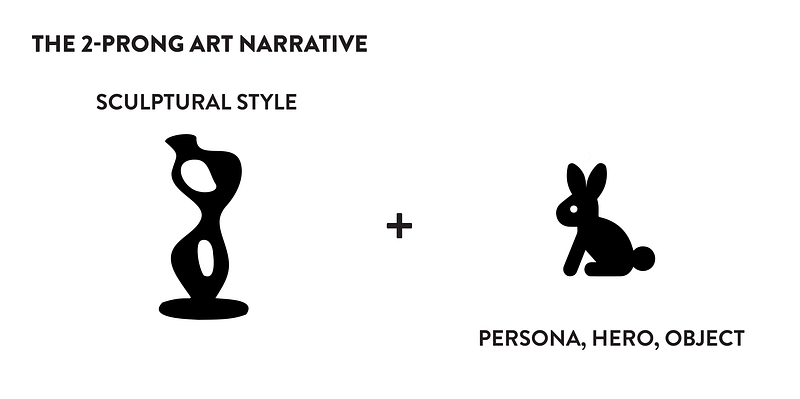
From the above conceptual insight of DALL-E’s modality, we know that it loves the combination of at least two narrative elements. In this case study, these consist of a reference to a visual style and a reference to the persona, hero, or object. We define it as such:
I’ve chosen the following three abstract, modernist sculptors, each one using different styles and techniques.
Dan Flavin, known for his gorgeous neon light sculptures and installations. His art impresses with his extraordinary use of neon light as primary artistic tool.
Isamu Noguchi, an intensely productive and versatile modernist American artist and landscape architect whose artistic career spanned six decades. He is widely revered for his biomorphic stone and paper sculptures.
Barbara Hepworth, also known as Dame Jocelyn Barbara Hepworth (DBE), an English artist and sculptor, created magnificent modernist, surrealist large scale sculptures in stone, bronze, and wood. She was also an excellent drawer and draftsperson.
Let’s enter the world of DALL-E
We apply these sculptural references together with the rabbit persona in the prompts.
“A Dan Flavin art of a rabbit”
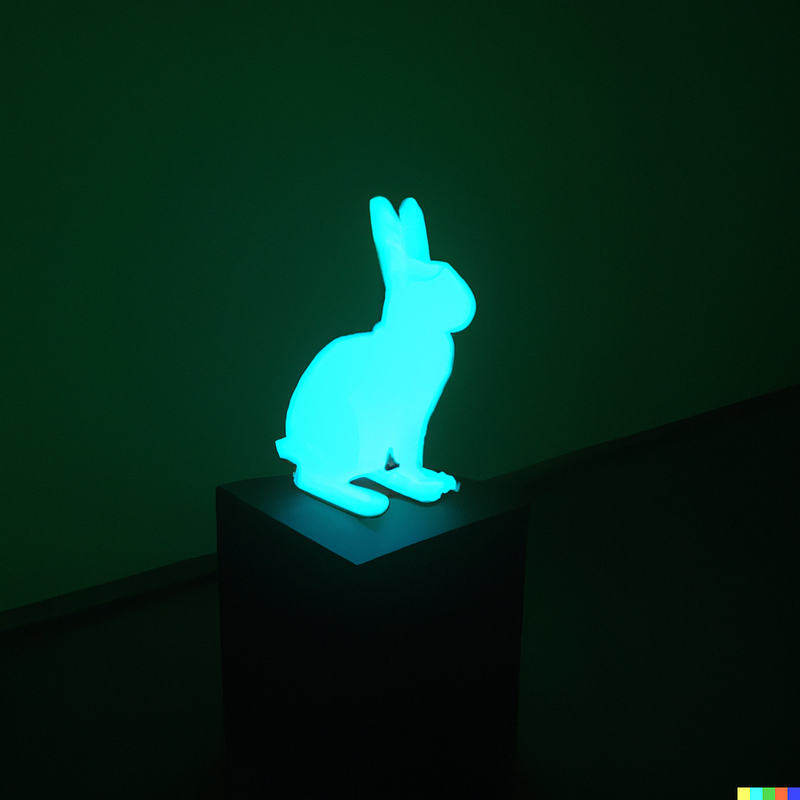
It’s a beauty. Simple, poetic, surprising. The reference to Dan Flavin creates an atmospheric, illuminated render of the rabbit. I could see this as a piece in my own space.
“An Isamu Noguchi art of a rabbit”
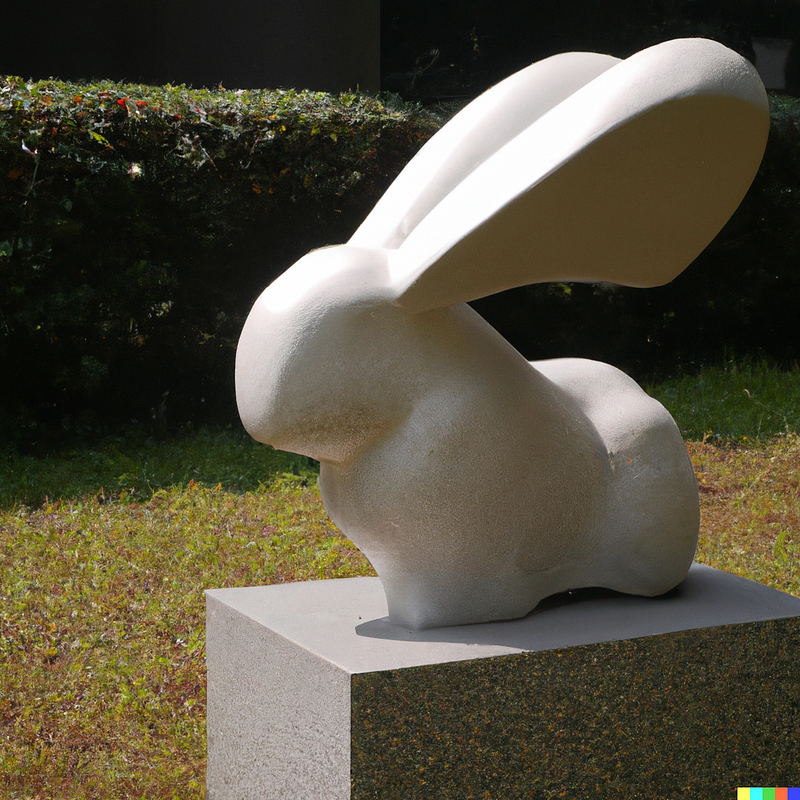
Stunning. There is a bit of surrealism in the form itself, but it’s an impressive concept of a rabbit.
“A Barbara Hepworth sculpture of a rabbit”
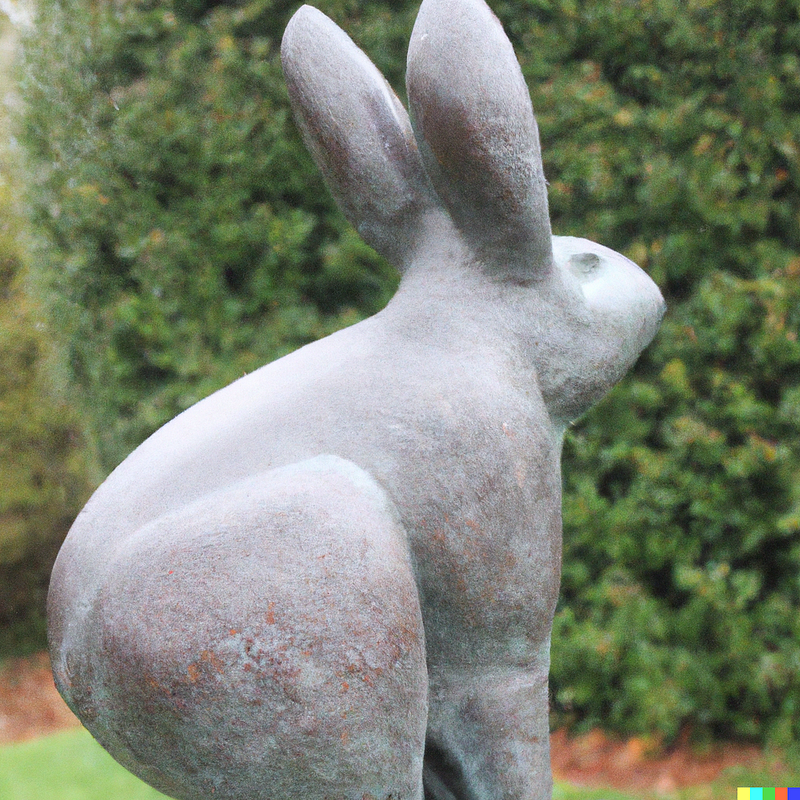
This render looks right out of the imaginary sculpture park itself. The texture is amazingly realistic, the composition is dynamic. In its poise, the rabbit displays a big personality.
Defining the three-prong prompt: A sculptural reference, persona, and an action
Now that we’ve explored a basic static DALL-E render of a sculptural reference, we can expand the prompt with a third contextual element, action.
We’ll ask for the rabbit to be active, jumping, or leaping.
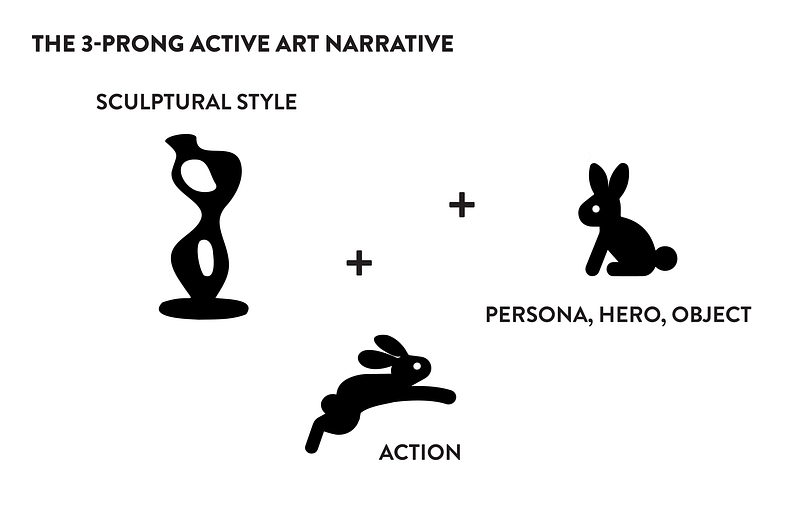
Defining an action for our persona will add fluidity and spatial aspects. We can describe the action as leaping, or jumping through the air.
The prompts for DALL-E are thus:
“A Dan Flavin art of a rabbit leaping through the air”
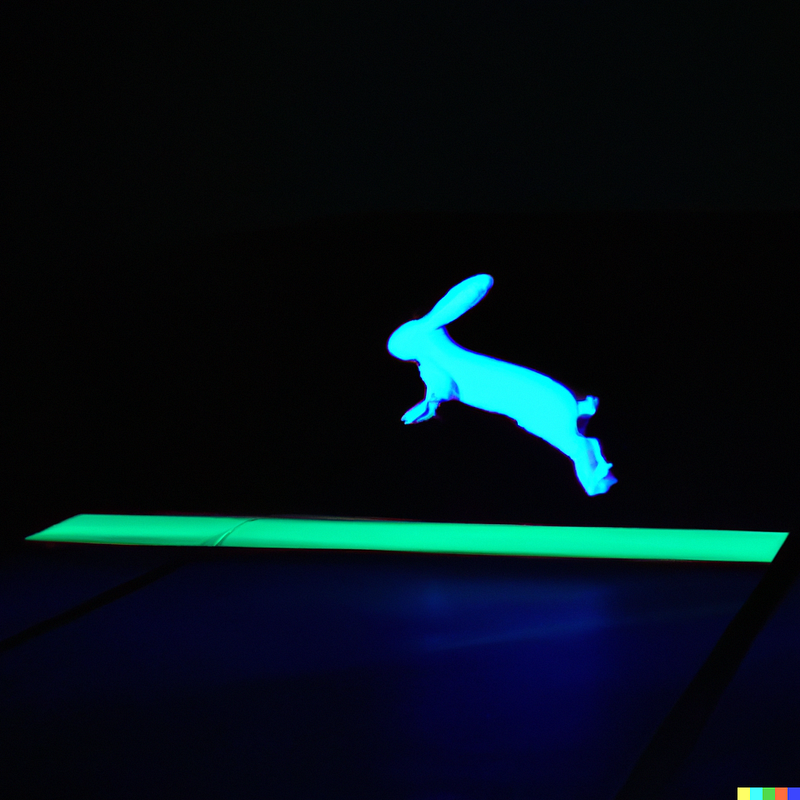
DALL-E rendered this beautifully based on the 3-prong input. The image has a cinematic, ethereal quality. While we’re not sure where this narrative is going, it can be the take-off point for the rabbit hero story.
“An Isamu Noguchi sculpture of a rabbit jumping through mid air”
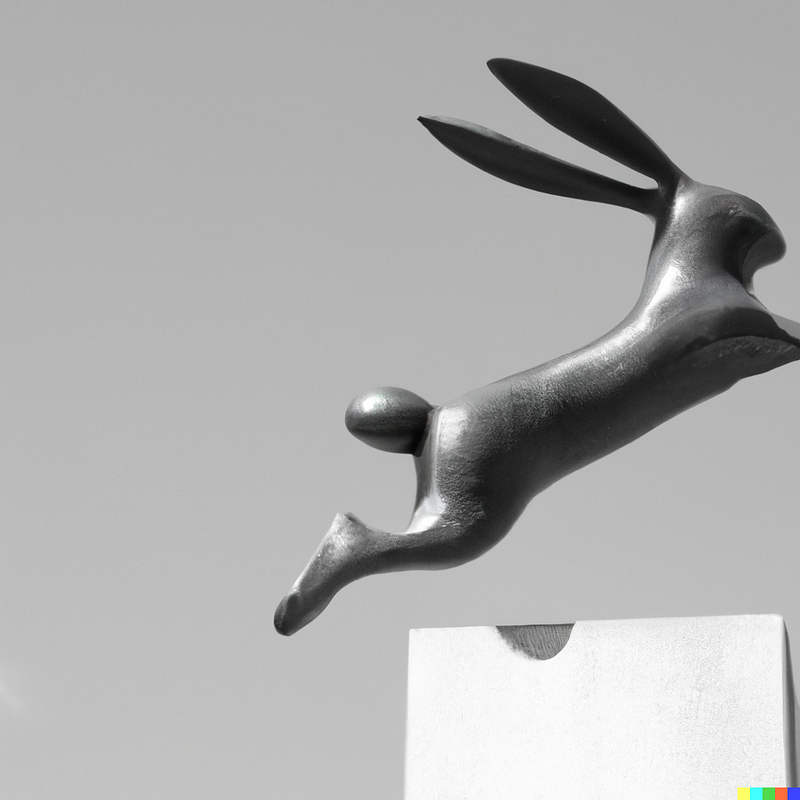
In this DALL-E image, the hero, the rabbit is taking on a playful personality, jumping into the air, escaping the picture, leaping into his freedom. Action here defines the hero as having energy and aspirations.
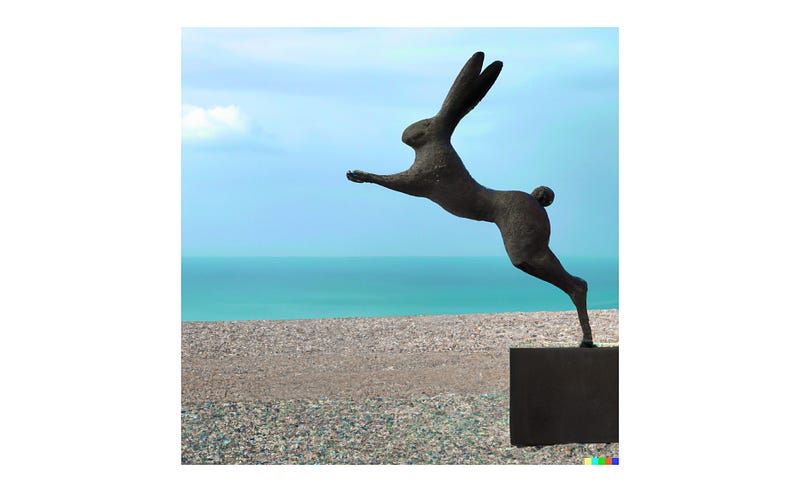
“A Barbara Hepworth sculpture of a rabbit jumping”
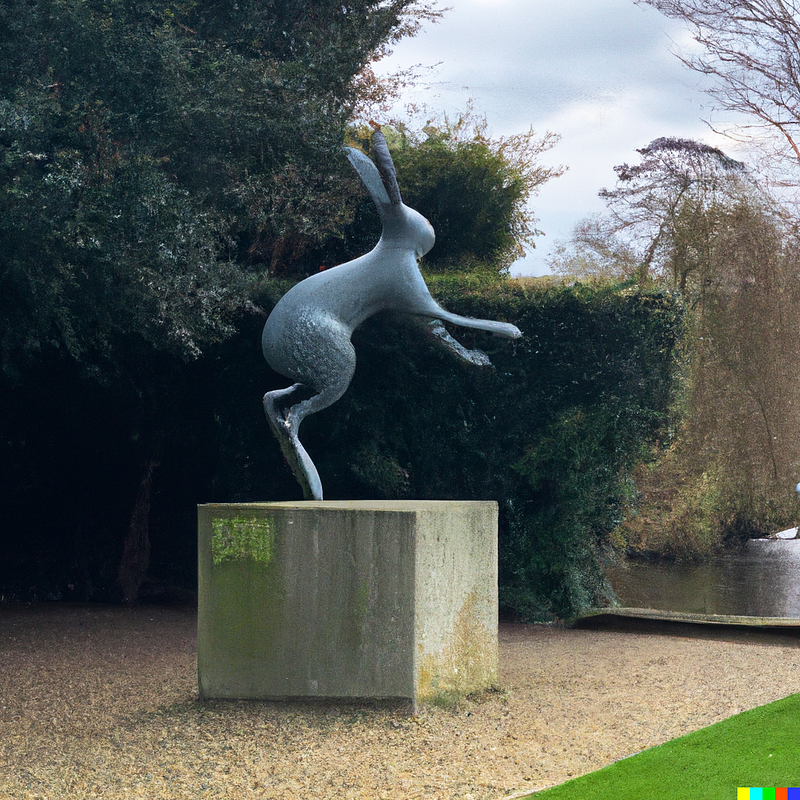
This DALL-E rabbit seems to be dancing on his concrete cube, excited to be in this park-like environment. The action here adds delightfulness and subtlety.
Defining the four-prong prompt: The sculptural reference, persona, action, and environment
We can expand a 3-prong set-up to include any other attribute. We can set the stage by defining the surroundings, colors, expression, background, textures, and so many other aspects.
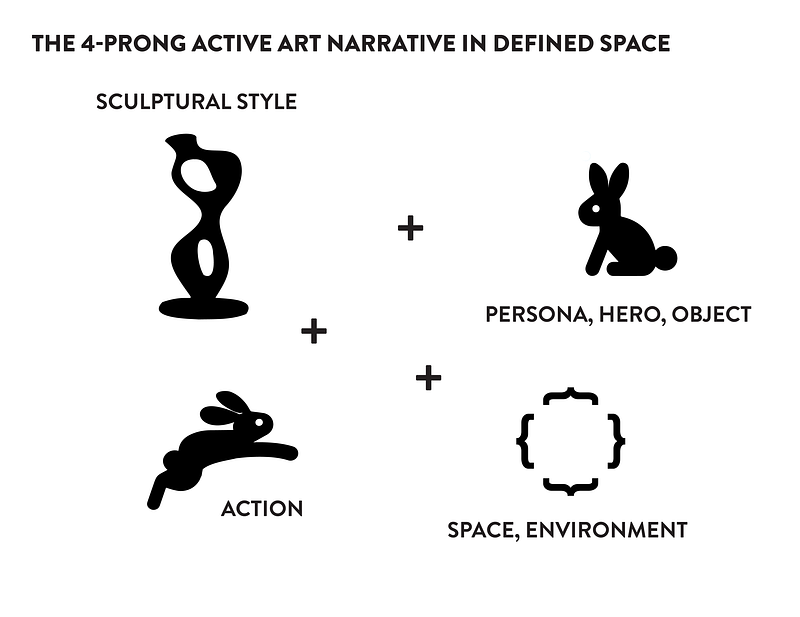
For this exploration, we define the environment on the Barbara-Hepworth-inspired dancing rabbit.
“A Barbara Hepworth sculpture of a rabbit diving into a big swimming pool”
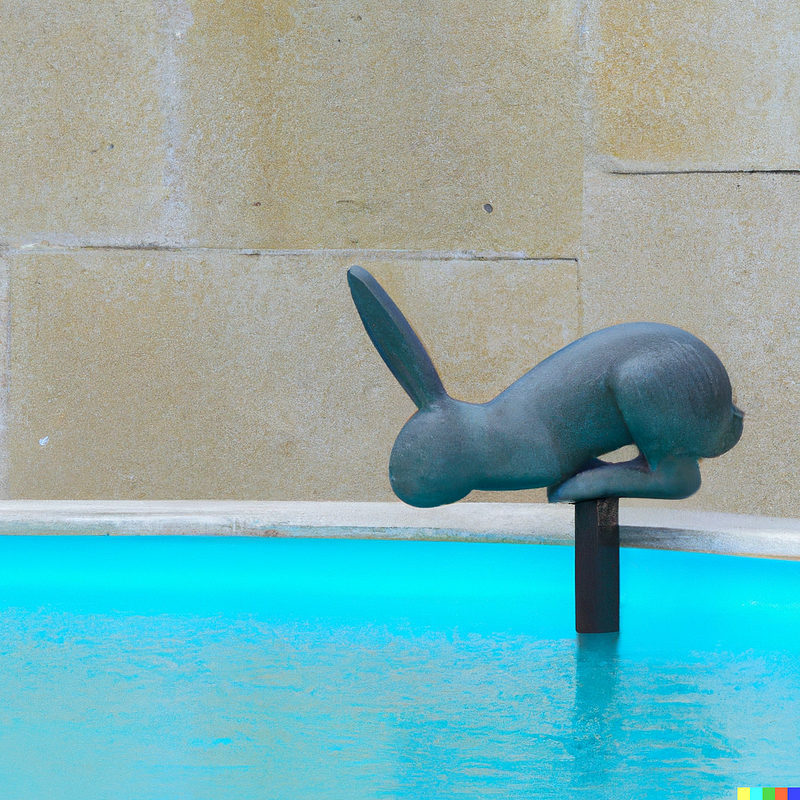
It’s a nice rendering, although it took a few rounds to get a render of the rabbit’s entire body. The form of the sculpture is lovely, smooth, and artistic. I could see this sculpture in someone’s swimming pool.
This can become an idea for a prototype. Or it can be a visual cue for a story that yet has to be written.
Expanding on the prompts can add interesting dimensions, although it will take several tries before DALL-E can loosely match one’s expectation, even on a rudimentary level.
Learnings and takeaways
DALL-E renders take time (and money). They need a meaningful prompts to make a render valuable to the designer.
Crafting a prompt takes a conceptual input. We need to define our expectations of a DALL-E render. (Randomness is fine, but unsurprisingly, the outcome is unpredictable).
It is important to know the artistic style references well. Read up about artists’ and their work and look images of their oeuvre. Delve into their universe that took them decades to create.
Study art history, visit museums, attend art lectures, research art movements. It will come in handy when you need to write design inputs.
Keep being amazed by what you see around you and make a note of it.
Experiment with the prompt, but don’t ask for the impossible. Remember, DALL-E pulls from open source databases. DALL-E doesn’t have the human ability to bend its mind around corners.
Remain humble and always remember, DALL-E does not replace the human imagination and creative mind. DALL-E is a tool. We can use it to explore.
Above all, enjoy the journey into AI.
And then, take a break from it all.
Interested in learning more about UX design, AI, design tools & trends, and art? Join Medium with this link, and support my future writing. Thank you! ✍️🧡
All images created with DALL-E ©Eva Schicker 2023.
Read more about AI and design:
Thank you.