
How to cope with different conductors
When you play in an orchestra or doing a project orchestra, there will be a different kind of conductors.
I have played a lot of orchestras in the past. And for each orchestra, there will be a different conductor in front of the orchestra. I have seen them conducting their style of the piece. One will conduct heavily with lots of arm movements and the other delicate and small. It’s how they have learnt it and how they like to conduct and how the music should be played of course. Also, they know how a certain piece should be played, but they also have created their style and interpretation of the piece.
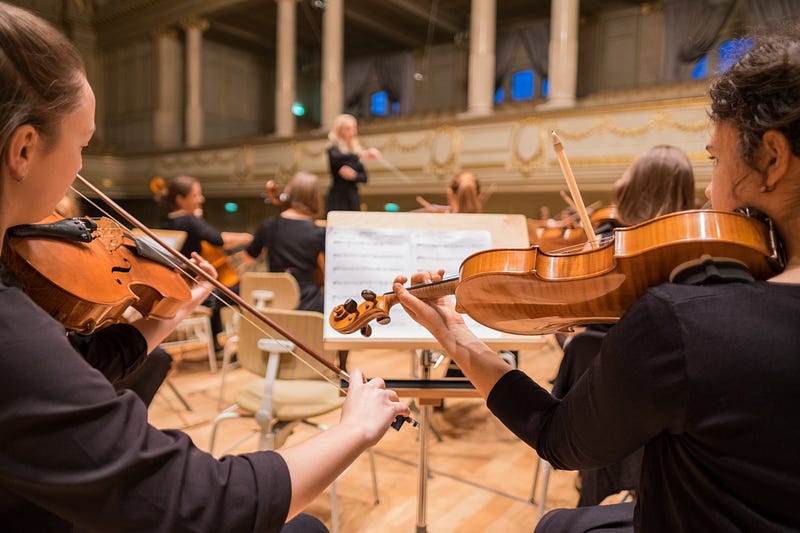
These conductors have a different kind of styles:
- how they interpret the music
- how they conduct, their style
- how they are as a person
- how they are towards the musicians
These aspects are all part of making music and passing that through to the musicians. When you are a musician you have to deal with different conductors in the world; they have all their style and interpretations of pieces they play/conduct.

Confused
Sometimes you will get confused when a conductor says it isn’t true what others told you. Lot’s of conductors do that often. They think they’re the one who is right with interpreting the music. That isn’t true at all. You have the rights to think for yourself when you practise. But yes, the conductor says the last word about the piece. He or she wants the music to be played as he or she thinks it should be.
You — as a musician — should follow, in this case — the leader, thus the conductor.
I love to see the different interpretations of the same music. It lies in the chosen tempo, dynamics or anything else. The personality of the conductor plays a part in interpreting the music as well. The way he or she makes music with their fellow musicians. The interaction.
How do you interact with the musicians in the orchestra or choir?
That depends on the character of the musicians, conductor, the environment, the orchestra staff and so on. Also what kind of music they play. If you have a conductor who loves to conduct the fifth symphony by Brahms — to name anything — and the orchestra members don’t, then you have a non-motivated orchestra. What sound will it get when you don’t have a motivated orchestra?
But what if you play under different kind of conductors? The only advice I can give is to listen to what he or she wants with the music, play it like that and do your best!
Yes, you have such motivated and very good conductors in the world. On diverse levels. Conductors who conduct the best orchestras in the wold and conductors who conducts amateurs. They both are professionals. Most people — who don’t have any musical skills, but listen to both kind of orchestra’s — may think the amateur orchestra has an amateur conductor as well. That’s not true at all. They only prefer to work with amateur musicians. It’s low-key I think.
Going to concerts
I have been to a classical music concert in the past a lot. Loved to go all the time. I once had a subscription to a series of concerts in the Concertgebouw of Amsterdam. I have been to one of the greatest violinist in the world Maxim Vengerov. I was 15 years old. He recognised me. I sat in the front row every concert. That was fun to do.
At that time, I started to play in my second youth orchestra. I got another conductor and after two years playing under this conductor, he was replaced by another conductor. I learnt a lot from my very first conductor.
During my amateur violin career, I have played under a lot of conductors. I am glad I had so many visions about how to play the music. This is why I love to play the violin a lot.
You can read my thoughts here:


