
How to Complete ‘The Year of No New Clothes’ Challenge
Steps I followed to free myself from emotional shopping
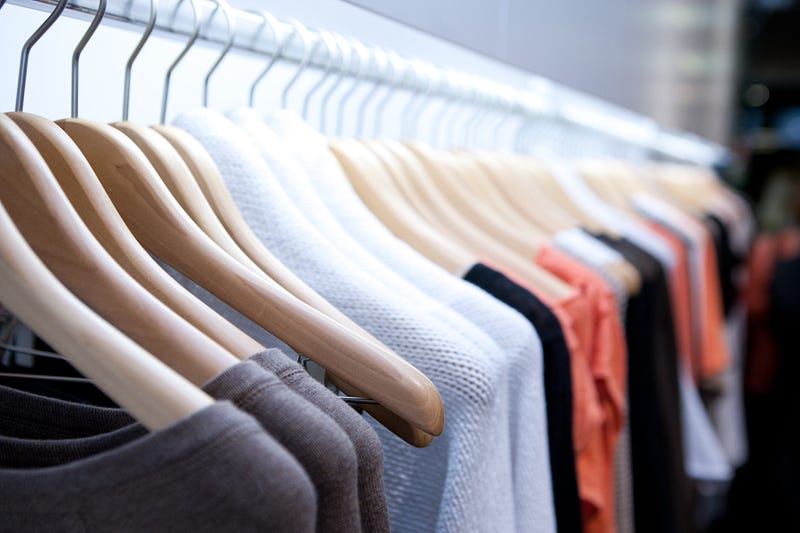
This story is the epitome of first world problems. About a year ago I was in a designer store with my husband and I was falling in love with a beige wallet on a chain that I couldn’t afford. It could hardly fit my phone and yet the price tag was worth two new phones. “I’m in love,” I gushed to the sales assistant who was doing her best to laugh off my husband’s concern.
“You don’t have the money,” he muttered. I went bright red, awkwardly pretending I didn’t hear him. I told the sales associate I may come back for it and hurried us out so I could go to a corner and die of embarrassment. The next week, I bought another designer bag instead.
That was the moment I realized I had a problem. The more stressful life got, the more I self-medicated with clothes, bags, and shoes which gave me a temporary hit but never quite filled the void. It felt like I was in an endless cycle to drown out the emptiness and loneliness I felt as a result of moving countries for a job.
The day after I bought the bag, I thought about all the possibilities I robbed myself of. Saving for the future, experiences in our new city, and online learning to build my professional skills. That evening, I cried to my husband and decided to snap out of the hypnosis.
I realize how ridiculous it is (not to mention the level of privilege I have) to cry about shopping especially given the current climate. But this time last year, I experienced my “rock bottom moment” with consumerism which became the trigger to take a “no new clothes” pledge for a year.
What Is “The Year of No New Clothes”?
There are a few iterations of this challenge. There’s A Year of No Shopping and The Year of Less. What they all have in common is the commitment by the participating individual to move away from a consumerism-driven lifestyle and be happier with less. It can also be a way to take a personal stance against the fast fashion industry which is one of the largest polluters in the world.
The damaging impact of fast fashion is the focus of The True Cost, a documentary that forced me to confront my role in perpetuating the ugly sides of the industry. As the end customer, the trendy looks I wore for one season, if made with cheap, synthetic materials like polyester, could be in landfills for 200 plus years. Not to mention the women in unsafe conditions earning less than 39c per hour to make it in the first place.
I, the end consumer, was a big part of the problem. And I have, just as you do, the power to opt-out.
Whether your motivation to be happier with less is for personal development reasons or a form of protest or both, you have the choice of how you want to take on this challenge and the duration. I decided to go for a version that targets one aspect of my shopping as a start to make it challenging enough but not impossible to achieve.
The guidelines I followed are as follows:
- I will refrain from purchasing brand new items of clothing for one year
- If I feel there is a gap in my wardrobe, I can look for second-hand or vintage items
- The second-hand items must be of high quality, for long-term use, and can be worn in two settings and as part of three different outfits
- Essentials like innerwear and socks are an exception to the above but I should buy high quality so that they last longer
Notice that these are written in the first person deliberately to set a clear intention for this challenge. You can adjust the difficulty level according to your goal. I wanted to start with clothing in the first year and then add more restrictions in subsequent years as I become more adjusted and comfortable living with less.
I am now in my second year of no new clothes with the addition of no new accessories including bags and shoes. But you can start with no shopping full stop in your first year of doing a challenge.
The key thing is to make it achievable and manageable for your current lifestyle. Reflect on your readiness to purge stuff from your life and then tailor the guidelines based on what you think you can stick to rather than try to emulate a fantasy of how you think you should live.
Why You Should Do This Challenge
In preparation for the challenge, I found articles from people who documented their learnings. To save you time from reading them all, here’s a summary of the top benefits you can expect based on these eight accounts.
- By taking the focus away from what to buy, you may be able to focus more on what you already have. The benefits are both functional and mental: you could get more wear out of your existing wardrobe and feel rewarded by your efforts to live on less.
- You could potentially save a lot of money. One person saved US$5,000 while another person saved a whopping US$17,000!!
- Your relationship with clothes and with yourself may change for the better. You may discover the reasons why you’re so attached to stuff or what the triggers are for buying. You may start to perceive the power that clothes, trends, and fashion have over you dwindle so that you can finally enjoy wearing clothes to express rather than to impress.
- Ultimately, your attachment to stuff may be broken, allowing more time and energy to focus on what you truly value in life.
Who wouldn’t want to be richer and happier? Of course, there is an element of bias as these authors all completed the one-year challenge or at least made it to the halfway mark. While I wouldn’t say my experience has been easy, compared to the many hardships that this year has presented us with, this is manageable especially if you are currently working from home.
In some ways being able to work from home has made it easier for me because I can literally work in pajama bottoms, but the pandemic has also become the perfect ailment for online retail therapy to treat. It’s easy to find loopholes when a hit of happiness is one click of a button away. During these movement-restricted times, you may want to consider restricting your online shopping!
In addition to having guidelines, you may find these two frameworks helpful. While guidelines are like high-level rules, Sarah Lazarovic’s Buyerarchy of Needs and Cait Flander’s “Do you need it?” shopping flowchart focuses on behavioral change. To succeed in the challenge, you need to consider what the restrictions are and how you’re going to live with them.
Steps I Took to Help Me Succeed
1. Find an accountability buddy
After committing to my one-year, I spoke about it to my best friend who quickly decided she would get on board. We tried convincing a third friend, but she wanted to stick to a different strategy of learning to make her own clothes. Throughout the year bestie and I would tell each other when we bought something to express our guilt. We would talk through things like the item, where we were, and what the trigger was for buying.
These conversations helped reveal things about ourselves so that we can learn to better manage our behaviors next time. It also served another important purpose of receiving compassion for having moments of weakness and taught us that no matter how much you want to be happier with less, there is a gap between good intention and action. We realized that we need to continuously work on bridging that gap.
The accountability buddy that you pick doesn’t have to be doing the challenge with you. It could also be a group of trusted friends who are not as consumerism-driven. If you share your experience more widely like I am doing now, don’t expect too much sympathy or encouragement. While it is a good thing that you are doing, it is not saving lives or helping people get through these tough times. That is something I had in mind from the beginning. Before helping others, I have to sort myself out.
2. Shop your existing wardrobe to find more “lewks”
“Work with what you have” is a common piece of advice from fellow pledgers. I had a fun time coming up with new outfits from my existing wardrobe which I called “lewks” because I wanted to distinguish them from my typical modus operandi. I used to buy clothes for how they looked on the hanger rather than how they looked on me. Too often I’d look in the changing room mirror and tell myself false stories like how it’s not a big deal that the fit is off when it’s so pretty to justify the purchase.
The consequence of years of buying this way is that I have disparate and dated pieces that don’t work with my body shape. The items that were not able to be turned into lewks were then donated. Going through this process helped me to realize that my clothes should enhance my natural beauty. For too long I was letting the clothes wear me. I love the way Lauren Bravo put it: “It’s the clothes that should be auditioning for you. Not the other way round.”
It’s important to still express your creativity and love of fashion. If anything, it takes more of your creative juices to create new outfits out of your existing wardrobe. If simplicity is more your jam, you could build a capsule wardrobe with your lewks.
By eliminating new clothes, you’re also able to eliminate society’s views of how you should look and dress from your point of view. As a result, wearing lewks is a way to live more authentically in the world.
3. Find a way to curb the craving that works for you
While other pledgers mentioned unfollowing social media influencers and deleting shopping apps, I did the opposite. I continued to watch YouTube haul videos and even downloaded the Vestiaire Collective app. But I knew I had to change how I was consuming the content.
By watching others shop I still get a bit of a hit, but I also take the additional step of simulating the guilt. I would estimate how much the stuff is worth after watching the videos and immediately think about how that money could be used instead to invest for the future. Soon enough, the little bit of “fun money” I had in the bank started to look more like “personal development money”.
I also like to have a bit of a browse every now and then so I might as well browse items from the resale market! The prices of the goods gave me a clear message that designer bags and shoes are not “investment pieces” because most of the items halve in value as soon as they walk out of the store. Going pre-loved felt like a no-brainer.
All this is to say that you will still feel the urge to shop because your emotional attachment to buying stuff doesn’t go away overnight. While some people can and prefer to go cold turkey, others like me simply cannot. I took a different approach from others but the intention is the same: curb your cravings in a way that works for you.
4. Develop your conscious consumption shopping trail
Given that my guidelines allow me to buy second-hand clothing, I knew I had to create a new mental map of where shopping is permitted. It started with visits to the local op shops where I quickly learned that it can be limiting depending on what items they have in your size and whether they’re high in quality.
Next, I searched for consignment stores in my city (Melbourne) and visited the ones in central to get a feel for which ones I would frequent. From there, I developed a trail of shops for my conscious shopping. By limiting yourself to a few places, you’ll have just enough choice for the rare occasion that you want to choose something for your wardrobe.
Half a year into the challenge, my husband and I moved to a suburb with one of the highest concentrations of consignment stores in all of Melbourne. At that point, I had purchased one item of clothing (a summer dress) and was feeling on track for my one-year.
And then, the pandemic hit. Melbourne experienced one of the most extensive lockdowns in the world. Retail stores were closed for four months between July and October. This was when I had unexpected moments of weakness. Fun money was depleted for the buzz of the apartment bell signaling the arrival of packages containing shoes and bags.
Looking back, I can see how lockdown blues and boredom were triggers for online shopping. Like me, you’ll probably have moments of weakness. Know that this is normal and by acknowledging them, you’re affirming that you’re still on the journey. If you can, note down your triggers and add it to your guidelines as something to watch out for. Then use your “Do I need it?” shopping flowchart to stop yourself from repeating the same behavior.
After buying a second pair of shoes in lockdown (the ultimate act of mindless consumption as I couldn’t even wear them out), I decided it was finally time to delete all my shopping apps. You may find that you need to adjust your strategies to adapt to changing circumstances, so keep experimenting! The more you learn about yourself the better your strategies will become.
5. Fill up the extra time with activities that cultivate inner happiness
With no apps to browse on my phone and no opportunities to go out to stores, I had extra time on my hands. I began to read more, draw more, write more, and I even started an Etsy shop selling digital goal setting and planning templates! These activities generated feelings of satisfaction and self-efficacy and lifted my spirits in a way that wasn’t ephemeral.
If you don’t know where to start with activities, try answering this question: “What did I used to love to do as a child that I wish I still did?” This gets you to think back to a time before you had money to spend on stuff to uncover budding passions waiting for a chance to bloom again.
And just like that, the one-year was over and we emerged from lockdown. I made a celebratory shopping trip before deciding to extend the challenge. I’d like to tell you that I’m a changed person and that, like the other pledgers, I’m now a conscious consumer. While I have indeed woken up to my triggers for mindless consumption as well as experienced some of the benefits that others have, the truth is I’m still on the journey.
It’s going to take a lot more than a one-year challenge to get there. Where is “there”? A version of myself who cultivates inner happiness without ever having to buy wants. Right now, I feel liberated from an over-reliance on retail therapy. I’ve been able to build an inner life for the first time because of less time spent on dressing up my outer life. And that is a great first step.
Result
Purchases made during the one-year:
· Second-hand: 1 dress, 1 bag, 1 pair of shoes.
· New: 3 pairs of shoes
· No new clothes
Final Thoughts
It occurred to me while writing this article that there is one benefit worth highlighting: the impact readers have made and are yet to make. If, in sharing our experiences, we persuaded 100 people to try this challenge we could be preventing 2,300kgs (5,070lbs) of textile waste from filling up our lands (the average Aussie discards 23kgs of fabric and leather per year, and in 2016, Americans were reported to generate 14 tonnes of textile waste per year).
Say it’s seven garments per kilo at an average cost of US$20 per garment to the consumer, that’s US$322,000 of value loss to the industry from the effort of 100 participants. But this is a global movement. Remake, a non-profit organization making fashion a force for good, has already reached 150,000 people. If all of them did a one-year challenge that’s $21M. And that’s a number that will make some fast fashion companies pay attention.
If you’re thinking about your New Year’s resolutions, why not consider saying no to new clothes? Given the year we’ve had, perhaps it’s time to confront the lifestyles we’ve all been living and figure out how to break the chains which shackle us to systems that no longer serve us or our planet.


