
How To Choose Your Emotions
You should control your feelings, not the other way round
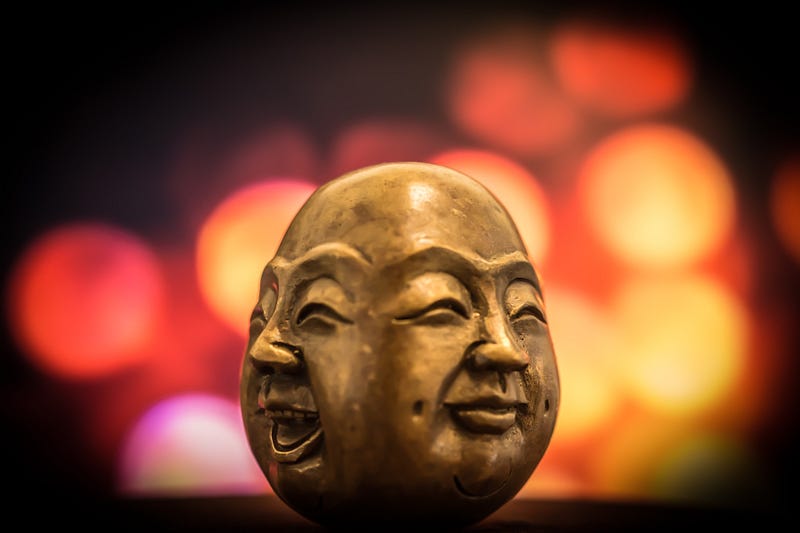
It was a bright and sunny Tuesday. Everything had been going just perfectly. The birds sang from the trees with a melodious tune. The sky was bright and clear. The sun was shy and merciful. Yesterday, the sun was so hot that I could barely breathe, but today, it decided to give us a break from the heat.
Just as I was dropping the dishes off in the sink, the alarm rang — that loud and annoying tone that makes you want to hit snooze. It was 1 o’clock. I could hear the birds sing from my window, but I hadn’t been outside. The alarm reminded me of the passing of time. I had just woken up what felt like 30 minutes ago and now it’s already 1 o’clock? My brain wandered as I searched my head for ideas on how to spend the rest of my day.
“I will visit a friend,” I said to myself. It felt like a good day to visit Ana. Besides, I hadn’t been to see her since she adopted a cat. Ana was the first name that came into my head. For some reason, visiting Ana on this bright and lazy Tuesday seemed like a good idea. As I fiddled around deciding what pants to wear, I also grabbed my phone and reached out to Ana to be sure she was home.
Ana was lovely and had a bright countenance, just like the weather today. She was in one of her playful moods, she always has them when she just got new or her bank account looks like a well-fed child. I was in a good mood, but not half over the moon like Ana. She wanted me to match her energy — like when identical twins wear the same clothes on Christmas Eve — so she tried.
“What the hell Ana, what nonsense is this”? Ana had just thrown her half-full glass of water on my face. “It’s funny right” she said to me as she burst out laughing. I couldn’t what had just happened, and the shock was written all over my face as I tried to understand what had just happened. My face lost the smile it was wearing just a few seconds ago. My shock quickly gave way to confusion and then slowly to anger. I could feel my face squeeze. My heart beat faster. Without asking for permission, my fists began to slowly squeeze, slow but hard. It was the right fist shape for a boxer facing a 250-pound opponent in the ring. But I wasn’t in the ring, I was at Ana’s house.
Emotions are what qualify you as a ‘normal’ human — and not a psychopath, they are a normal part of life. Although they are everywhere, emotions are stubbornly difficult to master, and only a few people have learned the art of controlling their emotions. But there is an even higher level, more difficult, and fewer people have ever reached; choosing your emotions.
Anger, happiness, fear, joy, sadness. Our brain is wired by nature so that we all have the basic framework that gives rise to these emotions. When events happen that cause us to have certain emotions, we don’t know that these emotions are building up in us. This is because emotions arise from unconscious processes that take place in our brains, involving a lot of hormones and chemicals like dopamine, serotonin, and endorphins. But since we aren’t conscious of when and how emotions form, it is difficult to affect which emotions you experience, let alone choose. But yet, it is possible.
This is where your feelings come in.
Feelings are usually confused with emotions — many people even think they are the same thing. Nothing could be further from the truth.
Emotions vs. feelings
Emotion comes from the Latin word “motus”, which roughly translates to energy in motion. When an event happens, your brain uses this event as a stimulus to induce some chemical reaction in itself. At the end of these chemical reactions, there is a product that you become conscious of and can feel and describe. We call this product FEELINGS.
Emotions are the raw data, the raw materials on which feelings are built. When the chemical reaction that produces emotions occurs in your brain, the physical effects can be measured in your blood pressure, pulse rate, facial expressions, body language, etc. All these effects then cause you to experience feelings, which are created after the chemical has done its work.
While the stimulus that triggers an emotion might be pleasant/unpleasant, positive/negative, or good/bad, emotions themselves aren’t good or bad.
Our feelings — which are experienced based on these emotions, are also very complex and open to misunderstanding. What makes feelings complex is that they are associated and influenced by our previous beliefs, our temperament and personality, our memory, as well as our previous experiences. Based on the raw data of emotions we experience feelings that may be good or bad, depending on how we interpret the original stimulus i.e., the original event to which we are reacting to.
Feelings are how we interpret emotions and let them sink in.
When Ana threw her half-full glass of water on my face, it took me a while to realize what had just happened. As I stood in shock, my brain was processing what had just happened. I skipped a breath, my heart beat faster, and my pulse raced. At that moment, my brain was going through my beliefs, combing through my previous experiences to determine what was an appropriate reaction to Ana’s actions. “Should I be excited, like a kid who was just given a new toy to play with?” After all, this was what Ana wanted, she wanted to get me in the mood to play. “Should I be angry?” Ana had just shown a complete disregard for my carefully planned outfit. I took my time to pick out this outfit, and now I have water dripping all over it. Or maybe it’d be more appropriate to be angry at her for not asking my permission. “Should I be sad?” She threw water on my face despite me making a huge effort to visit her. Throwing water in my face is not a nice way to show appreciation for my effort.
Anger. The choice was made. It was very disrespectful of Ana to throw water on my face. I am older than her anyway, and in my culture, this is not the way you treat an elder. It was at this point that my wrist began to fold. Not out of the urge to punch anybody or anything, but out of the urge to contain my anger. All these in a matter of seconds.
And then I snapped.
Choosing your feelings is like deciding what to do with the flour in your kitchen. You can make bread, pizza, pie, cake, or puddings.
Labeling your emotions
Labelling your emotions is the first step towards achieving a higher emotional intelligence. When you have emotional intelligence, you can easily identify and understand your emotions. Your increased emotional awareness gives you the ability to harness your emotions and apply them toward more productive tasks like problem-solving, emotional deregulation, and helping others.
But to harness the power of your emotions, you first have to know what it is you are dealing with. It’s like harnessing the wind to power the sails of your boat. If you don’t know what the wind is or you don’t understand how it works, you won’t be able to set your sails and harness the best winds to take you in the right direction.
Understanding your emotions helps you communicate better with yourself, and also to communicate your feelings better to people around you.
Pick what you feel
When you understand your emotions, you have greater control over when and how you choose to display them physically. The chemical reactions that occur in your brain to produce emotions do not ultimately determine what you feel. As we have seen before, emotions are raw data, and feelings are greatly influenced by our thought processes, memories, culture, temperaments, etc. Because our feelings are subjective, we have the final decision over them.
Choosing your feelings is like deciding what to do with the flour in your kitchen. You can make bread, pizza, pie, cake, or puddings. The options are limitless, and you have the sole power to decide what you want to bake with the flour. This is an important concept in psychology, it’s called Dialectical Behavior Therapy (DBT). DBT teaches that when you experience certain negative feelings taking root, you can engage in an opposing thought process or behaviour that helps you negate the effects of the unwanted feelings you have.
When Ana threw water on my face, I could feel the anger building up inside me. But I didn’t want to get angry. I couldn’t let anger be my reaction, no! To get angry is easy, but I’ve been taught that easy doesn’t always mean right. While Ana had done something that’s considered disrespectful in my culture, she isn’t from my culture so there’s no way she would have known that. She was only trying to make me as excited as she was, she must have thought that this was the right way to do it. And yes, I had invested some time in picking out my outfit, but I didn’t put in that much effort anyway. Besides, I was going back home from Ana’s place so I wouldn’t be needing a stellar outfit again today. There were a thousand reasons to be angry, but there were also a thousand counter-reasons to not be. I just had to remind myself of what these counter-reasons were.
By looking for counter reasons, I wasn’t trying to suppress my emotions. Instead, I was doing something healthier by identifying and labeling my emotions, and reminding myself that my feelings and reactions aren’t fully under my control.
Other advice to help you manage your emotions
1. Get enough sleep: Scientists have found that when you don’t sleep properly, you are more prone to violent outbursts of anger. Lack of sleep decreases your ability to manage your emotions or anything else.
2. Exercise Regularly: Exercise, especially aerobic exercises like jogging, improves your ability to regulate your emotions.
3. Eat healthy: In one study, researchers found that diet can improve emotional clarity by increasing positive emotions and decreasing negative ones.
I left Ana’s house feeling as happy as I was when I came. But I felt even better because I left with a sense of fulfilment. It felt like I was walking on air, with my feet above the ground. I could have been angry at Ana for what she did. Overcoming my anger somehow made me feel like a Superman. I was happy because I knew that if I could choose my emotions that day, then I could do it the next day and every day after that.


