
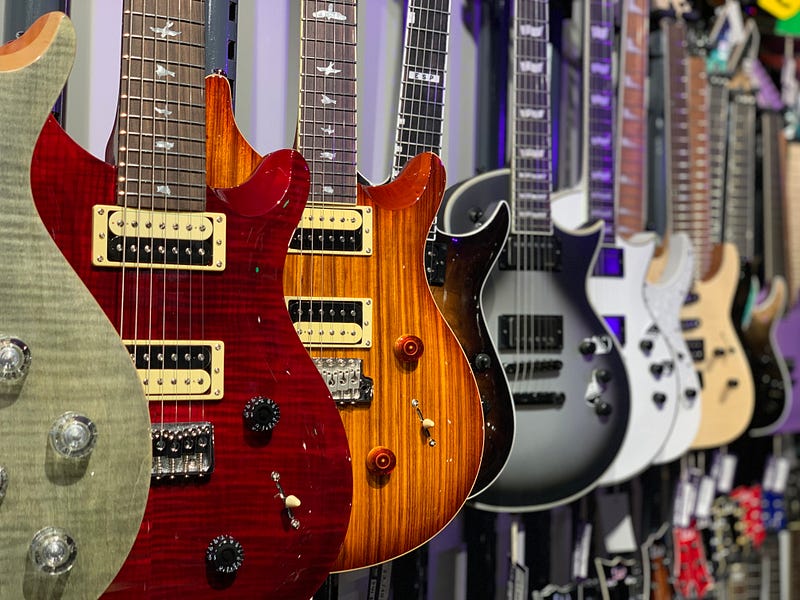
How To Choose What Instrument Fits You Best
Playing the violin has brought me a lot of opportunities. Such as fun, using my brain to think about how to play music, and playing with other fellow musicians.
You’re alone while practicing, but when you play together, you’re not alone. Then, you’re playing with other fellow musicians. The joy playing together and I feel very loved when I play with fellow musicians.
This is why I stimulate my children to play an instrument. It has also many benefits for your brain and your body system. I feel so good when I play the violin. Like last Saturday, when I had a rehearsal as a step in, but still… I played the violin, music I played years ago with my first youth orchestra and my first conductor — again. I think I have talked about it a little bit.
But I really think it is an important issue to talk about. I hear a lot of people not knowing where to look at when they’re choosing an instrument — for themselves and for their child. It depends on whether it’s for you or for your child(ren). It is good to know a little bit about it — just to know where to look and what to look for.
Choosing an instrument for your child
When you choose an instrument, you have to take a number of things into account. There are a lot of instruments you can choose from, some of the well-known instruments everybody knows and some instruments are not so familiar.
Does your child talk a lot about a certain instrument? Ask him around why he wants this instrument badly. What kind of instrument is it? Look for the nearest music school in your neighborhood. Check their website for more information, like what other instruments do they teach in, who are the teachers, what methods do they use for their students, do they give student concerts, and so on. Ask about the instrument you’re looking for or maybe — and that is even better — ask more information about other instruments. What kind of instrument is it? What can you do with the instrument? Can you play in an orchestra with this instrument? Find some more information about this instrument. Read how you have to clean the instrument. And how you have to take care of the instrument.
When your child doesn’t know yet what instrument it will play, go to the closest music school (even better: different music schools in your neighborhood when there are more) when they organize a day where you can try all instruments. Try every instrument, so you know how it sounds and what you can do with it. Of course, let try your child as much as possible instruments to get to know the instruments. That’s very important, to get a feeling about these instruments.
Take a look at how your child reacts to each instrument. And then eliminate the ones that aren’t right for your child or your child doesn’t like it all. Talk to each teacher for more information and what kind of teacher he or she is and how their teaching method is. There must be a click with the teacher and your child. Otherwise, it doesn’t work.
When you’re looking for an instrument for your child, the teacher must be good with children. That is a big thing must. Also, the costs for taking care of your instrument could be a lot, and not only the lessons. Take a look at this issue as well.
Choosing an instrument for yourself
If you’re thinking about to play an instrument yourself, I’m a firm believer it is still possible (as a lot of people think it is not possible). What I told you about checking to do for looking at a great music teacher for your child, that also applies to adults.
The teacher you’re looking for has to be great with adults. The teacher must understand what an adult needs during the lessons to be better at playing the instrument. They can teach children well, but if they can’t teach adults? It is a different approach.
These are a big part of choosing an instrument. But what makes it what instrument you choose that you or your child truly love? It is very personal where to look for while choosing an instrument that fits you.
- I looked at the following things during my search as a child:
- I looked and heard what sounds the instruments makes
- What is the color of the sound of the instruments?
- How long does it take to play a decent piece of music?
- What do other fellow musicians think about the instrument they have chosen?
I looked and heard what sounds the instruments makes
As said, I went to the local music school to try al the instruments. I knew I wanted to play the violin. I saw my sister playing the violin. I wanted that too. But I also was open-minded to look at other instruments. What kind of instruments were on the market and how do they sound like.
What is the color of the sound of the instruments?
I don’t mean, the color of the instrument itself, but the color the instrument makes. Is it loud, is it soft, is it dark, do you have to make these sounds by hand and fingers or by mouth? These aspects of the instruments make an instrument personal for you or your child, or whoever is playing an instrument.
How long does it take to play a decent piece of music?
To me, it was an issue of how long it takes by playing a decent piece of music. It depends on the student, teacher and how they teach, and how talented the student is. How well does the student practice with all the time they have? It doesn’t matter how long you practice, but how you practice with the amount of time you have. It is all a combination of this.
What do other fellow musicians think about the instrument they have chosen?
Other children have chosen that particular instrument before. They play it an amount of time and can tell you about why they have chosen this instrument. How much do they need to practice, what pieces do they already play and how long did they practice this piece.
Agnes Laurens is a writer. She writes for the local newspaper. Agnes lives in Bunnik, The Netherlands, with her husband and three daughters. Writing is — aside from playing the violin — one of her passions since childhood. She is on Twitter and Instagram.
As soon as my Patreon page is ready to be launched, you’ll be the first one who will get notifications when you subscribe to my mailing list and subscribe to my Thoughts.


