
How to Change Your Career Even If You Think It’s Too Late
How I moved from SaaS to freelance writing, with no prior experience or connections in the industry

Change is scary. Change is that much scarier when there is money attached to it. Anyone looking to give their professional life a do-over faces a real danger of a pay cut, uncertainty, and possible disapproval from those around them.
Yet, career change is one of the most common things we experience. In fact, about 49% of us report to have gone through a major career shift in our lives, and one of the most challenging ones to see through due to self-doubt and fear. This is especially true in 2020 when so many people are facing redundancy or are being put on furlough.
In the past year, I’ve gone through a major career shift from working in a mid-senior role at an EdTech SaaS firm to going full-time freelance with my writing business. While I have a degree in English and French translation and I’ve written all of my life in one way or another, when I started on this path I had zero experience writing for clients or publications. Other than having some writing talent, I had to learn everything else from scratch.
Here I want to share step-by-step how I went about this transition for two main reasons:
- I’ve heard so many people say they’re too old to be starting anew. I’m in my 30s as I’m going through this change and I’ve met many others who’re making the jump at 40 or later. In fact, a survey conducted by Indeed has found that, contrary to public belief that most career changers are in their 20s, the average age of people changing careers is 39. I want to show that it’s never too late to make the jump.
- I wish I had made this transition earlier, but the self-doubt was so crippling that I only took action when staying in the status quo was physically unbearable. Last year, I hired a life coach just to work through some of the anxiety, unrest, and sleeplessness I was feeling at the time. It was almost as if my body was pushing me to finally make the move. I hope others don’t have to wait that long and can start their transformation earlier.
This guide is designed to work for people with families as well as people who don’t wake up at 4 a.m. to see the sunrise before jumping on a treadmill. We’re all different and have different commitments, so you have full liberties to follow these steps as closely or as liberally as you want.
I Planned My Exit Six Months to a Year in Advance

It usually takes people about a year before they’re ready to move into their new career full time and this was certainly true for me. I knew that without any experience or endorsements, I was starting from scratch. So, I had to play the long game.
I linked my new career to my existing experience
I wanted to suffer as little of a pay cut as possible as I moved into this new field of work, so I decided to use my existing experience as an edge in my new career. I didn’t have any content marketing or journalistic experience, but I had six years in the EdTech/SaaS sector. As it happens, there’s a big demand for technical writers in this industry, so I chose this to be my niche. This helped me distinguish myself from other writers and to build my reputation as a freelancer. It’s really important to be an expert in your new field from day one.
When you’re approaching someone else for work, be it as a freelancer or a future employee, people want to know they’re dealing with someone who can do the job. You need to persuade them that they can trust you by emphasizing specific experiences or skill sets you have.
- List all the skills and experiences you have gained to date (from all your past jobs)
- List all the skills and experiences you need in your next career
- Find where the two overlap
- Emphasize the overlapping experience and skills when you approach employers/clients
Notice that I’m not saying you should be dishonest. But you should be super focused on choosing the right thing from your resume to present to your future employer/client. As the saying goes you have only one chance at a first impression, so make it count.
I gave my online presence a do-over
I knew that if I was reaching out to cold leads, chances are they’d check me out online. I wanted to make sure that everything they saw online about me reflected my desired career and echoed what I was saying about myself in my pitch. So, here’s what I did to make sure that my online persona matched my chosen career.
I tweaked my LinkedIn title
Before my transition, the title right underneath my name read “Enterprise Account Manager / EMEA Team Lead” which was the job I had at the time with the software business I was working for. My intro was also talking about my commercial experience in SaaS. I changed that to the following:
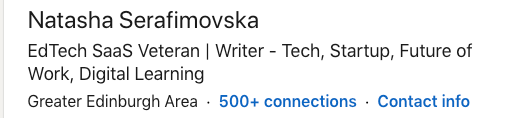
The title still contained EdTech SaaS, so it wasn’t completely off what I was still doing at the time, but it also positioned me as an expert in my new industry. Now, when prospective clients check my profile they will see consistency between how I position myself in an email and my online professional presence.
I built my website
Most of the first months in lockdown were spent learning how to build a WordPress website using Elementor. If you ask me, I probably spent too much time on this. If I were to do it again, I will just use an existing template and be done with it.
In any case, having a website is very important if you’re starting your own business. This might not be as important for your own career change, so you can be your own judge here. I can say that, while I haven’t won any business directly from my website yet, my URL is shared almost every time I pitch someone and sometimes I’m even asked for it.
I made sure that my website matched the rest of my personal brand and visitors can see within seconds what industries I work in:
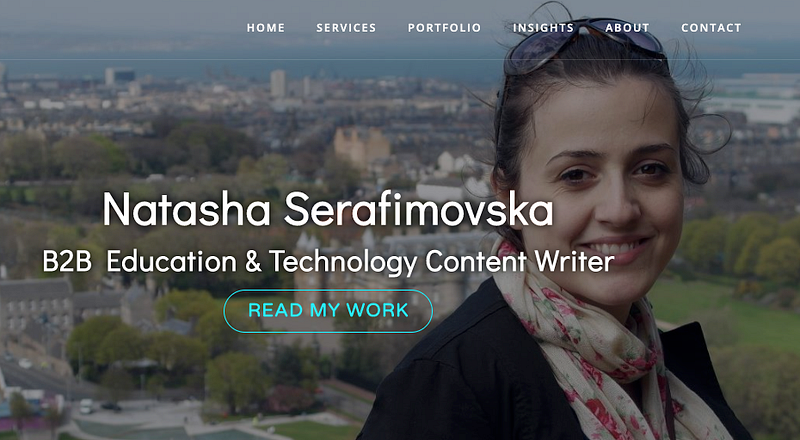
If you don’t want to go through the trouble of building a whole website, I’ve seen people build a smart resume using Notion which gives you the flexibility to stand out a bit more and is completely free of charge. This can be a good option if you’re looking to get a more creative job like a graphic designer or a photographer.
I updated the rest of my social media presence
I quickly learned that Twitter is very important for freelance writers (more on this later), so I updated my intro there to reflect my new career. I also became a writer on Medium and started writing on the topics I wanted to build my thought leadership around. Not only this gave me credibility as a writer, but I also made decent money for only writing a handful of articles in the last year.
I Built My Network with Professionals in My Chosen Career
I searched for my tribe
I have to say that this has been by far the biggest contributing factor to my success. Freelancing is far more collaborative than I initially thought and finding my “tribe” has been instrumental in:
- Learning more about the industry
- Improving my skills (for example, how to pitch publications)
- Finding work
You might be thinking “Well, I don’t know anyone who does what I want to do.” Luckily there’s an easy fix for this and here’s what I did.
Facebook is a platform I’ve used for the longest, so I started there. I’ve found Facebook groups to be a great way to connect to people in the same boat as you or even to find job opportunities in your new field. If you don’t know where to start, simply type in the Facebook search box whatever industry you want to get into, and look for groups. In my case, I searched for freelance writers (and other variations of it).
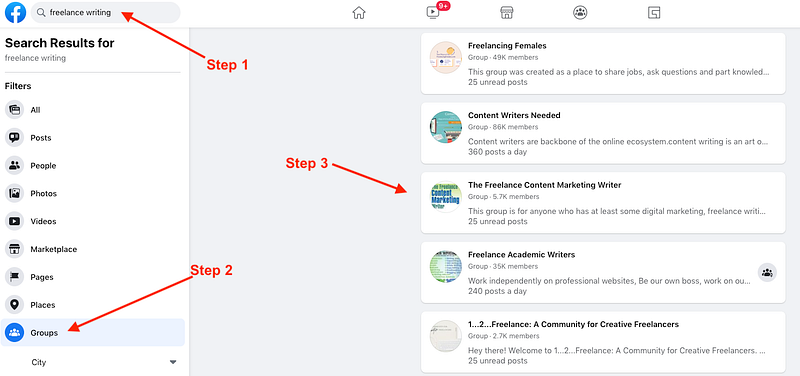
I found many groups, but I didn’t want to have information overload either so I was selective as to what I needed. For instance, I knew I didn’t want to do academic writing so I skipped that group as I saw it had a lot of activity (240 posts per day) which can create a lot of noise in my newsfeed. Instead, I joined other groups that were more related to content marketing and freelancing.
I’d advise that if you’re just starting out you join as many as you can. To avoid being overwhelmed, I set one hour almost every day to browse through them. That way I was able to find which ones post things that are relevant to me and then either leave or spend less time in the other ones.
Twitter is another good platform for finding like-minded people and events in your industry. The way I approached this is the following:
- If I read an article on a topic I cared about, I looked for that writer on Twitter and followed them. Many of them posted information about job opportunities, podcasts, and webinars in my industry which was very important when I was just starting out.
- I Googled “popular Twitter hashtags about writing”. This gave me over eight million results, but also a very neat list of hashtags I can start exploring:
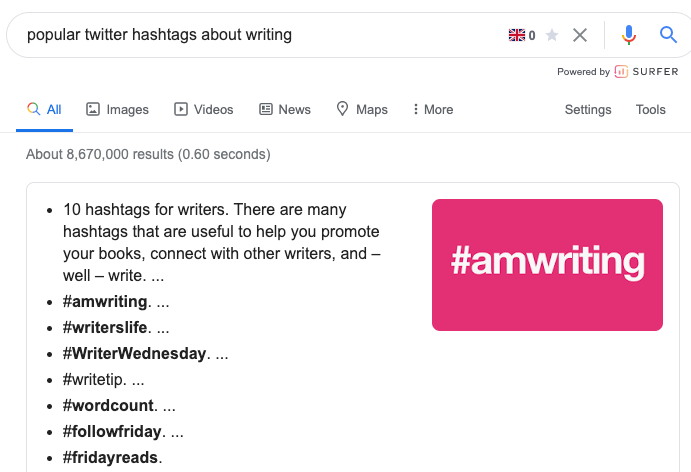
I tweaked my Google search a few times to see what other results I can get and then I searched for those hashtags on Twitter. I also searched the other hashtags people used alongside the ones Google suggested and soon I had over 50 hashtags to explore. This gave me a list of hundreds of people and companies I can follow immediately and start engaging with. What’s more, many of them followed me back and helped me build up my own online presence in the process.
Soon, my Twitter news feed was filled with tweets from people and companies I really wanted to hear from. What I found also very interesting is that many of the people who hang out on Facebook are also active Twitter users. I often saw someone post in a Facebook group that they want to build up their Twitter following and they’ll start a “Twitter follow-thread.” That way I got 50–60 new followers in one day, all in my relevant industry.
You might prefer Instagram or another platform, the same approach can work just as well. I didn’t want to spread myself too thin so I remained active on these two platforms and maintained some presence on LinkedIn and Medium.
What I want to emphasize here is that through this networking and connection with others I:
- Found work with publications and platforms I’d never heard of before.
- I learned so much more about pitching and how to find freelance writing work.
- I became a member of a Twitter group of “pitching pals” where we review our own pitches and cheer each other on when we get a rejection (or when a pitch gets accepted).
- I became much more confident as a professional writer.
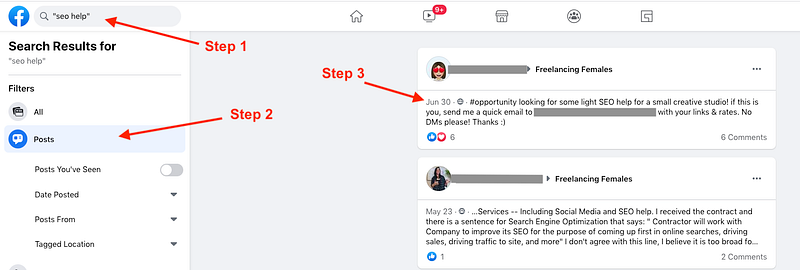
Depending on your chosen career, you might want to go a different route and look for the actual companies you want to work for or search for people talking about the problem you’re solving. For instance, in my case, I also searched for “SEO help” or “need more content” to see if anyone is writing about or commenting on this on Facebook. Instead of looking for groups, this time I checked “posts” to see if someone is writing about this. This in itself revealed a handful of opportunities to pursue.
I attended events in my new industry
Thanks to my prior networking, I learned of many webinars, conferences, and online events that I wouldn’t have known about otherwise. Doing this in time of COIVD has been especially fortunate because many of the events that would have been face-to-face were now online. One example is the month-long content marketing conference that took place in August and was hosted by the American Society of Journalists and Authors which usually takes place in person in the U.S. There I learned about so many strategies and tools in the industry that the ticket was well worth the money.
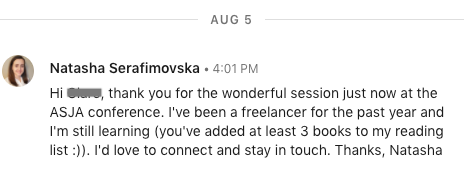
The key to attending any of these events is the follow-up. I came across many freelance writers who’re top of the game and who I knew I wanted to stay in touch with. After each session I attended, I reached out to the speakers and panelists with a warm introduction message highlighting what I liked from the session. This was always well received and my LinkedIn network looks much better as a result.
Soon after the conference finished I applied for an ASJA membership which is usually awarded to established writers with books and many professional publications under their belt. I really didn’t know if I’d be accepted, but to my surprise I was. I’m now an official associate member of ASJA. I’m not sure if my attendance at their content marketing conference had anything to do with it, but it certainly didn’t hurt. This membership alone gave me access to a mentor, job opportunities, pitching help, and overall “insider” support from hundreds of other established professionals.
I asked for help
We all need someone who’s walked the walk to tell us what pitfalls to watch out for and what avenues to explore. Once I started networking and reaching out to people I found that most people are happy to help.
As I was reading and learning more about freelance writing and the people who wrote in my niche, and before my AJSA membership, I reached out to some of them for some advice. One of them was a former Googler and a contributor for the Guardian and they agreed for a quick Zoom call to offer some pointers in the industry. They weren’t offering mentorship per se, but we’re still in touch and I’m still learning a lot from our emails and the resources they share. Through them, I discovered and joined other platforms where I got one of my highest-paying projects to date.
I Made It Official & Set Up My Own Business
Once I had everything else in order, I decided it was time to make things official and set up my own business. I’ve heard from other freelancers that having a business not only helps you come across as more professional, but it limits your liability towards those clients. For instance, if you act as a sole practitioner and there’s a lawsuit, you as an individual can lose all your assets. As a limited company, the business loses its assets but you as an individual are unaffected. Likewise, having a registered business made it much easier to add other services to my portfolio, such as coaching and strategy consultancy.
I knew nothing about setting up a business, so I started reading up on it and found out that it isn’t as complicated as I thought.
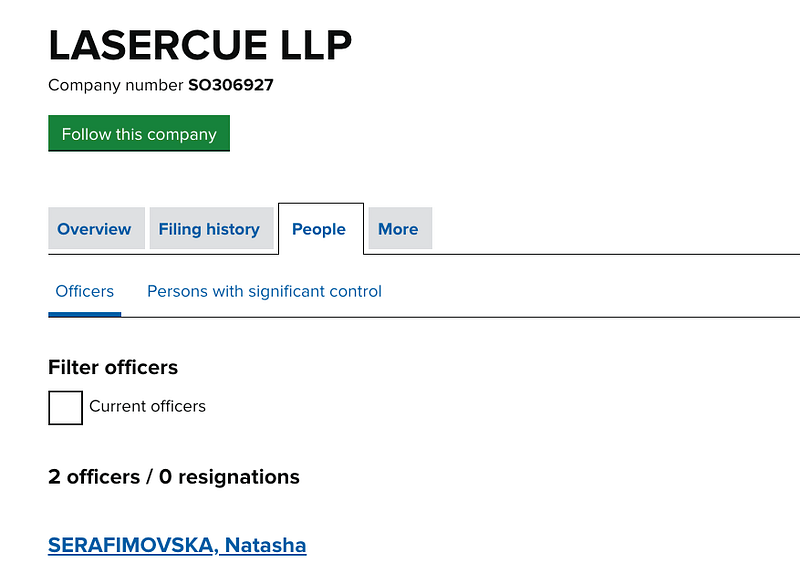
I’m based in the UK and I needed to decide what kind of business I wanted, so I read through this information offered by Companies House. At the time, my partner was also looking at doing some consultancy work for a client, so in April 2020 we registered a limited liability partnership and hired an accountant to deal with all the finances.
Currently, I still work with some agencies as a sole practitioner because that’s how our collaboration started last year, but I’m using LaserCue LLP for any new business.
I Applied for Work and Became Comfortable with Rejection
The bottom line is that whatever we’re after, whether a freelancing career or our next job with another employer, we need to put ourselves out there. Luckily, my years in sales came in handy here as over time I’d developed a pretty thick skin when it comes to rejection.
Initially, I sent tons of emails I received no response to, and many that were rejections. I found my first work through content agencies that work with a pool of writers to deliver content for their corporate clients. It wasn’t highly paid, nor was it in my niche areas, but it was the first money I made from writing and I counted myself lucky.
Those first low-paying “gigs” served as a proof-of-concept and a confidence boost that I could do this.
I got other writing projects by applying directly to businesses and publications and pitching my ideas. Throughout all this, I made sure I was putting away some money so that I had a safety net when I decided to finally pull the trigger.
I still haven’t fully replaced my previous salary, but I’m not too far off. In the meantime, I’m infinitely happier and more fulfilled and you can’t put a price on that.


