
How to Buy Good Wine on a Budget
A short primer on finding good deals on wines you‘ll be proud to share and savor

As a wine professional, I understand how expensive wine is. Truly, I do. Throughout my experience in the wine world — first as a bartender at various restaurants, then as the general manager of a French wine bar in Washington, DC, and currently as a wine science graduate student in Bordeaux, France — I’ve had my fair share of good (and very expensive) wines. I’ve tasted wines that cost $10 per sip. I’ve seen people throw down hundreds for a bottle at dinner and thousands on birthday party tabs. I even once saw someone shake, pop, and spray a $100 bottle of champagne just to show off their riches and swank.
Yes, wine can be a luxury and a status symbol. But are those $100 bottles of champagne really better than a $20 sparkling wine from Alsace? Sometimes, yes, but oftentimes, no.
By studying and working with wine, I’ve become privy to the reasons why some wines are more expensive than others. And as a student with a small budget, I’ve learned to use this to my advantage to find good deals on good wine.
The keyword here is good.
“Good” is inherently subjective, but the assumption that I use in this article is that we share a baseline standard of what “good” means. In this article, good wines start a notch above the big brand names, like Barefoot, Yellow Tail, and Sutter Home.
Of course, these “value wines” that cost roughly $5–8 dollars per bottle would be the best deal. For someone who wants cheap and consistent wines, these are fine. You always know what you’re getting with Sutter Home, and there’s certainly a market for that dependability.
But these wines are manufactured to taste the same in every bottle, every year. They rely heavily on additives, like the sugary, color-correcting Mega Purple. If you’re like me, you don’t want to drink sugary, fermented grape juice. You want to drink something unique and expressive and lively. You want to learn about the wine region, and this requires that the vineyard location be revealed on the bottle, or at the very least on the winery’s website. For many “value wines,” this is not the case.
So I’m here to tell you that it’s possible to find good deals without drinking bottom shelf wine. These eight tips are the ways that I’ve learned to buy good wine on a budget.
Figure Out What “Good” Wine Is to You
The first step to saving money when buying good quality wines is to determine, for yourself, what good quality means. You might choose to agree with the wine critics.

To you, good wine quality would be something that was rated about a 90 on the Robert Parker scale. Or, you might decide that good quality wine is a natural wine made without additives. You might find that good wine to you is strictly dry white wine. If you’re like me, quality wine is about the balance of the tannins, sugar, and acid, and also about the story of the winery and the respect for the environment with which it was made.
Whatever it may be for you, it is critical to define this parameter. Without it, you’ll be lost when buying wine. What do you care about? What tastes good to you? It might take a few bad bottles to figure out what you don’t like, and that’s a great place to start. Take notes. Save it somewhere on your phone, or use a wine tracking app like Vivino.
Once you hone your definition of good wine, you’ll feel empowered when staring at shelves full of wine. You’ll make intentional purchases, a central tenet in the frugal community. You won’t be lured by marketing tactics into a deep, tannic wine when you like light, fruity wines. This will help you to waste less money by only purchasing wines that you’ll most likely find to be good.
Drink Less, but Better
From my personal experience, a good bottle of wine purchased from a wine store in the U.S. starts somewhere in the $10–20 range. The folks at Wine Folly would agree. It’s not realistic to pay $5 for an interesting bottle of wine; economies of scale mean that a bottle at this price will come from a very large winery churning out high quantities of easy-drinking (read: sugary or highly doctored) wines. For a wine that starts to reflect its place of origin (its terroir), you’ll likely start to find this around $10, and you’ll get something really good around $20. For a nice holiday dinner or a splurge, you can find great bottles for about $30.
This might sound like a lot of money to you; I completely understand. But if you’d like to start drinking good quality wines, the trick might be to drink a little less — but better. Rather than spending $20 a week on a few bottles of Barefoot, consider spending $20 per week on one bottle of something new and interesting. Your health — and your wallet — will thank you. Plus, wine is a luxury, not a necessity; treating it as such will keep your interest piqued.
Buy Nonrated or Underrated Wines
High wine ratings from wine critics are known to drive up wine prices. Using wine expert James Halliday’s wine rating system, one Australian study found that wines from 5-star wineries charge an average of $6 more per bottle than a similar 4.5-star winery and $14 more per bottle than a 3.5 or 4-star bottle.
Wine ratings can have an even greater impact on wine prices than sensory quality ratings, i.e. ratings on attributes like aromas and flavors. A 2014 study found that wine price is only moderately correlated (+0.30) to ratings on sensory attributes. This same study points out that wines from small-name wineries can lead to great consumer bargains. “Typically, quality ratings and wine reputation variables are highly correlated, but when they are not for a particular wine, potential bargains for consumers may be identified,” write the authors.
So if you’re looking to buy a wine from a well-known region, consider buying it from an offbeat producer. Underrated wineries are a great place to look for a deal.
Buy Wine From Lesser-Known Regions
Ever wondered why Burgundy and Bordeaux are so pricey? It’s all a matter of supply and demand. Centuries of marketing their wines to aristocrats, coupled with appellation laws that limit the production size, means very expensive vineyard land in these regions. As a result, the bottle prices skyrocket. Case in point: the most expensive bottle of Burgundy ever sold went for the absurd price of $558,000 in 2018.
What’s more exciting to me than fancy wines from the famous wine regions are good wines from lesser-known places — at a fraction of the price. Burgundy and Bordeaux are NOT the only places with good terroir!
If you like Bordeaux wines, made primarily from Merlot and Cabernet Sauvignon, look to the Maipo Valley of Chile. Here, in the “Bordeaux of South America,” Cabernet Sauvignon reigns king. To give you an idea of the price differences we’re talking about here, the highest-rated Bordeaux wine on Vivino, Château Trotanoy Pomerol 1961, costs $2499.95. The highest-rated Maipo Valley wine on Vivino, Don Melchor Cabernet Sauvignon 2015, costs just $119.99. Even if the Trotanoy is better, is it $2379.96 better? Probably not, but that’s what high demand and low supply will do.
For more Bordeaux alternatives, you could try South Africa, especially the Stellenbosch region. Look to Virginia, an upcoming wine region where there are some surprisingly good Bordeaux blends. Or, look to Lebanon, an often overlooked wine-making area that has been making wine a lot longer than Europe.
For those who love Pinot Noir, try looking for bottles from the Alsace region of France or from Germany, where the prices can be quite budget-friendly.
How about Chardonnay? This is one of the most widely planted grapes in the world, so finding it from areas other than California and France is easy. Try finding Chardonnays from the Finger Lakes region in upstate New York, the Victoria region of Australia, or the Willamette Valley in Oregon. A high-quality Chardonnay from Napa Valley will cost you anywhere from $35–90, whereas a high-quality Finger Lakes Chardonnay will only run you about $10–30.
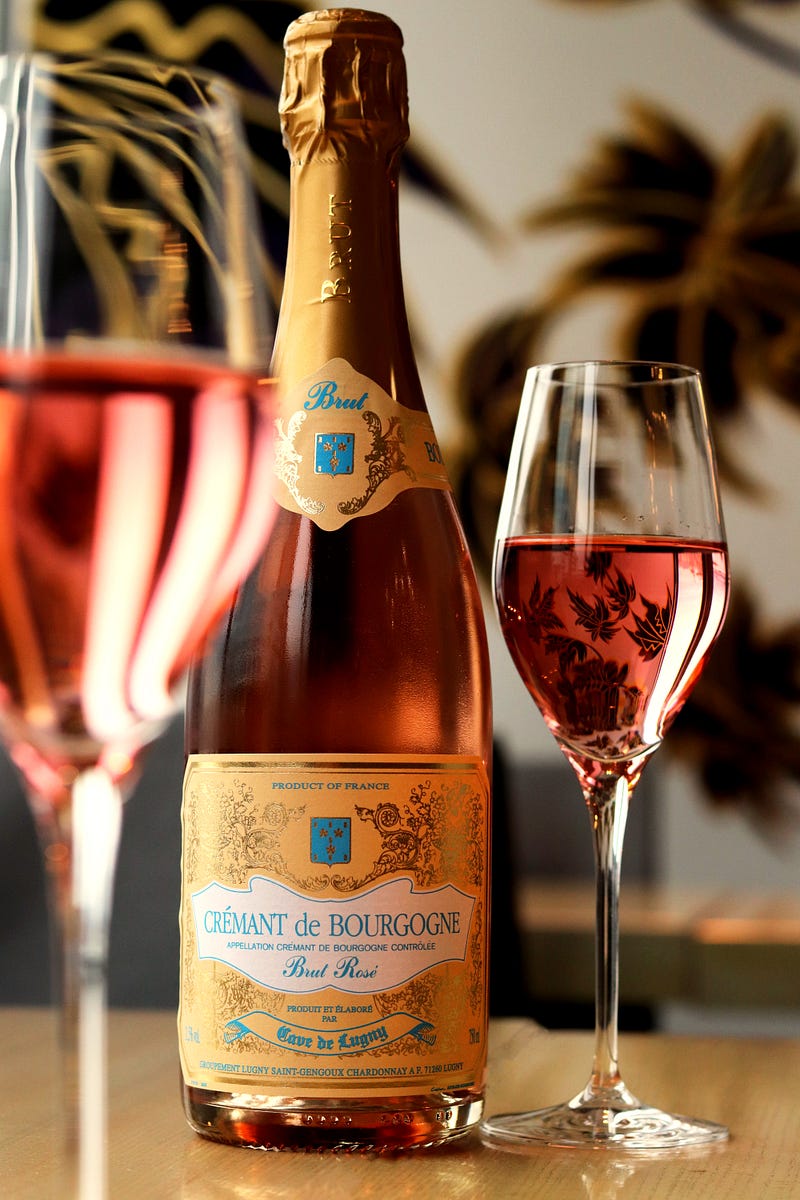
For bubbly, stay away from Champagne if you’re on a budget. Look for sparkling wines from Alsace (France), Northern Italy, Penedès (Spain), or South Africa. These regions all produce excellent sparkling wines.
Another trick: buy crémant. These are French sparkling wines from any region other than Champagne, but that are made in the same méthode champenoise style, and often made from the same grapes. On Vivino, French champagnes with a 4.0 or above rating will cost you roughly $70-$100 per bottle, whereas a French crémant at the same rating will only be about $17–25. Remember, these wines are made in the exact same way as champagne, just in different regions of France!
Buy Wines Made From Lesser-Known Grapes
Beyond looking for lesser-known regions, look for a grape that gets you a similar style of wine at a cheaper price point. If you know you like Pinot Noir, do some research online to find out what words wine professionals use to describe these wines. You might find words like “light” and “fruity.” Do a quick Google search for “light and fruity red wines” to come up with a list of similar styles of wine made with different grapes. Keeping a list like this on your phone is a great way to find cheaper wines when you’re at a wine store or restaurant and you need to think on the spot.
Here are a few ideas on grape variety alternatives, but remember, doing your own research will save you time and money down the road.
- If you do prefer lighter, fruitier red wines like Pinot Noir, look instead to Gamay from France, Trollinger from Northern Italy, Grenache from Spain, or Frappato from Sicily.
- For people who like tannic and peppery red wines, look to the German grape Blaufränkisch.
- If you like Grenache/Syrah blends, a Châteauneuf-du-Pape will cost you upwards of $50 per bottle, but a Greek Mandilaria with similar flavors will cost you about half of that.
- People who like crisp, acidic white wines could try Assyrtiko from Greece or Albariño from Portugal. Or, my personal favorite, a delicious, organic Austrian Grüner Veltliner, costs only about $10 per bottle.
Buy in Bulk
If you go back over the last six months of social distancing and count how many bottles of wine you’ve bought (no one’s judging), you might notice that it was enough to warrant a discount if you had bought them all upfront. If your finances permit it, buying in bulk can often save you a lot of money on your total bill.
Ask your local wine store if they offer case discounts. If you’re lucky, you could get 10–20% off on a case of 6 or 12 bottles. At an average of $10 per bottle, 20% off a case of 12 bottles would save you $24 — enough to buy two more bottles… or invest in your retirement savings!
Ask for Help
I used to be afraid of asking for help in a wine store because I didn’t want to appear cheap by asking for a $10 bottle. I got over this fear by realizing that a) if they have $10 wine for sale, it’s because they have a market of people just like me with this budget, and b) they’d much rather make a sale of a $10 bottle than no sale at all.
Wine shop sales associates and restaurant sommeliers probably don’t work in these positions by chance. I guarantee you they work in this field because they love wine — and because they’re knowledgeable about it. It is quite literally their job to help you pick out a wine. Ask for help when buying. Tell them your price point confidently, and let yourself be guided by their knowledge to find the best wine for your budget.
If you’re with friends or family at a restaurant and you want to avoid saying the price out loud, point to something in your price range on the menu and say, “I’d love something in this ballpark.” The sommelier will then find you what you are looking for at the price you want to pay. It’s that simple.
Have a Plan!

It’s the holiday season — and even if we can’t be in big groups this year, I’m going to guess that you’re probably still going to buy a bottle of wine to share with those in your quarantine crew.
If you walk into a wine store (or shop online) without a plan, you’re going to be tempted to spend more than you wanted to. And you’ll rationalize that purchase in any way possible. A splurge is OK if it’s a rare occasion, but when splurges become the norm, it can lead to frustration and a blown budget. This used to happen to me all the time. “It’s for a friend’s birthday,” I’d think. “I can splurge just this once.” At the end of the month, after two birthdays and three nice dinners, I’d recoil from my credit card statement. “Did I really spend that much on wine!?” I’d say to myself.
Avoiding this is simple: do your homework on wine styles or grapes you like or might like to try, make a budget, and stick to it! I now have a $60 per month budget on wine; I stick to it religiously and still manage to drink amazing wine. I may not be drinking expensive Burgundy wines every night, but I’m drinking wines that fit my definition of good, and that’s what counts.
The trick to sticking to your budget is being prepared. This will save you from impulse buys or buying something you probably won’t even like. And the more prepared you are, the more you will increase your confidence when purchasing wine.
You can — and should — treat yourself to good wines, but that doesn’t have to mean breaking the bank. If you follow my advice, you can drink interesting, good quality wines on a budget.