
How To Bulk and Cut Properly for Optimal Long-Term Muscle Growth
Best practices for bulking, cutting, and maintaining.
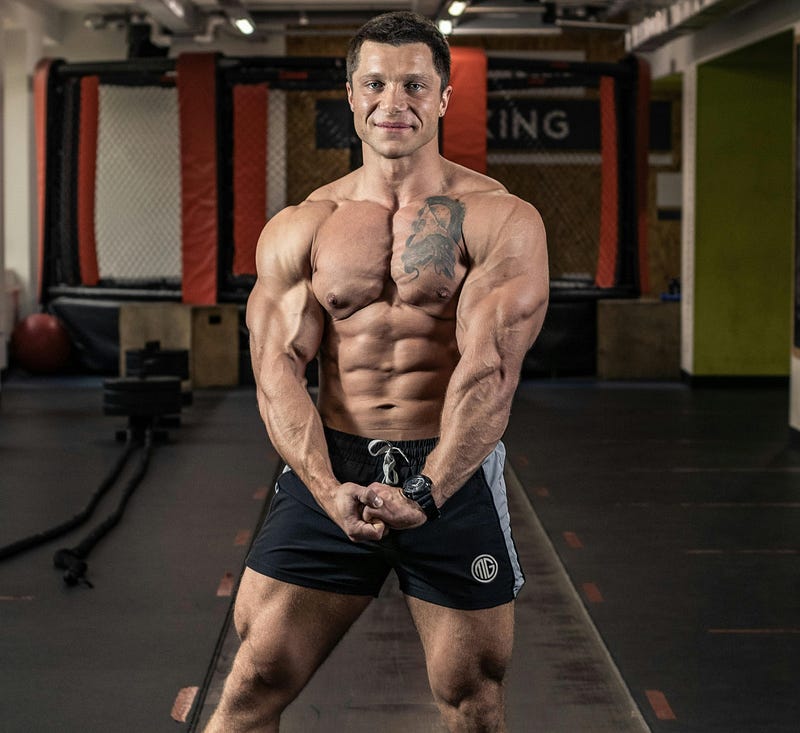
If you want to build a great body that’s big, muscular, lean, and defined, you need to understand how to bulk and cut properly.
Recomping, or building muscle while losing fat at the same time, can work to an extent, but it is seldom optimal. And, if you are below about 10–12% body fat, it’s just not possible.
So, you will need to go through phases of deliberately gaining weight in order to increase your muscle size. But you will put on a certain amount of fat during these phases as well, so you’ll then need to do a cutting phase to remove that.
On top of that, if fat loss is your priority, you’ll need to understand how to incorporate maintenance phases into your program to ensure you don’t regain the body fat you have lost.
So, let’s take a look at each of these.
How To Bulk Properly
A typical bulking phase usually lasts between eight and 16 weeks. That’s the amount of time required to gain an appreciable amount of muscle. Anything less than eight weeks is not particularly worthwhile (though if that’s all you’ve got, for whatever reason, it can still provide some benefit).
You can bulk for much longer than this; however, if you do it slowly and keep the fat gain to a minimum. Some people can continue to bulk for a year or more.
During your bulking phase, you’ll be eating at a calorie surplus. But it’s important not to overdo it, or you will gain too much fat. The “dirty bulk”, where you just eat anything and everything you want, is not a good idea. So, generally speaking, you should be aiming for an excess of around 250 calories per day. That should allow you to gain about half a pound per week, most of which should be muscle.
You might be able to go a little higher if you are a skinny beginner and/or have good muscle-building genetics. But, if you go much above that, you will gain a lot more fat, and only a little more muscle, so, it just isn’t worth it.
Conversely, if you are a lot more advanced and close to your limits in terms of how much muscle you can put on, you’ll need to do it more slowly.
It’s not always easy to know if you are in a surplus, though, so you’ll need to keep track of your weight for the first 2–3 weeks and make adjustments as required.
Also, if you are just coming out of a cutting phase, you’ll gain a certain amount of body water during the first few days of your bulk, so you need to bear that in mind as well.
As for your macros, just make sure you keep your protein intake to at least 0.8g per pound of body weight per day. That’s assuming you are relatively lean — but you shouldn’t be bulking if you are very overweight, anyway. Fats should make up around 20% of your total calorie intake, and the balance will come from carbohydrates, most of which should be from whole food sources. But, a little junk food is perfectly fine, and some people may need it to reach their target calorie intake.
Training During a Bulk
When you are eating at a calorie surplus, you’ll have more energy, and your recovery will be better than when eating at a deficit or maintenance. So, you can benefit from training harder, longer, and heavier if you wish. However, you can also gain well from lower volumes, as your body will be in a more anabolic state, anyway.
So, a bulking phase is the time to put more of a focus on the bigger compound lifts, and you can do them with heavier weights for lower reps. That will build both size and strength to a high degree.
5X5 and 4X8 routines work well, but you should also include some smaller exercises, done for a higher number of reps, to balance out your program and give you the best possible results.
A couple of good programs you might want to consider are the following:
An Upper/Lower Body Split Routine for Size and Strength
The PHUL Workout Routine for Size and Strength
Or, if you prefer a more “bodybuilder-style” routine, try one of these:
The Best Push/Pull/Legs Workout Routine for Building Muscle
An Opposing Muscle Groups Workout Routine for Mass
How To Cut Properly
You can lose fat much faster than you can gain muscle — particularly if you are very overweight. In fact, it’s easy if you are very overweight, but the leaner you get, the more of a challenge it becomes.
If you are an overweight beginner, or you have bulked up a bit too much, you can cut your calories to 1000 below maintenance per day — or even more.
A 1000-calorie per day deficit should allow you to lose about two pounds per week. But you’ll also lose some body water when you first start dieting, so your first week’s loss will be more than that.
You shouldn’t try to lose weight too fast, though, or you will likely lose a lot of muscle as well. I once lost 20lb in 30 days, but that’s not something I would recommend, as I did lose quite a bit of muscle, even though I was training hard throughout that time.
You’ll need to decide for yourself what level of body fat you are happy with, but for most people, I would suggest that when you get up to around 17–20%, it’s time to start a cut. Continue this until you are in the 10–12% range, and then you can start bulking again. But some people will be happy with levels a little higher than that, and some will want to go lower. At 10% body fat, you should have very clear abdominal muscles, though, so there’s no need to go lower than that unless you are competing.
There’s also a genetic component to how lean you can get, whilst preserving muscle, and some people will never get good abdominal definition. If that’s you, I wouldn’t worry about it, though.
As for your macros, make sure you keep your protein intake high. You can cut your fats a little, but most of the reduction is likely to come from carbs — unless you’ve been eating a higher-fat diet, in which case more of it can come from fats.
Cutting phases are generally between four and 12 weeks long. But, if you have a lot of body fat to lose (more than 10% of your body weight), it’s better to do this over two or more phases rather than trying to do it all in one go (see Maintenance Phases, below).
Also, bear in mind that if you have a target weight, you’ll need to go a few pounds below that, as some of the weight lost will be water, which will go straight back on when you start eating more.
Training During a Cut
When you are cutting, you’ll have less energy for training, and your recovery will not be as good. But, as your body will be in a catabolic state, you’ll still need to train hard in order to preserve your muscles while you are losing fat.
So, you’ll probably want to go a bit lighter and do somewhat higher reps than you would do on a bulk. Also, you might want to swap the really big lifts for suitable alternatives, e.g., deadlifts could be replaced with Romanian deadlifts. And you won’t be able to tolerate very high volumes, either. So, if you normally do four sets of an exercise, you should probably reduce that to three.
If you usually train each body part once per week (which can work fine — though not optimally — when bulking), you should increase that to twice per week when cutting.
The reason for this is that when you train a muscle, it will adapt and grow for maybe three or four days. After that, if you are in a calorie surplus, it will simply stay as it is for a few days. So, if you train it once per week, your recovery will be excellent, though your growth will not be as fast as it could be. However, when you are eating at a deficit, the muscle will start to shrink pretty much as soon as the adaption phase is complete, so you’ll need to train it again sooner.
Maintenance Phases
After you’ve done a cutting phase, you’ll be leaner than you were before, but your body will want to regain the fat that you have lost (or most of it, anyway). So, you’ll probably find that you won’t want to be as active as normal, and you’ll have cravings for high-calorie, unhealthy foods.
Therefore, if your goal is long-term weight loss, or if you have more weight that you want to lose, you’ll need to do a maintenance phase first to let your body adjust to your new weight.
To do this, you’ll need to stick to eating your diet foods for a while, but increase your calorie consumption to around maintenance. Bear in mind, however, that your metabolism will have slowed down a bit, and your weight will be lower, anyway, so maintenance will not be as high as it was before your cut.
You’ll gain a little weight in your first week due to an increase in body water, but after that, you will look for your weight to stabilize. So, if it goes up, you just need to reduce your calorie consumption a bit, but if it goes down, increase it a bit.
After a few weeks, you’ll find your weight will be stable, and you’ll lose your cravings. You’ll also feel better and more energetic, and you’ll probably be able to add a little junk food to your diet, if you want to, without it affecting you much.
At that stage, you can simply maintain your new weight, or if you have more body fat to lose, you can go into another cutting phase.
You should not expect to lose the same amount of weight in your second cut, though, as you will have less to lose, so it will not go down as quickly.
For example, if you weigh 200 pounds and you want to get down to 150, you might do that in three phases. In your first phase, you should lose about 20 pounds. Then, you’ll do a maintenance phase. After that, in your second cut, you might lose 17 pounds. And after another maintenance phase, you should lose the last 13 pounds in your final cutting phase.
Then, one more maintenance phase will allow you to stay at that weight without any problem if that’s what you want. So, yes, it will take a long time. But it probably took you a long time to get to 200 pounds (or whatever), in the first place. And, if you want long-term success, that’s the best way to do it.
Ultimately, if you bulk, cut, and maintain correctly, you should be able to get the body you want. Best of luck.


