
How to Build Your Personal Brand on Social Media
How to establish your personal brand on social media
Social media is one of the best avenues to organically build your personal brand. Unfortunately, not everyone knows how to best approach this process, and when done incorrectly, results are unlikely to follow.
If you want to learn more about using social media to cultivate your personal brand, then keep reading — you’re in the right place.
What Is a Personal Brand and Why Build One?
Before diving into the how, we should first examine the why — starting with a brief overview of exactly what is a personal brand.
Everybody that’s entered personal information into a social media platform has a personal brand or image that is seen by those who interact with the content they’ve uploaded. Everything you post, share, and interact with online inevitably becomes a reflection of your online persona and plays a significant role in how other social media users see and judge you.
Just like large corporations, if you wish to become successful in any online endeavour, cultivating and maintaining a positive personal brand on social media is of great importance. After all, there are no shortage of examples of people and businesses that have lost customers or faced heavy backlash due to how they’ve conducted themselves online.
Those who manage to cultivate a positive personal brand that is both trustworthy and worth interacting with will ultimately see the benefits in their bottom line via increased engagement, better market penetration, and higher sales.
Top Methods To Build and Maintain Your Personal Brand on Social Media
1. Define Your Personal Branding Goals and Desired Outcomes

Implementation requires a solid plan, and to develop such a plan, a clear set of goals and desired outcomes must first be outlined.
These goals can be both qualitative and quantitative in nature, and in reality, you should define several of each to act on.
When it comes to qualitative goals and desired outcomes, the exact phrasing will largely depend upon the niche you’re operating in. For example, if you plan to run a website dedicated to selling home audio equipment, one of your goals may be becoming an authority figure on desktop gaming sound systems. By defining a goal in no uncertain terms, it allows you to devise the necessary steps to turn it into a reality.
Quantitative goals, on the other hand, are often much more general in nature and typically have to do with the number of subscribers, shares, and sales you hope to generate from your social media presence. The biggest mistake people make when setting quantitative goals is they define what they hope to achieve, but not how they plan on measuring their progress.
Whether it be through assisted conversion or any other KPI/Metric, any quantitative goal should also come with a clearly defined outline on how you will go about tracking its progress.
2. Audit The Current State of Your Personal Brand on Social Media
Once goals have been clearly defined, it’s worth taking a few hours (or however long it takes) to conduct an overview of the current state of your social media brand. The best way to achieve this is by opening an incognito window in your preferred browser and searching whichever name(s) you use on social media.
Doing this will show where you appear in search engine results, what kind of content has become most closely associated with your personal brand, and what aspects of your online persona internet users are most likely to come into contact with.
This process should also be repeated with any keywords/long-tail keywords you want to be associated with. Depending upon what you see, you may want to go back and add/change some of the goals you had previously outlined.
Lastly, you want to make sure that all information is the same across different platforms. If you have duplicate or old accounts that you no longer use, and don’t plan to use in the future, they should be closed or put into private status to avoid confusion.
3. Make Any Necessary Updates

If you’ve identified any inconsistencies in your social media profiles, now would be the time to correct them and ensure all information is updated. This is especially important for social media pages you don’t use often.
You can also take the time to claim your social media platforms across platforms that you plan to use at some point in the future.
At this stage, you should also remove any questionable or unflattering content you may have come across during your audit. The content doesn’t always have to be of an offensive nature, it could also be something you don’t wish to be associated with your personal brand, or something that comes off as unprofessional.
A good number of people skip this step, only for it to come back to haunt them in the future. If you have anything on your social media profile that may be construed as unflattering, the chances of it surfacing grow exponentially as your personal brand gains popularity.
4. Define Where Your Target Audience Frequents

Defining your target audience is a fundamental part of digital marketing, and without doing so, failure is all but guaranteed. However, in the world of social media, this process requires an extra step. Not only do you have to define who you want to market yourself to, but you also have to find out which sites, groups, and pages these individuals frequent the most.
Continuing with our previous example of gaming sound setups, if you wish to become an authority figure in this area, you need to identify the most active online communities where this topic is discussed, and use these channels to grow your brand.
On top of this, you should also take the time to identify other groups whose scope is much broader but still encompasses your niche/topic. Doing this will allow you to further expand your reach, thus growing your personal brand.
5. Develop a Content Marketing/Personal Branding Strategy

Building a personal brand on social media ultimately revolves around content. If you don’t provide followers with quality, value-driven content, the chances of them seeing you as an authority on any given topic are virtually non-existent.
While there are several mediums through which content can be created, blog/social media posts and videos are by far the most effective. For example, marketers who have placed an emphasis on blogging are 13 times more likely to see a positive ROI from their social media marketing efforts than those who don’t.
Additionally, social media users share videos 12 times more often than they do text and image-based content combined.
Along with content creation, you should also focus on content curation as part of your strategy. In case you’re unaware, content curation essentially means collecting and posting other people’s content you think your followers will find valuable.
When acting as a curator, it’s tempting to overshare content simply for the sake of having a more active social media page. While the temptation is there, it’s best avoided, as this strategy could backfire.
Several studies have shown that people value quality over quantity, and as long as your social media pages are consistently being updated with new content, followers are more than willing to forgive what may be seen as a lack of quantity in favor of quality and consistency. If you share too many articles, your posts may begin to appear as background noise in people’s feeds, something you surely want to avoid.
When sharing videos, articles, or images created by third parties, it’s usually a good idea to provide a few sentences in your own words describing why you think the content is valuable and relate it to some topic or subject your followers consider you an expert on.
When developing a content marketing strategy, there is no right or wrong way of going about it and the most important aspect of the process is constant evaluation. Much like quantitative goals, you need to pick a set of metrics/KPIs you feel will give you the best insight into the viability of your content marketing strategy.
For example, you may find click-through rates don’t increase when you go over three articles a week. Conversely, you may find that certain keywords/phrases don’t garner as much engagement as others. All these little data points should be used to constantly tweak and re-tool your strategy (whatever it may be) until you find something that works.
6. Improve Your Reach Through Guest Posting

Another excellent tactic to incorporate into your content marketing strategy is guest posting. While this topic deserves an article all on its own, we will cover just the basics for brevity’s sake.
Guest posting involves creating content to be published on someone else’s platform under your name and contact details (including social media links). At first, this tactic might appear counter productive, but it’s actually an excellent way to increase awareness of your personal brand on social media.
Content creators/influencers that gain a large following are always looking for alternative revenue streams through which they can monetize their popularity and authority status. That being said, doing so leaves them with less time to produce content, an issue they solve two ways — by paying someone else to create content for them and featuring guest posts by other personalities/influencers.
By writing a guest post for another social media personality in a similar niche/field, you’re gaining easy access to their audience, and if the post delivers true value, chances are you will gain subscribers and followers in the process.
When looking for guest posting opportunities, it’s highly recommended that you only supply content to social media personalities with larger followings than you. The only exception to this is if you identify someone on social media who, although has a smaller following than you, operates in a related niche and whose follower/subscriber base doesn’t overlap heavily with your own.
7. Consistently Create Quality Content

When producing content for social media, consistency is key.
The most successful/respectful brands on social media are those that continually provide their followers with quality content to ingest, and those who go through long periods of inactivity have a hard time reaching authority/influencer status.
One major concern people have is their inability to consistently produce content, especially if they have other day-to-day responsibilities. In these situations, there are several solutions, the most common one being paid content creators.
Whether they be blog posts, images, or video clips, there is no shortage of individuals out there willing to create such content for a price. Whether they be freelancers or part of an agency, these individuals make up a large part of the creator economy, and when used correctly, they can prove extremely useful.
However, the quality of these creators varies drastically. While some can put together compelling blog posts/videos, others produce low quality content that is unlikely to reflect positively on your social media brand. If you end up contracting someone to produce content for you, make sure you work closely with them and clearly lay out your expectations.
Aside from paid content creation, accepting guest posts is another strategy, although you should keep the number of guest posts to a minimum if possible.
8. Put Focus on Community Interaction

Although social media is a great publishing platform, it allows you to interact with followers in a way traditional publishing avenues don’t. The best way to go about doing this is in the comments section of any articles/videos you post.
When you engage with your followers/subscribers in a positive and healthy way, it only helps to further establish you as an authority figure in the area.
One thing to keep in mind when doing this is brand consistency. Far too often, social media influencers make the mistake of adopting a much more casual and less professional tone when interacting with users compared to how they come across in their content.
For the sake of your personal brand, whether it be in a blog post, video clip, or replying to a message in the comments section, always maintain a consistent voice and tone.
Lastly, don’t feel the need to respond to questions you can’t provide an authoritative answer on. Remember, for the sake of your personal brand, providing no answer is often preferable to providing an incorrect one.
9. Ensure Consistency in Your Brand
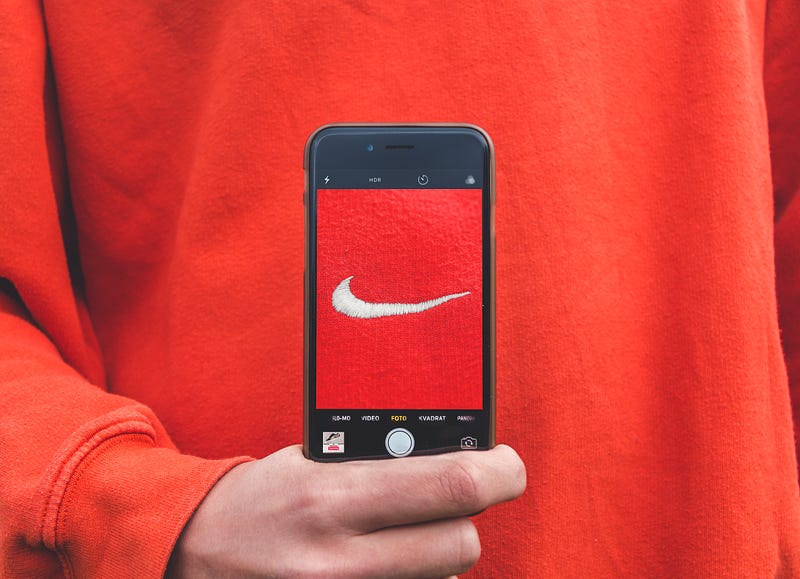
Continuing with something I touched upon in the previous section, brand consistency is very important. While this certainly includes attributes like your tone, personality, and voice, it also relates to stylistic decisions, especially when it comes to producing images and video content.
Some of the more popular social media brands (personal and business) have created an easily recognizable format in which their videos and images are presented. For videos, this may include a quick intro before every video, a particular background in which the speaker appears in front of, and anything else that users can quickly associate with their personal brand.
As you grow your personal brand on social media, you should put effort into ensuring that everything you put out to your audience maintains a level of consistency.
10. Collaborate With Other Influencers & Social Media Personalities

Whether it’s online or offline, your reputation is heavily influenced by the company you keep, and part of creating a successful personal brand online involves building connections and collaborating with other influencers and personalities within your niche.
In most cases, these types of collaborations result in a mutually beneficial situation that provides greater exposure for both parties involved. These collaborations can also be great when you’re feeling uncreative and producing new content isn’t proving easy.
When choosing someone to collaborate with, spend some time reviewing their social media activity and researching their digital properties. This vetting process is important, as you want to ensure that every association you add to your personal brand is a positive one.
During this investigation process, you may come across something they support that you don’t wish to have your brand associated with.
11. Continually Study Successful Influencers

One of the best ways to build a successful personal brand on social media is by studying those who’ve already managed to do so. A lot can be learned from the successes and failures of those who came before you, and not taking advantage of this free resource would be unwise.
One great aspect of this strategy is that success isn’t niche specific, and even if a social media personality/influencer is operating in an unrelated area, there is still much you can learn from them.
12. Use Productivity Increasing Tools

Creating a popular personal brand on social media doesn’t happen overnight, and if you’re like most people, you probably have work and/or school commitments to attend to.
Because of this, you need to maximize your time as much as possible, something that can be difficult when you have several different social media profiles to update. Luckily, apps like Buffer, Sprout, and Hootsuite allow you to upload the same post to several social media sites at once, saving you plenty of time in the process.
Some productivity tools that I personally use:
- Canva — to make quick yet custom graphic designs
- PenSignal — to automatically tweet my articles on Twitter
- Notion — free productivity tool that I use to organize thoughts
Building Your Personal Social Media Brand: The Bottom Line
More people than ever before are attempting to build a personal brand online that they can then monetize, meaning competition is as stiff as ever. Fortunately for you, the vast majority of individuals who undergo this process give up within a year or less, meaning the arena isn’t as crowded as you might think.
Still, there is no shortage of smart, enthusiastic, and driven individuals in the space, and if you wish to be contender, putting the best version of yourself forward is an absolute must.
Thanks for reading this article! Leave a comment below if you have any questions, and if you want to learn more about blogging, content marketing, or subscription newsletter strategy, be sure to sign up for the Blogging Guide Newsletter!
If you liked this article, here are some other articles you may enjoy:

Casey Botticello is an internet entrepreneur and the founder of Blogging Guide, an online community of writers with an award-winning newsletter. He is also the creator of the popular Medium Writing Course and the Substack Newsletter Course.
Casey previously worked at several tech startups, a lobbying & strategic communications firm, and has created several businesses of his own. He is a graduate of The University of Pennsylvania, where he received his B.A. in Urban Studies.
You can connect with him on LinkedIn, Twitter, Facebook, follow his Medium publications, Digital Marketing Lab and Medium Blogging Guide, or reach out to him directly on his personal website.


