How to Build a Movement
The Civilization of Love and other great movements are forged over dinner tables — just like the Church…
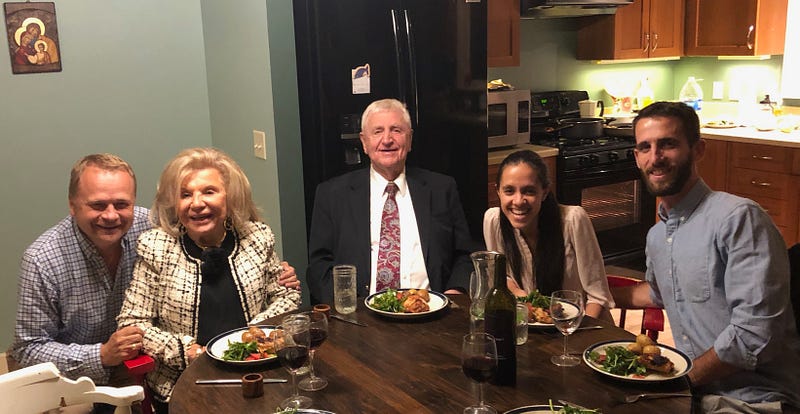
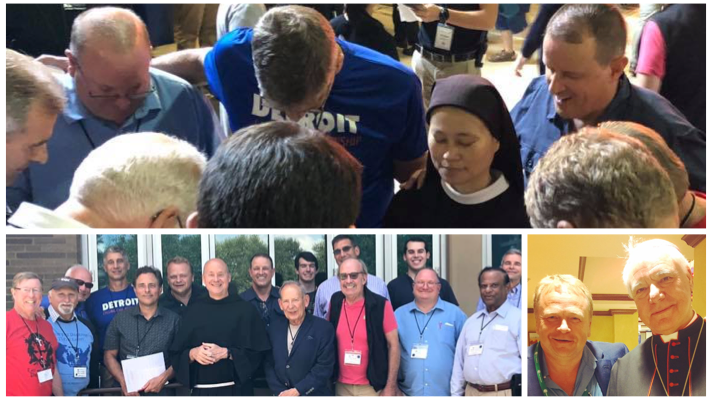
“Mass is like going to dinner with my best friend,” Mike Timmis taught our brotherhood. “You’re not sharing a religion, you’re sharing a relationship…The divide is culture, not color.”
Timmis builds up and grows movements with global impact including: Alpha International, Prison Fellowship International and the National Fellowship of Catholic Men. He is also president of the Archdiocese of Detroit Endowment Foundation. The list goes on and on.
“You have to have a love story with Jesus,” Timmis explains. “Many Catholics are still in the Old Testament of worshipping the Divine but they don’t relate to His humanity... Do you have one or two friends you can share your faith with?”
We are drawn to movements by one dynamic voice who inspires and connects. Calls to do something “go viral’’ when the ripple effect creates sub-movements within the greater movement.
The organizational model? The family. The founder inspires the offspring to start families of their own yet each “new family” (aka domestic church) remains part of the bigger family and continues to inspire new ones who bring more people in.
This is why the entire Church is called the bride of Christ and why the most successful religious organizations are always spinning off new small groups within larger organizations.
The Last Supper marked the founding of the priesthood and the Eucharist and each Mass includes both a meal and a sacrifice. Similarly, growing movements from Alpha to the National Prayer Breakfast are anchored by a meal, a message and fellowship focusing everyone on mission and meaning.
“Jesus always traveled with buddies,” Timmis says. “He sent them out two by two. The biggest problem with the Church is we send priests out one by one… One of the biggest epidemics is the loneliness of men… We have blurred so many distinctions that men are afraid of women, afraid of saying the wrong thing…The most beautiful thing is when a man and woman can be one in Jesus.”
We desire Jesus when we sense His presence in other people.
I constantly meet good souls who were transformed, who went from skeptics to interested to seekers to believers to Disciples to true Apostles after encountering St. John Paul the Great, the most visible saint in history.
Dynamic Catholic estimates that just seven percent of U.S. Catholics are responsible for 80 percent of volunteering and giving.
We all have a calling, a reason and mission we were created to carry out. From Seeker to Disciple to Apostle there are many steps along our spiritual journey. Sherry Weddell, who focuses her life on forming intentional missionary disciples throughout the Church estimates that about “3 percent of all the individual charisms and individual vocations that we have been given by God are being manifested and lived.’’
What would the world be like if those 3 percent grew to 4 percent?
We “can deduce that man became the image of God not only through his own humanity, but also through the communion of persons, which man and woman form from the very beginning. The function of the image is that of mirroring the one who is the model, of reproducing its own prototype. Man becomes an image of God not so much in the moment of solitude as in the moment of communion.” This “constitutes, perhaps, the deepest theological aspect of everything one can say about man. … On all this, right from the beginning, the blessing of fruitfulness descended” (JPII, Theology of the Body.Body)9:3).
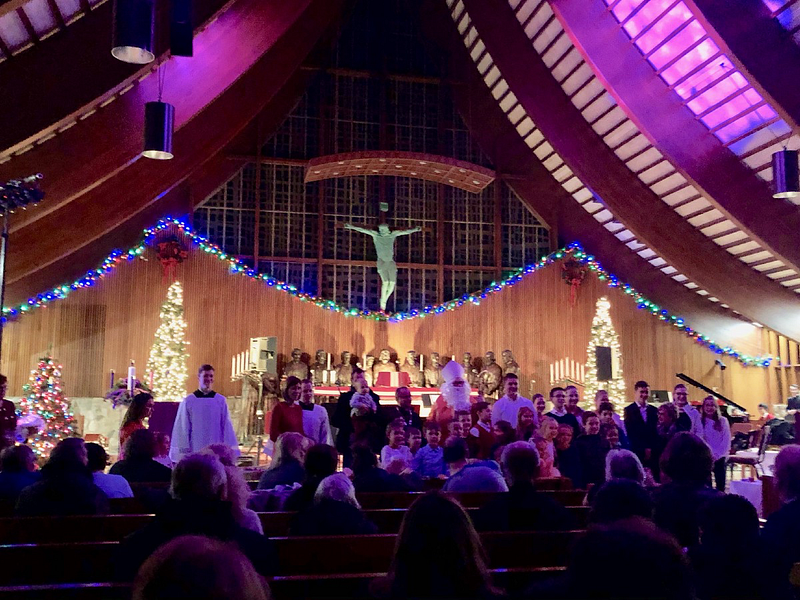
“Love and Mercy: Faustina” references Orchard Lake…
The new surprise hit, the Catholic film from Poland, “Love and Mercy: Faustina’’ explains how the Divine Mercy message passed from Poland to American through Orchard Lake, Michigan.
Orchard Lake is a very Polish place founded by Poles. John Paul said it “reminds me of my beloved Krakow territory.’’ But just as a Church that began in Israel spread through the Roman Empire and beyond, people from around the world are drawn to Orchard Lake and its Catholic and Polish ways.
Orchard Lake Chancellor Mirosław Król arrived when seminary enrollment had cratered to nearly nothing. People were betting the place would close. Król “made Orchard Lake Polish again’’ bringing large numbers of seminarians from Poland but also American Polonia, Vietnam and the Philippines.
The boys prep school will be joined by a girls prep school in the fall. Is this breaking a traditional? Actually, Orchard Lake’s college invited women lay students nearly 50 years ago and Felicia nuns were part of this organization from the beginning in 1885 and even earlier. As John Paul said at Orchard Lake in 1969:
“I wish, my dear friends, that you could understand two fundamental truths: the first truth and most basic one is this, every person has a vocation in life and on this vocation lies a person’s greatness; the second truth is this: everyone of us has to comprehend his own personal vocation, and if Christ is calling you to serve Him as a priest, so that you could forgive sins and celebrate the Holy Sacrifice of the Mass in His name, please do not look back, but continue to look forward and follow that special calling.”
From Poland to the Middle East to Africa to England to Michigan
Consider our dear friends Stephanie Germack and Joe Kalenkiewicz. Both were true victims of socialism, born in Poland as Germany and the Soviet Union attacked at the dawn of World War II.
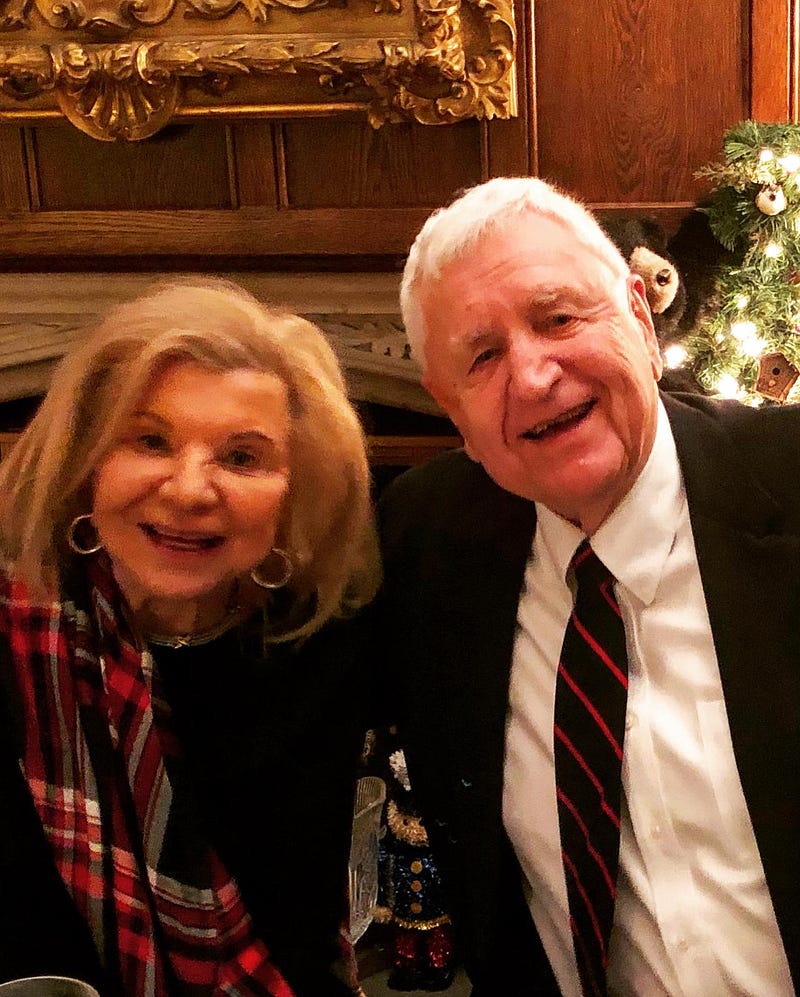
Their familes were captured and relatives died at the hands of the Russians. They eventually fled through the Middle East and Africa, meeting in Kenya (where they were classmates as small children) and England and yet again, in America as adults where they both lived the American Dream.
Stephanie knew John Paul, broke bread with him regularly, organized efforts to build the St. John Paul II National Shrine in Washington, D.C. Joe is similarly highly educated and worldly. His parents founded the Polish Art Center and maintains the Kalenkiewicz Collection.
Both reconnected at Orchard Lake, John Paul’s first U.S. home, the home of St. John Paul the Great Shrine Chapel and the John Paul the Great Foundation.
Called from around the world to Poland
Joe and Corinne MacDonald got inspired by World Youth Day 2016 in Krakow, Poland where John Paul and St. Faustina served as the patron saints. Soon they were starting a new JPII ministry, joining with the bigger movements already underway.
They met John Paul’s long-time secretary, Cardinal Stanisław Dziwisz, who helped them set up the JP2 Project, which brings U.S. college students from across America to Poland for a semester abroad that has them walking in John Paul’s footsteps.
Like John Paul himself, the JP2 Project draws all kinds of young people from the called to the confused, from the devout certain of their life mission to totally confused (not even sure whether they believe) looking for a way.
Men on Fire
Dr. Ed Loniewski and Rory Clark organized Livingston Men on Fire bringing in the Church’s best speakers for evenings with all the essentials: Mass, Confession, food and fellowship as well as annual treats. Now the core team has rented an indoor University of Michigan football field to bring 1,200 men to Acceptthechallenge.org February 22.
Where are you with Jesus?
Our dear friend Dr. Tom Graves (his original Polish name is Grabowski) has grown Catholic Men’s Fellowship into a movement. Leaders across the Church know him and his work, asking him to speak, work with and pray for others.
It all began with just one question from our friend Tony who asked him a simple question that can take a lifetime to answer: “Where are you with Jesus?’’