
How to Build a Daily Breathwork Practice
Can the quality of your breath affect the quality of your life?
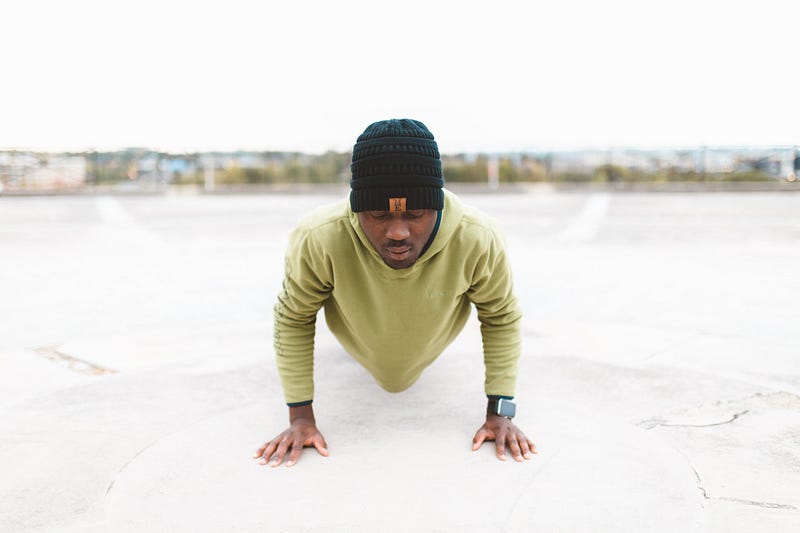
It’s funny to think of breathing as something that needs to be practiced as the breath just breathes, right? As true as that is the quality of your breath can dramatically vary.
The breath is breathing us just as the heart is beating us but unlike other autonomic responses that our body goes through on a moment-to-moment basis, we can control our breath (temporarily) to tap into the quite extraordinary health benefits it can provide.
It’s one of our most potent tools for enhancing vitality, health, and emotional resilience. And the more we practice techniques that support vitality, health, and emotional resilience the more vitality, health, and emotional resilience we have. It keeps on growing. That’s the power of building a breathwork practice everyday.
The breath is breathing us throughout our entire lives, 24 hours a day, from the day we’re born until the day we die. It never stops. We don’t have to go anywhere to find it, buy it, source it, or grow it, it’s with us forever and always. So, what happens when we do become aware of it? What happens when we start to look and see what and who lies within and beyond our breath?
By becoming aware of what happens when we breathe we quickly come to see that we have everything we need already inside of us. But before we can discover just what that feels like on an experiential level we have to be curious enough to find out.
On average
The average person breathes between 20,000 to 25,000 breaths every day. Building a daily breathwork practice is simply becoming aware of a fraction of those breaths. It could be as short as a few minutes everyday or building up to a full breathwork practice but the length doesn’t really matter. What matters is giving awareness to this incredibly subtle but fiercely influential action we undertake on a moment-to-moment basis.
To build a daily breathwork practice it’s important to know that there is a difference between breath awareness, breath control, and breathwork. If you’d like to read more on this you can check out another blog that I wrote here.
In short, it comes down to which area(s) of the breath are focused on while breathing.
For example, breath awareness is simply observing all four stages of the breath (inhale, pause at the top of the inhale, exhale, the pause at the bottom of the exhale) while it moves in and out without changing or controlling any part in particular. The goal is to simply become aware of how the breath is moving from moment to moment.
These breathing exercises are super attainable. It doesn’t matter where you’re at in your life, what physical condition you’re in, where you are in the world, or if you’re under this stress or that stress, all it takes is for you to breathe, and you’re doing that anyway.
Breath control is focusing on one stage of the breath more so than the others. Soma Breath, for example, focuses on holding the out-breath (exhaling fully and then holding no breath), so within this technique, a strong focus is on the pause at the bottom of the exhale.
Rhythmical breathing, alternate nostril breathing, and lots of other pranayama exercises are other forms of breath control.
Breathwork is a mix of the two above. During breathwork sessions, the goal is to be aware of the breath (breath awareness), and to keep it connected with no pauses between the inhale and exhale (breath control). This encourages maximum relaxation, with the goal being to achieve a state where it feels like the breath is breathing you. So, there is an element of ‘losing’ control as opposed to staying in control (breathing in a specific rhythm).
As you can see they are all very different.
The 4 steps to building a breathwork practice
- Curiosity/desire
- Knowledge
- Try
- Review
First and foremost, you have to be curious enough to want to explore the breath. That’s number one. Then you have to find out what breathing exercises there are and/or discover the science behind how the breath is so powerful before trying it for yourself and then reviewing how it felt on an experiential level.
For me, my first introduction to the breath came while SCUBA diving. It was the very first time that I saw just how the quality of my breath directly affected the quality of my experience and that alone captivated me. Then I was lucky enough to find breathwork practitioners that guided me through all kinds of different breathing exercises which sparked my curiosity even further. I was even more enchanted by the breath whilst doing my Kundalini yoga instructor training before falling completely in love with breathwork after I was introduced to SOMA Breath. It was like everything had been building up to that one moment so that everything else could make sense.
I had finally found what I was looking for.
After that, I went on a discovery to learn more. I took the Free Online Masterclass, then I enrolled in their 21 Day Awakening Journey before fully committing to becoming a SOMA Breath Instructor. And from then on I’ve dedicated my days to learning more, studying more, and deepening my own practice whilst sharing sessions with others. It’s completely changed my life.
This has been my journey but there are many ways to reach the top of the mountain.
There are hundreds of different techniques that have been passed down from our ancestors over the thousands of years that we have been here and now with modern-day science revealing the power of the breath, it’s never been more exciting to experience that power within.
The path ahead
There’s no right or wrong path when considering which, if any, modality you’d like to choose. That’s the whole point. The invitation is to find out what feels good for you and for your body, where you find the most connection, and how best to integrate that among the few thousand breaths you take every day.
Whether you go for the meditative approach and choose to watch your breath just like the Buddha did all those thousands of years ago. Or if you want to dive into a training to learn all about breath control, rhythmical breathing, and pranayama exercises to feel more vital and alive through techniques such as the Wim Hoff Method or Soma Breath. Or if you’re ready to find your spirit guides and power animals or breathe your way through trauma in one of the incredible breathwork modalities that are on offer, it doesn’t really matter. Switch it up, try as many as you want, combine forces if you like. The breath is ever-evolving, so, why shouldn’t you be?
The joy comes from being with the breath and that’s experienced in all breathing exercises.
~
If you’ve been inspired by my journey and would like to explore SOMA Breath for yourself, click here


