
How to Build a 7-Figure Business + $4.5M Real Estate Portfolio by 25
Justin Tse is not your average entrepreneur
Justin Tse is a 25-year-old entrepreneur who has been making videos online for 10 years. When he was a teenager, he saved up for many years to be able to buy his very first iPod, one of Apple’s most iconic products of the 2000s. Justin developed a passion for tech over time, and these days his content covers mainly consumer tech, home technology, cars, and travel campaigns. His channel has over 800K subscribers and 134M views.
During his first few years as a YouTuber, Justin spent all of his free time outside of school working on videos, weekends included. At the time, his content was making exactly $0, but as influencer marketing grew and more and more opportunities lined up for him, he dropped out of school to dedicate 100% of his time to his business.
These days, Justin’s media agency is growing at a sustained pace of about 2x per year. His company creates 80 to 100 videos per year for some of the biggest brands in the world, and in 2022 he flew 120 times for business trips. He spends every single day working on videos for his customers and his YouTube audience, and he’s built a 7-figure business from his passion.
In this article, I will break down Justin’s 5 main income streams through 3 key points:
- Leveraging his 7-figure business for real estate acquisitions
- Creating passive income opportunities through his content
- Using a real estate/media agency synergy to put together an Airbnb business
1. Adsense/brand deals — Media company
The bulk of the content Justin Tse makes is aimed at corporate customers. They come to him to get Justin’s audience to check out their product, and they pay his agency a fee in order to get a spot.
The RPM (Revenue Per Mile, or how much a content creator gets paid for 1,000 views on Youtube) in the tech niche is on the lower end of the spectrum, as opposed to other niches like personal finance.
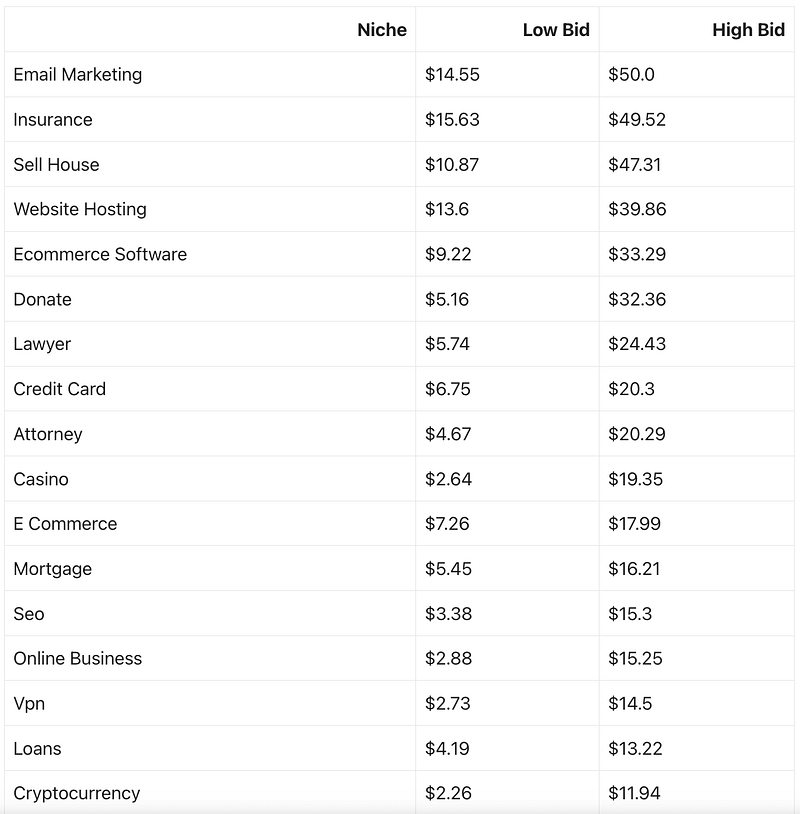
Over the past year, Justin made $116,257 in Adsense revenue, which is pretty low considering he has over 800,000 subscribers and his channel has been around for 10 years.
Yet what is interesting in his specific case is that his company gets paid whether or not the video performs well, because customers want to be in his videos. “YouTube money” is just a bonus for him, and he considers it a passive income. This is pretty smart, but also needs to be nuanced.
Making videos on YouTube and making money with Adsense is extremely hard, and very few people manage to make a decent living from it. When you compare the time it takes to write, shoot, edit, and publish videos (hours and hours of work) versus the amount of money you’ll make from one video, it’s easy to understand why making YouTube videos is nowhere near “passive”. Of course, nobody makes money in the beginning, and growth can be exponential. But most people will have to work extremely hard for years before seeing any money come in from YouTube.
Another smart way Justin generates extra money from his videos is by shooting commercial-grade content:
“We pride ourselves in trying to film the videos in as high quality as possible and in commercial grade because we are then able to use this as leverage in the negotiation process and at the same time license the content to the brands to use it on their own platform.”
Justin not only publishes a branded video on YouTube, he also offers the featured brand the option to purchase the footage in order to use it anywhere they want, effectively becoming owners of the material. He explains the rates for this kind of deal range anywhere from $5,000 flat to tens of thousands of dollars for large deals.
2. Affiliates
The Amazon Affiliates program generates tens of thousands of dollars for Justin’s business every year, which is rather small when you consider the company makes 7 figures a year. I’ve tried Amazon affiliates myself and I have to say that the click rate is so low, you need a huge audience to make a lot of money there.
Ali Abdaal, another Youtuber I’ve covered in the past, has 6 times more subscribers than Justin Tse (4.82M) and includes Amazon affiliate links in almost every video description he posts. Yet he only made $44,000 in Amazon affiliate income in 2022.
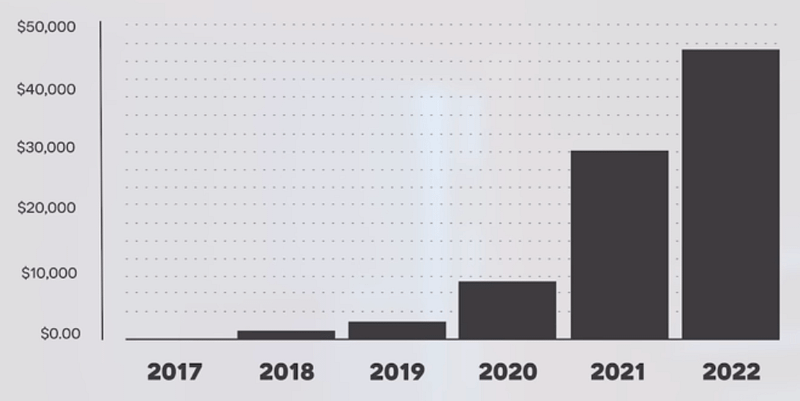
In the case of Justin, his most popular product to date is the Urban Office standing desk, for which he’s been able to convert 100 sales, making around $5,000 in commission (the desk retails for $1,600)
3. Youtube Business Course
“The thing about making Youtube videos and brand campaigns is that it is fully hands-on, and if you take on a ton of campaigns, then it is essentially around the clock. You’re always filming, editing […] Although I do enjoy what I do and like to have the ability to be able to work on all these great campaigns, at some point it is nice to build a passive side”
Again, the term “passive” should be nuanced here. Depending on the course format you decide to go with, it can be anything but passive. Back to Ali Abdaal, his courses are cohort-based, with live webinars and Q&As where he has to be on camera and give a bunch of speeches in front of thousands of people. Although this makes a lot of money (the cheapest course package costs $2,000) it requires a ton of work, and even a whole team. That’s definitely not passive.
Justin’s course is a more “classic” video course you can watch on demand, along with a bunch of downloadable resources, 150+ pages of PDF content, quizzes at the end of chapters… The content never changes and there’s never a live session. This means that he and his team only have to put in the work once, put up the course for sale, and reap the benefits of their hard work, for as long as the course is available, and for as long as they promote it in their videos. The profit per sale for such a product ($300 one-time purchase) is a lot lower than with a live audience, but the upside is that you only have to put in the work once. If you’re good, you can make 20 sales every month ($6,000 profit) and never have to work a day in your life (if that’s what you’re into).
4. Real estate
Here we get into one of the most interesting aspects of Justin’s different income streams. He has a rather impressive real estate portfolio for a 25-year-old, made of 4 properties:
- One condo he lives in, purchased in 2017
- His company office purchased in 2020 through his media company
- One Airbnb apartment purchased at the beginning of 2021
- His dream condo purchased at the end of 2021, under renovation
Although his video business currently generates 95% of his revenue, it is important for Justin to diversify, because in his own words: “YouTube may not be around forever, industries change, the opportunities we have now may not be around in 10 or 15 years.” That’s why he started investing in real estate, with a long-term horizon of at least 10 years.
The BRRRR method
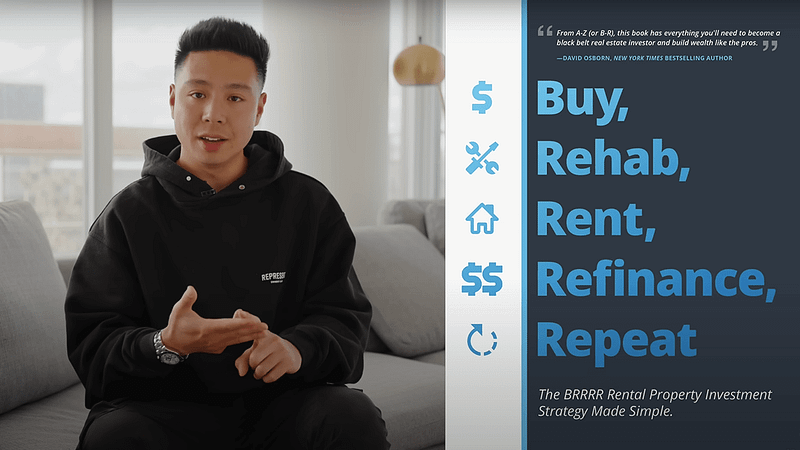
Justin invests in real estate using the BRRRR method, which is short for Buy, Rehab, Rent, Refinance, Repeat.
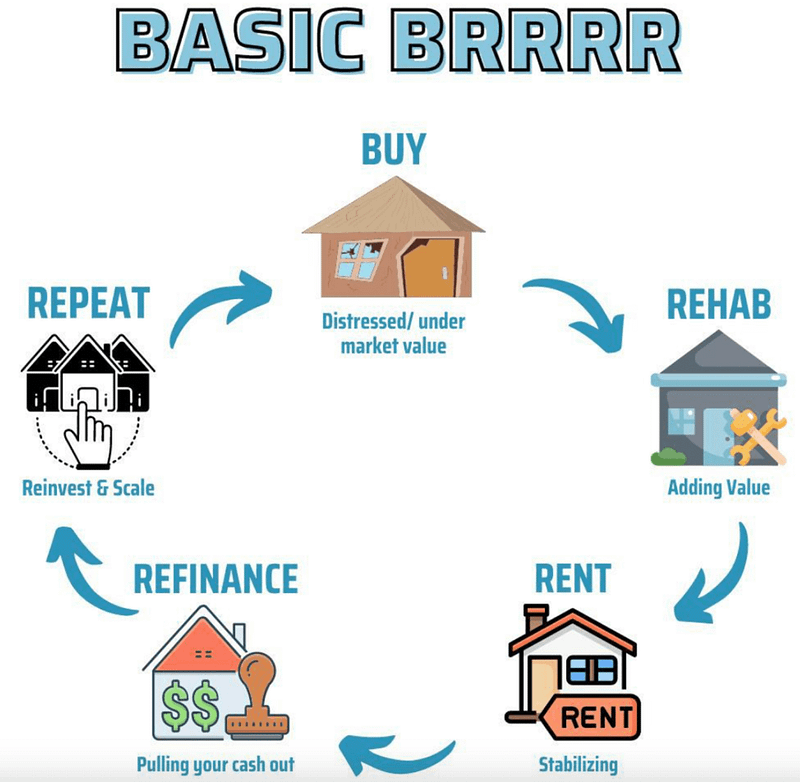
The way he uses that approach in synergy with his media company is very interesting and has huge potential from a business perspective. I’ve broken it down into 4 bullets here:
- Justin makes renovation/lifestyle videos in which sponsors pay to appear. He’s able to get huge discounts on designer luxury furniture he uses both for the video and to furnish the place.
- He then takes amazing photos of the place and rents it as a luxury Airbnb experience.
- The positive cash flow goes into paying off the mortgage faster.
- He then refinances the property and puts the leftover towards another deposit for another property.

The last 2 points of this approach are no rocket science, it’s just real estate 101. But the first 2 points are very interesting because Justin essentially gets his customers to pay for his properties through promotional content. It’s scalable, duplicable, and very smart. With this technique, Justin has been able to purchase a $3M real estate portfolio with 15 to 25% downpayments. Thanks to appreciation, these properties are now worth $4.5M to $5M, but he doesn’t plan on selling any time soon. Instead, he wants to expand his Airbnb empire and build vacation homes to rent out and use as leverage to acquire more properties.
Airbnb revenue example
To give us an idea of how much his Airbnb business makes, Justin breaks down the revenue and expenses for one of his units. He paid $550,000 for it and invested $100,000 in remodeling. The listing has been live for just under 2 months, has a 90% occupancy rate, and made $5,445 in net revenue so far. Some expenses are especially high due to “launching costs”, and these will decrease over time.
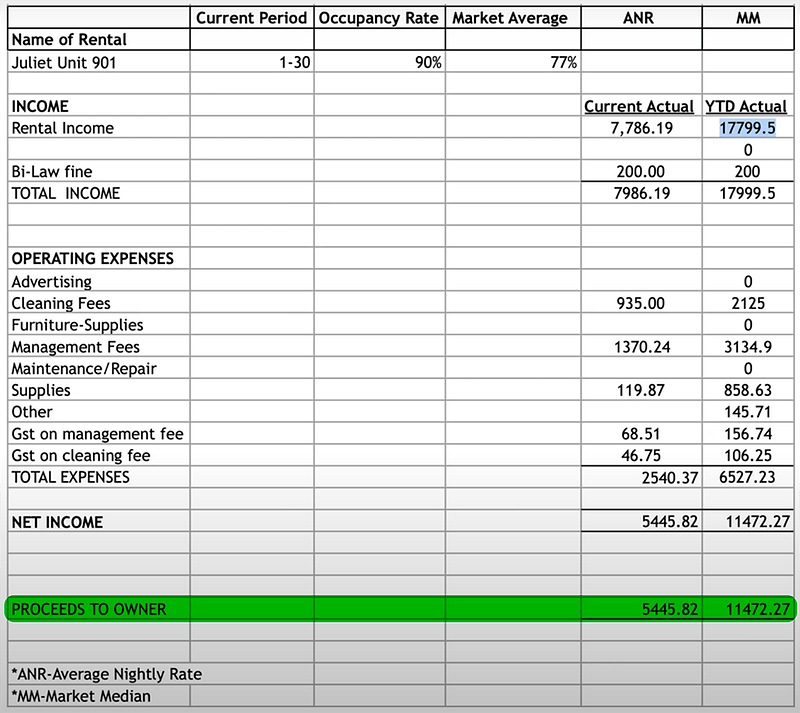
Justin’s Airbnb strategy is to identify relatively unique properties and then invest a healthy amount into remodeling, in order to make them stand out even more. His financial goal is to hit $100K a year in net profit off rentals and to then expand his business as a subsidiary of his media company.
5. Clothing company — Kinsvale
Justin invested in a clothing company in 2019 and currently owns 50% of it. The brand sells both online and at its own retail store downtown. The primary difference between this revenue channel and the others is that the fashion industry has many overhead costs. Kinsvale (that’s the name of the clothing brand) generates between $100 to $150k per year in revenue but is yet to return a positive cash flow for its owners. No matter what kind of profit you make in this industry, overhead costs will include payroll, rent, inventory… On top of that, profits are usually reinvested into the next collection, so Justin hasn’t actually taken any dividends out yet.
His investment was made through a promissory note, which is a great way to hedge your bet and make sure you don’t lose 100% of your investment. He will get his money back after 5 years and still hold the same amount of equity. However, whether or not he’s able to profit from his investment will depend on a lot of factors, including how well the company performs in retail and online.
Conclusion
If any of this was easy, everyone would do it. Justin has been growing his business consistently for the past 10 years and now generates millions. A good rule of thumb is that 50% of people will never try, 40% will stop within the first year, 9% will crash in the second year, and less than 1% will eventually “make it”.
The most interesting and inspiring part about Justin’s business is how he has been able to leverage his media agency to build a nascent real estate empire, and this is a great reminder that no matter how successful you become financially, diversification is key to protecting your future.
I hope you found this article useful, thanks for reading, and enjoy the journey you’re on.
I interviewed 50 productivity/business experts and made a 150+ page guide out of the project. Get it for free here.