
How to Brew the Perfect Coffee
The science of crafting the perfect cup of caffeinated goodness
Collectively, the world drinks over 2 billion cups of coffee every day! Almost everyone takes their coffee differently. Many of us don’t know that much about coffee, caffeine or how it works. Still, some of us don’t know the fascinating science that goes into brewing the perfect cup of coffee. Just like your cup of coffee, the science behind it is deliciously nuanced. It’s time to take your coffee to the next level while providing you with a daily moment of contemplation.
What is Coffee and Why Do We Drink It?
In 850 A.D., an ancient Abyssinian goat-herder named Kaldi noticed his goats were acting strangely. The goats were full of energy, dancing and prancing about in the grass. Upon closer inspection, Kaldi noticed the goats had been snacking on some strange red berries. Upon eating these berries himself, he too began to dance. Eventually, he determined that it would be wise to dry and boil the berries, creating a warm beverage. The goats in this popular legend may have started our cultural addiction with coffee.
Even hundreds of years ago, people brewed coffee to stay awake and alert. What Kaldi and his fellow goat-herders did not know was exactly why they felt this way.
Inside the plump red cherry, the fruit of the coffee plant, lies the coffee seed. When the pulp of the cherry is washed away, the ripe seed can be dried and roasted. This seed is what we call the coffee bean. As we continue striving towards productivity, we seek ways to keep us aroused throughout the day. Unlike Kaldi, we don’t necessarily need to process our coffee beans.
The active ingredient responsible for many of these benefits derived from coffee is caffeine. Caffeine is the most commonly consumed psychoactive stimulant worldwide. Understanding what it can and can’t do will help boost your productivity!
Health Benefits
Have you limited your coffee intake because of the potential impact of caffeine on your health?
I advocate for drinking coffee for its flavour and productivity-related benefits because it’s safe (as long as you aren’t drinking >3–4 cups while pregnant or lactating).
A study published in the New England Journal of Medicine assessed the effects of coffee across 95 human trials. Interestingly, they found that consuming less than 6 cups of filtered coffee per day did not negatively affect cardiovascular health.
Individuals who drank between 3–5 cups of filtered coffee per day showed a small but significant reduction in heart disease and stroke. When looking at coffee drinkers as a whole, they found a reduction in the risk of cancer and all-cause mortality.
While there isn’t any evidence suggesting that coffee will prevent disease, this analysis suggests that coffee could contribute to a healthy, enjoyable lifestyle.
Staying Awake and Alert
Caffeine keeps us aroused and awake! Its chemical structure is remarkably similar to the signalling molecule, adenosine. Adenosine builds up for the day. As it accumulates, it binds to proteins on brain cells, called adenosine receptors.
Adenosine receptors are located in a specific part of the brain involved in alertness and arousal. It activates these receptors, slowing down the brain cells. When these brain cells slow down, we become less alert and more sleepy.
Caffeine impersonates adenosine! When it binds to adenosine receptors in our brain, it prevents adenosine from activating them. Caffeine prolongs our alertness and arousal.

Use caffeine to hack your brain and productivity:
- Drink with breakfast or in the middle of the day for an energy boost
- Caffeine, along with carbohydrate intake, improves post-exercise recovery
- While I’m in the middle of a fast, as part of my intermittent fasting routine, drinking coffee helps me stave off hunger
- When I brew coffee, I take a few moments out of my day, focusing my full attention on the brewing process. I focus on the sound of the dripping, the aroma of the coffee and the flavour. This provides me with a moment of relaxation and contemplation in the morning.
Brewing the Perfect Cup
Just as important as understanding coffee and caffeine, we must also perfect the morning brew. You will save a lot of money, learning to brew the perfect cup. Rather than spending money at cafes, I save money by sourcing high-quality fair-trade coffee beans and brew the coffee myself! Since I prefer my brewing methods over most cafes, I save ~30–50 Euros per month.
I hope my exploration in coffee brewing will help you learn to master the perfect brew to boost your happiness, productivity and the quality of your morning coffee!
Moka Pot
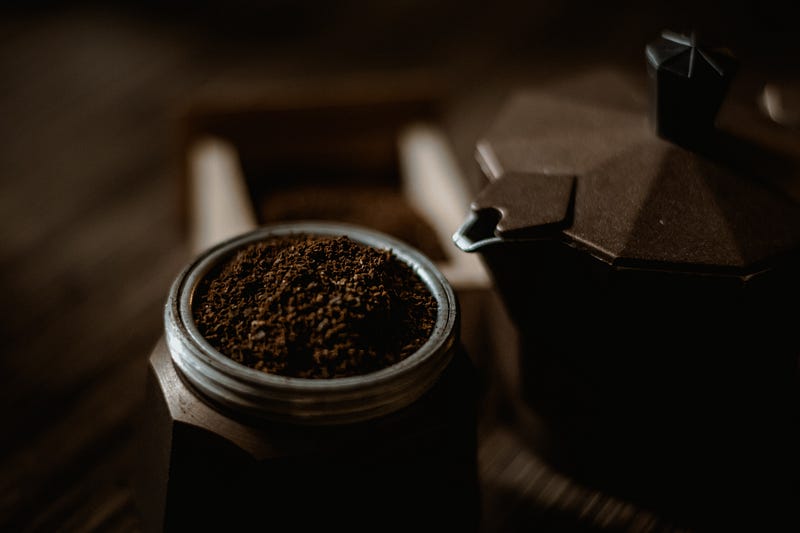
For almost 100 years, this Italian invention streamlined the morning espresso. The Moka Pot or Stove-Top Espresso Maker is a staple for any coffee lover. It consists of three main compartments:
- Bottom Chamber: The base of the Moka Pot unscrews, so that it may be filled with water.
- Coffee Chamber (also called the Filter Basket): This is a perforated metal chamber that holds finely ground coffee. The bottom of the coffee compartment is a small cylindrical tube. When water from the bottom chamber evaporates, it generates air pressure that displaces hot water up the cylindrical tube.
- Top Chamber/Lid: A final compartment screws on top of the coffee chamber. The bottom of this compartment is perforated, allowing hot coffee to rise into its inner-chamber. Once there is enough air pressure from evaporated water, the coffee rises through a cylindrical tube at the top of this inner-chamber. Like a hot volcano, the coffee bubbles out at the top.
To briefly summarize, heated water in the bottom chamber evaporates into vapour. The increased pressure pushes hot water into the coffee chamber. The coffee grounds saturate and expand. The water vapour and expansion in this chamber pushes coffee out of its spout at the top.
Now that we understand how it works, we begin to master our technique.
- Get fresh fine-ground coffee and pre-heat your water.
- Heat your stove on a low to medium setting.
- Add water to fill ~80% of the bottom chamber.
- Fill your coffee chamber to the brim, evenly smoothing out the finely-ground coffee with your fingers or a spoon.
- Secure the Coffee Chamber over the Bottom Chamber containing our pre-heated water.
- Secure the top chamber over the rest of the Moka Pot. Twist to ensure a tight seal. Careful! It will be hot!
- Place onto the stove, leave the lid open and wait for the bubbling sound.
- When the stream of coffee begins to flow out, turning a lighter shade of brown/yellow, take the Moka Pot off of the stove and cool the bottom on a cold towel.
While this process is a little slower than the typical Moka Pot procedure, it ensures that the coffee is unburnt. If you prefer the American to an espresso, add boiling water to dilute, otherwise enjoy your flavorful, bitter brew.
French Press
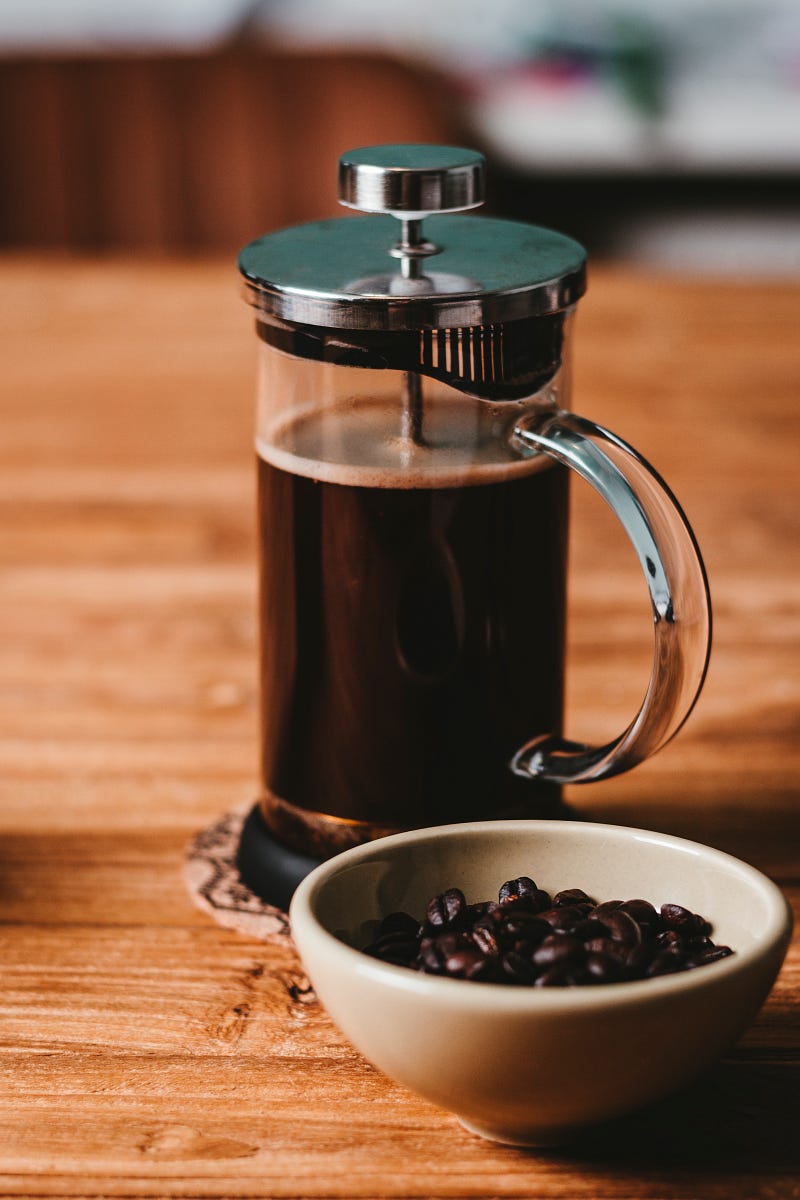
This caffeine-contraption uses a plunging mechanism to extract coffee from coarse-ground beans. It consists of a glass beaker and a plunger with a filter at the bottom. Ground coffee is added to the bottom of the glass beaker, where it begins to extract the flavours of the coffee. When pressed down, the plunger adds additional pressure for extraction and further separates the coffee grounds from your coffee. It generates very aromatic coffee, less bitter than the espresso.
- While the typical wisdom suggests a 1:10 ratio of coffee grounds to water, I use a 2:10 ratio. For every 100mL of water used for my coffee, I add 20g of fresh coarse-ground beans.
- I measure out heated water, pouring it into the beaker.
- I cover the top of the beaker with the plunger, leaving it to saturate for exactly 3 minutes. Once this perfect three minute is up, I remove the plunger and stir the top with a wooden spoon. Using a non-metal utensil reduces the chances of shattering the beaker.
- I place the plunger back on top of the beaker, slowly pushing down for 30 seconds.
I’ve found that 3.5 minutes is the perfect amount of time needed to extract the flavour from the coffee. The French Press requires a bit of gentle patience.
Hario V60
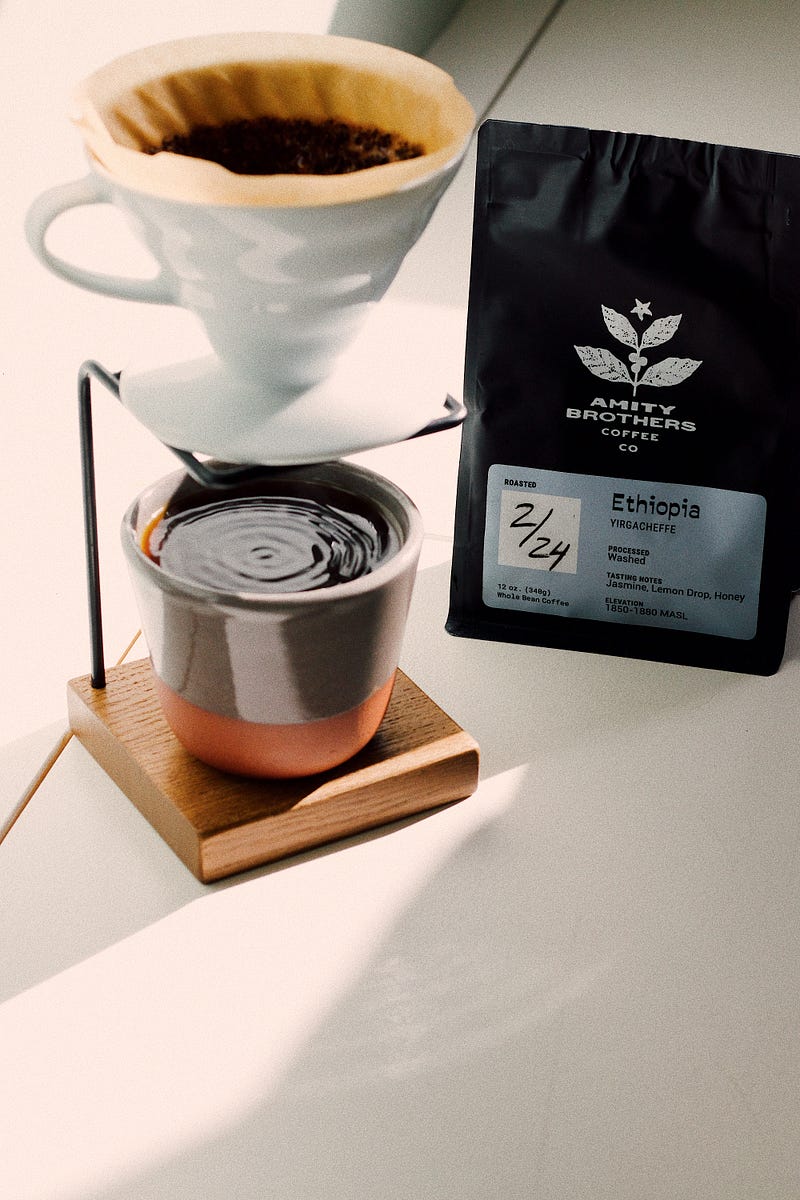
This is my favourite method for brewing coffee! The V60 is a ridged cone that holds a filter. Medium-ground coffee (15–20g per 100mL) is scooped into a moistened filter. Coffee grounds are saturated with heated water, followed by slow extraction. With practice, it will only take around 3.5 minutes to brew the perfect drip-coffee.
If you use bleached filters, make sure to pre-wash them with boiled water. Place the filter in the cone and pour boiled water to wash away any loose fibres that would affect flavour.
- Place the V60 Cone over your cup or glass receptacle. Put in the filter and add coffee.
- Pour a bit of boiled water to ensure the coffee in the cone is soaked. Let it sit for 30 seconds to absorb the water.
- Pour a stream of boiled water. Pour a gentle stream of water in a swirl around the outer edges of the cone. Make sure to aim away from the saturated coffee in the centre.
- It will take around 3 more minutes for the coffee to drip. Add more water depending on how much coffee you’re making!
I find this method the easiest to clean and the most flavourful!
Make every single cup of coffee matter. Take time out of your day to relax and brew yourself the perfect cup. Remember the many ways it benefits your productivity while you appreciate the complexities of its aroma and flavour.
Here’s a brief summary of the benefits mentioned in the article:
- Arousal and alertness from caffeine
- Post-exercise recovery
- Daily energy boost as part of a healthy diet
- A moment of pensive contemplation everyday
- Saving you money every month


