avatarKhushboo Patel

Free AI web copilot to create summaries, insights and extended knowledge, download it at here

1807

Abstract

void faulty lumps or tenderness. If your periods are irregular, do this on the same date every month.</p><p id="8a08">Remember mammography is an accurate test, but these examinations are useful as a screening tool. Women should start doing this test at the age of 20 and should additionally get regular mammograms done after 40 years of age.</p><p id="e601">Maintain a diary with your monthly findings to know your breasts better.</p><p id="c146"><b>Step 1</b></p><figure id="ef6d"><img src="https://cdn-images-1.readmedium.com/v2/resize:fit:800/0*FwhKPY1V03kIORAg"><figcaption>Step 1</figcaption></figure><p id="b07f">Stand in front of the mirror with your shoulders straight and your hands on your hips. Begin observing your breasts.</p><p id="f77b">You should look for:</p><ul><li>The size, shape, and color of the breasts to be usual.</li><li>Evenly visible breasts with no distortion or swelling.</li></ul><p id="cd61">If you notice the following changes, bring it to your doctors notice:</p><ul><li>Puckering, dimpling, or bulging of the skin.</li><li>Rash, redness, swelling, or soreness.</li><li>An <i>inverted nipple</i> (pushed inward instead of sticking out).</li></ul><p id="8c05"><b>Step 2</b></p><figure id="fce5"><img src="https://cdn-images-1.readmedium.com/v2/resize:fit:800/0*AB20kuy2WK_IoZ43"><figcaption>Step 2 and 3</figcaption></figure><p id="5392">Stand in front of the mirror with your arms raised over your head and look for the same changes, described in step 1.</p><p id="44e1"><b>Step 3</b></p><p id="22e8">While observing your breasts in the mirror, look for any signs of fluid coming out of one or both nipples (this could be a watery, milky, or yellow fluid or blood).</p><p id="5742">Note: Lactating mothers may have some discharge, which can be ruled out.</p><p id="858d"><b

Options

Step 4</b></p><figure id="7fad"><img src="https://cdn-images-1.readmedium.com/v2/resize:fit:800/0*DpvsKDnn4rJbwbjk"><figcaption>Step 4</figcaption></figure><p id="0fac">Lie down on a flat surface, and examine your breasts with your hands.</p><p id="98b3">Use your left hand to examine the right breast and vice versa with the other breast. Use your finger pads, keeping the fingers together and flat. Maintain a firm, smooth touch. Cover your entire breast, from side to side, and top to bottom.</p><p id="5796">Pattern:</p><p id="f9e3">Circular motion: Start from your nipple and move in larger circles until you reach the end of your breasts.</p><p id="f7e4">Up and down motion: Move your fingers up and down vertically, as if you were mowing a lawn, in rows.</p><p id="261b">Pressure:</p><p id="9feb">Use light pressure- for the skin and tissue just beneath the breasts</p><p id="e506">Use medium pressure- for tissue in the middle of your breast tissue.</p><p id="d964">Use firm pressure- for the deep tissue in the back of the breasts.</p><p id="3d9b"><b>Step 5</b></p><figure id="3af2"><img src="https://cdn-images-1.readmedium.com/v2/resize:fit:800/0*IDOmOszYHcgcAFox"><figcaption>Step 5</figcaption></figure><p id="8446">Come to a standing or sitting position and examine your breasts. Use the same hand patterns and pressure used in step 4.</p><p id="e081">What you should do if you notice any abnormal findings:</p><ul><li><i>Do not panic</i>- Some women may have lumps in their breasts, which is very normal. There are numerous causes for a benign lump, such as hormonal changes or an injury.</li><li><i>Call your doctor </i>if you find any new or worrisome lump. Also if there are any irregular changes.</li><li><i>Make sure your doctor answers</i> all your questions.</li></ul></article></body>

How to breast-proof yourself at home.

Do this simple self-test to understand your breasts better.
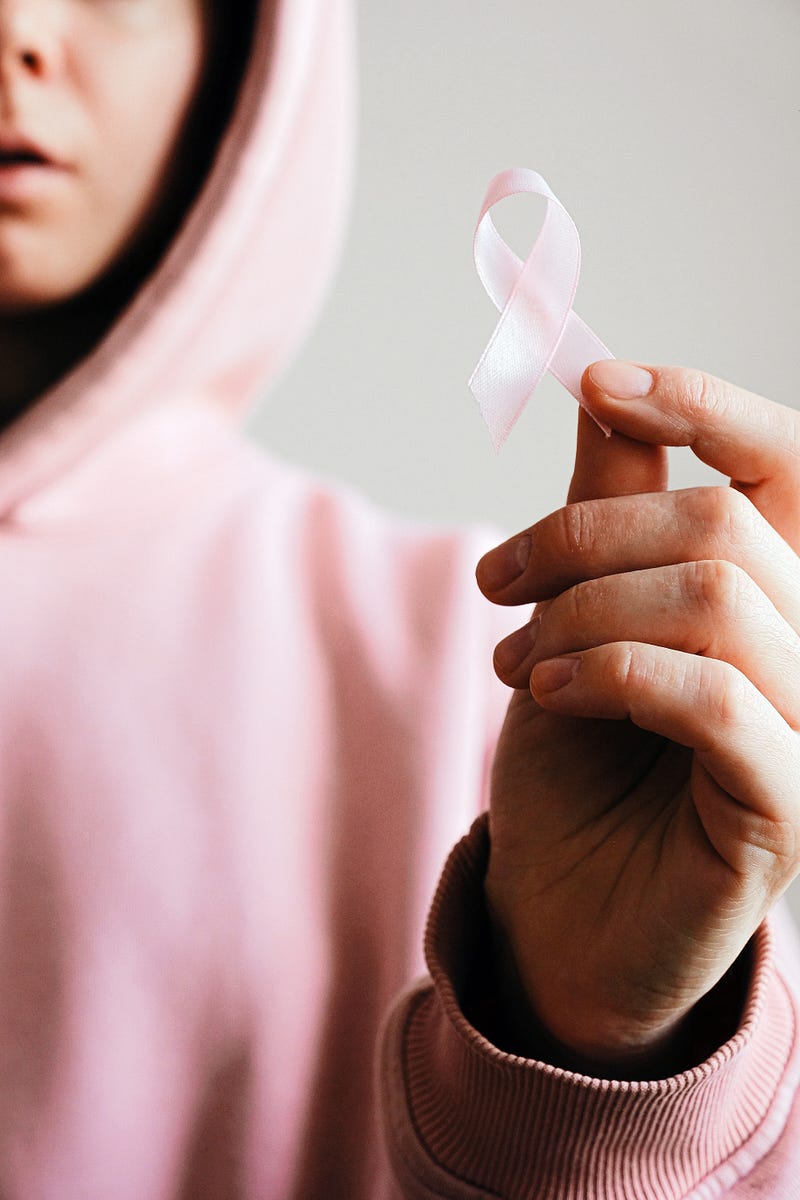
Photo by Anna Shvets from Pexels

About 1 in 8 American women (about 12%) have a chance of developing invasive breast cancer. It is the second-largest type of cancer, which causes fatality among American women, after lung cancer.

According to the American Cancer Society, an estimated 276,480 new cases of invasive breast cancer are expected to be diagnosed in 2020.

They also estimated that about 30% of newly diagnosed cancers in women, will be breast cancers. A woman’s risk of breast cancer doubles if she has a first relative that is a mother, sister, or daughter diagnosed with breast cancer. Less than 15% of women with breast cancer had a family history, whereas the rest 85 % had no family history. With this data, it becomes extremely important for us women to be more aware of our breasts.

Know if you are at risk:

  • Any family history of breast cancer.
  • Any previous history of breast cancer.
  • Women who had radiation therapy between 10–30 years of age.

Five steps of Self-test for Breast Examination.

Do this self-examination once a month, probably one week after your periods, to avoid faulty lumps or tenderness. If your periods are irregular, do this on the same date every month.

Remember mammography is an accurate test, but these examinations are useful as a screening tool. Women should start doing this test at the age of 20 and should additionally get regular mammograms done after 40 years of age.

Maintain a diary with your monthly findings to know your breasts better.

Step 1
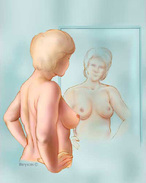
Step 1

Stand in front of the mirror with your shoulders straight and your hands on your hips. Begin observing your breasts.

You should look for:

  • The size, shape, and color of the breasts to be usual.
  • Evenly visible breasts with no distortion or swelling.

If you notice the following changes, bring it to your doctors notice:

  • Puckering, dimpling, or bulging of the skin.
  • Rash, redness, swelling, or soreness.
  • An inverted nipple (pushed inward instead of sticking out).

Step 2
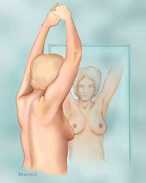
Step 2 and 3

Stand in front of the mirror with your arms raised over your head and look for the same changes, described in step 1.

Step 3

While observing your breasts in the mirror, look for any signs of fluid coming out of one or both nipples (this could be a watery, milky, or yellow fluid or blood).

Note: Lactating mothers may have some discharge, which can be ruled out.

Step 4
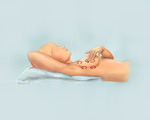
Step 4

Lie down on a flat surface, and examine your breasts with your hands.

Use your left hand to examine the right breast and vice versa with the other breast. Use your finger pads, keeping the fingers together and flat. Maintain a firm, smooth touch. Cover your entire breast, from side to side, and top to bottom.

Pattern:

Circular motion: Start from your nipple and move in larger circles until you reach the end of your breasts.

Up and down motion: Move your fingers up and down vertically, as if you were mowing a lawn, in rows.

Pressure:

Use light pressure- for the skin and tissue just beneath the breasts

Use medium pressure- for tissue in the middle of your breast tissue.

Use firm pressure- for the deep tissue in the back of the breasts.

Step 5
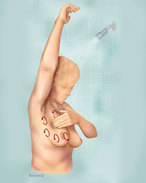
Step 5

Come to a standing or sitting position and examine your breasts. Use the same hand patterns and pressure used in step 4.

What you should do if you notice any abnormal findings:

  • Do not panic- Some women may have lumps in their breasts, which is very normal. There are numerous causes for a benign lump, such as hormonal changes or an injury.
  • Call your doctor if you find any new or worrisome lump. Also if there are any irregular changes.
  • Make sure your doctor answers all your questions.
Women
Breast Cancer
Health
Self-awareness
Life
Recommended from ReadMedium