avatarSuzanne E.

Free AI web copilot to create summaries, insights and extended knowledge, download it at here

7999

Abstract

Pexels</a>. | <b>But, seriously, how fun does skating down the open road, wind blowing through your hair look?</b></figcaption></figure><p id="62dc">Here are a few ideas for habits people usually dread:</p><p id="8b18">Working out:</p><ul><li>Have a dance party</li><li>Become a hula-hooping pro</li><li>Prepare a scavenger hunt around your city</li></ul><p id="f662">Waking up early:</p><ul><li>Set your favourite song as your alarm</li><li>Prepare a fun treat that makes you jump out of bed each morning</li><li>Set an alarm time trial around your house and try and get to each spot before the alarm goes off</li></ul><p id="0701">Cooking healthy food at home:</p><ul><li>Pretend you’re on Masterchef</li><li>Have fun with plating and presentation</li><li>Make a personal cookbook by experimenting with recipes</li></ul><p id="1869">Conventional activities work for some people, but that person may not be you. If it’s not, it’s completely ok to do things your own way. In fact, it’s <i>encouraged</i>.</p><p id="3ce3">Just remember, fun things can still be hard, but you’ll be more excited to push through the challenges when you’re having a great time.</p><h1 id="117f">4. How am I going to make this easy?</h1><p id="a895">Just like making it fun, habits should be easy. Even when they are hard, they should be easy. Yep, I know that’s confusing, hear me out.</p><p id="4a57">You can’t always stop a habit from being hard. If it requires a big mindset shift, like trying to do things you think you’re not good enough for, it’s going to take a lot of energy. It may even feel physically painful (especially if you’re prone to tensing your body when you’re uncomfortable or stressed).</p><p id="fa9f">But you <i>can</i> control how hard it is to actually start the habit. Studies show that the more effort you have to put in to start your habit, the <a href="https://jamesclear.com/habit-guide">less likely you are to do it</a>.</p><p id="7ca4">Like, come on, if I’m trying to work out in the mornings but I have to pick out my clothes, choose a workout, search for my keys, and change around my schedule to fit it in, I’m probably just going to skip it.</p><p id="0902">And if you are <a href="https://neurodivergentinsights.com/blog/sensory-overload-in-adhd">neurodivergent</a>, it’s even worse because each “normal” step feels more like 10 different steps to you.</p><figure id="894b"><img src="https://cdn-images-1.readmedium.com/v2/resize:fit:800/1*3irUmkbUSaUfPKQ_0GK10w.jpeg"><figcaption><a href="https://www.pexels.com/photo/woman-sitting-on-deck-chair-by-sea-258145/">Photo by Pixabay from Pexels</a>. | <b>There’s always a way to make hard tasks more bearable. Think about your strengths and what you can bring to the table.</b></figcaption></figure><p id="0a5f">So how do you remove some of that start-up friction? There are two main ways:</p><h1 id="65f7">Prepare everything you can in advance</h1><p id="a113">The night before, make it part of your evening wind-down to prepare for new habits the next day. This could be choosing clothes, prepping food, being clear on the activity you’re going to do for that day… anything that requires brain energy.</p><p id="4fe1">But don’t spend more than 5–10 minutes doing this. If preparing feels like a chore, then just like your habit, you’re unlikely to keep doing it and it’ll have a ripple effect.</p><p id="00fe">Instead, do the basics and don’t overcomplicate it.</p><p id="c381">Choosing your clothes for tomorrow’s workout? Top, bottoms, socks, underwear. Put them on your desk. Sorted. Preparing food for tomorrow’s cooking? Put all your ingredients together in the fridge so you don’t have to search for them. Leave the store cupboard items on your worktop. Done.</p><figure id="9ed8"><img src="https://cdn-images-1.readmedium.com/v2/resize:fit:800/1*5G3h_5O1M3rwc_5ialRzdw.jpeg"><figcaption><a href="https://www.pexels.com/photo/hands-with-folded-cloths-9185814/">Photo by Timur Weber via Pexels</a>. | <b>It’s the easy actions that drive lasting change</b></figcaption></figure><p id="e595">Making it easy doesn’t have to be difficult, and it will make such a difference the next day when all your energy is focused on starting your habit.</p><h1 id="ab1f">Habit stacking</h1><p id="cd9e"><a href="https://www.everydayhealth.com/emotional-health/habit-stacking-and-why-it-might-help-your-behavior-changes-stick/">Habit stacking</a> removes a lot of that starting energy depletion.</p><p id="6c37">You know how it takes 20 minutes to hype yourself up to go on that walk? Well, if you know that as soon as you finish eating lunch, you head out the door for a stroll, you save a lot of that wasted energy, and it’s a lot easier to do!</p><p id="4126">That’s what habit stacking is. It’s taking a habit you already have (eating, using the bathroom, going to work, etc) and attaching your new habit to the end of it.</p><p id="3bc9">New habits aren’t intuitive. They don’t feel like second nature. You have to really concentrate to do them. Heck, sometimes you have to spend all your brain energy just to <i>remember</i> you wanted to do them. Habit stacking takes something you already do automatically to act as a trigger/ reminder to do your new habit.</p><p id="6237">If you can harness the power of habit stacking, you have a better chance of making this habit stick. Just don’t go overboard. Habit stacking isn’t a hack to build multiple habits at once. If you’re someone who struggles building habits, it’s best to focus on just one at a time no matter how fun or easy it may feel.</p><h1 id="6069">5. How am I going to track and review this habit?</h1><p id="7af3">Here’s where we get to the good stuff.</p><p id="a216">Most people create rigid plans for their new habits and think they’ve failed if they can’t keep up. They think putting a checkmark next to a habit is enough to make a habit stick. Sure, that <a href="https://www.nih.gov/news-events/nih-research-matters/dopamine-affects-how-brain-decides-whether-goal-worth-effort">checkmark gives you dopamine</a> and is a great tool to help you keep going. But if your habit feels resistant or boring, that <a href="https://www.intoactionrecovery.com/how-dopamine-drives-our-behavior/">dopamine hit will wear off</a> pretty quickly. The thrill of the completed task can’t compete with the pleasure that comes with avoiding a task you hate doing. So, on top of your daily checkmarks, you should have a system in place to review your habits regularly.</p><figure id="4478"><img src="https://cdn-images-1.readmedium.com/v2/resize:fit:800/1*FD90nSWVHM12ayX_XFkgBw.jpeg"><figcaption><a href="https://www.pexels.com/photo/crop-ethnic-psychologist-writing-on-clipboard-during-session-5699456/">Photo by Alex Green via Pexels</a> | <b>Letting your thoughts out of your mind and onto paper (or your screen) is the best way to organize and understand them</b></figcaption></figure><p id="f606">But how often should you be reviewing?</p><p id="4ea4">I wish I could give you an exact timeframe, but like I said earlier, you’re an individual with unique circumstances. A one-size-fits-all approach works for almost no one.</p><p id="51db">In an ideal world, you’d write a little daily summary about how your habit went… but that’s not realistic for everyone.</p><p id="a6f8">Instead, choose a hard deadline review interval (weekly, fortnightly, monthly … try not to go longer than that if you can) and put it in your calendar. But always have a caveat — if the habit isn’t working, or I’m struggling to keep up after X days, I will review it now.</p><p id="f1fe">As for the review itself, what should you be asking? The most useful reviews will include questions like:</p><ul><li>How does this habit make me feel?</li><li>What struggles am I facing?</li><li>How does the reality of this goal differ from my expectations?</li><li>Can I make this habit easier? How?</li><li>Can I make this habit more fun? How?</li><li>How am I going to change this habit so it better aligns with my ci

Options

rcumstances</li><li>Have I given it enough time? Should I activate my “get-out” clause?</li></ul><p id="900b">These questions will help you adapt the habit and tailor it to your needs. After all, what’s the point of an experiment if you can’t play around with your method, right?</p><p id="a9d8">Before you start, create a template you can quickly turn to when you need to review. You can do this in a notebook or create a worksheet on Canva. Personally, I use Notion to build my own easy plug-and-play templates that take the effort out of my habit tracking and reviewing process.</p><p id="3e6e">As for that get-out clause…</p><h1 id="26bd">6. What’s my get-out clause?</h1><p id="5a7d">By far, this has been the most powerful tool I’ve used to build new habits in my own life, and it’s a tool few people use to their advantage.</p><p id="777d">A get-out clause is essentially like a contract to yourself that you’re allowed to stop pursuing a habit if it no longer serves you without feeling any kind of guilt about it. And before you ask, no it’s not meant to be an excuse to give up at the first hurdle. It’s a way of removing your emotions from the habit-creation process and being realistic about your journey.</p><figure id="9a69"><img src="https://cdn-images-1.readmedium.com/v2/resize:fit:800/1*0aNXgNf53OalO_zN8WYaMA.jpeg"><figcaption><a href="https://www.pexels.com/photo/woman-in-activewear-with-a-jacket-walking-while-carrying-a-backpack-4939429/">Photo by Nataliya Vaitkevich via Pexels</a> | <b>Walking away doesn’t have to be sad. Take the lessons and leave with the biggest smile on your face knowing you gave it your all.</b></figcaption></figure><p id="96ff">So how does a get-out clause work?</p><p id="216d">You’ll write down the “terms and conditions” in which you agree with yourself you can stop trying to build a new habit.</p><p id="9201">The idea is, you create a set of criteria a habit needs to meet and if it doesn’t, it’s a reminder that you and that habit aren’t compatible, at least not at this time. Instead of chalking the end of your experiment as your own failure, you remind yourself you gave it a reasonable go and that’s all you can ask for.</p><p id="87de">Your get-out clause should reflect your own expectations and the specific thought processes that usually cause you to internalise the “failure” of your habit.</p><p id="938d">I like to structure mine in two parts. In the first part, I write out my expectations, and in the second, I use a checklist to make sure I’ve checked that I satisfied the terms of my clause before I make a decision. I include items such as:</p><ul><li>How long do I need to give this habit before I feel ok stopping it?</li><li>Did I try to review and adapt this habit? How many times?</li><li>Do I feel I have reviewed and adapted this habit enough to be confident it’s just not for me right now?</li><li>Does this habit still align with my overall life goals?</li><li>How will I reward my efforts?</li></ul><p id="33d7">At the end of my get-out clause, I’ll add a section at the end where I sign that I agree to the get-out clause and will not internalise this as me being a failure. This makes it feel more like signing a contract and ending an experiment, taking some of the emotional sting away.</p><p id="7924">Again, this is a great thing to have as a template.</p><h1 id="5b7d">7. How will I reward my efforts?</h1><p id="cee3">Rewards are part of the holy trinity of habit creation. But it may be time to start thinking of rewards a little differently.</p><p id="1e06">Giving yourself a little <a href="https://bmcpsychology.biomedcentral.com/articles/10.1186/s40359-018-0270-z">reward for completing a habit</a> is a great way to enforce the behaviour. And even though scientists like Andrew Huberman remind us that the <a href="https://www.youtube.com/watch?v=Wcs2PFz5q6g">habit itself should be the reward</a>, most acknowledge that people aren’t able to access that mindset, and rewards are a good alternative in the meantime. Ultimately, you have to meet yourself where you’re at and use the methods that work for you in that moment.</p><p id="e555">But life is a series of checks and balances, right?</p><p id="2f7c">So naturally, if you only reward yourself when you do the habit, you’re going to associate not doing the habit as something bad. For a lot of people, this can lead to the idea that when they do the habit, they deserve good things, but when they don’t do it, they don’t deserve anything. And this is a core reason why we internalise failed habits as shame, guilt and not being good enough.</p><p id="cf8c">Rather than making your rewards focus on just action, make it more about <a href="https://tinyhabits.com/purpose/">effort and intention</a>.</p><figure id="f1fb"><img src="https://cdn-images-1.readmedium.com/v2/resize:fit:800/1*cm41mRkIevkBfj3kUdp6WQ.jpeg"><figcaption><a href="https://www.pexels.com/photo/joyful-diverse-students-giving-high-five-in-park-5537998/">Photo by Zen Chung via Pexels</a>. | <b>Isn’t life more fun when you can give yourself a high five every day?</b></figcaption></figure><p id="14c2">If your new habit goal is to write 500 words a day but today you sat at your desk and stared at a blank screen, celebrate yourself. <i>You tried</i>. And tomorrow you’ll try again. Already, sitting at that desk was probably a lot of effort, and you were dealing with a lot of overwhelm. The fact you showed up at all proves you want to try. And you deserve to praise yourself for it. If you view it as a failure, then why even bother getting to your desk at all?</p><p id="23b3">Celebrating the small steps, the trying, and the intention helps you repeat those actions, slowly removing your overwhelm and eventually leading to bigger gains. But if you tell yourself it wasn’t worth rewarding and celebrating, you’re going to end up falling into the “I’m not good enough” pitfall.</p><p id="9a47">This same principle is why you should reward yourself after giving up a habit. You tried. You showed up. You did the experiment, reviewed it, adapted it, and it just wasn’t for you. <b>But you still tried.</b> And trying is usually the hardest part.</p><p id="c454">Reward yourself for that effort and regroup. The more you reward the effort, the more you’ll want to keep experimenting in life to find the habits, systems, and paths that move you closer to your goals. And isn’t this what habit-building is all about?</p><h1 id="a1f1">Get curious about new habits without tying your self-worth to them</h1><p id="fc4f">A well-thought-out habit that is tailored to you and aligns with your goals has the power to move you in the right direction. But a habit is worth nothing if it doesn’t work for you.</p><p id="e15f">It’s time to stop listening to outside noise and forcing yourself into a habit that doesn’t work for you. Stop blaming yourself when a habit just doesn’t want to stick.</p><p id="d586">Instead, treat your new habits like experiments. Explore what works for you and change what doesn’t. Ask questions about habits and be selective about the ones you think are worth exploring for your life circumstances. Let go of the behaviours and activities that just don’t make sense or work in your life right now. And most importantly, remember that a habit does not determine your self-worth.</p><p id="efcc">A failed habit is not a failed person, it’s just an experiment you conducted that didn’t work.</p><p id="cf4a">If you keep exploring without judgement, you’ll find the right habits for — -you — and they won’t cost you your self-belief in the process.</p><p id="0fa1"><i>Looking for more anti perfectionist mental health talk? Subscribe to my newsletter, <a href="https://the-anti-perfectionist-club.ck.page/subscribe">The Anti Perfectionist Club</a>, and be the first to get notified each time a new story drops! Plus weekly tips, tricks and slow growth psychology to help you start your journey of self-discovery and mental well-being!</i></p></article></body>

How to Break the Dreaded New Habit Shame Cycle with Seven Simple Questions

Ask yourself the right questions to avoid pursuing toxic habits that won’t work for you

Photo by Thirdman via Pexels

Do you remember that TikTok you saw last month?

You know, the one with the woman who has her sh*t together. Fancy career, relationship goals, money in abundance, a huge smile across her face … everything you’ve ever wanted.

All because of this one habit that will change your life.

You want what she has, so you decide to follow her tutorial and build that habit for yourself.

Day one felt great — you were basically a pro at it … why didn’t you start sooner? Except, two weeks later, you realised it had been 12 days since you tried those habits again.

“What went wrong? How did I mess up so bad?” you asked yourself in the mirror.

Suddenly, that “incredible” habit made you feel worse than you did before.

We’ve all been there. I know I have.

The internet is full of people promising the path to happiness if you follow the same habits they do.

“If you wake up at 5 am every day, you’ll be super successful.”

“If you work out every day, you’ll be happy and stress-free.”

Photo by Ivan Samkov via Pexels. | When the influencers be influencing…

They show you how amazing these habits are and give you a blueprint for how to replicate them in your own life.

They’re always these seemingly super easy habits that literally anyone could do. At least that’s what they want you to believe.

Listen, I’m not saying these habits don’t work. Every good habit has its target audience. But does that mean every good habit works universally?

Absolutely not!

And what happens when you try to start a habit that doesn’t work for you? You don’t blame the habit. Of course not, the habit is good. Instead, you start believing you’re the problem. In your eyes, you become a failure.

Habit building shouldn’t be a checkbox exercise that leads to feeling bad about yourself. It’s about turning potential habits and systems into experiments where no matter what happens, you learn from it.

It all starts with a mindset shift.

If you’re struggling with low self-confidence from broken habits, you need to start experimenting. Ask yourself the right questions before you start to protect your mental health in the long term. Plan how you’re going to separate your self-esteem from the outcome of a habit.

If you’re ready to be kinder to yourself when it comes to building new habits, here are the seven questions you need to ask yourself.

1. What do I expect to get from this habit?

You’ve heard about this new habit that’s supposed to be good for you and now you want to try it. You’ve probably done some research on the habit, too.

But do you know exactly why you want to build this new habit?

“Because it’s good for me” is a good starting point, but it’s not very helpful for creating a habit that sticks.

As you start planning your new habit, it’s a good idea to write a list of benefits you hope to achieve from this experiment. For example, if your goal is to wake up at 5 am, your list might look like this:

  • If I start working earlier, I can enjoy my favourite shows in the evening without rushing
  • I prefer working out in the morning and this will give me the time to do it
  • I can beat the traffic in the mornings
  • I’ll have time for a proper breakfast before the day starts

Photo by Mikhail Nilov via Pexels. | How fun is it to imagine how life can change through new habits?

Now, let’s be clear. You’re not a fortune teller and you don’t know if you’ll actually get those benefits (you might even get different ones) but having a clear idea of the purpose of your habits gives you a better driving force to get started.

At the very least, you’ll know there are reasons relevant to your life and your specific goals that make this habit a worthwhile venture.

2. Has someone influenced me to pick up this habit? Why would this work for me, too?

It doesn’t matter if it’s a loved one or some random influencer online. Don’t take one person’s success and expect the same results. Even if there’s a group of people telling you how much this habit has changed their life.

There are far too many productivity bros and their minions selling snake oil habits that leave you feeling useless when they inevitably fail for you. And that failure has nothing to do with you.

Photo by cottonbro studio via Pexels. | Just because it works for them, doesn’t mean it’ll work for you

Every person starts from a unique point in their life, and that largely dictates whether habits will work the same for you as someone else.

If you don’t have the same:

  • Mental health status
  • Fitness level
  • Stress levels
  • Job
  • Location
  • Previous experience
  • Support system
  • Finances

and many other circumstances unique to you…

Then you can’t be sure the habits that worked for someone else will work for you, too. It’s why many healthcare providers avoid giving generic advice to their patients looking to build healthy habits.

Does that mean you shouldn’t try habits you’ve seen online or that your friends recommend? Not necessarily. But if you do, make sure you do wider research first and remove all expectations you’ll have the same results they did.

Make this experiment your own, on your own terms. Otherwise, you’re just chasing someone else’s dreams. And that rarely gets the best results.

3. How am I going to make this fun?

Newsflash, contrary to popular belief, habits don’t have to be torturous. Even habits that challenge you can be fun. And if a habit is fun, well, you’re way more likely to keep it up.

Before you start trying to build a habit, make a list of ways you can make a habit so fun you want to keep repeating it. The more personalised you make it to your current lifestyle, the better.

Photo by Vidal Balielo Jr. via Pexels. | But, seriously, how fun does skating down the open road, wind blowing through your hair look?

Here are a few ideas for habits people usually dread:

Working out:

  • Have a dance party
  • Become a hula-hooping pro
  • Prepare a scavenger hunt around your city

Waking up early:

  • Set your favourite song as your alarm
  • Prepare a fun treat that makes you jump out of bed each morning
  • Set an alarm time trial around your house and try and get to each spot before the alarm goes off

Cooking healthy food at home:

  • Pretend you’re on Masterchef
  • Have fun with plating and presentation
  • Make a personal cookbook by experimenting with recipes

Conventional activities work for some people, but that person may not be you. If it’s not, it’s completely ok to do things your own way. In fact, it’s encouraged.

Just remember, fun things can still be hard, but you’ll be more excited to push through the challenges when you’re having a great time.

4. How am I going to make this easy?

Just like making it fun, habits should be easy. Even when they are hard, they should be easy. Yep, I know that’s confusing, hear me out.

You can’t always stop a habit from being hard. If it requires a big mindset shift, like trying to do things you think you’re not good enough for, it’s going to take a lot of energy. It may even feel physically painful (especially if you’re prone to tensing your body when you’re uncomfortable or stressed).

But you can control how hard it is to actually start the habit. Studies show that the more effort you have to put in to start your habit, the less likely you are to do it.

Like, come on, if I’m trying to work out in the mornings but I have to pick out my clothes, choose a workout, search for my keys, and change around my schedule to fit it in, I’m probably just going to skip it.

And if you are neurodivergent, it’s even worse because each “normal” step feels more like 10 different steps to you.

Photo by Pixabay from Pexels. | There’s always a way to make hard tasks more bearable. Think about your strengths and what you can bring to the table.

So how do you remove some of that start-up friction? There are two main ways:

Prepare everything you can in advance

The night before, make it part of your evening wind-down to prepare for new habits the next day. This could be choosing clothes, prepping food, being clear on the activity you’re going to do for that day… anything that requires brain energy.

But don’t spend more than 5–10 minutes doing this. If preparing feels like a chore, then just like your habit, you’re unlikely to keep doing it and it’ll have a ripple effect.

Instead, do the basics and don’t overcomplicate it.

Choosing your clothes for tomorrow’s workout? Top, bottoms, socks, underwear. Put them on your desk. Sorted. Preparing food for tomorrow’s cooking? Put all your ingredients together in the fridge so you don’t have to search for them. Leave the store cupboard items on your worktop. Done.
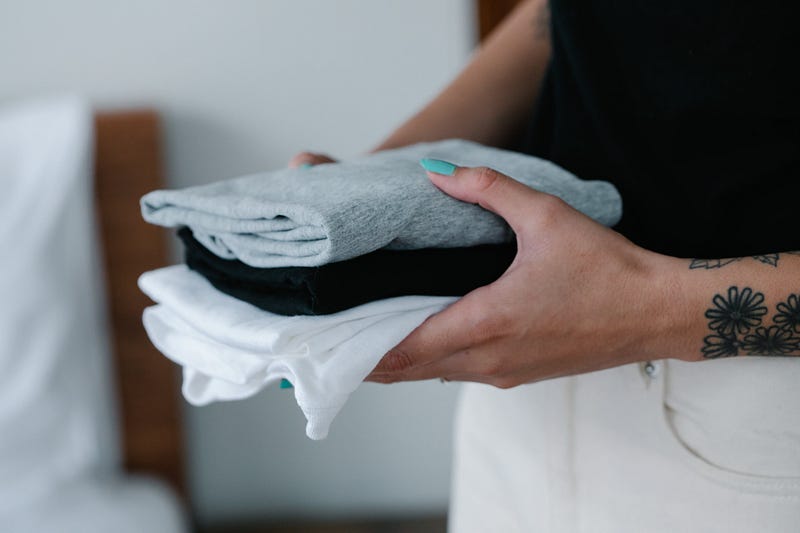
Photo by Timur Weber via Pexels. | It’s the easy actions that drive lasting change

Making it easy doesn’t have to be difficult, and it will make such a difference the next day when all your energy is focused on starting your habit.

Habit stacking

Habit stacking removes a lot of that starting energy depletion.

You know how it takes 20 minutes to hype yourself up to go on that walk? Well, if you know that as soon as you finish eating lunch, you head out the door for a stroll, you save a lot of that wasted energy, and it’s a lot easier to do!

That’s what habit stacking is. It’s taking a habit you already have (eating, using the bathroom, going to work, etc) and attaching your new habit to the end of it.

New habits aren’t intuitive. They don’t feel like second nature. You have to really concentrate to do them. Heck, sometimes you have to spend all your brain energy just to remember you wanted to do them. Habit stacking takes something you already do automatically to act as a trigger/ reminder to do your new habit.

If you can harness the power of habit stacking, you have a better chance of making this habit stick. Just don’t go overboard. Habit stacking isn’t a hack to build multiple habits at once. If you’re someone who struggles building habits, it’s best to focus on just one at a time no matter how fun or easy it may feel.

5. How am I going to track and review this habit?

Here’s where we get to the good stuff.

Most people create rigid plans for their new habits and think they’ve failed if they can’t keep up. They think putting a checkmark next to a habit is enough to make a habit stick. Sure, that checkmark gives you dopamine and is a great tool to help you keep going. But if your habit feels resistant or boring, that dopamine hit will wear off pretty quickly. The thrill of the completed task can’t compete with the pleasure that comes with avoiding a task you hate doing. So, on top of your daily checkmarks, you should have a system in place to review your habits regularly.

Photo by Alex Green via Pexels | Letting your thoughts out of your mind and onto paper (or your screen) is the best way to organize and understand them

But how often should you be reviewing?

I wish I could give you an exact timeframe, but like I said earlier, you’re an individual with unique circumstances. A one-size-fits-all approach works for almost no one.

In an ideal world, you’d write a little daily summary about how your habit went… but that’s not realistic for everyone.

Instead, choose a hard deadline review interval (weekly, fortnightly, monthly … try not to go longer than that if you can) and put it in your calendar. But always have a caveat — if the habit isn’t working, or I’m struggling to keep up after X days, I will review it now.

As for the review itself, what should you be asking? The most useful reviews will include questions like:

  • How does this habit make me feel?
  • What struggles am I facing?
  • How does the reality of this goal differ from my expectations?
  • Can I make this habit easier? How?
  • Can I make this habit more fun? How?
  • How am I going to change this habit so it better aligns with my circumstances
  • Have I given it enough time? Should I activate my “get-out” clause?

These questions will help you adapt the habit and tailor it to your needs. After all, what’s the point of an experiment if you can’t play around with your method, right?

Before you start, create a template you can quickly turn to when you need to review. You can do this in a notebook or create a worksheet on Canva. Personally, I use Notion to build my own easy plug-and-play templates that take the effort out of my habit tracking and reviewing process.

As for that get-out clause…

6. What’s my get-out clause?

By far, this has been the most powerful tool I’ve used to build new habits in my own life, and it’s a tool few people use to their advantage.

A get-out clause is essentially like a contract to yourself that you’re allowed to stop pursuing a habit if it no longer serves you without feeling any kind of guilt about it. And before you ask, no it’s not meant to be an excuse to give up at the first hurdle. It’s a way of removing your emotions from the habit-creation process and being realistic about your journey.

Photo by Nataliya Vaitkevich via Pexels | Walking away doesn’t have to be sad. Take the lessons and leave with the biggest smile on your face knowing you gave it your all.

So how does a get-out clause work?

You’ll write down the “terms and conditions” in which you agree with yourself you can stop trying to build a new habit.

The idea is, you create a set of criteria a habit needs to meet and if it doesn’t, it’s a reminder that you and that habit aren’t compatible, at least not at this time. Instead of chalking the end of your experiment as your own failure, you remind yourself you gave it a reasonable go and that’s all you can ask for.

Your get-out clause should reflect your own expectations and the specific thought processes that usually cause you to internalise the “failure” of your habit.

I like to structure mine in two parts. In the first part, I write out my expectations, and in the second, I use a checklist to make sure I’ve checked that I satisfied the terms of my clause before I make a decision. I include items such as:

  • How long do I need to give this habit before I feel ok stopping it?
  • Did I try to review and adapt this habit? How many times?
  • Do I feel I have reviewed and adapted this habit enough to be confident it’s just not for me right now?
  • Does this habit still align with my overall life goals?
  • How will I reward my efforts?

At the end of my get-out clause, I’ll add a section at the end where I sign that I agree to the get-out clause and will not internalise this as me being a failure. This makes it feel more like signing a contract and ending an experiment, taking some of the emotional sting away.

Again, this is a great thing to have as a template.

7. How will I reward my efforts?

Rewards are part of the holy trinity of habit creation. But it may be time to start thinking of rewards a little differently.

Giving yourself a little reward for completing a habit is a great way to enforce the behaviour. And even though scientists like Andrew Huberman remind us that the habit itself should be the reward, most acknowledge that people aren’t able to access that mindset, and rewards are a good alternative in the meantime. Ultimately, you have to meet yourself where you’re at and use the methods that work for you in that moment.

But life is a series of checks and balances, right?

So naturally, if you only reward yourself when you do the habit, you’re going to associate not doing the habit as something bad. For a lot of people, this can lead to the idea that when they do the habit, they deserve good things, but when they don’t do it, they don’t deserve anything. And this is a core reason why we internalise failed habits as shame, guilt and not being good enough.

Rather than making your rewards focus on just action, make it more about effort and intention.

Photo by Zen Chung via Pexels. | Isn’t life more fun when you can give yourself a high five every day?

If your new habit goal is to write 500 words a day but today you sat at your desk and stared at a blank screen, celebrate yourself. You tried. And tomorrow you’ll try again. Already, sitting at that desk was probably a lot of effort, and you were dealing with a lot of overwhelm. The fact you showed up at all proves you want to try. And you deserve to praise yourself for it. If you view it as a failure, then why even bother getting to your desk at all?

Celebrating the small steps, the trying, and the intention helps you repeat those actions, slowly removing your overwhelm and eventually leading to bigger gains. But if you tell yourself it wasn’t worth rewarding and celebrating, you’re going to end up falling into the “I’m not good enough” pitfall.

This same principle is why you should reward yourself after giving up a habit. You tried. You showed up. You did the experiment, reviewed it, adapted it, and it just wasn’t for you. But you still tried. And trying is usually the hardest part.

Reward yourself for that effort and regroup. The more you reward the effort, the more you’ll want to keep experimenting in life to find the habits, systems, and paths that move you closer to your goals. And isn’t this what habit-building is all about?

Get curious about new habits without tying your self-worth to them

A well-thought-out habit that is tailored to you and aligns with your goals has the power to move you in the right direction. But a habit is worth nothing if it doesn’t work for you.

It’s time to stop listening to outside noise and forcing yourself into a habit that doesn’t work for you. Stop blaming yourself when a habit just doesn’t want to stick.

Instead, treat your new habits like experiments. Explore what works for you and change what doesn’t. Ask questions about habits and be selective about the ones you think are worth exploring for your life circumstances. Let go of the behaviours and activities that just don’t make sense or work in your life right now. And most importantly, remember that a habit does not determine your self-worth.

A failed habit is not a failed person, it’s just an experiment you conducted that didn’t work.

If you keep exploring without judgement, you’ll find the right habits for — -you — and they won’t cost you your self-belief in the process.

Looking for more anti perfectionist mental health talk? Subscribe to my newsletter, The Anti Perfectionist Club, and be the first to get notified each time a new story drops! Plus weekly tips, tricks and slow growth psychology to help you start your journey of self-discovery and mental well-being!

Habits
Habit Building
Self Improvement
Psychology
Self Confidence
Recommended from ReadMedium