
How to Comprehend Other People’s Perspectives
Because we can all benefit from understanding each other’s point of view

Last night, during a dream, I was struck by how I could see things from different angles. I no longer viewed images straight on but could see them from a bird’s-eye view or from beneath looking up. In our everyday lives, we usually see things from a specific angle, depending on where we are in relation to them, and it’s the same with our mental perspectives. What we see in front of us depends on our opinion (our inner viewpoint).
What we see through our physical eyes is the only view we can have from our current position. We can liken this example to our mental viewpoints in everyday life. From a spiritual perspective, our view matches our current understanding and knowledge.
Nonetheless, if you want to learn and grow, it helps to see various perspectives rather than only the obvious, easy-to-view ones. During my dream, I explored the scene before me, several monks in simple robes, and marveled at how looking at their bare feet from underneath them presented a completely different scene from the one I would typically see.
The same goes for viewing the monks from above. I’d never get to look at people from such perspectives in my waking life unless I made an effort. I’d have to shift my body, moving to a suitable place to observe them, perhaps from a helicopter or mountaintop. To see others’ mental perspectives, we must also shift our positions to look at things as they do.
Many people don’t consider trying out different perspectives in their everyday lives. Often, we become rigid in our views because we think we see situations from the correct vantage point. The wrong places, we believe, are where others stand. We think those who see things differently are mistaken and need correction. Sometimes, they see us as needing to be taught to look at the situation from their chosen vista.
When we are mindful of viewpoints and contemplate how they aren’t right or wrong, we can recognize the unhelpfulness of rigidly sticking to our perspective without considering someone else’s. The best way to see anything accurately is from all possible angles if we are to come to a worthwhile conclusion about what we’re looking at. But how can we do that?

Seeing through someone else’s eyes
The typical way we might imagine somebody else’s viewpoint is to put ourselves in their shoes. The idea is to immerse ourselves in their position mentally and physically to understand how they may feel and think.
The problem with putting on other people’s shoes, however, is that they are unlikely to fit us. Consequently, when we adopt new perspectives, we must leave behind our opinions and be nonjudgmental, disregarding whether they fit our usual ways of seeing things.
According to science, we’re equipped to do this naturally. A University of Plymouth study led by Dr. Giorgio Ganis, Eleanor Ward, and Dr. Patric Bach shows that when we need to make a judgment from another person’s literal, physical view, we bypass potential difficulties like having to imagine ourselves rotating our visual aspects to match theirs. We can quickly make snap judgments from others’ viewpoints.
Ward gives an example:
“Imagine you’re in a car, and you see a pedestrian crossing the road, and a bus is traveling at speed towards the crossing. Suddenly, you realize the driver hasn’t seen the pedestrian and could hit them, so you beep your horn. How did you make this split-second decision? Our study suggests you automatically put yourself in the bus driver’s shoes and saw the scene through their eyes.”
We can all imagine Ward’s scenario and see how it makes sense. When the need arises, putting ourselves in others’ shoes (seeing from their perspective) isn’t difficult for us. We do it automatically.
During the study, researchers concentrated on a common psychology rotation test where participants were asked to conclude whether a letter (“R,” for example) shown on a computer screen was inverted (“Я”) or presented as standard. Typically, the more the letter is pivoted away from someone, the longer it takes them to recognize its form. This is because they must mentally swivel the letter to its proper position before judging whether it is standard or inverted.
When study participants could see another person viewing the letter in the scene presented, they stopped struggling to ascertain its position. They quickly imagined its stance (inverted or not) as if through the other person’s eyes.
Interestingly, when the other person was removed from the scene and replaced by a lamp (representing an inanimate object), the study participant’s visual ability to work out the letters’ orientation slowed, leading to the conclusion we’re built to imagine seeing through other people’s perspectives.
Nonetheless, imagining visual data through others’ eyes differs from seeing their emotional points of view. But there’s an NLP (Neuro-Linguistic Programming) activity that can help.
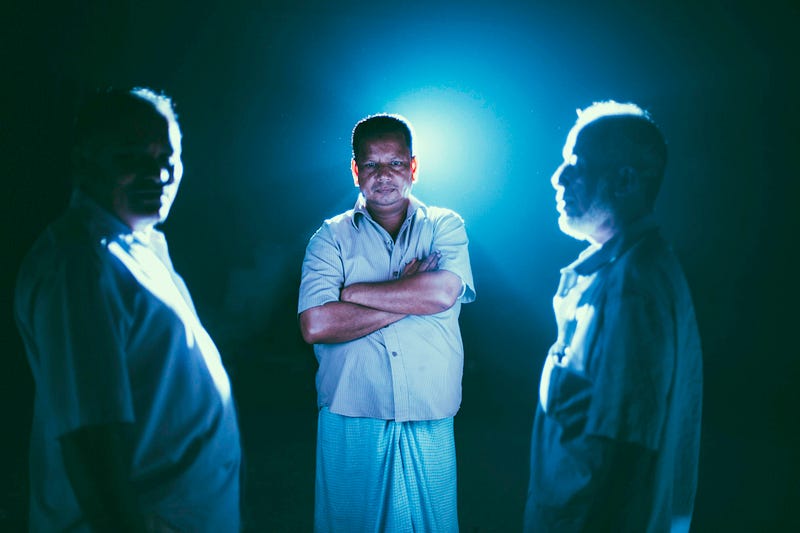
Understanding someone’s viewpoint with perceptual positions
I learned about perceptual positions when I trained as an NLP practitioner. Doing so, too, can help you understand situations from others’ viewpoints and involves five steps:
Step One: Define the situation
For instance, you may want to gain clarity about an argument with a friend. You can see your perspective, but you understand you’ll also benefit from seeing your friend’s point of view.
Step two: Create a space
Create a space in which to carry out the exercise. Think of it as similar to a stage set. You need an area (an anchor point) where you stand or sit to represent your outlook, a place to represent your friend’s view, and somewhere for an imaginary casual observer. You’re about to roleplay, taking the part of being yourself, your friend, and then the observer.
Step three: Try out each position
First, move to the area representing your view and stay there briefly. You’re not trying to review the argument yet; you’re just physically and mentally identifying that the space signifies your position.
Take a short break. Half a minute will do.
Shift to the area representing your friend’s outlook and imagine you are them. Consider their mannerisms, gestures, and voice. Think about how they might feel about various events in their life (not the argument) and how they may be affected.
Take a short break.
Go to the area representing the position of a casual observer for a moment.
Step four: Check out the different perspectives
Go to the area where you will assume your perspective. Remember how the argument unfolded, including what you said, did, and felt.
Take a short break.
Assume your friend’s position by stepping into the area representing their view. Run through the argument as if you are your friend having the experience. You might benefit from imagining you step into their body. Take into account any stressful experiences they’ve had lately that might influence them and how they see you during the row.
Take a short break.
Now, move to the casual observer position and describe what you see and hear. Stay impartial and explain what you experience without casting judgments. If you were a therapist, how would you help the quarreling friends? Do you have any advice for them?
Step five: Assess the exercise
Go over what you’ve learned and make notes. Did you glean insights? Perhaps you have an idea about how to handle the situation and what you want to achieve.
The perceptual positions method can help you understand another person’s perspective, clarify your feelings, and gain an impartial observer’s perspective. As a result, you’ll get a broader idea about what’s happened and see the bigger picture.
I find the technique helpful in various situations, not only when I can’t figure out what to do after a disagreement. For example, I might run through the practice if I’m concerned that I did or said something that might have offended someone. Afterward, I inevitably discover that my fears hold no weight and can relax.
I watch the various perspectives in my dream as the dream characters (the monks) stroll while meditating in the forest. A slight breeze rustles the leaves on the trees, and the men walk silently and slowly.
Seeing them from different angles helps me know they are most likely calm and relaxed. I pick one of them to “become” for a few moments and float into his body. His slow movements engender a sense of tranquility, and my breath mirrors his breath until I enter a deep, dreamless void.
By the morning, I recognized how such a monk might experience meditating in the woods. When we put ourselves in others’ places to see their perspective, we can better understand interactions and, perhaps, find solutions to dilemmas. We are richer and wiser because of our experience.


