
How to Become More Resilient
A guide for being more resilient in a turbulent life.

Weather the Storm
How do you react to things going wrong? Do you embrace that and come back stronger or do you give up quickly?
When stressful life events keep piling on, resilience is your engine that pushes you forward.
Resiliency is weathering the storm like a hardened sailor, it is adapting to life’s adversities.
A resilient person doesn’t have to be this perfect unbreakable hero who can withstand anything but someone who can adapt and overcome what life throws at him.
Being resilient won’t make your problems easier but you will have more mental toughness to deal with them.
These hardships could be about your financial situation, health, or relationship problems.
But adversity doesn’t only come from outside, many people, especially perfectionists have a ruthless inner critic that keeps criticizing them unjustly and this could very easily add up to all the other external adversities of life.
As chronic stress from these adversities has detrimental effects on our health, building resilience could help us reduce these harmful effects and improve our physical and mental well-being.
How To Become More Resilient
1. Get Connected
It takes courage to ask for help and one way or the other, every human needs help. Isolation can affect your resilience. So don’t hold back on calling a friend or a family member who can listen to you with a non-judgmental attitude.
You might think that only getting listened to and validated might not help but it is not true. Getting listened to and emotionally validated can help you regulate your emotions and subsequently help you with mental stability.
2. Experiment with Positivity
“Everything can be taken from a man but one thing: the last of the human freedoms — to choose one’s attitude in any given set of circumstances, to choose one’s own way.” ― Viktor E. Frankl, Man’s Search for Meaning
Being positive about obviously stressful situations could be hard. Sometimes negative emotions add up and we feel like it is unbearable to resist them all.
To shield ourselves from this feeling of defeat, we can use positivity in different areas of our lives. We can start to write things we are grateful about as this helps with stress and supports resilience.
Secondly, if you are someone who has a mean inner critic, this can hurt your resilience too. And you might benefit from cognitive restructuring. Cognitive restructuring is changing our unhealthy thought patterns with healthy and realistic ones.
If you want to learn more about some of those unhealthy thought patterns and solutions, you can check my article below.
But in short, you have to write down the thoughts that your mean inner critic is throwing at you and challenge them with the concrete pieces of evidence that exist in that event.
Reappraisal of a seemingly negative event as neutral or positive can also help you break those stress-inducing thought patterns and have a more positive outlook on life.
3. Accept Your Emotions and Focus on What You Can Do
Rather than escaping from your emotions or procrastinating endlessly, accept the negativity you feel at this moment.
Accept your negative emotions and thoughts, even if it hurts. After accepting, challenge those thoughts fiercely.
- Do these thoughts have concrete evidence?
- Could this be interpreted differently?
- Would a friend of yours look at that differently?
After accepting the negative events and your emotions, focus on the actions you can take in that situation. This can help you feel empowered and you can start taking charge of those thoughts and behaviors.
4. Find A Sense of Purpose
“He who has a why to live for can bear almost any how.” ― Friedrich Nietzsche
Having a purpose in life is one of the most important parts of being human. Having a purpose, no matter how small, can add meaning to your life and lead to a more satisfactory life.

Having a purpose in life is crucial for being resilient as research shows that people with a purpose in life have better emotional recovery when faced with negative stimuli. These life purposes don’t have to be grand but being aimless in your day-to-day is not helpful either. Pursuing a better career, getting better at your hobbies, or spending more time with your loved ones can all help.
5. Help others
Another helpful activity for resilience is helping others. We are social animals and our relationships with others affect who we are. Helping others has a unique effect on resilience. Research suggests being prosocial is associated with higher life satisfaction and less negative emotions.
6. Learn Psychological Flexibility
Some might interpret resilience as mental toughness, people might construe a resilient person as a rock that doesn’t budge and doesn’t change, but that is not true for resilience.
Resilience involves being flexible, accepting the negative emotions and events as they are, being open to new ways of interpreting these emotions and events, and adapting your behaviors in line with your values. This type of flexibility is shown to be a significant predictor of well-being and is associated with resilience.
7. Therapy
Some people might have a prejudice against going to therapy. But as humans, we all need help from time to time. Getting help in understanding ourselves and how we interpret the world around us could be a monumental moment for our well-being.
Therapy allows us to be understood by a professional who studied the human mind for years and this expertise can help us understand ourselves on a deeper level.
With this understanding and with the help of our therapist we can shape our thoughts to be healthier and more productive, learn to regulate our emotions better, and start becoming a more resilient person as a result.
8. Self-care Through Exercise and Meditation
Exercise has great benefits to your overall mental health, it can help by reducing anxiety and depression while increasing your self-efficacy (belief in your capacity for achieving a goal).
A recent study also suggests a strong correlation of exercise with resilience. For these reasons it might be a good idea to add a workout routine to your daily life.
Mindfulness Meditation on the other hand, recently became popular for its positive effects on mental health. Especially on well-being, stress management , and resilience.
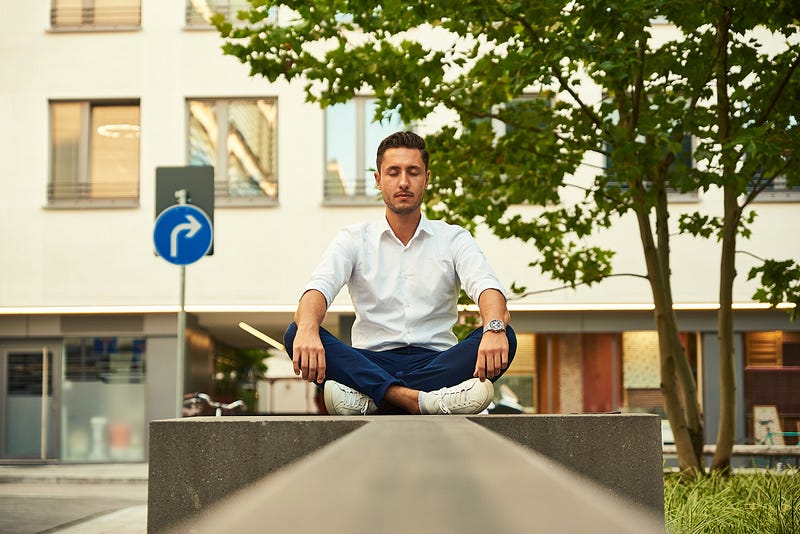
Its effectiveness and ease of use make it valuable for anyone who wants to deal with stress more effectively and increase their resilience.
It involves observing your thoughts and physical sensations without holding on to them, observing them like cars passing by on a road and you as an observer on the side. The meditation practitioner observes these thoughts without judging them and lets them go. For a detailed guide, you can check the APA website.
9. Self-compassion
We all go through failures, inadequacies, and pain in our lives. A tragic incident can happen and we might blame ourselves or we can constantly criticize ourselves for tiny shortcomings we experience in our daily lives.
Beating ourselves up all the time for these failures and pain doesn’t help us and puts us on a never-ending downward spiral. To stop ourselves from spiraling down into this negativity, we can start by being mindful of the pain we are experiencing.
As I mentioned above, mindfulness involves being aware of your thoughts and sensations without judgment, and to be self-compassionate we need to observe our negative thoughts without judgment.
Then we can start accepting that we are another imperfect human, and as all humans do, we make mistakes.
Once in a while, we might forget an important task, we might not perform well in a meeting, or might realize we haven’t spent enough time with a loved one.
Rather than beating ourselves up about those shortcomings we can start treating ourselves like someone we love. Try treating yourself like you treat a loved one, this could make you realize how harsh you are to yourself and make adjustments to that. By starting this journey of self-compassion, you can learn to eliminate the internal adversities that chip away your resilience.
For a more detailed self-compassion guide you can also check this guide made by University of Utah.
There Is Hope
Whether we like it or not, our lives will be filled with challenges and hardships we need to overcome. Being resilient can help you overcome these hardships and increase your life satisfaction. The good part is, being resilient can be learned and fostered. By implementing the suggestions above, you can start becoming a more resilient version of yourself.