you are confused about the ways how to learn efficiently, check out these study skills on effective learning:</p><div id="1ccc" class="link-block">
<a href="https://www.educba.com/effective-study-tips/">
<div>
<div>
<h2>13 Most Amazing Effective Study Tips | plan | skills | habits</h2>
<div><h3>Effective study skills I have come across students who spend most of the time studying sincerely and yet score poor…</h3></div>
<div><p>www.educba.com</p></div>
</div>
<div>
<div style="background-image: url(https://miro.readmedium.com/v2/resize:fit:320/0*7ZgmBXWgoecp7RTX)"></div>
</div>
</div>
</a>
</div><h1 id="b173">Focus on one subject at a time</h1><p id="291c">According to Malcolm Gladwell in <a href="https://www.amazon.com/Outliers-Story-Success-Malcolm-Gladwell/dp/0316017930">Outliers</a>, the common feature of experts in any field is 10,000 hours of focused and productive time:</p><blockquote id="a9c5"><p>In fact, researchers have settled on what they believe is the magic number for true expertise: ten thousand hours.― Malcolm Gladwell, Outliers: The Story of Success</p></blockquote><p id="e53e"><b>In programming and investing, that’s practice.</b></p><p id="2e8c">In any academic field, that’s active research, both reading and creating constructive analyses. In writing, it’s writing, reading editorial feedback, and reading really well-written things.</p><p id="3dc7" type="7">Whatever it is, 10,000 hours seems to be the key!</p><p id="edff">Learn. Practice. Review how you are doing. Learn more where you see gaps. Practice more, especially where you are weak. Iterate.</p><h1 id="8f7a">Engage in deliberate practice</h1><p id="8a4d">Not all practices will make you perfect. For that, you need a particular one — deliberate practice to develop your expertise. Because being an expert in something is usually, the result of a deliberate effort over a more or less prolonged period to improve certain skills in a particular field.</p><blockquote id="13a1"><p>For example, most people practice and focus on the things they already know how to do. It can even be a chore for them.</p></blockquote><p id="784c">But engaging in deliberate practice is quite different. It considers specific and sustained efforts to do something we cannot do well or even at all.</p><p id="e82f">And the research on improving expert performance shows that only by working at what we cannot do (or don’t know how) will turn us into the expert we want to become:</p><p id="5763"><a href="https://www.researchgate.net/publication/236884283_Deliberate_practice_Is_that_all_it_takes_to_become_an_expert">Deliberate practice: Is that all it takes to become an expert?</a></p><h1 id="1b19">Start teaching others</h1><p id="79cd">Teaching others is another excellent way to improve our subject expertise faster.</p><p id="c549"><b>Way faster.</b></p><p id="8a90">It works because this forces us to think through the details. It enables us to get new insights from others. According to <b>the Learning Pyramid</b> that was developed way back in the 1960s by the NTL Institute in Bethel, Maine, you can see something interesting:</p><figure id="24f8"><img src="https://cdn-images-1.readmedium.com/v2/resize:fit:800/1*w11EiPOQy4Zp1gL39F4czA.jpeg"><figcaption></figcaptio
Options
n></figure><p id="3b6a" type="7">90% of the gained information learners retain when they teach someone else or when they implement it immediately.</p><p id="cb81">Thus, this way will bring to our mind the information we have previously studied. And it will lead to the longer-lasting acquisition of that information than more time spent passively re-studying.</p><p id="d4c0">Because when we implement or teach, we instantly make mistakes at the beginning. Here, we need to learn how to correct the mistake, and this forces our brain to concentrate and learn concepts deeper.</p><h1 id="3336">Final Thoughts</h1><p id="b084">If you want to become an expert, always know that it won’t be easy at first. Yes, it’s incredibly hard, but it’s undoubtedly possible. All you need to do is to continuously gain new and more information about your expertise field, practice repeatedly, and put a lot of effort into it.</p><p id="b60b">These qualities are always needed to become an expert in any field you choose. Even though it takes time and often differs from person to person, you can still become the best if you try hard enough!</p><p id="c67e"><b>Now, it’s your turn: What would be your top tip or hack into how to become an expert?</b></p><p id="740b">Thank you for reading!</p><p id="f338">Check out some of my popular articles:</p><div id="c872" class="link-block">
<a href="https://readmedium.com/one-of-the-best-creative-problem-solving-techniques-a9558ba57ff6">
<div>
<div>
<h2>One Of The Best Creative Problem-Solving Techniques</h2>
<div><h3>Give this brainstorming technique a try! See the difference it will provide the next time you explore solutions through…</h3></div>
<div><p>medium.com</p></div>
</div>
<div>
<div style="background-image: url(https://miro.readmedium.com/v2/resize:fit:320/1*_t_OfNF3eImUBRHpWAiJzg.jpeg)"></div>
</div>
</div>
</a>
</div><div id="6cc0" class="link-block">
<a href="https://readmedium.com/the-4-hour-work-week-for-entrepreneurs-really-e2dd9aebe32d">
<div>
<div>
<h2>The 4-Hour Work Week For Entrepreneurs… Really?</h2>
<div><h3>Is it possible to work only four 4 hours a week and still running a successful business?</h3></div>
<div><p>medium.com</p></div>
</div>
<div>
<div style="background-image: url(https://miro.readmedium.com/v2/resize:fit:320/1*40sFaK7juk2XUmYoh9xXAw.jpeg)"></div>
</div>
</div>
</a>
</div><div id="08b1" class="link-block">
<a href="https://blog.prototypr.io/how-to-increase-productivity-on-your-side-project-1db5f88c2b15">
<div>
<div>
<h2>How to Increase Productivity on Your Side Project</h2>
<div><h3>Productivity is about being efficient when you are working. Side projects are meant to be fun, to be rewarding, and not…</h3></div>
<div><p>blog.prototypr.io</p></div>
</div>
<div>
<div style="background-image: url(https://miro.readmedium.com/v2/resize:fit:320/1*hU3f1brMFmPcqkkvzzCBBg.jpeg)"></div>
</div>
</div>
</a>
</div></article></body>
What is the best way to develop a real understanding of something? Should you learn as much as possible about a subject, for instance? No, you shouldn’t.
The right answer is to develop a true understanding of an issue and master the basics because,
True mastery is not about doing difficult things, but about mastering the basics.
Experts will not attempt to dive into more complex theories or methods until they are perfecting the basics. They know that mastery requires constant attention to (and understanding of) the basics.
So when you have learned something completely new, don’t tackle it headlong immediately. First, consider the basic elements of the task at hand, and only then start with each less complicated part of it.
Mastering requires you to use your ability of reasoning.
It’s about being an active learner rather than a passive recipient of information. It’s about using all your brain’s computing power to make a worthwhile mind map of the idea you want to master.
You have everything to become an expert at whatever you wish (and quickly at that) if you follow the tips below:
Believe in yourself
Being an expert starts with a belief in yourself, not information or accreditation.
Stop thinking you can’t be an expert. You can.
All of us can.
A belief in yourself is how you get started. And it gives you self-approval and motivation to learn the tools you are missing to be an expert because none of us born experts.
Gain information
Start gathering the information through reading, listening, observing, and practicing in the chosen field. Just remember that information is all around you, and you can always find it these days using DuckDuckGo, Google, or another search engine.
Gain relevant and meaningful information and develop this into knowledge and skills. If you are confused about the ways how to learn efficiently, check out these study skills on effective learning:
According to Malcolm Gladwell in Outliers, the common feature of experts in any field is 10,000 hours of focused and productive time:
In fact, researchers have settled on what they believe is the magic number for true expertise: ten thousand hours.― Malcolm Gladwell, Outliers: The Story of Success
In programming and investing, that’s practice.
In any academic field, that’s active research, both reading and creating constructive analyses. In writing, it’s writing, reading editorial feedback, and reading really well-written things.
Whatever it is, 10,000 hours seems to be the key!
Learn. Practice. Review how you are doing. Learn more where you see gaps. Practice more, especially where you are weak. Iterate.
Engage in deliberate practice
Not all practices will make you perfect. For that, you need a particular one — deliberate practice to develop your expertise. Because being an expert in something is usually, the result of a deliberate effort over a more or less prolonged period to improve certain skills in a particular field.
For example, most people practice and focus on the things they already know how to do. It can even be a chore for them.
But engaging in deliberate practice is quite different. It considers specific and sustained efforts to do something we cannot do well or even at all.
And the research on improving expert performance shows that only by working at what we cannot do (or don’t know how) will turn us into the expert we want to become:
Teaching others is another excellent way to improve our subject expertise faster.
Way faster.
It works because this forces us to think through the details. It enables us to get new insights from others. According to the Learning Pyramid that was developed way back in the 1960s by the NTL Institute in Bethel, Maine, you can see something interesting:
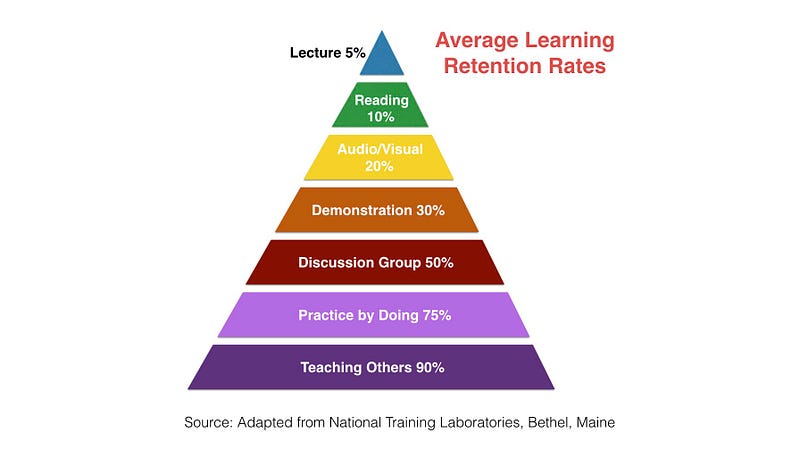
90% of the gained information learners retain when they teach someone else or when they implement it immediately.
Thus, this way will bring to our mind the information we have previously studied. And it will lead to the longer-lasting acquisition of that information than more time spent passively re-studying.
Because when we implement or teach, we instantly make mistakes at the beginning. Here, we need to learn how to correct the mistake, and this forces our brain to concentrate and learn concepts deeper.
Final Thoughts
If you want to become an expert, always know that it won’t be easy at first. Yes, it’s incredibly hard, but it’s undoubtedly possible. All you need to do is to continuously gain new and more information about your expertise field, practice repeatedly, and put a lot of effort into it.
These qualities are always needed to become an expert in any field you choose. Even though it takes time and often differs from person to person, you can still become the best if you try hard enough!
Now, it’s your turn: What would be your top tip or hack into how to become an expert?