
How To Become An Expert At Any New Skill
The Art of Mastering the Boring Fundamentals

“Learning is not attained by chance, it must be sought with ardor and attended to with diligence” — Abigail Adams
At the start of this year, I wanted to learn Chinese. So I applied to a language course.
The first class was boring, to say the least.
The teacher rambled on and on about tone, pronunciation and grammar. She didn’t mention any phrases that we could use in conversation or even how to introduce ourselves.
I walked out of that class very confused.
Why weren’t we learning how to actually speak in Chinese? Why were we simply learning how to pronounce the tones correctly?
It wasn’t until my second class, that I realised that in order to say simple phrases we needed to know how to pronounce basic tones.
The initial grammar, pronunciation and tones that my Chinese teacher had emphasised during my first language class was the “Boring Fundamentals”.
What are the Boring Fundamentals?
The boring fundamentals consist of the basic knowledge and skills that you need to begin learning a new skill.
For example, when you first start writing on Medium, you obviously need basic reading and writing skills. However, you also need to understand how the platform of Medium works, curation, publications and the partner program.
I know it sounds boring, but these are the elemental skills and understanding you need to start writing.
Likewise, any skill has fundamentals you need to master first to later become an expert at it.
Why is it Important to Learn the Fundamentals first?
When you know the basic fundamentals of a skill that creates a stable foundation to build up your skill set.
Knowing the basic fundamentals of a skill allows you to create consistent habits to grow from in order to master a specific skill.
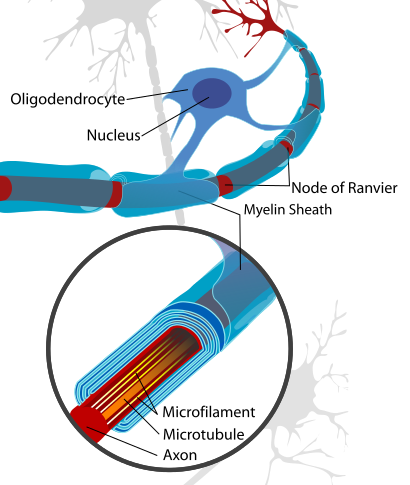
When your brain creates a habit, a certain neurons create stronger connections with each other to reinforce a certain skill set. When you consistently repeat a habit, the brain creates a fatty substance, called myelin which binds to axons within a neural network. The myelin creates a stronger neural connection by creating a faster signal process along the axons. This reinforces the habit.
How to Master the Fundamentals
1. Identify the Fundamentals of the Skill
“You can’t build a great building on a weak foundation. You must have a solid foundation if your going to have a superstructure” — Gordon B Hinckley
Every skill is founded on a set of core concepts in order to practice the skill.
For instance, in order to play the piano, you must have a basic understanding about the piano keys, music reading, notation, rhythm and beats. Without knowledge of these fundamental concepts, it would be difficult to progress to an advanced level.
This is why you need to identify the basic knowledge about a skill first. That fundamental knowledge that you acquire creates a foundation for a certain skill to be built upon.
What are the basics that you need to get started? What are the foundational knowledge that you must have in order to progress in a specific skill set?
2. Set a Date
“Small disciplines repeated consistency every day lead to great achievements gained slowly over time” — John Maxwell
We all know that becoming an expert at a skill takes consistent effort and patience, however, this is easier said than done.
This is why we need to set a date and time when we will learn these fundamental concepts.
Yet, the aim is not to rely on motivation to prompt us into action, but rather rely on habitual routine which is created by consistent, daily efforts.
When do you have time in you schedule to focus on learning the skill’s fundamentals?
3. Build upon it
“The foundation is now in place, now we can get to work” — David Luiz
Once your foundation is solid, then you can advance your skill set. This is the part where you master your skill.
Now you can expand your knowledge about the particular skill.
For example, once you know the basics of piano, you can progress to learning to play more difficult music pieces.
This then creates an uphill trajectory, where you are consistently adding to you skill set based on that initial fundamental foundation.
If learning a new concept is difficult, having that basic cornerstone will enable you to re-assemble it again.
Conclusion
In summary, having a good grasp of the boring fundamentals of any skills allows you to lay a strong foundation to build up your skill set.
In order to master those fundamentals you need to:
- Identify the basics of a certain skill set
- Create a consistent routine to learn those fundamentals
- Build upon those established skills in order to increase your expertise
You just have to start.


