
How to Become a Meditator
An easy path to mindfulness meditation
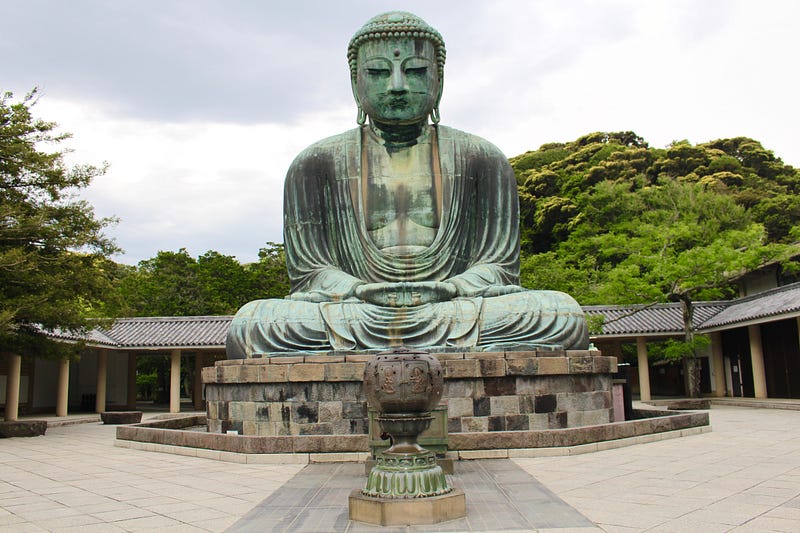
By this time, many readers of Medium have probably put at least a toe into the cooling waters of meditation. But for those of you who have held back, reticent about anything that’s “spiritual,” or at best ambivalent about anything some call “woo woo” — right now is the perfect time to try it. There’s nothing magical about it; meditation is supremely practical.
You may be surrounded by people who already meditate and they may have made it sound mysterious. It’s not. Meditation is not hard. It is not really unfamiliar, in a way it’s something you already do naturally, only you never thought to call it anything.
There are flocks of fine meditation masters, gurus, and teachers. If you like meditating, you might want to join a group, find a teacher or join a meditation circle. But why no try it out at home, on your own, before going anywhere. Why not see what it feels like. Meditation is something you can learn, right here, right now, today. Just keep reading
You can do it, your friends can do it, so can your partners, your parents, grandparents, children, grandchildren. You’ll soon be able to teach them. Meditation is for everyone.
When you learn to meditate you are using your conscious mind to change your brain. We know from multiple studies, when you learn to meditate you’re slowly re-wiring your brain. We all want transformation, we want to feel better, be better. Learning to meditate and making the decision to have a meditation practice is one of the simplest ways to do that. But before we talk about commitments, you have to try it out so you know what “it” is that you’ll be doing. If you still need encouragement, meditation practice may make you less anxious, better able to handle your stress-filled life, and it might even make you happier. Try it.
If you’ve read this far, chances are you’re interested, curious, and a little worried that you won’t be able to do it. Perhaps you’ve never been able to sit still and it looks like people who are meditating are just sitting there. I promise you, you can learn this. It’s literally as easy as breathing, because the thing you are doing while you’re learning mindfulness meditation IS breathing.

Step One: Mindfulness of the body
Sit in a comfortable place — a cushion on the floor like the meditators you’ve seen, or on a chair, or your living room couch. If it’s too uncomfortable sitting, you can lie down.
The first thing you’re going to do is to focus on your body. Mindfulness just means “paying attention” and by looking for and finding the best, the most comfortable physical position, you’re learning to focus on where you’re directing your attention — to your body.
Are you comfortable? Are you relaxed? Think about your legs — strange as self-talk may seem, ask your legs: “Legs are you in the best position possible, are you comfortable?” Do that all over your body — your arms, your shoulders, your back, your face. Imagine each part of your body, see if moving it around, you can find the most comfortable position. The goal here is to find maximum comfort while you’re learning mindfulness. By focusing on each area until you’ve found the right position, you’ve been doing mindfulness meditation, you’ve been paying attention to your body, you’ve been mindful of your body.
Try to relax every part of your body, paying attention to how you really feel. Physical relaxation feels great, we all know that. If you sit in a painful position when you meditate, you’ll soon hate meditating. If you’re in chronic pain, find the best position you can, at least keep pain at a minimum.
Step Two: Mindfulness of the breath:
After finding the best position, and relaxing, move on to your breathing. Breath naturally, the way you usually breathe. Look for your breath. Do you feel your breath right under the tip of your nose, or do you feel breath lower in your chest, or abdomen? Feel your breath going in as you inhale, feel your breath going out as you exhale. As you focus on your breath, you’re meditating, with mindfulness on your breath.
Almost immediately — I mean that literally, within a few seconds — your attention will probably stray. In fact, since you’re just learning mindfulness — to pay attention — you probably won’t notice it immediately. But then you’ll remember: “Hey I’m supposed to be paying attention to my breathing.”
That’s the magic moment. When you’ve become aware that your mind has drifted and you’re thinking about something else, you can bring your attention right back to your breath. That’s meditation.
This is the practice we call “meditation practice.” You’re “practicing” noticing your attention, you’re practicing dragging it back to your breath.
Don’t worry when you notice your mind drifting all over the place. Don’t think “I’m not doing it right, I’m not focusing on my breath.” Everyone does that, our minds are thinking and feeling machines. As soon as you notice your mind has drifted to something else, when your mind has dragged your attention elsewhere, just keep bringing your focus back to your breath. People have called this thing our minds do, the way we drift almost instantly away from our breathing, the “monkey mind.” Our minds are always all over the place. In meditation,we’re practicing directing our mind’s attention.
The action that is most important for “rewiring the brain” is learning to notice when you’ve drifted away from paying attention to your breathing. This moment of noticing that your mind has drifted is what is meant by being “mindful.” As soon as you notice your mind has gone off into one or another thought or feeling, bring your focus and attention back to your breathing. Start again, focusing on your breathing. This is where the magic happens. This is what you practice. This is meditation.

Methods that may be helpful
Some people find it helpful to “count” with each full breath. So inhale and then exhale and as you are exhaling, think “I” then “2” etc., each time you exhale. Your breathing doesn’t have to be forced, or deep, your normal breathing is perfect.
There’s another method you might find helpful when you’re distracted by thoughts or feelings. Put your own thought-words into the focused attention on your breathing. When breathing in you can think “I’m breathing in,” and when you’re breathing out, you can think ‘I’m breathing out.” Putting these words into your meditation on your breath may make it easier to maintain the focus on your breath.
Don’t make any effort to avoid having thoughts and feelings because you can’t do it. That’s how our minds function, we have endless thoughts. The idea is to notice these thoughts that have dragged you away from your focus (mindfulness in other words), and then to bring your attention back to your breathing. “I’m breathing in, I’m breathing out.”

Step Three: Paying attention to your thoughts and feelings
Later, when you’re familiar with focusing attention on your breathing, you may decide to start to pay more attention to your thoughts. You become aware of your thoughts, without getting lost in some story. Instead, you watch your thoughts like a fly on the wall, with some distance. You’ll see your thoughts are just thoughts, they come and go rapidly all the time, rather like clouds in the sky. Practicing this is how your mind changes your brain, quite literally.
Awareness of our thoughts may be helpful
Seeing how your thoughts come and go provides a lesson in how our minds work; it offers us with some concrete evidence about our mental processes. Realizing thoughts come and go so rapidly, it becomes easier to understand their temporary nature, and they lose some of their overwhelming power. It’s not that you’ll start ignoring your thoughts, but you’ll have a more realistic perspective on them. It’s easier to dismiss those repeating automatic “I’m no good” kinds of fleeting moments, and gain confidence in thoughts that encourage us to see our better selves..
Beginning with an altruistic intention
From our own research on five contemplative traditions with over 2000 participants, along with other recent studies in psychology and neuroscience, there seems to be a connection between approaching meditation with altruistic intentions and positive outcomes related to compassion and healthy empathy, and other relationship-promoting qualities.
While meditation may have emerged from spiritual practices, many westerners have rejected overt religious affiliation and only consider meditation when it has been translated into a secular practice. It may be possible to approach meditation from a non-religious perspective while holding on to the heart of a universal element in spiritual endeavors — that is concern about other people.
When sitting down and settling in, preparing to meditate for however long you’ve planned, it may be tuning into that universal by simply thinking: “I’m going to meditate to help myself and to help others.”
As a highly social animal, we’re unconsciously wired for prosocial or altruistic intentions. We want to help others, and for most of us, our darkest thoughts come upon us when we believe we’ve harmed another. To begin a meditation session wtih a moment of awareness of our altruistic nature may be helpful. It certainly can’t hurt. So before starting your meditation session, briefly remind yourself that you are doing this practice for your own benefit and for the benefit of the important people in your life, and for people you don’t even know, for people in unfortunate circumstances, and extend this to the whole world. Setting an “altruistic motivation” seems to bring particularly good outcomes. You don’t have to really believe this (or anything) –it’s the doing of it that seems to have a significantly positive effect.
Keeping a “meditation journal”
It’s often helpful to keep a meditation journal. After a meditation session, write in a notebook or diary, how it was, how you felt and what thoughts you had, what was problematic, what did you like, what didn’t you like. Note any problems, any discomfort you may have felt. If you skip your meditation session, write a sentence or two about that, why you think that happened. Any experience around meditation is important, personal and on the right path.
Practice means practicing, but it’s your practice
Meditation is a skill and like other skills — such as playing an instrument, playing a sport, or writing stories or articles, in order to first get comfortable doing it, and then to get good at it, you need to do it over and over — you need to develop a meditation practice. It’s called a “practice” because when you meditate, you are literally practicing “paying attention” or being “mindful.” The more you practice a skill, the better it gets. At first you feel awkward, unskilled, and self-conscious. As you practice, it becomes automatic. And meditating every day makes that moment come more quickly.
In the beginning, plan on making your meditation sessions short, just five or ten minutes might feel perfect. You’ll know when to try 15 minutes, and then, when you’re ready to go for 20 minutes. If you find you want to meditate longer, that’s fine. However, it is better to keep sessions short —so even, if at times in the beginning, it seems difficult, you’ll still like it. It’s better to have very short meditation sessions than to have ambitious plans for longer meditations, then find it’s impossible to maintain and ending up feeling like a failure. When it’s uncomfortable, stop and begin again tomorrow. Start slow, really slow. You can’t do this thing wrong. You can also try short meditation sessions more than one time each day. Experiment.
Figure out the best time to meditate. It is often recommended that early morning, when you first wake up, is a good time to practice. It is also often suggested that you keep the same time daily. While these are familiar suggestions, they may not be right for you. If you can’t meditate at the same time every day it doesn’t matter. Whatever rules you hear don’t have to be your rules. You make the rules in your meditation practice.
Despite the occasional mild warnings that “meditation doesn’t cure everything” — it doesn’t — and “meditation doesn’t necessarily work for everyone,” — again, it doesn’t, the practice of mindfulness meditation keeps expanding because most people benefit from it. Studies have confirmed it’s helpfulness in managing stress, improving abilities to pay attention, regulate your emotions, and solve problems. Meditation focusing on “loving kindness” may help to reduce those chronic worries about harming others, or hurting someone’s feelings.
You’ve seen how easy it is for you to start right now, and join the wave of mindfulness meditators. You may learn different ways to meditate. You may say a mantra over and over, you may decide to focus on another object, a picture, a sound, an idea, for example “loving kindness.”. You may want to try a group meditation. All meditation is practice is practice in paying attention. You can do this at home, in a circle or class, or with a master. Most important, you can do this wherever you are right now. Just try it, it’s easy and it’s yours.
Adapted from Psychology Today, Our Empathic Nature, How to Meditate (Made Easy): Mindfulness Meditation


