How to Bear Your Cross
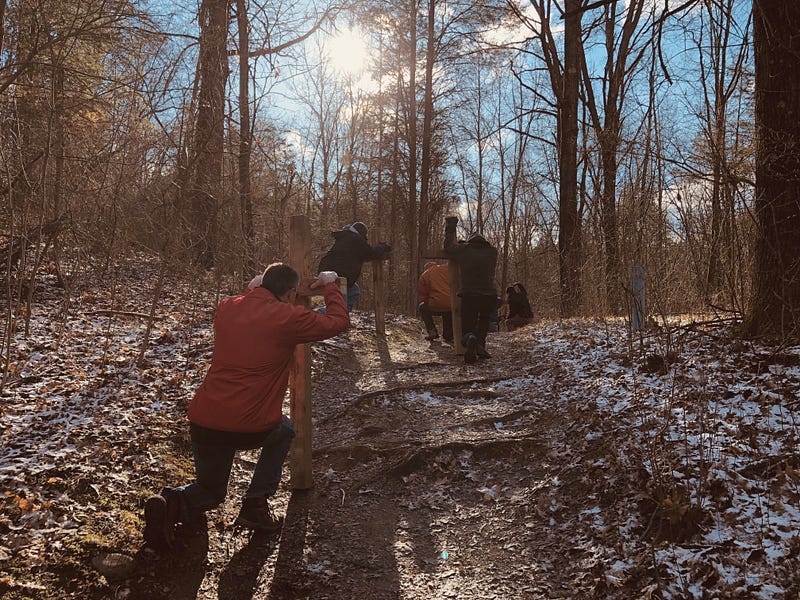
Churches closed: each man was given a cross (mine was 21 pounds) to carry along a three-mile hike into the woods
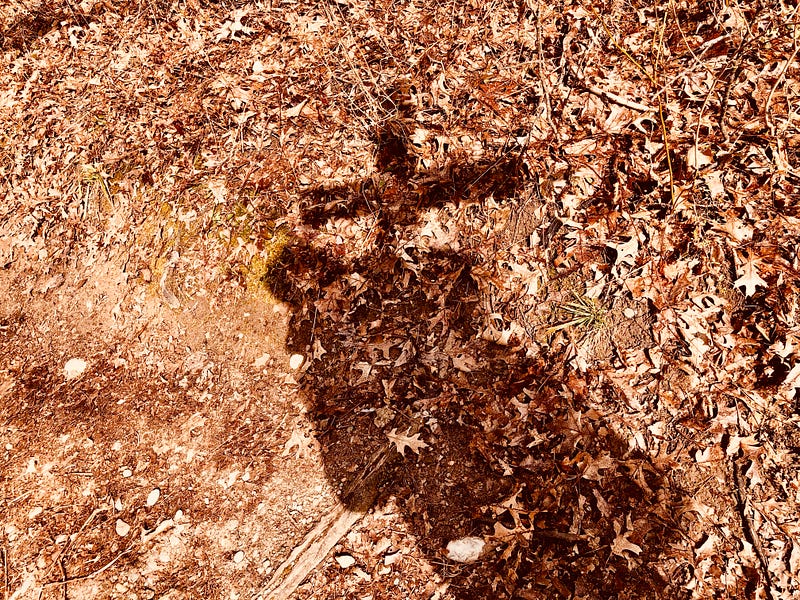
I wondered if the State Trooper would try to stop us. Instead, he asked us to pray for him by name.
After New York and New Jersey, no one in America has more pandemic victims than my native Detroit. Our “stay at home'' order was just extended statewide and intensified through April. Many are anxious, angry or scared. Churches are closed. We aren't even supposed to visit friends or neighbors.
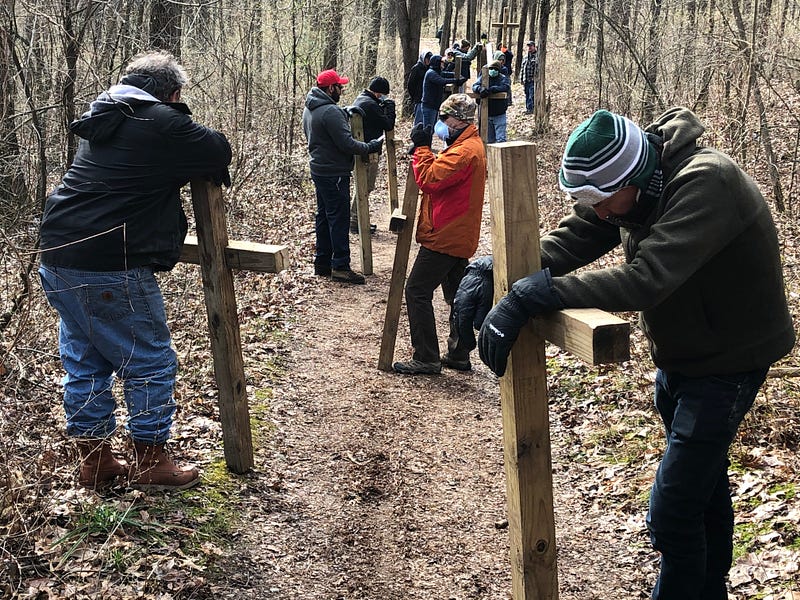
So I knew I had to join the brave men organizing a three-mile hike to pray the Stations of the Cross. I didn't realize (until I arrived) that each man would be asked to choose a wooden cross (mine was 4-and-a-half feet high) and carry it with him along the walk. Carrying a cross is different than talking about it.
Without a clear centering on the cross, author Fleming Rutledge explains, the story of Jesus is yet another philosophy coming from an inspirational leader, a list of moral rules. The crucifixion alone, she stresses, differentiates Christianity from all other religions: “It is in the crucifixion that the nature of God is truly revealed… The resurrection, being a trans-historical event planted within history, does not cancel out the contradiction and shame of the cross in this present life; rather, the resurrection ratifies the cross as the way until He comes.”
“Never forget that there are only two philosophies to rule your life: the one of the cross, which starts with the fast and ends with the feast. The other of Satan, which starts with the feast and ends with the headache.” — Fulton Sheen.
Take up your Cross
Most of the hikers chose our own individual crosses. An extra large cross could be carried by two men.
Our friend, Gregg, is one of the most tireless volunteers I know at St. Patrick Catholic Church.
If there's a pancake breakfast or Alpha dinner, Gregg is there setting up early, always the last to leave after clean-up. He didn't get one of the hand-made crosses (we ran out) so he humbly found a gigantic tree-like branch (about 12 feet long) and threw it over his shoulder and off he marched.
Watching Gregg and others kneel and pray in the dirt, moved us, reminding me of the song: “Were you there when they nailed him to a tree?”
Our pastor, Father Mathias Thelen, stresses we aren't just a random collection of Christians in Brighton, Michigan: “We are a family.’’ We are a family where everyone has his or her own unique role, gifts and callings. Together, we are part of something bigger than ourselves.
Our friend, Dave, is front row and center at most parish activities, always there to help, passionately leading his large family by example. He follows Ephesians 5, which teaches that a husband and father must be willing to risk his very life on the cross to save his family.
His wife, Melissa, is a hub for connecting the faithful. That same day, she would be praying at home as yet another group of friends marched at the epicenter of the epidemic, outside St. John Hospital in Detroit (where activity hit its apex the other day with 69 COVID-19 patients on ventilators at once). Our East Side friends prayed for healing, for mercy, resurrections and new beginnings for our region and for the whole wide world. They are there every day through Holy Week.
Back in Brighton, the focus was on the cross and events of Good Friday.
My cross weighed just 21 pounds
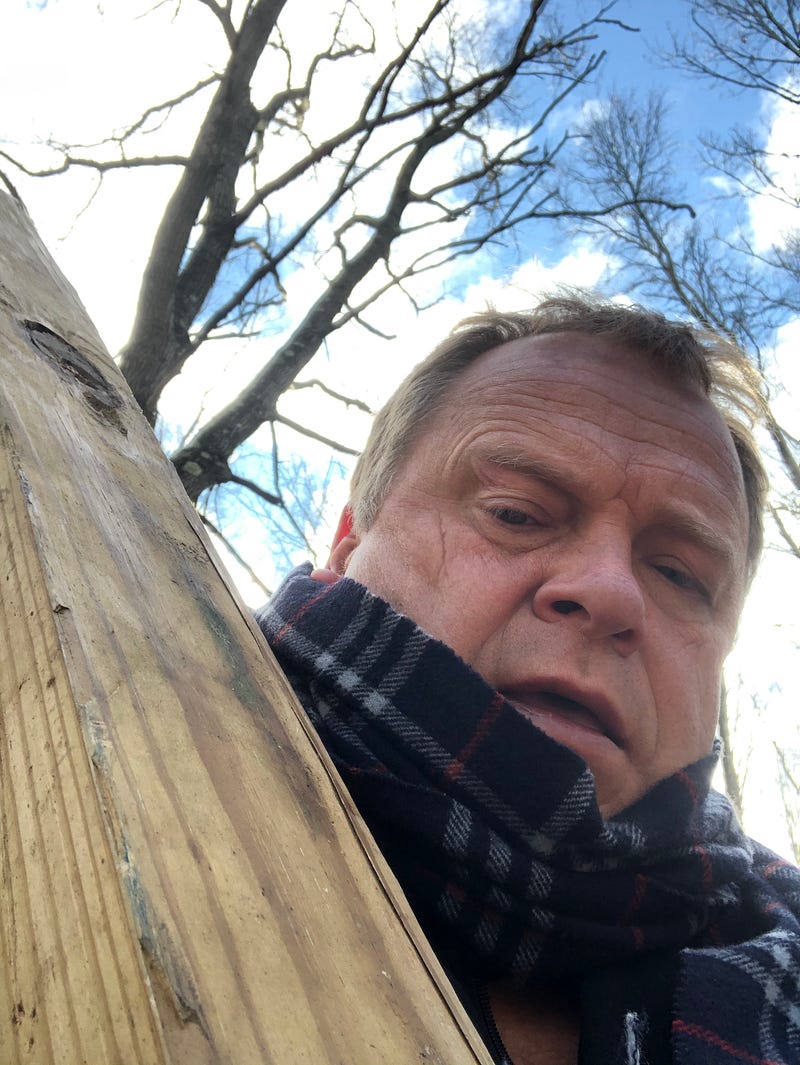
My own cross was relatively small, two posts fastened together, but solid enough to hold up any backyard deck. My cross fit fairly easily in the front seat of my Chevy Camaro: puny compared to the Cross of Jesus Christ (and no one was humiliating or hurting us as we marched). But nevertheless, my little cross still seemed to get heavier the longer I carried it.
Twice, near the end of the hike, I swung my cross the wrong way and smacked myself in the back of the head. Not intentionally, certainly, but enough to hurt.
It was a good reminder of what we were trying to do, of what we strive to become. I also felt close to getting a splinter once or twice but we were spared from any real pain because we were being protected. Our savior carried a much, much larger cross, being tortured along the way, suffering for all of us, for you and for me.
We hiked for two hours, the same day our state and our nation debated when the quarantines will end, knowing the timing of the decision is the difference between life and death. No decision is harder, President Trump said, stressing:
“Staying at home leads to death also, a different kind of death… It’s the greatest decision I’ll make... I have a big decision coming up. I pray to God it’s the right decision.’’
One of our brothers and key leaders spoke of the heavy burden he carries worrying about his four children. This is a cross of fatherhood. He heard the Voice tell him: “They are not yours to carry. I’m carrying them.”
Then an eagle soared over us
Our beloved St. John Paul the Great called himself a sportsman, always going out into the wild or somewhere few had ventured before, imagining what he called “a Springtime of Evangelization.’' And spring is truly now here. But in Michigan, spring means 63 sunny degrees one day, then snow and wind the next and 32 degrees. We felt we were following John Paul and his vision, the way he joyfully hiked into the mountains, always blazing better ways forward.
“We're all missing the Eucharist,’’ our visionary, Rory Clark, explained. “Going through the 'S curve,’ we were spaced out, yet all connected. This is how it will be until we all can come back together.’’
At the 10th station of the Cross, Tom was hugging his cross, which touched us as a beautiful act of love. We couldn't hug each other. Social distancing makes a new kind of barrier, we sense, to keep us from the invisible enemy — and each other — but we could cling to our crosses.
If we started to fall, our crosses would prop us up even as we felt their weight upon our backs. We could hug our crosses too, as Tom did. On the first Good Friday, Jesus transformed the cross from a source of state-sponsored terror and control into a source of power and love and strength for all Christian people who stand beneath it. That is why despots try to remove the cross anytime they want total authority, knowing the tiniest person can tap into great strength and ultimate highest authority from the cross.
Our friend, Jordann, joined the Church a year ago, at the last Easter Vigil, but he powerfully recited the words of the stations. He observed:
“You are all unique, every single man here has a different cross, a different thing they carry,’' he said. “They all carry it differently but you don't have to carry it alone. God wants you here in a new way.’’
We were clinging to a rope, he stressed, adding: “God shook it and now what are you going to do? He disabled all your comforts. He took away all your distractions. Where do you go? Do you go to God or do you sit? A lot of the men were complaining the other day but how do you use this as an opportunity? Have you spent some of that time in Scripture? Reached out to people? They say a sneeze can travel 27 feet but my smile can travel the distance of a football field. We don’t have a priest here but we're all called to be priest, prophet and king.”
Men said they could feel “so much love. His presence was here.” Our friend Mark, like Joseph the carpenter, used his talents and work to find the wood to make everyone a cross, telling us we had to take them because everyone has their own cross in life.
I literally couldn't recognize one of my brothers as we spoke: we asked each other how our families were doing but he was covered by layers of clothing: a hat, a coat, a scarf, a mask so I couldn't identify him. We all have some sort of mask in this life but the cross cuts through masks as the great equalizer.
Another member of our brotherhood noted how walking through the woods, keeping our distance, could leave us “isolated by trees.” That happened in his family of eight kids, each sibling moving, going their own way. But Christ, who unites, can change that. The mighty wind of the Holy Spirit was loud (it was an especially cold morning) yet we knew the others were close by going through much the same thing.
“The cross of Christ is the touchstone of our faith. From the beginning it has caused offense, as we have seen in Paul’s statement that the cross is a stumbling block to Jews and foolishness to Gentiles. It is typical of American Christianity, as of American culture as a whole, to push the cross out to the margins, because we prefer a more upbeat and triumphalist form of proclamation and practice.
The Great Recession put a crimp in our style for a brief time, but it has not canceled out the disturbing trends in our culture toward self-centered lives based on consumption, sensation, and instant gratification — all this coinciding with the exponential growth of the gap between the super rich and the struggling middle class, not to mention the gap between those barely holding on and the truly poor. The 'word of the cross’ (I Cor. 1: 18), in contrast, calls the Christian community to embrace struggle on behalf of others as the way of discipleship.” ― Fleming Rutledge, The Crucifixion: Understanding the Death of Jesus Christ.