
How to Be the Kind of Caregiver You Would Want Taking Care of You
Staying sane while taking care of someone with Alzheimer’s
I am half a decade into the journey alongside a spouse with early-onset Alzheimer’s. Yes, the same spouse I had metaphorically slapped in the face with a white flag and packed the Samsonites in anticipation of leaving.
Then, like blackened roses drenched in death, the diagnosis arrived. His brain was cohabiting with the same disease that had befallen his grandmother, mother, uncle, and a list of other cousins-twice-removed longer than that rose’s stem.
I decided to stay. Relentlessly and way too long into way too many nights I asked myself: how do I remain both here and sane?
How do I avoid weaseling my way out of the statistics in which 30% of caregivers die before the person for whom they are caring? That number is 70% if you’ve blown out more than 70 candles on your special day.
Here’s what’s kept me on this side of the coffin.
#1. Put Yourself First
Thankfully, most media has changed the perception that self-care is selfish and counter-intuitive.
“It’s not selfish to love yourself, take care of yourself, and to make your happiness a priority. It’s necessary.”
— Mandy Hale
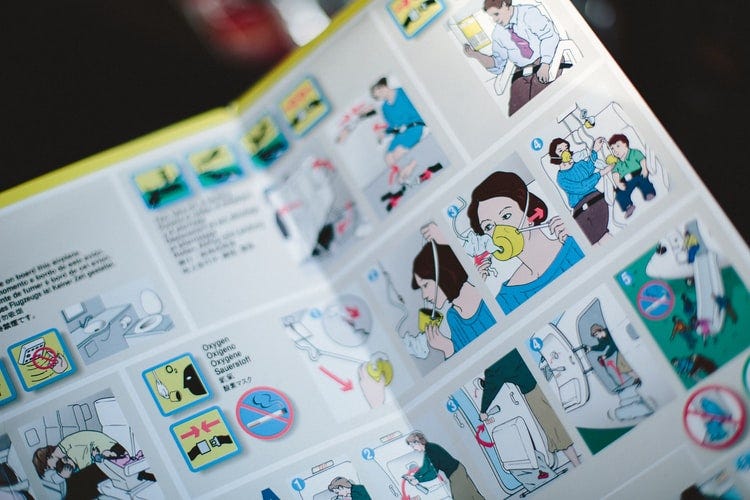
In post-university years, a friend spent many years hustling her soul, patience, and skirt length for an airline company. Whenever the topic of self-care is murmured she refers back to the emergency landing talk through which most of us jiggle our seat trays. The simple instruction we were always given being “Put on your own mask first.”
Why? If I’m passed out between first class and the beer cart I’m of no use to anyone. But when I put on my own mask first I’m able to help someone else put on theirs — and save us both.
The same is true for self-care. If I choose to save rather than extinguish a minimum of two lives I need to French kiss that mask and snort that oxygen. I’m not going down with Alzheimer’s Air, thank you very much.
That oxygen — self-care — will look very different to many people. For me, it includes my morning run-and-chats with my bestie, dedicated time romancing my keyboard, libraries worth of books, and porch visits with pals.
Your self-care might be yoga, meditation, or snuggling your buttocks into an oak tree and deciphering the ephemeral clouds messages marshmallow-ing their way past. Perhaps chamomile tea, scalding your bones in glimmery bubbles, getting lost in DaVinci-strewn mezzanine, or spending your child’s inheritance on used Vera Wang bridal gowns does it for you. For all I know, your Happy Place involves magic mushrooms and naked air guitar.
Whatever it is: Do It. And do it regularly.
If I am no good to myself I am no good to anyone. I wouldn’t expect my dust-ridden van to deliver me places without gas or regular oil changes. How, then, can I expect the same of my own body?
#2. Admit You Need Help & Build a Team
I like asking for help as much as I enjoy rectal exams. However, I quickly realized that requesting and accepting assistance was what would keep «put a down payment on my own burial plot» at the bottom of my To-Do list.
“Don’t be afraid to ask for help when you need it. I do that every day. Asking for help isn’t a sign of weakness, it’s a sign of strength.” — Barack Obama
Help comes in unexpected ways and from surprising people. Accept it.
My mother transports a hot meal from her oven to my table every Tuesday. Friends provide parenting advice and a through-the-phone shoulder to bawl on. My neighbor plays chef with our teens and sends them home with containers jammed full of their lessons.
My monthly support group listens and encourages almost as much as my muscle-rubbing massage therapist and my brain-caressing psychotherapist. One friend is on speed dial for fix-it advice.
Some people want to help but have no clue as to how. Give them specific requests. Take my spouse out for a walk once a week. Cradle my recycling boxes from the curb to my shed. Bring me a case of pinot noir and stay with me to be sure I don’t choke on my own vomit.
We aren’t meant to do this alone. Build your team and use it.
#3. Embrace Absurdity, Anger, Grief, etc.
I love chocolate and wine almost more than my firstborn. Given the gun-to-my-head choice between these vices and honesty, though, I’d kick the cocoa in the shins, dump the wine into my flowerbed, and grab for truth. It’s that important to me.
In the life of a person with Alzheimer’s, there is very little truth. Well, okay, there is their truth and there is the rest of the world’s truth. Deception isn’t intentional in this distortion called confabulation.
“[T]he truth is that ‘individuals who confabulate have no recognition that the information being relayed to others is fabricated.’” (AgingCare)
My husband, leaning into the doorframe, insists he let the cat outside — even when our feline’s rubbing hairballs into his ankle. Or he will inform every passerby marching down our street that his wife has a new job (I don’t) and that his children are eight and 10 (they’re 13 and 15) and that we just returned from a trip to New Orleans (oh, so close, it was Texas three years ago).
For someone who didn’t tell her kids about Santa or the Tooth Fairy, I have had to lean into this struggle with what feels like lying. Embracing absurdity, and Henckel-ing out the idea that everything has to be corrected, has proven to be one of my newest superpowers.
Sometimes you may have to Tina Fey your way through. Your laugh at his made-up, senseless joke told for the 18th in three minutes, may be drier than the crackers he just hid in his underpants. Use Rule #1 of Improv and always agree and say yes.
My superpower also includes embracing grief, frustration, and anger. Because they’ve arrived in bigger numbers than conspiracy theorists to Area 51 and I can’t just shove a pistol to their head and threaten them with death if they don’t evacuate.
It’s okay for anger to march in and it’s perfectly fine for frustration to have its fifteen minutes of on-stage fame. I am not perfect. Because I suddenly have “nursemaid” thrust onto my resumé doesn’t mean I am an emotionless robot.
I do my best. And sometimes, when I discover that a van door has been left open overnight in -30 degree weather, that best comprises non-star-quality bellowed curse words.
Survival
Putting myself first, constructing a support team, and embracing the ridiculous absurdity that shadows Alzheimer’s are what keep me afloat of these tsunami waves. After half a decade I am here. And I am sane. So far.
©Jennifer J. McDougall 2021