
How To Be More Creative with Your Photography — Introduce Limitations
Beware the enemy of your art!
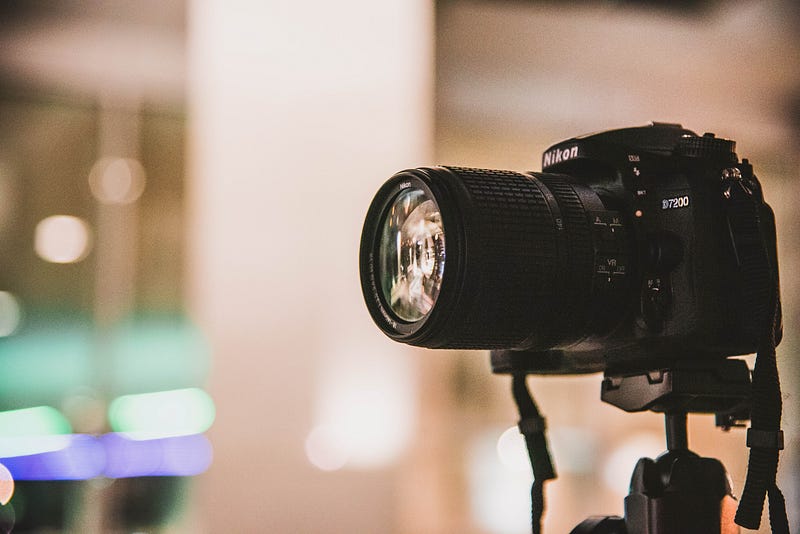
Has your favorite camera company romanced you about their newest model?
Will your photography improve significantly if you have that new camera?
Today, many new cameras offer a long list of amazing features. They promise more accurate automation and better results.
They draw your attention to the technology, not to the art of photography.
So much time is spent learning and thinking about the next additional feature, there’s less attention on your creative art. Would you agree?
“The enemy of art is the absence of limitations”
— Orson Welles
Consider for a moment the above quote from well-known movie actor/director Orson Welles.
He said that without limitations, your art or creativity will suffer.
Why is that?
Because limitations require creative solutions that result in self-expression rather than technology-expression.
Today’s cameras remove all limitations.
Fully automatic exposure systems. Autofocus systems that can track your subject and recognize their face. Lenses that tempt the photographer to zoom in, rather than find a creative composition with existing elements.
You can use many of these features creatively, but the path of least resistance is to let the camera take care of it. The camera does everything for you.
Knowing how to control the camera is no longer a limit.
Anyone with a smartphone can take a technically excellent picture.
With a new DSLR or mirrorless camera, all you need is a spare battery and a large memory card. You can take thousands of pictures effortlessly.
There’s almost no limit to how many photos you can take.
The absence of limitations
If we substitute the word art with the word photography in Orson Welles quote, we have:
“The enemy of photography is the absence of limitations.”
New cameras offer no limitations to what they can do for us, it’s all so easy.
Perhaps we should reword what Orson Welles said:
“The enemy of photography is new cameras.”
This may sound a bit extreme. We all want that shiny new thing, don’t we?
A brief photography history lesson.
Cameras were not always automatic.
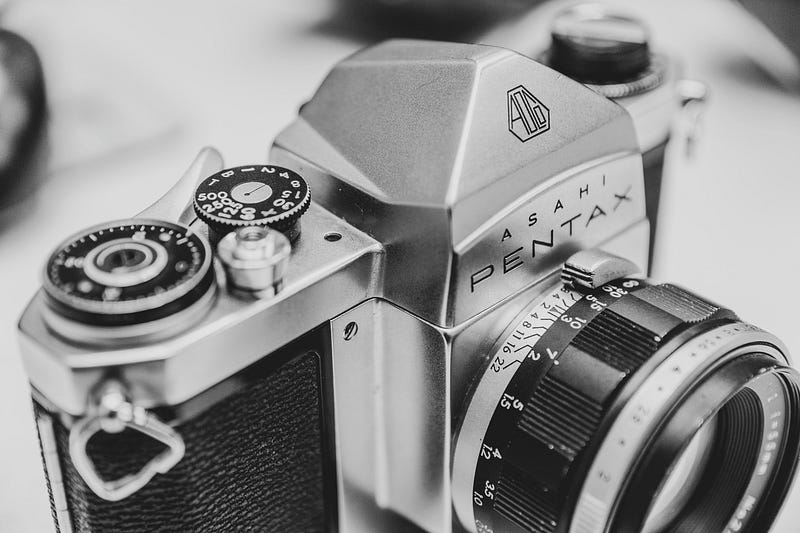
There was a time, when there were no automatic settings and no zoom lenses.
Cameras used film instead of a memory card. The film could only shoot a maximum 36 pictures. When that was used up, you had to load another film into the camera. And it was expensive.
Those limitations caused most photographers to think before pushing the button.
Imagine having a camera that could take only 36 photos. And a fixed lens with one view. Today we call that a prime lens.
You had to focus the lens manually and control both shutter speed and lens aperture yourself, using a light meter to measure the light.
If you enjoyed shooting slide film (transparencies) like I did, you had to frame the picture in camera the way you wanted it. The image projected onto the screen in a slide show was what you shot straight out of the camera.
Those limitations caused you to be very creative.
You couldn’t fix it later in Photoshop.
With film cameras, there was no display on the back of the camera to see if the picture turned out. The moment you clicked the shutter, you had to know if it was going to be good or not. You learned that from experience.
If you felt that you missed the moment, or a setting was wrong, you’d shoot again.
self-expression rather than technology-expression
With all those limitations, the pictures were amazing.
Photographers understood and controlled the equipment as a tool to capture the moment.
The results were a blend of the photographer’s skill and talent.
Those limitations required the photographer to control and create their art.
The greater the limitations, the greater the creativity.
I guess Orson was right. Limits breed a creative solution.
What can we learn from the old limited way of doing things?
How can you be more creative with your photography today?
Try this, create limitations
- Use a prime lens, not a zoom. Stick to one lens only and explore its characteristics. Choose a 50mm or 35mm lens. These are the most universal, but experiment with any lens, as long as it is not a zoom.
- Control your camera manually. This allows you control over depth of field and shutter speed. Learn how each of these settings affects your picture.
- Manual settings mean you can creatively make the image lighter or darker and control how much is in focus. Learn to use your camera’s light meter as a guide, not a rule.
Learn the tools. Pay more attention to the image.
Take back your creative choices.
Be the photographer. Be the artist.
Think about the reverse of Orson Welles’ words:
The friend of art is limitations.
If you’d like to be informed when there are new articles about photography or any other insightful articles from my overactive brain, Sign-up Here