
How to be kind to yourself
My road to quietening the inner critic
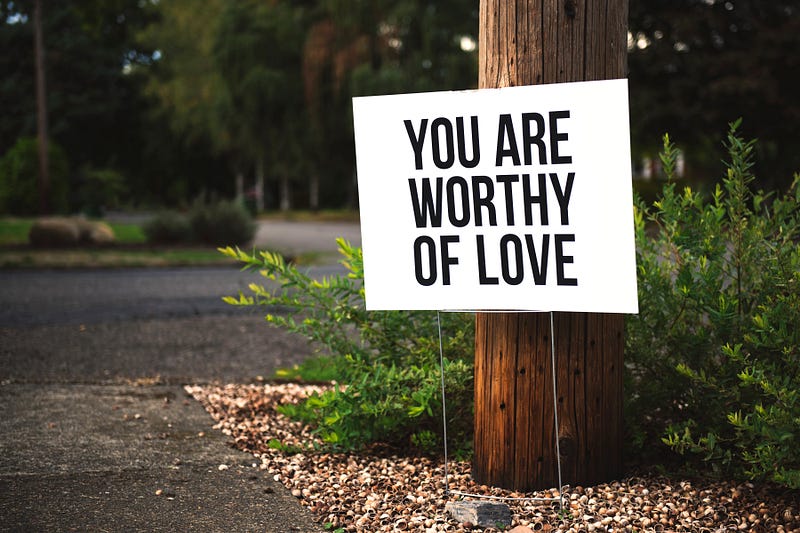
I don’t know where my inner critic came from. I have supportive parents, my romantic relationships have mostly felt loving and safe, and I managed to muddle through my childhood without ever really getting picked on. Seeing as growing up (/life in general) is no picnic half of the time, what I probably should have done is enjoy this privilege that life had afforded me.
Alas. It wasn’t to be. With the role of “bully” going unfulfilled by my family and peers, I instead decided to flex my metaphorical muscles and step up to the challenge. So began the running commentary in my head (sing with me if you know the words) — you can’t do this, you’ve embarrassed yourself, why not give up now, your body is disgusting, you should be working harder… Catchy, isn’t it?
In all honesty, I co-existed with my inner critic up until my mid-twenties, without considering that there was anything particularly noteworthy about it. It was only when I started preparing to apply for my doctorate in Clinical Psychology, that I became aware of the toll the voice had taken. Completing my application took months — I was crippled with self-doubt, which permeated through everything I wrote. No number of revisions could eradicate my propensity to undermine and belittle all my achievements and work to that point.
Unsurprisingly, I was rejected outright by three out of four institutions. Ouch. In the end, I was offered an interview by the fourth university after being placed on their wait list, which set the stage for my inner critic to present its final masterpiece. Sat across the four horsemen of my apocalypse, I stumbled, giggled and trembled through my interview. When asked to discuss my experience and perspective on key mental health issues, my inner critic stamped on my ideas before I had a chance to articulate them. I had nothing to say for myself. 10 minutes later, it was over.
I couldn’t believe what had just happened. Some six years of work had led up to that moment, and I choked. That’s when I realized the voice had been working against me, not with me, the whole time. Although it was the inner critic that drove me to get the highest grades and work three jobs, it finally clicked that none of my experience or qualifications mattered if I couldn’t present myself with conviction. My relationship with myself required a drastic overhaul.
The process of quietening my inner critic has been slow and arduous. Two years on, I still continue to have moments where I question myself, my relationships, my abilities. The inner critic remains, but other voices of compassion, encouragement and praise have now entered the dialogue. How did I do this? Here are my three lessons learned.
1. Treat yourself like you would a loved one
Pretty much everyone I know who struggles with the omnipotent inner critic (myself included), seems able to show a staggering amount of compassion for other people. See, it’s not that we are incapable of kindness, we just don’t like reserving any for ourselves.
One of the most powerful things I learned was to actively encourage myself to think about how I would behave in situations if the subject were my best friend. If this person were to get an amazing new job, would I direct them to the Forbes 30 under 30 list to minimize their achievements? If they ran a 10k for the first time, would I smirk and tell them that “it’s not quite a marathon”? If they got sick and couldn’t go to work, would I shrug and say “mind over matter, baby”? Absolutely not.
Identifying the disparity in my responses was a crucial step to helping me recognize the double standards I set for myself. It exposed my inner critic for what it was: unkind, unfair and illogical. In doing so, challenging my inner critic became more accessible — it’s easier to argue with someone when you know they’re full of sh*t. Practicing self-kindness also felt far less mysterious and opaque — with this thought exercise, I realized I had the tools to be more compassionate to myself all along, I just had to give myself permission to use them on myself.
2. Re-frame failure
Historically, I have had an appalling relationship with failure. I don’t mean just the “big failures”, like bombing an exam or being passed up for a promotion — I was scared of imperfection in anything. Ice-skating birthday parties were a disaster for me, as I did not understand what could possibly be fun about falling over in front of people. I also couldn’t bear the idea of playing any type of game (I’ve been known to hide in the toilets at Christmas parties), because I derived absolutely no pleasure in doing something that I wasn’t good at in front of an audience.
The way I started to overcome this (I say started, as this is a work in progress) was a mixture of accident and design. Being both risk-averse and a high-achiever meant I had been propelled into adulthood without experiencing any life-shattering failures. So when it finally came as I applied for my doctorate program, it hit me hard. Kind of embarrassingly hard, looking back on it. Alice in Wonderland sums it up nicely.

Once I had licked my wounds, I actually found that I was approaching life more boldly than before. Failure was no longer something to be avoided at all costs, as I had failed, survived, and been able get better as a result. I also listened to well-timed interview with artist Jemima Kirke, who conceptualized the avoidance of failure and the reluctance to fail as an arrogance of some sort. Why should I be so special that I can go through life without making mistakes, practicing, and producing work that nobody cares about? This was an incredibly grounding message, placing failure within the scope of the human experience, rather than something that can be leapfrogged if you are good enough.
With these realizations, I began to actively cultivate a space for failure in my everyday. This may sound stupid, but one of the ways I did this was weight training. Here was a form of exercise which emphasized working to the point of failure. Failure here was hailed as evidence of hard work and the prerequisite of progress. Making these new positive associations highlighted that I was still valuable and worthy in the absence of “perfection”. Self-kindness no longer needed to be so conditional.
3. Don’t let society reinforce your inner critic
My inner critic was smart. It managed to shape-shift and camouflage so that it took hold of me in a way that was socially acceptable. It masked as determination, or perfectionism, or ambition — all qualities that society gives you a big smack on the back for. It didn’t matter that I worked myself to the point of collapse in my second year of university, or flirted with bulimia in high school to maintain my thigh gap. Society only cared about the results, so it really didn’t matter how I got there.
This was a major lesson in re-defining my priorities. By accepting validation and reinforcement for outcomes, not the process, I was essentially teaching myself that success was to be achieved at any cost. It didn’t matter if my relationships or mental health suffered along the way, as long as the job was done. My definition of success was also so tied up in my professional and academic achievements, that I did not give myself the chance to acknowledge other aspects of myself and my life which merited recognition.
Rejecting reinforcement of my inner critic meant constructing a more holistic definition of success. Success was no longer superficially beautiful, but rotten at the core. While my idea of success still had some of the familiar markers (such as job performance), it now made space for me — my sense of well-being, my job satisfaction, what I was learning, and how much joy I derived from life.
The process of quietening my inner critic makes me think a lot about the story of the two wolves. One wolf is darkness and despair, the other is light and hope. They are always fighting, but which one will win? The answer is — whichever one you feed. Negativity may always exist in my head, but I now choose to nourish the positive, so that I can let in the light.