
How to be a Good Negotiator as An Introvert
The Devil’s in the Details.
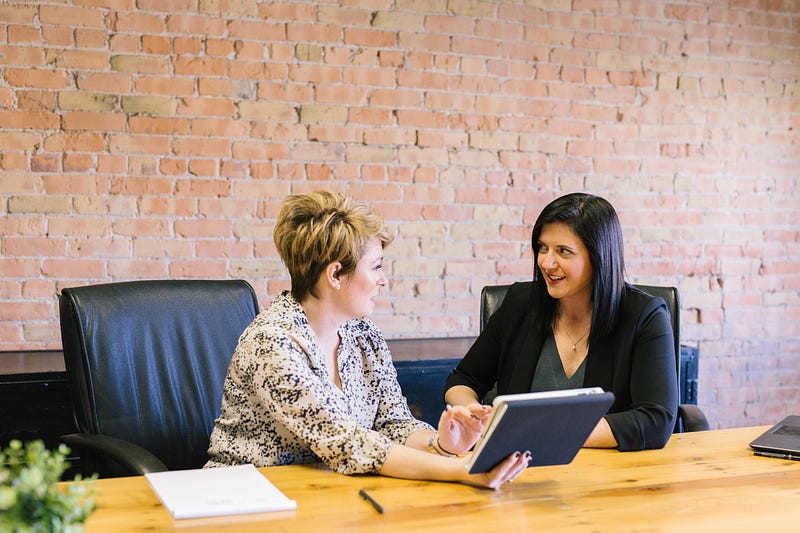
What do you think of when you hear the word ‘negotiation”?
Aggression. Being Vocal. Being Strong.
Every time I ever had to fight for something the argument very quickly got exhausting for me. I would start out fine negotiating to request, stating down logical arguments to back my points, yet as soon as the argument would get heated I would have a tendency to go quiet or become frantic because of the discomfort and strain in other people’s voices.
The word “negotiation” is often not associated with introvert traits. Which is not surprising. Most introverts avoid conflict. We do not want to be seated at a table while people yell at us. Nor are we the people who like to be yelled at by our partners or parents. Yet negotiations often as we know require confrontation and aggression.
You expect the attorney to speak up for her client, during a negotiation. Even if that involves yelling across the table. It's the same when we’re seated at the back of a taxi and are yelled at for no fault of our own. Or need a particular product at a lowered price. Negotiation is a part of some people’s professions but for others its part of their lives.
While it may be difficult for introverts to be amidst a negotiation. You will be surprised how with a little training we can get really good at them.
It's because of one common trait in Introverts — Self Monitoring.
The Power of Self Monitoring
Most Introverts are trained to ignore their need for quiet and peace. As a social society, we expect people to constantly socialise in one form or another. So the introverts are quickly trained into moulding themselves as per the needs of their environment. If its a social environment introverts are relatively louder, amiable and try to indulge in small talk. Yet if they're in a quieter environment they quickly move to deeper discussion, a more peaceful atmosphere.
This form of moulding oneself as per the situation is more often found in quiet people. And is called Self- Monitoring.
An introvert can be a great orator simply because of their intuitive understanding of their audience. They are better at reading the social cues of their audience whether they're enjoying the talk or simply yawning. This morphing yourself as per the social requirements is a form of effective self-monitoring. Which is surprisingly useful in negotiations.
A person who has a high self-monitoring tendency is much more likely to read the body language, the environment around them. Their calm and quiet demeanor can be an advantage in a negotiation. A loud person spends a lot of energy in their own body language and being vocal. But a quiet person who spends less time talking and more time observing and listening calmly. Can gauge the situation much better and make the right deal at the right time.
The Winning Body Language
A lot of negotiation is in the body language. Negotiating is stressful, but the best way to stay calm through such situations is by paying attention to your face and your body postures. Smile, breathe deeply, talk softly. Unclasp your hands, relax your shoulders, keep your arms loses on the side. When we start concentrating on our body language, it is less mentally taxing to be standing the stressful situation. Yes, it might've hard to change body posters, but it's all about moving your attention from around you to onto yourself.
Once we’ve mastered our body language. We are in a position to command the attention of others in the room. We often assume a negotiator is dominating, loud. Yet the point of a negotiation is to convince the others in the room. It requires a lot of questioning and listening. Answering and reaching agreements, which is something most introverts are good at.
With the right attitudes and self-training introverts can be master negotiations, without harming or offending people around you.
Introversion is a powerful trait in those who have it.
It doesn't make us weaker but gives us a different strength that we can use in our daily lives.
In the book Quiet, Susan Cain gives the example of a brilliant salesperson, who is an introvert. Salespeople are expected to be louder and extroverted while making sales. Yet this was a quiet man who went from house to house selling kitchen knives. He set an unprecedented sales record in his company while still being the quiet introverted lean wiry man you would see at the corner store buying a newspaper.
This is the power of an introverted negotiator.
As Ram Das said about being a good negotiation:
We’re fascinated by the words — but where we meet is in the silence behind them.”