
How to Be a Budget Anthony Bourdain
Travel advice for people who value quality over quantity
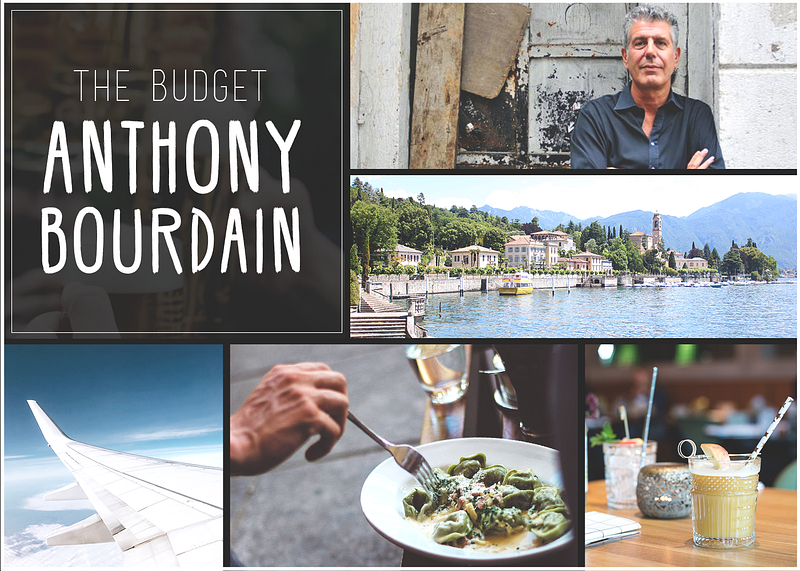
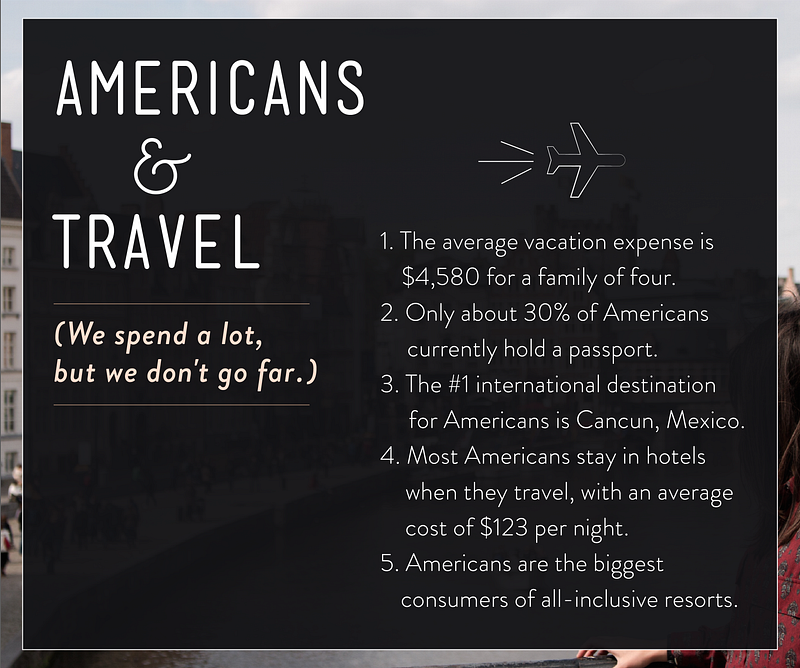
Since starting The Financial Diet nearly three years ago, I’ve probably read, edited, or personally written hundreds of articles on budget travel. It’s no surprise that this is a popular topic — who doesn’t want to broaden their horizons and see new things without having to bleed money the way so much travel demands?
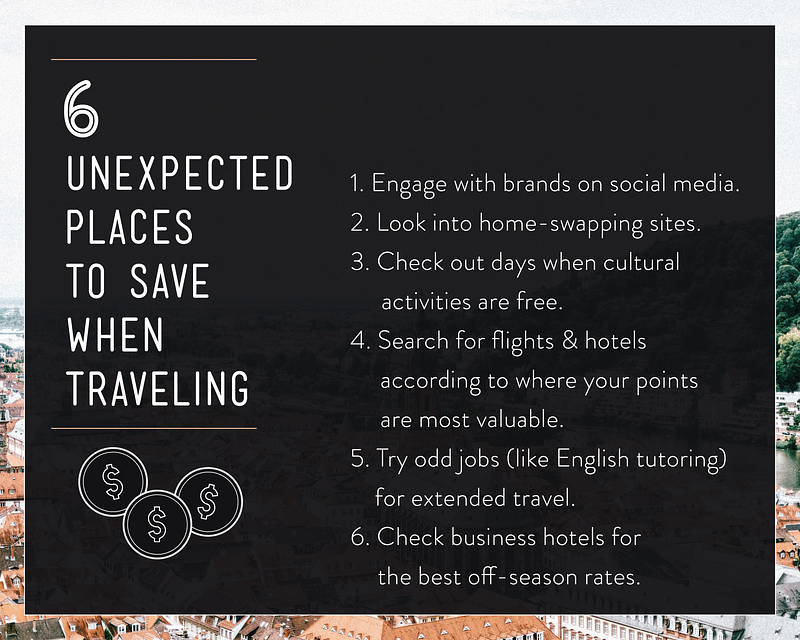
There are a million variations out there on the same ideas (point strategies, airfare hacking, knowing the right seasons and times, etc), but there is rarely a true exploration of what it really means to travel well and thoughtfully while sticking to a pared-down budget.
We spend so much time talking about the nitty-gritty of getting from point A to point B that we don’t consider what we’re really supposed to do when we get there or how exactly our money is being invested when we arrive. (What is the real value of these trips, and how can we make sure we’re getting the most out of them?)
I’ve always believed in the deep-and-narrow version of travel: I lived in another country for three years, and I make it a point to stay at least a week in any new city, soaking it up in as meaningful a way as I can and doing my best to have a “local” experience.
Many people take the opposite approach —they get a kind of thrill from racking up as many stamps on their passport and tend to hop around from town to town as quickly and efficiently as they can. Of course, there is nothing wrong with this approach, but it’s also what is often addressed when we talk about budget travel: getting the absolute most for your dollar, in terms of miles and sights.
If we look at travel through a different lens, where the goal is not necessarily to accumulate but to be outside of ourselves for a while, the game becomes very different.
Most of my time spent traveling has been done on a very tight budget, and I was initially able to move abroad because I was working part-time as a nanny while going to school. None of it was glamorous, but in many ways, the profound normalcy of travel under such conditions makes the experience feel more tactile. (It’s easy to insulate yourself from anything scary or unknown when you are traveling with a flexible budget.)
But even before I had gone anywhere on my own, I was an enormous fan of Anthony Bourdain. I remember watching his very first travel show, set in Paris, where he spent his time doing deeply normal things, like having an espresso and a cigarette, or enjoying a heaping plate of braised veal on a red-and-white tablecloth.
That, I immediately thought, is what I want travel to feel like: soaking up a city and enjoying it in an almost passive way. But even as Bourdain’s various shows have grown to take him to more than 80 countries, the simplicity of his approach feels as pared down as it did on that first trip to Paris. And while, yes, there are definitely lessons to be learned on how to get to some of the destinations he’s visited for less money, I’d argue that it’s only part of the story: We can and should be asking ourselves how to create those kind of experiences wherever we are.
In writing this piece, I spoke to Mike Steele, an avid traveler and former travel-industry professional who has visited seven countries in the past year, all on a serious budget. He told me”
I started traveling in my sophomore year of college. Since I only made $100 every two weeks, I initially thought that travel was something out of my reach until I started a career. As I commuted from college to my hometown, I’d notice these intercity buses promoting “$1 tickets” along the highway. I soon became really fond of these buses: They allowed me to explore new cities cheaply, without being tied to my car. Even while earning a salary, I’ve held on to the frugal conception of travel I started with. It’s allowed me to visit seven countries in the last year.
Using buses is a major [budget travel rule]. It’s rare to find a $1 ticket, but an intercity bus is much cheaper than driving or flying. You won’t have to pay for gas, tolls, or parking. And unlike a flight, you’ll be dropped off right in the middle of the city. It’s unfortunate that buses have a reputation for being unpleasant and unsafe. Buses are safe, cheap, and utilitarian. (Maybe surprisingly comfortable?) And seeing travel in a more utilitarian way will allow you to travel more often.
I’m also a huge fan of hostels. Not only will you save a significant amount over a hotel or an Airbnb (a bed in a hostel costs around $30 to 40 a night), you’ll make connections. It’s far more interesting. I was scared of hostels when I first began traveling: I thought they were unclean or unsafe. I wish I knew that hostels weren’t just safe, they were where my tribe was: people looking to see the world cheaply and meet others doing the same. Staying in hostels each time gave me experiences that I wouldn’t otherwise had. I got to hang out with people from all over the world and hear their stories. Hostel mates coaxed me out of my introverted self, allowing me to try things I wouldn’t had done otherwise. (Like a pub crawl in Germany, violin lessons in London.) I left changed every time.
Using buses or hostels, it’s easy to budget a short weekend away to a different city. You have to reconceptualize travel as something about change and connection, rather than about luxury or comfort. Utilize free city tours at hostels, see free monuments, sit in the park and people-watch. You can be pampered at home!
Now, I know you’re probably asking: How do you find these hostels or use these buses? There are a few things to know. Nomadic Matt is a hugely informative budget traveler. (Full disclosure: He used to write for my old employer, but I promise he is independently awesome!) He has a solid guide on getting the most out of any hostel you might find online.
As for buses, in the United States, you have the basics that allow low-cost (if not perfectly convenient) travel in the form of things like Megabus, Greyhound, and Bolt Bus. But internationally, Mike’s own former company, Wanderu, provides an enormous amount of options.
The biggest choice one must make — be it for hostels or buses — is deciding that “imperfect” travel is good enough for you. Meeting strangers, taking the slower route, and discovering cities without the perfect timeline have to be something you’re open to. And, yes, they don’t guarantee some sort of mythic Ultimate Travel experience, but they mean getting the best for the most budget-friendly value.
The idea of taking yourself out of your comfort zone (even if you don’t have the help of friendly fellow hostel-stayers) is a big one. All the travel experiences I have most treasured have been when I felt most outside of myself, the most like a better or at least different version of who I am. For example, French is my second language, and part of what drew me to living in France was this idea that I could be a new person. (Studies show that we are actually very different, personality-wise, in different languages.)
And on a recent trip to Miami, my favorite part was undoubtedly getting to ask every Spanish speaker if I could speak in Spanish with them, as I’m about three months into serious practice with the language. They were simple conversations, of course, but getting even that glimpse of interacting with people on their own terms and seeing even something as simple as words on a menu from an entirely different perspective felt thrilling.
Ultimately, we have to ask ourselves what exactly makes travel so alluring, and the answer must go beyond “ooh-ing and ah-ing at beautiful new sites and foods,” even if that’s a big part of it. We have to take the mentality of “being incredibly present in the moment, feeling and seeing things with fresh and curious eyes,” and expand it to places that aren’t prohibitively expensive to get to. Learning a language is in many ways free, exploring your own city in a very active and intentional way can be incredibly low-cost, and taking the time to visit friends in nearby cities means getting to explore a new place without having to pay for lodging, while having the added benefit of getting to explore through the eyes of a local.
If we think about how Anthony Bourdain travels — simply, without a focus on luxury but a focus on detail — we see how much of this can be reproduced almost anywhere. And in almost every piece we’ve run about budget travel on The Financial Diet, there is a clear undercurrent of “I focused on what was important and eliminated the rest.”
Yes, there are ways to shave off cost in transportation or boarding, but I would argue that the more pressing question is not “How can I get this hotel room for cheap?” but rather, “How can I learn to enjoy and value the experience of staying in a hostel or with a host?” Taking these budget options on their own terms, and for their own reasons (coming to seek out and appreciate the fluidity of bus travel, rather than seeing it as a last resort, for example) means not having to scale down your experience. Approaching travel in this way makes it an experience woven throughout our lives, rather than something very separated from our day-to-day, something we scrimp and save for once or twice a year. Even time in our own cities (our own homes!) can be spent with a travel mindset: always looking, always learning, and always hungry for more.