
How to Backtest a Trading System
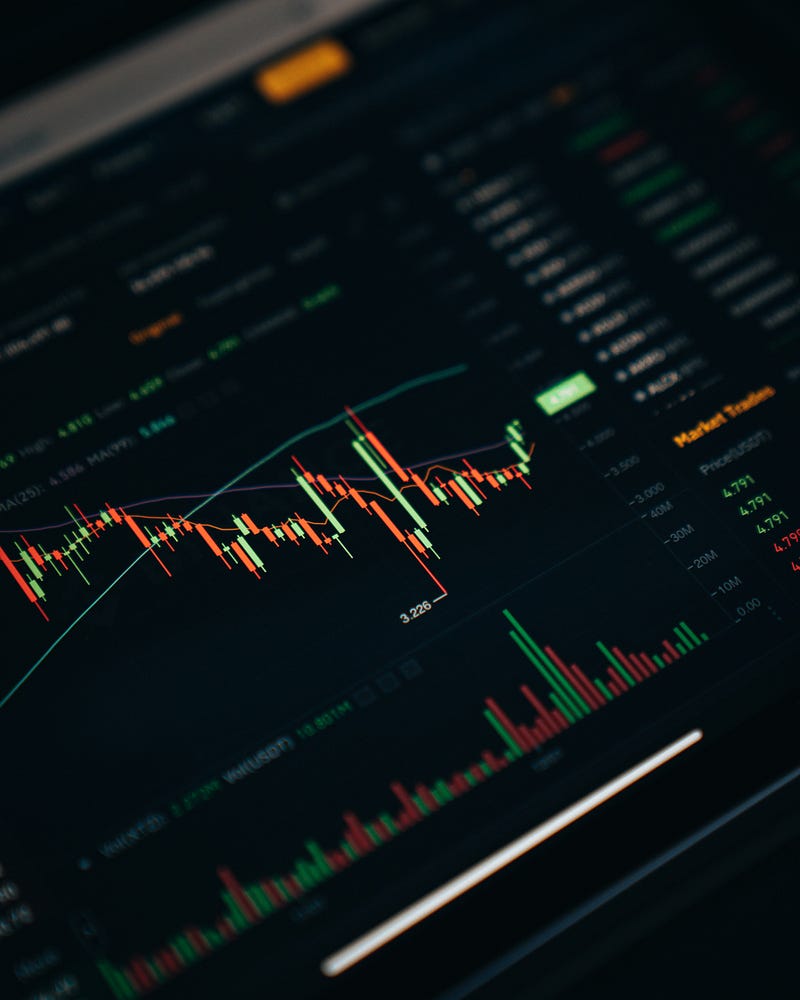
Backtesting is a crucial step in the development and evaluation of a trading system. It involves testing a trading strategy using historical data to assess its potential profitability and risk management. By simulating trades based on past market conditions, you can know how a trading system performed in the past which can give you an idea of how a strategy is performing today, even if market conditions change over time.
Backtesting can be a challenging and time-consuming process, but it is essential to be successful in the markets.
Designing a Trading System
The first step in backtesting a trading system is to design a strategy that defines the rules for entering and exiting trades. This can involve identifying indicators, setting criteria for entry and exit points, and determining position sizing and risk management parameters.
Your trading system must be purely objective and your rules must be precise to allow for a good backtesting. Here are some tips to design a trading system:
- Choosing a market and time frame: Before designing a trading system, you need to decide which market you want to trade and what time frame you want to use. The choice of market will depend on your preferences, risk tolerance, and trading style. Some popular markets include stocks, futures, forex, and cryptocurrencies. The time frame can range from intraday to long-term, depending on your trading goals and strategy.
- Identifying trading rules and indicators: Once you have chosen a market and time frame, you need to identify the trading rules and indicators that will form the basis of your strategy. This can involve technical analysis tools such as moving averages, oscillators, and trend lines, as well as fundamental analysis factors such as economic news and corporate earnings reports (keep in mind that fundamental analysis is harder to implement into mechanic trading systems as it’s not really objective, but it’s possible).
- Determining entry and exit points: You need to determine the criteria for entering and exiting trades. This can involve setting up buy and sell signals based on your chosen indicators, as well as defining stop-loss and take-profit levels to manage risk and maximize profits.
Manual Backtesting
Manual backtesting is a method of backtesting that involves manually reviewing historical price data and simulating trades based on a trading strategy. This approach is useful for traders who want to test their strategy without using specialized backtesting software, or who want to gain a deeper understanding of how their strategy would have performed in different market conditions.
To conduct manual backtesting, follow these steps:
- Collect historical data: To manually backtest a trading system, you need to collect historical data for the market and time frame you are interested in. This data can be obtained from a variety of sources, including online databases, trading platforms, and financial websites.
- Review the data: Once you have collected the data, review it to identify potential trading opportunities based on your strategy. This can involve looking for buy and sell signals based on your chosen indicators and entry and exit criteria.
- Simulate trades: After identifying potential trading opportunities, simulate trades based on your strategy by recording the entry and exit prices, as well as the stop-loss and take-profit levels. Keep track of the results of each trade, including the profit or loss and any fees or commissions. You can use a spreadsheet for this step, like below (I can’t share it as it’s not mine, but you can probably find spreadsheets like this on the Internet).
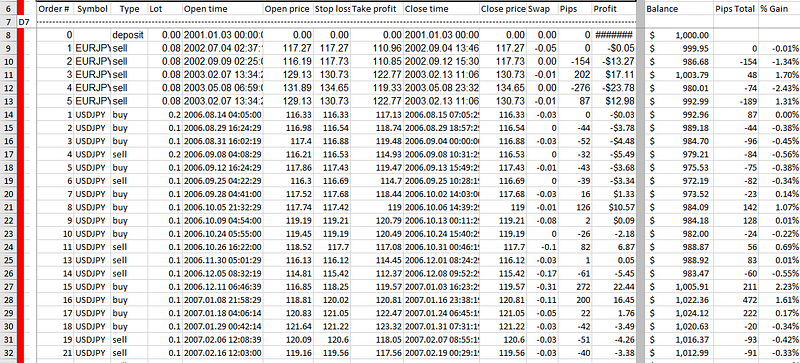
Manual backtesting can be time-consuming and labor-intensive, but it can also provide valuable insights into the strengths and weaknesses of a trading strategy and doesn’t require any coding knowledge.
Automatic Backtesting
Automatic backtesting is a method of backtesting that involves using specialized software to test a trading strategy against historical data. This approach is useful for traders who want to test a large number of trades quickly and efficiently, and who want to minimize the potential for human error.
To backtest automatically, follow these steps:
- Choose a backtesting software: There are many backtesting software options available. Some popular options include MetaTrader 4, TradingView, and NinjaTrader. You can also make your own backtesting software if you have programming knowledge (I’ve made mine with Python if you want to check, but I wouldn’t recommend it for beginners).
- Enter trading strategy parameters: Once you have chosen a backtesting software, enter the parameters of your trading strategy, including the indicators, entry and exit criteria, and risk management parameters.
- Import historical data: Import historical data for the market and time frame you are interested in, either from the backtesting software’s database or from an external source.
- Run the backtest: Run the backtest using the software’s automated testing tools, which will simulate trades based on your trading strategy and generate performance metrics and reports.
Automatic backtesting is a powerful tool if you want to quickly and efficiently test a large number of trades and assess the performance of your strategy. However, it often requires coding.
Analyzing the Results
Once you’ve run a backtest, it’s important to analyze your results to know whether the strategy is promising or not.
You have several things to look at to analyze the results:
- Performance metrics: Performance metrics provide a quantitative assessment of the performance of a trading system. The most important ones are the profit factor, Sharpe ratio, maximum drawdown, and win rate.
- Equity curve: The equity curve is a graphical representation of the account balance over time, and can help traders visualize the performance of the trading system. A smooth, upward-sloping equity curve is generally desirable, indicating consistent profitability over time.
- Trade statistics: Trade statistics provide a detailed breakdown of the trades executed by the system, including the number of trades, the average profit/loss per trade, and the average duration of trades. They’re not as important as performance metrics, but they’re good to know so that you know if the trading system fits your style.
- Risk management: Assess the risk management aspects of the trading system, including the use of stop-loss orders, position sizing, and other risk mitigation strategies.
- Market conditions: Consider the performance of the system under different market conditions, such as high volatility, trending markets, and range-bound markets.
- Optimization: Finally, consider opportunities for optimization and refinement of the trading system, based on the insights gained from the backtest results.
Pitfalls and Limitations of Backtesting
While backtesting can be a powerful tool for evaluating the performance of a trading system, it is important to be aware of the potential pitfalls and limitations of this approach.
The first one is over-optimization, or “curve-fitting,” in which the trading system is optimized to perform well on historical data but fails to perform well on future data. To avoid over-optimization, traders should use a simple and robust trading strategy and avoid tweaking the strategy based on the results of the backtest. You can also test your strategy using a walk-forward approach to know if it isn’t over-optimized.
Then, there is the survivorship bias: obviously, you wouldn’t even consider a strategy if its performance in backtest is bad. But that’s not because the backtest is good that the strategy is good.
Then, backtesting results are only as good as the quality and accuracy of the historical data used in the analysis. You should ensure that the data used in the backtest is free of errors and biases, and that it accurately reflects the market conditions at the time.
Finally, backtesting relies on a number of assumptions and simplifications, including assumptions about trading costs, slippage, and liquidity. These assumptions may not always hold true in real-world trading situations, leading to differences between backtesting results and actual performance.
Final Note
While backtesting is not a guarantee of future success, it is an essential tool for any trader looking to improve their performance in the markets. By using backtesting in conjunction with other analysis and research tools, you can probably be successful in the markets!
To explore more of my trading stories, click here! You can also access all my content by checking this page.
If you liked the story, don’t forget to clap, comment, and maybe follow me if you want to explore more of my content :)
You can also subscribe to me via email to be notified every time I publish a new story, just click here!
If you’re not subscribed to medium yet and wish to support me or get access to all my stories, you can use my link:
A Message from InsiderFinance

Thanks for being a part of our community! Before you go:
- 👏 Clap for the story and follow the author 👉
- 📰 View more content in the InsiderFinance Wire
- 📚 Take our FREE Masterclass
- 📈 Discover Powerful Trading Tools