
How to Avoid Work Exploitation During an Economic Crisis
Pandemic is not an excuse to take advantage of employees
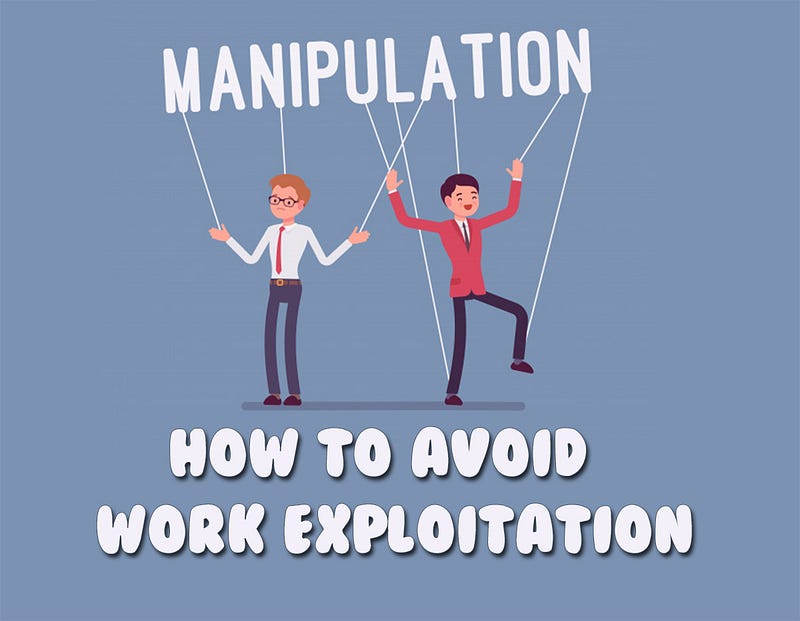
We are in the middle of an economic crisis that cost 40 million Americans their jobs. Being employed is nearly identical to a luxury right now, as many companies laid off a large percentage of their workforce.
However, being in a crisis doesn’t constitute workplace exploitation. No matter how difficult things are, it’s not a reason to expect an employee to work for two or three without being compensated for it. Everyone deserves to receive a fair wage, and no one is allowed to take advantage of your hard work.
There is a way to avoid exploitation. You should observe the behaviors listed below, and recognize abuse if it takes place in your office — or, in many cases, your home.
Demand Compensation for Extra Work
You should keep your eyes wide open and look out for bright red flags. It probably feels scary when some of your coworkers are laid off, but it’s not a reason to work extra with zero overtime pay.
If your boss throws an unreasonable amount of work at you — this is the first red flag. It’s understandable to expect more than a minimum, but there should be a limit. If there is a lot of tasks on the docket, the company should use that income to compensate you for overtime work.
You cannot complete a significantly higher workload just because your organization wants you to. Or, if they insist — you should expect to be paid. Refuse to work for free and value your input.
Don’t listen to your manager if they start talking about how lucky you are while others are jobless — this is a form of manipulation.
Refuse to Work for Two
You are one person — you can’t work for two or more. There should be a reasonable expectation according to the working hours and your abilities.
If the company has a high workload, they should rehire someone who was laid off. No one can expect you to cover the entire office when you’re the only one left. In this case, your boss should be the one doing all the jobs for everyone else, not you. There should be a reasonable solution, and pushing a double workload onto your shoulders isn’t one.
Pandemic is not a reason to merge three positions into one and expect a single employee to handle all the work at a lower pay rate.
Don’t Allow Your Boss to Guilt-Trip You
Attempting to guilt-trip an employee is an unethical trick. You shouldn’t feel guilty for retaining employment during a crisis. On top of that, even though having a job is a privilege right now, no one has the right to use to squeeze out every ounce of energy from their workers.
Don’t listen to your manager if they start talking about how lucky you are while others are jobless — this is a form of manipulation. Remember: you are making a profit for the company, which means you are valuable. Every employee offers time and effort in exchange for a payment. In case your employer is unable to keep paying you, they should let you go, allow you to apply for unemployment, and make it clear you should look for a new job. Making you feel guilty and demanding to complete extra work or give you more duties, is unacceptable.
Refuse to work for free and value your input.
Reject Someone Else’s Job Duties
If your boss requests you to perform duties, which are not mentioned in your job description, you should refuse. Completing work for someone two positions above is unacceptable. Performing tasks below your pay grade also isn’t something you should agree to do.
You need to focus on your own work. If the company removed another employee from their position — they need to hire someone new. In the instance of you being a temporary replacement, the salary should be adjusted accordingly. If it’s not, reject the responsibility for doing someone else’s work.
Pandemic is not a reason to merge three positions into one and expect a single employee to handle all the work at a lower pay rate. This is the definition of exploitation, which has no place in the modern world.
Working from a home space constitutes convenience and comfort, not extra unpaid labour.
Deny the “You Work from Home” Tactics
Your employer might expect you to work extra, or take shorter breaks and lunch, only because you’re working from home. Setting up an office in your apartment or house doesn’t equal to you working more.
Working from a home space constitutes convenience and comfort, not extra unpaid labor. You may not need the entire hour to eat lunch, but it’s still your free time. The fact that you can start early to jump on a conference call doesn’t mean you have to work extra.
In case your manager attempts have to take advantage of the working arrangement, you need to make it clear that any additional work hours have to be paid.
You are not a volunteer — you’re a paid employee.
Recognize Threats and Blackmail
In some cases, blackmail and threats might occur. Threatening to fire or lay someone off is against the law, so is the blackmail. Under no circumstances, the employer is allowed to exhibit such behavior, even during an economic crisis.
If your boss is insinuating, they will replace you with someone they let go of — it’s time to remind him of the legal implications. Don’t allow anyone to mistreat you.
Always Watch Out for Red Flags
Everyone should learn how to recognize red flags at work, both during the normal time and in the middle of an economic downturn. No one should be exploited or taken advantage of.
The crisis won’t last forever, but you will remember how your boss behaved. Mistreating the staff isn’t a smart idea in the first place, and if your employer engages in such behavior — take notes. The moment it starts, you should consider looking for another job, even right now.
There are many employers out there who are happy to exploit others, and the crisis is one of the countless opportunities to do so. Stand up for yourself and value your work. You are not a volunteer — you’re a paid employee.


