
How to Avoid Pitching a Fit Even If Our Buttons Are Pushed
Hint: Clenching our jaws won’t work
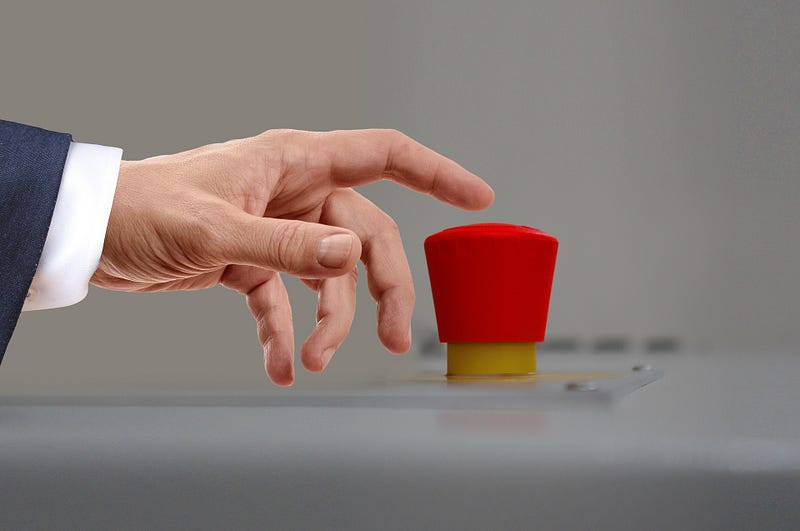
Have you ever been in a business meeting when someone pitched a fit and went off on another person? I have, and it isn’t pretty. Our ability to control our emotions, avoid outbursts, and stay calm and controlled in heated situations are hallmarks of professionalism. Yet, it can be hard to hold our temper when we feel as if we’re being attacked or insulted.
I have always struggled with a hot temper and a short fuse. I’ve gotten myself into some sticky situations and have had to apologize to people I wouldn’t share a cup of coffee with at any other time. So, I have worked hard to identify my buttons and find ways to keep myself in check. It isn’t always easy, but it has gotten easier for me to avoid going off like a rocket when my buttons are pushed.
“Anger blows out the lamp of the mind.” — Robert G. Ingersoll
Two quick-acting solutions for hot tempers and short fuses
Two fast-acting strategies that I work for me are breathing deeply and leaning or moving away from the person. As you read how I do it, it may seem as if this takes a bit of time, but it can be done in a few seconds.
Breathing
“The practice of being in the moment with your breathing will begin to train your brain to focus solely on the task at hand and get the stress monkey off your back. When you’re feeling stressed, take a couple of minutes to focus on your breathing.” Travis Bradberry, Ph.D.
Mind and emotions are connected. Change one, and the other changes. When our buttons are pushed, and we flash into anger, a potent mix of chemicals releases into our bodies, and we prepare to fight or flee. We have only a brief moment between stimulus and response to take control.
We can become so pumped up that our voice quivers and our bodies may tremble. Our pre-frontal cortex, the seat of good choices and decisions, goes offline. Our responses can be dangerously out-of-control and unprofessional.
The first quick solution is to deepen our breathing immediately. Taking several long, slow, deep breathes relaxes our bodies and minds, puts energy behind our voice, and helps ease the trembling. Our shoulders will drop, and slowly we will begin to feel less emotional and more in control. Silently repeating a soothing word like “calm” or “peace” will still the mind and thoughts even more.
Leaning
I have found that leaning or moving away from the person puts physical distance between me and them and literally gives me breathing room. If I’m standing, I usually take one small step back and one to the side as I’m breathing in and out. If I’m sitting, I will lean away from the person and rest my elbow on the arm of my chair. I sometimes find that if I also cross my arms, I can deepen my sense of control and safety and begin to feel calmer. Instead of irrationally reacting, I am capable of responding appropriately.
“The point is, our emotions come through our bodies, for better and worse. Often, we can change our emotions by changing our bodies, and our bodies are changed by our emotions.” — Elaine N. Aron Ph.D.
Long-term solutions for hot tempers and short fuses
I have found 3 long-term solutions that help me tame my temper and become less reactive and more resourceful.
Understanding and defusing our buttons
The first key to control starts by understanding our buttons. My button is sarcasm. It isn’t the words being said, it’s how they are being said. That tone of voice jerks me back to my childhood and being in the care of a psychologically abusive person. The urge to protect myself is overwhelming and, as a child, the only option I had was anger. As a child, it became my shield, but as an adult, it is less a shield and more a weapon ready to fire.
When I discovered the source, it was easier for me to avoid pushing my button. My more rational brain could make the distinction between past and present; I no longer was jerked backwards in time.
This process is highly emotional and may require the help of a trained professional since it releases powerful emotions that can be hard to accept and process. I used cognitive behavior therapy combined with techniques from neurolinguistic programming.
Meditation and anger management
Research from Northeastern University has shown”
“….Three weeks of daily meditation practice substantially reduced aggressive behavior even in the absence of any enhanced executive control capabilities. These results suggest that meditation attenuates aggression through direct reductions in motives to cause harm to others.”
Meditation practices teach us how to remain non-reactive to what happens around us and to us. We are able to remain peaceful and calm despite provocation. It fosters a sense of equanimity, pro-social behavior, and compassion toward others and ourselves
There are a variety of meditation techniques and schools, so it’s important to find a method that works for you. You also can find several apps with both guided and music-only meditations. Explore and experiment until you settle on something you are willing to use daily.
Mindfulness and anger management
Mindfulness and meditation are often thought of interchangeably, but they are different. According to chopra.com:
“Meditation is an intentional practice, where you use focus to increase calmness, concentration, awareness, and emotional balance….Mindfulness is the simple act of paying attention and noticing and being present in whatever you’re doing.”
Mindfulness helps us be present to what is happening in the moment. As I wrote earlier, a sarcastic tone of voice used to send me hurtling back to my childhood. After I started practicing mindfulness, I found it easier to remain present where I knew that I was safe and in control of my emotions. I no longer responded like the 5-year-old I had been.
Studies show that mindfulness practices can reduce stress and the toll it takes on our health and wellbeing. It also diminishes rumination— the tendency to relive past, unpleasant memories and allow the memory to elicit negative emotional response in the present like a cow chewing its cud. In addition to reducing stress and rumination, mindfulness increases our compassion and empathy for others. Because it teaches us to be present, we are better equipped to monitor and manage our emotions and emotional responses.
“If you get angry easily, it may be because the seed of anger in you has been watered frequently over many years, and unfortunately you have allowed it or even encouraged it to be watered.” — Thich Nhat Hanh
Who’s in control?
When our buttons are pushed and we go off on others, we have lost control and are at the mercy of a learned response to a stimulus. Just as we automatically yank our hand off a hot stove when we accidentally touch it, we automatically blow when our buttons are pushed. And just as we learned to not touch the hot stove, we can learn to not push the button.
“When you react, you let other control you. When you respond, you are in control.”― Bohdi Sanders


