
The Dark Side of The Web — Cryptocurrency Scams to Watch Out For
The cryptocurrency market presents as profitable an opportunity to earn, as it is tethered with scams. Every day, we are bombarded with loads of enticing offers and investment opportunities that sometimes seem too good to be true. As a crypto enthusiast who has been investing around for a decent amount of time, suffice to say I have had my fair share of pitfalls, having lost some good amounts of money to a variety of scams. I gather my experiences here today, in hope that you will not repeat my mistakes! I will be citing examples from scam platforms which I dabbled in the past, like mineify, mygbit, and darkmine.
#1. If it is too good to be true, it probably is.
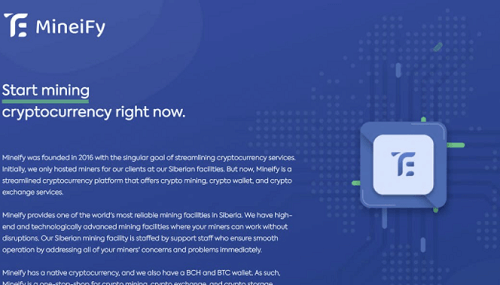
Back in those days, mineify was an alleged mining site which promised, and in fact delivered, a very good ROI! Mineify was a really convincing platform — it had a well-drafted whitepaper containing legal information and even company registration number (supposedly with ASIC). They showed you ‘live’ video streams of their mining farms, gave a name and a face to their supposed CEO, Nikolay Prozora, and even had a very huge and lively telegram community! Everything seemed quite legit, except that it was probably too good a deal to be true!

They had very attractive affordable mining plans that promised incredible hash rates.
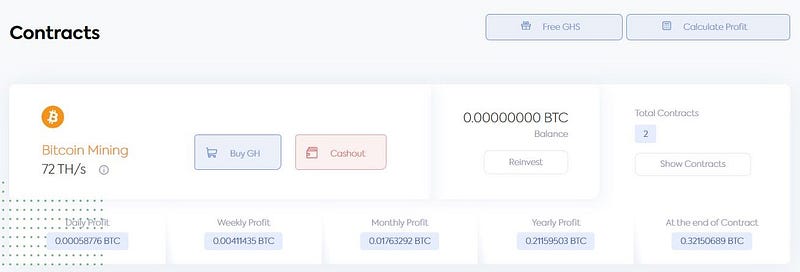
They promised very generous free sign-up bonuses (attractive bonus hashrates in the case of mineify).
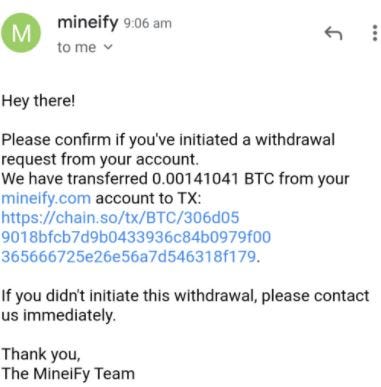
Best of all, withdrawals were free, with a very low withdrawal limit. I remembered deriving pleasure from withdrawing (for free!) to my wallet every other day.
Believing that mineify was authentic, I spent a good amount of time studying the platform and had religiously tabulated my investments and returns in Excel as following
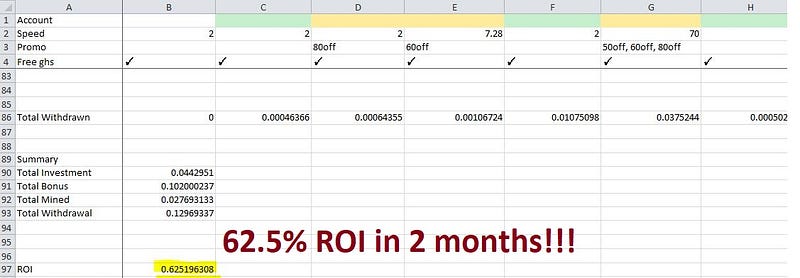
As you can see, the returns were pretty impressive; I started investing in October 2020 and by December 2021 I had already gotten back 62.5% of my capital. Over that period of 2 months, they kept rolling out offers after offers that seemed really too good to be true — initially a 50% discount on mining plans, then 60%, then 70%, then 80%, and finally yes you guessed it right, a 90% discount!

At that stage I was really starting to question what was going on. However, my greed for short-term returns clouded my judgement and fueled subsequent additional investments to avail the never-ending upsized discounts, refusing to believe the inevitable truth that mineify would turn scam. And true enough, they did, in December 2020.
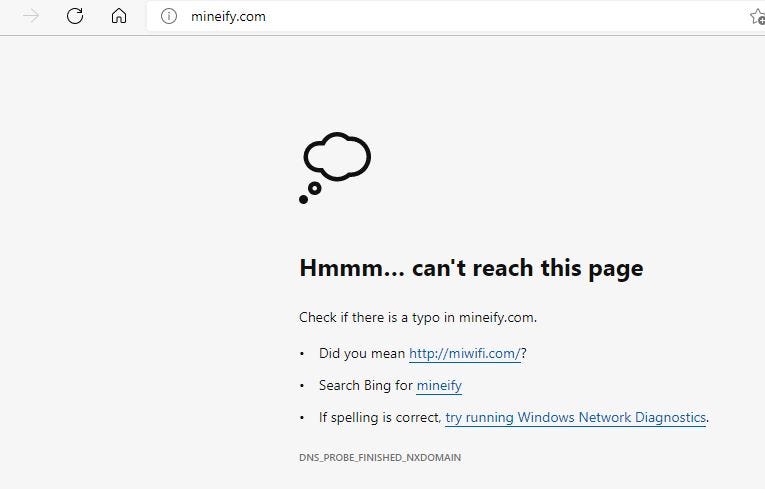
This happened in a series of steps — the mining initially stopped, payouts halted, telegram group removed us one by one then vanished altogether, and the website then ceased to operate. I should have seen it coming — but then again, being the naive oblivious investor who saw what I wanted to believe, I chose to ignore the many red flags — offers that were too good to be true, unrealistic mining hash rates, generic pictures used in the website design, flawed grammar, etc. It was a painful but a fruitful mistake.
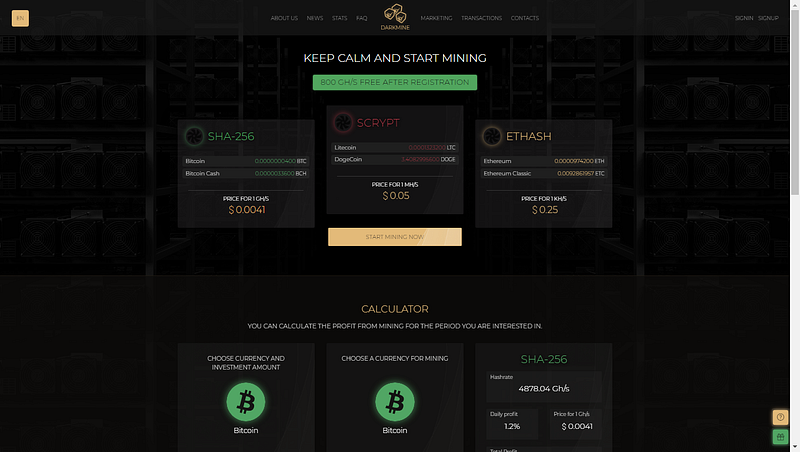
In the case of darkmine, they had also promised attractive mining hashrates for perpetual contracts — yes you heard that right, they promised that the mining plans would go on forever!
#2 New establishments
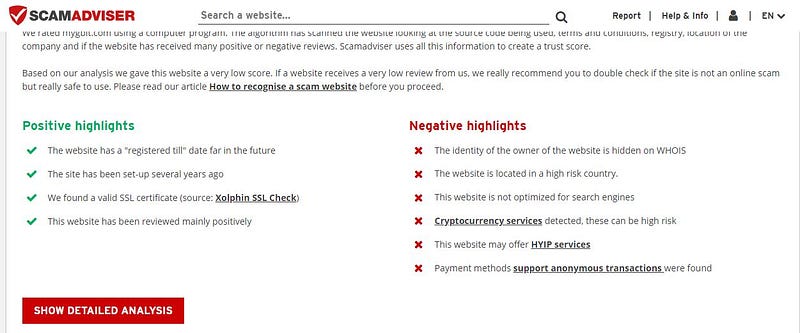
Exercise caution when investing in recently established platforms (within few weeks or months), especially if they promise generous offerings. Sure, they may be paying initially, but may turn scam in a while; only time will tell. However this isn’t a universal rule that exempts long-standing platforms from going astray; however the probability of such happening may be lower. A good starting point is to check for reviews on verifiable websites like trustpilot. However, then again, beware of fake reviews — it is all too easy for companies to write a multitude of fake reviews designed to pump up a particular site’s rating. Some clues that should raises suspicion as to the legitimacy of a review include a stereotypical presentation (some fake reviews are just mirror images or copy pastes of one another) or being written by unverified users who had never written any in the past.
#3 Referral bonuses that are unrealistically attractive
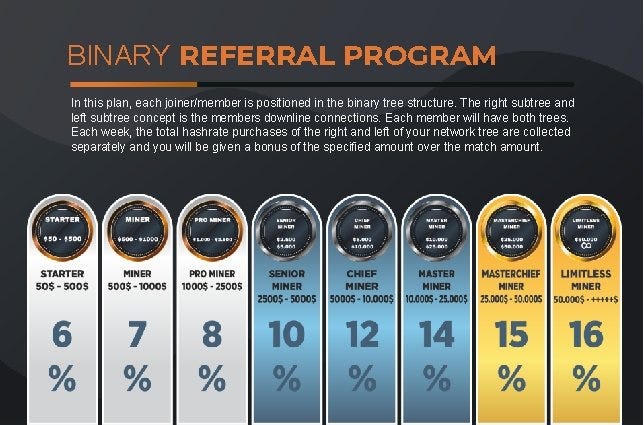
Sure, we do love a bonus every once in a while; however an overly enthusiastic referral program ought to ring a bell. After all, the said company needs to profit from the revenue generated; what are the odds that it can freely dispense large amounts of money in the form of referral bonuses, unless it is a MLM/ Ponzi scheme? In the example of mineify, referral bonuses of up to 10% were given for 3 generations of referrals — that quickly adds up quite generously. Mygbit had a two-arm referral program, where referral bonuses will only be credited if matching amounts of investments were made by people on both sides of the arm.
#4 Poor website design
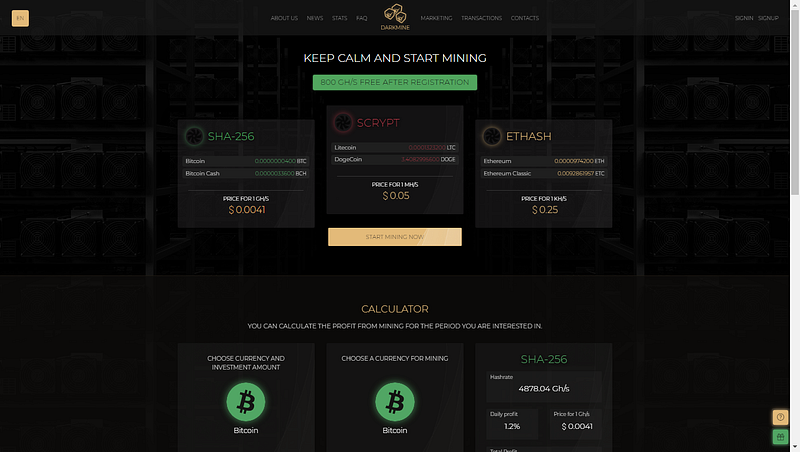
They say, don’t judge a book by its cover. This is true to a certain extent. However, paucity of content, poor language and generic images pulled off the internet should raise suspicion as to the credibility of a platform.
# 5 Beware of phishing sites
Phishing is a strategy whereby an attacker sends a fraudulent message designed to trick a human victim into revealing sensitive information to the attacker or to deploy malicious software on the victim’s infrastructure like ransomware.
In the case of crypto, this is done by designing a similar looking webpage for the unwary user to enter his or her login details.
This once happened to me — I googled cakedefi, and top in the list came a sponsored search result (google ads), the exact address of which I could not recall, but was akin to that of the official site, but with a blogspot domain (something like cakedefi.blogspot.com) — this should immediately ring a warning bell. Clicking into the link brings the user into a login page that is indistinguishable from that of the original (as shown below). I immediately reported the ad to google, following which it was promptly taken down. (before I had the chance to take a snapshot of the page for reference to be included in this article.)
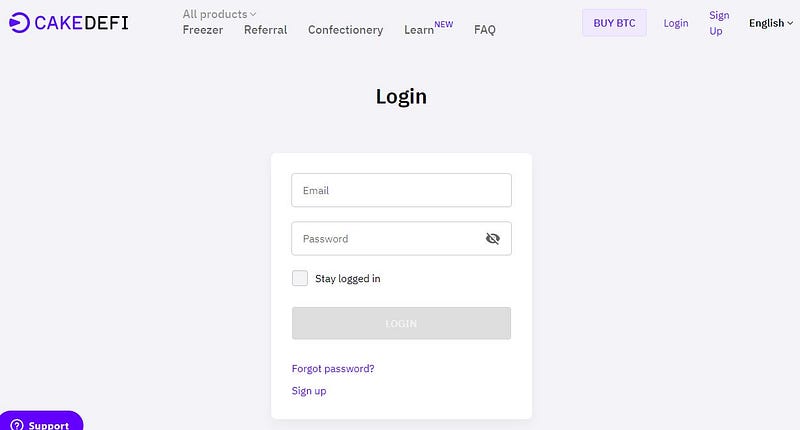
If the unwary user enters his or her login details, these would immediately be submitted to the scammers, thus compromising the user’s cakedefi accounts. This exploitation can occur using any platforms, in many other ways apart from the example quoted above, such as a purposefully misspelled URL (eg goggle instead of google; bïnance instead of binance, among many others). As such, always ensure that login details are being entered into the correct site; and of course, it goes without saying, never real your TAC/ OTP/ 2FA codes to anyone, including anyone who claims to be a customer service representative, which leads us to our next point.
#6 Unsolicited DMs are scams until proven otherwise
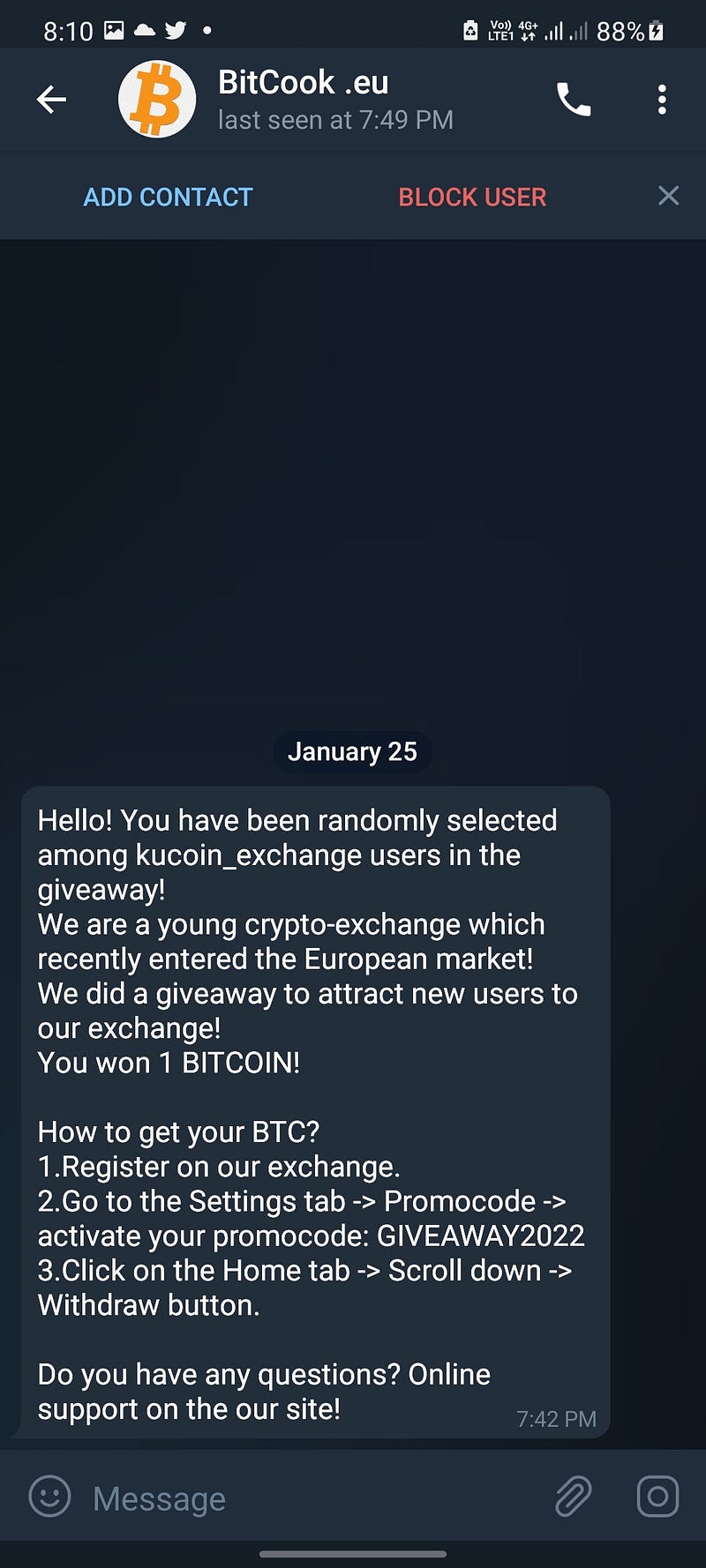
Telegram is a very convenient way of connecting like-minded people of similar interests in public groups, with cryptocurrencies being no exception. However it is the lurking ground of scammers looking to prey on the unwary. Some people will disguise as the support staff of a certain group, and be very ‘helpful’, initiating a conversation to a user who had perhaps earlier on asked a question in the common group. The following is a screenshot of such a message.

#7 Beware of fake groups
Look at the following screenshots and compare the groups — can you spot the difference?
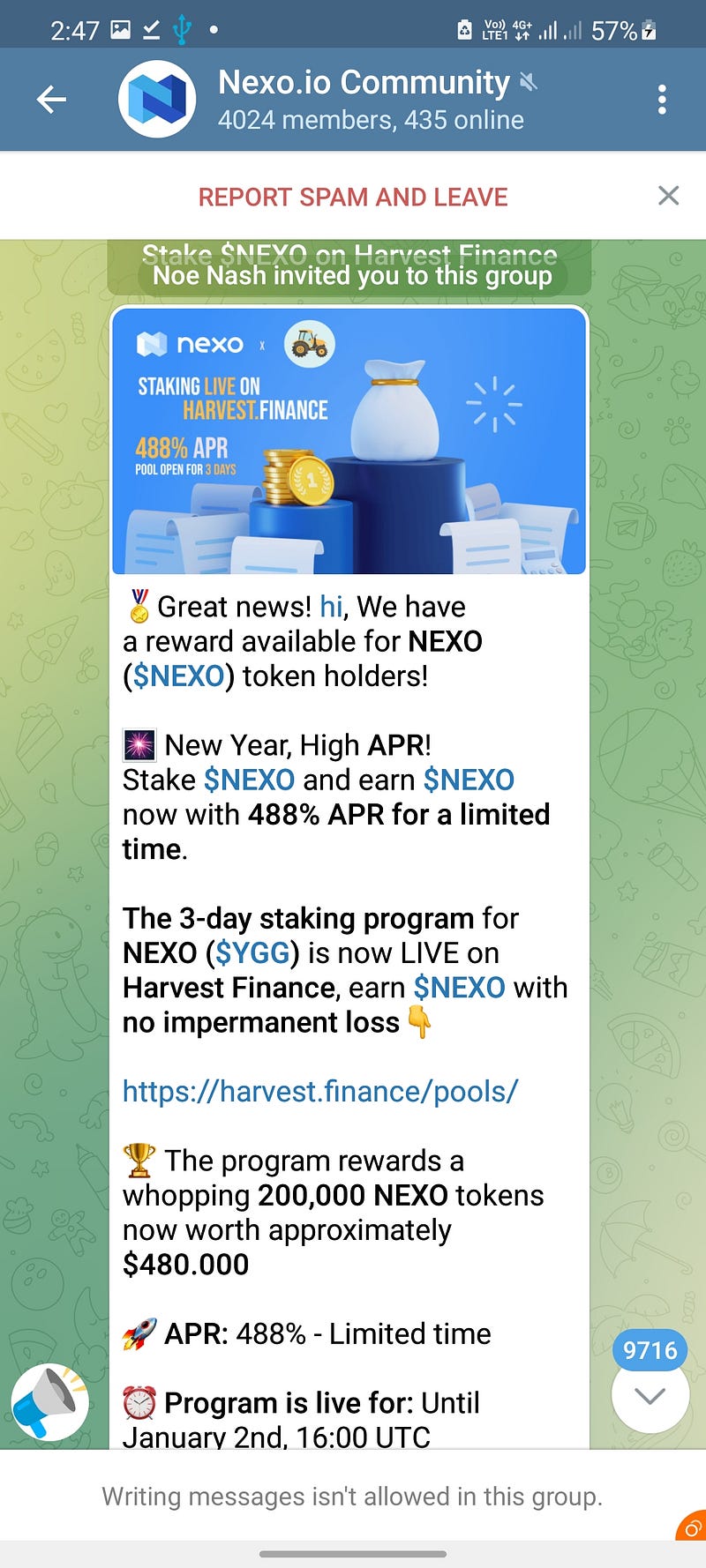
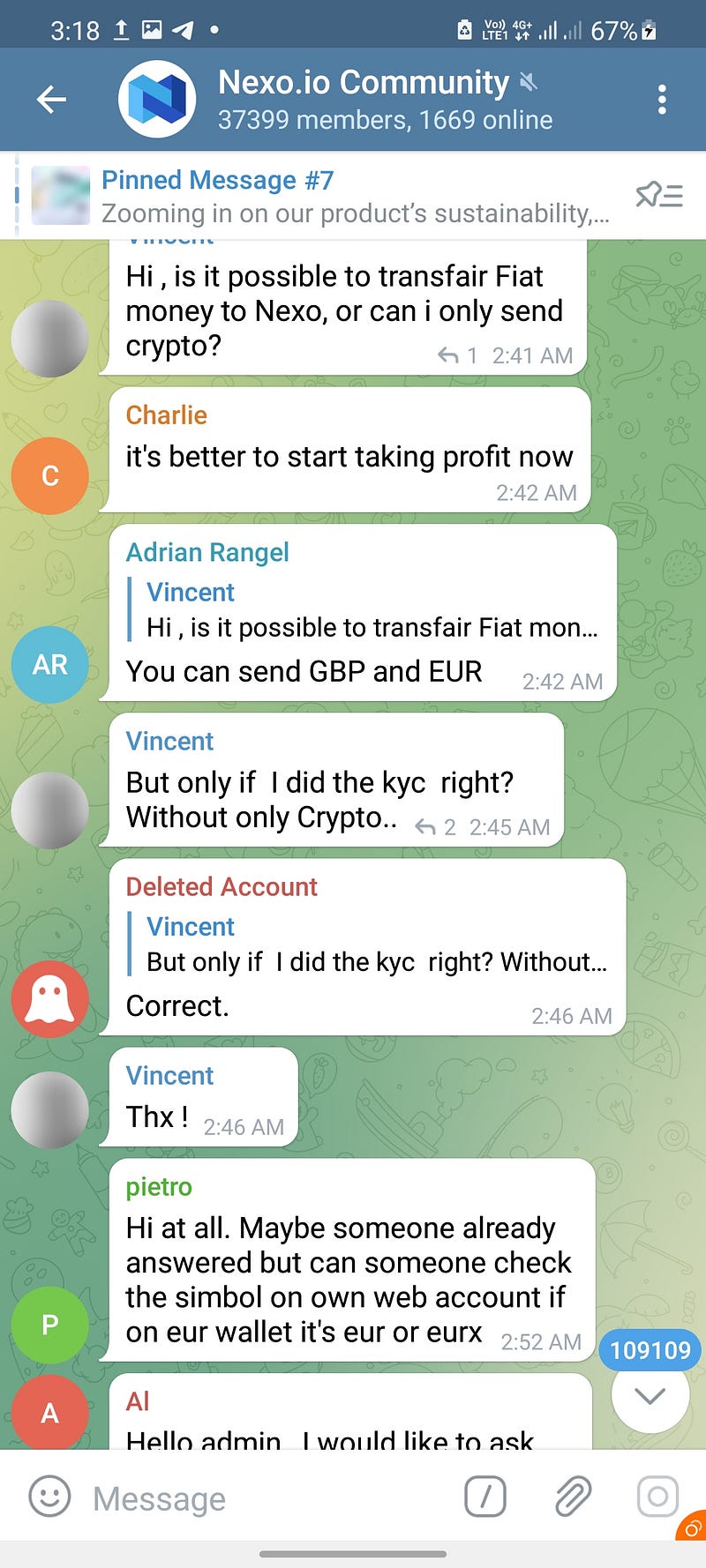
Both have the same group name, with a similar profile picture — indeed there isn’t any apparent difference between the 2 groups, except for the number of its members. The one on the left is a scam group — this can be easily spotted by features eg hosting suspicious promotional messages, relatively small audience for a popular platform, and also groups to which you were invited to join.
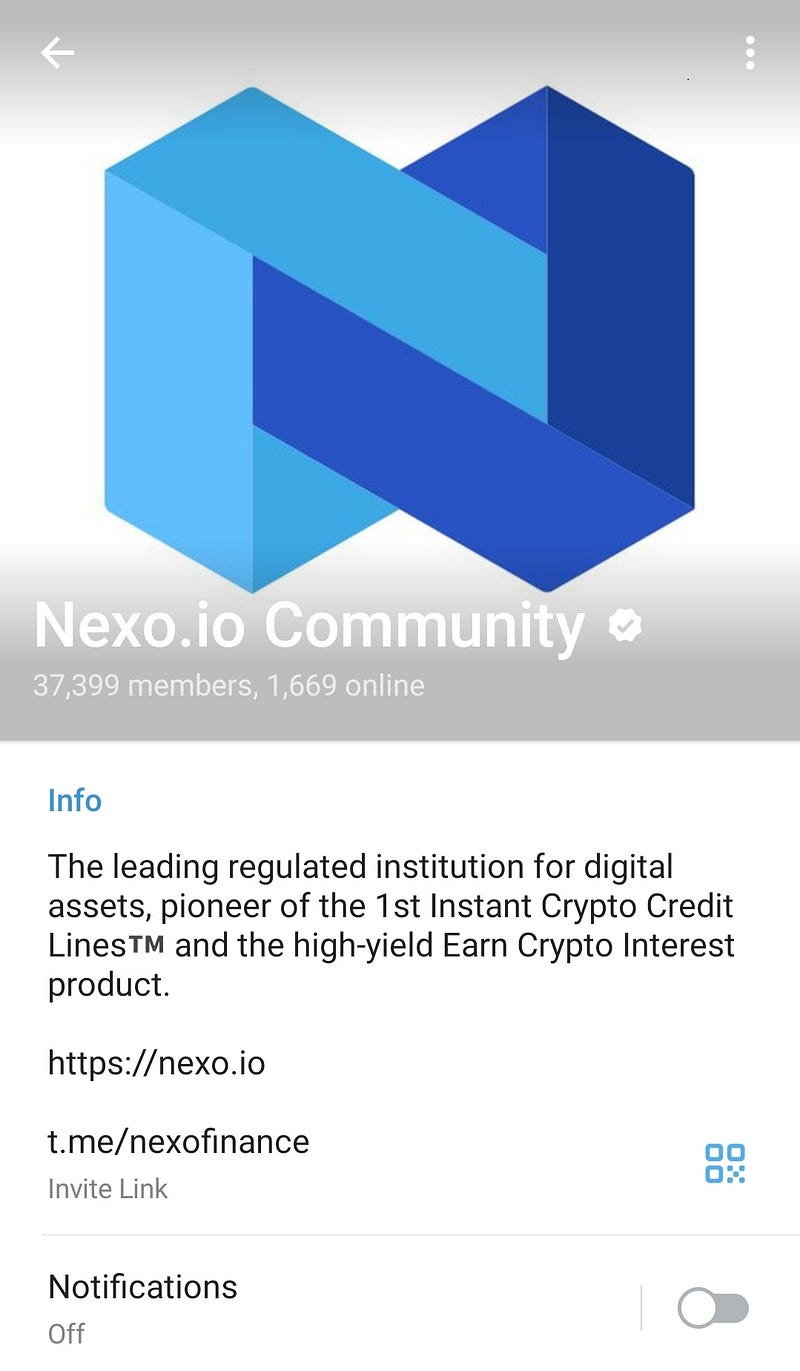
A closer inspection reveals that the original group has a tick symbol beside the group name — indicating its verified status as below.
# 8 There is no such thing as a double reward airdrop!

Very often we come across ‘promotions’ held by a certain organization that claims to promise ‘airdrops’ to users who subscribe to it. The mechanism is as such — the user is supposed to send a certain amount (usually a lower limit applies) of a cryptocurrency to a given address and in return, the user will supposedly receive double the amount of cryptocurrency sent. This has been an age-old scam that many people still unfortunately fall for.
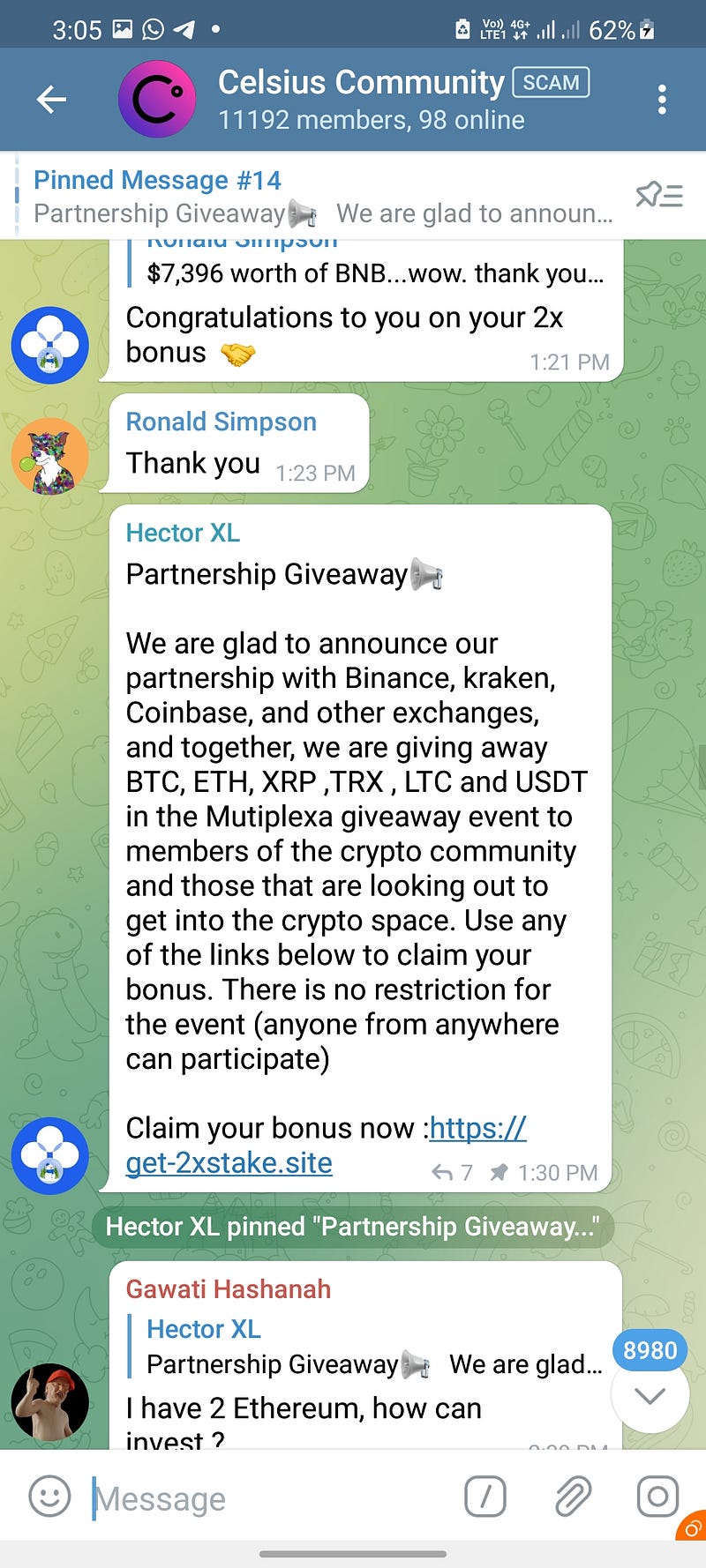
And it is not uncommon for such groups to host messages by fake accounts claiming to have received the ‘airdrops’, falsely reassuring users of the authenticity of the promotion.
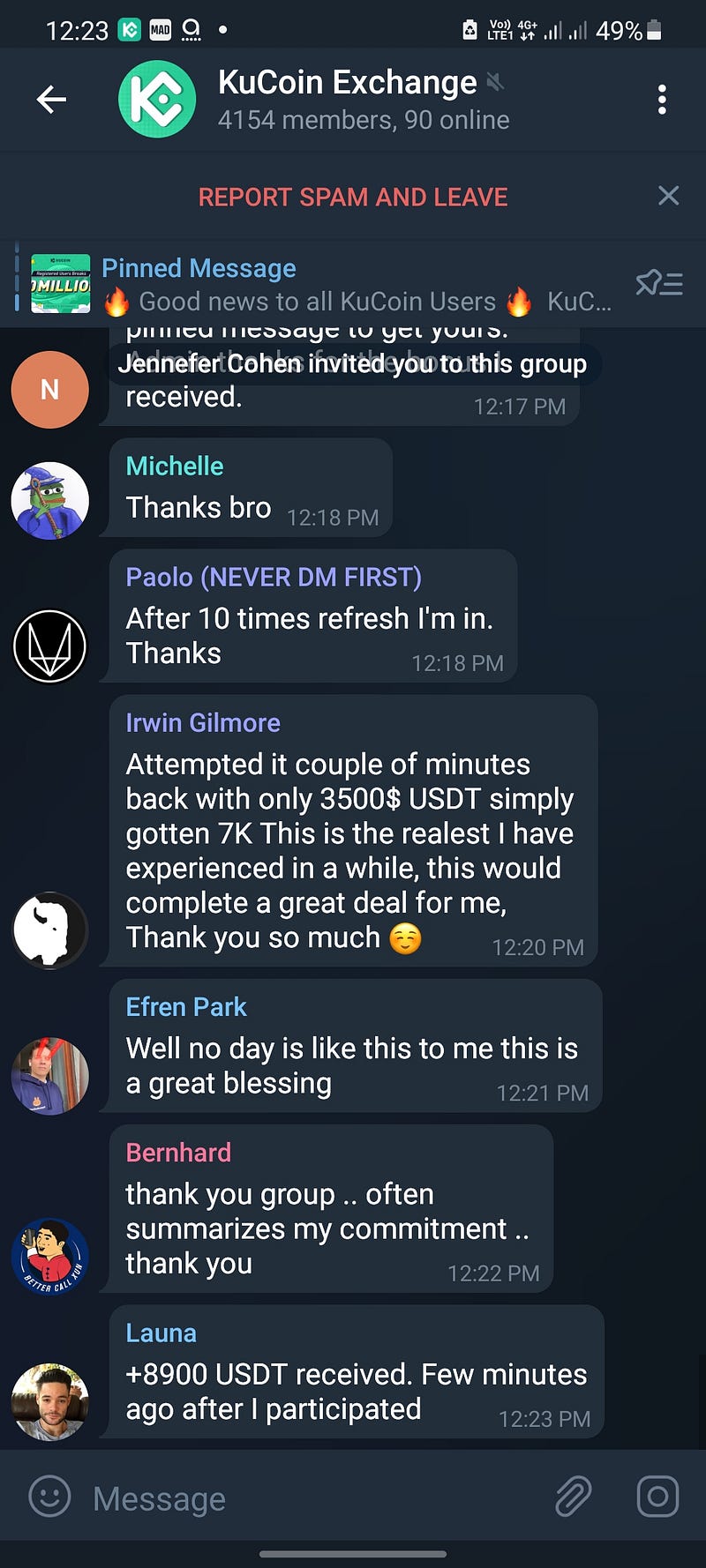
While appearing to lend credibility, the following are not necessarily indicators of reliability of a particular platform ; scammers will go all out to paint as convincing as possible a picture of their platform to deceive unwary and trusting investors.
- Company registration numbers (Mineify was supposedly registered with ASIC, and had a registration number)
- Whitepapers (can be pulled off a template easily)
- Vast telegram community (Mineify had multiple telegram groups of various languages with more than 10k members in each)
- Physical establishment (Mygbit had a physical office in Turkey, verifiable on Google Maps, but yet would have turned scam, as time would tell)

- Good ratings on review sites (Trustpilot included) — it is all too easy for scammers to contribute good ratings towards their own platforms — look out for red flags eg reviews by users who are newly registered and have only limited post counts. Such reviews often have a repetitive nature to their language, and they may be actively promoting the platform on the review site.
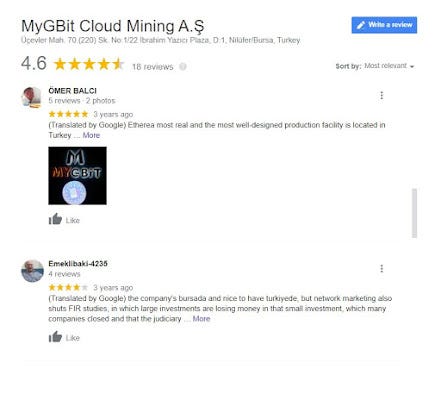
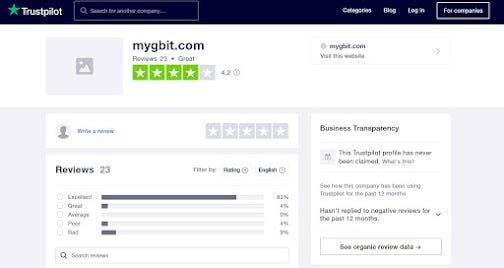
- ICO tokens — Mygbit had launched its own token sale, which I had unfortunately availed, shortly before its disappearance earlier this year.
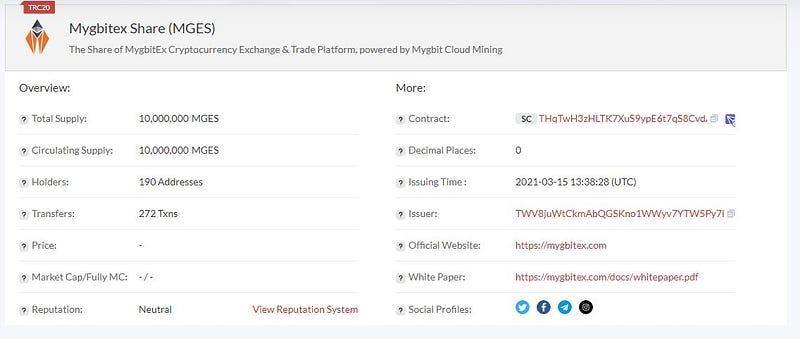
- Exchange platforms — Mybit had also launched ‘mygbitex’, its own exchange platform with a supposedly promising future.
- Mobile applications — not all applications from the google play store/ apple store are legitimate.
- Impressive video presentations — MyGBIT had a very impressive presentation, including promotional video materials that seem very genuine, given authentic-looking mining setups, facilities and company personnel. I have saved a copy of the video as below for educational purposes, to show you the extent to which scammers would go to convince you of a particular platform.
The list goes on and on; at the end of the day, the importance of doing a thorough research before investing in any one platform cannot be overstated.
Having had my fair share of turbulent experiences in the cryptocurrency journey, I cherish all the investment platforms which have stood the test of time and proven to be worthy of mention and sharing, such as the ones below
Nexo — $25 signup bonus on $100 deposit
Cake DeFi — $50 signup bonus on $50 deposit
If you liked this article, follow & subscribe
If you would like to see more content like this, you can support me by using one or more of my affiliate links below:
Cake DeFi Get a $50 signup bonus with $50 deposit Nexo Get a $25 signup bonus with $100 deposit Kucoin Cryptocurrency exchange with a host of trading bots Huobi Cryptocurrency exchange
For Malaysian investors Stashaway Get free investing for 6 months! Wahed referral code ‘KENLIE1’ on signing up to claim RM10 bonus Capbay P2P referral code ‘8879c6’ on signing up to claim RM100 bonus
Connect with me on Publish0x Medium
Join Coinmonks Telegram Channel and Youtube Channel learn about crypto trading and investing


