
How To Articles …
Why do we seek other people’s Opinions?

I’ve had a love them or leave them attitude about How To articles for a very long time. I see them constantly on Medium and thought it was time that I sorted this out for myself. This is my attempt at making sense of why there are so many of them out there, and what they might mean to all of us. If you find this of some use, great. If not, there are some How To articles I can refer you to. 😊
Some of the most successful articles on Medium are How To articles. How to drive income, save a marriage, raise your kids, improve your sex life, choose your path, end your relationship or start over with a new one.
After 12 to 20 years of formal education, do we really need all these opinions? Are we actually in a deficit of knowledge, or have we found ourselves in the precarious position of not accepting what we already know, thus not feeling confident enough to handle our own lives, without getting up to date advice from others? In another way, knowledge normally compounds over time; growing and expanding as we age. Becoming more capable of adapting to our changing environment. More capable of fueling the decisions that affect our lives every day.
Or has something changed?
I love learning. It’s why I read and why I write. I want to know what other people have to say. I want them — at times — to pontificate eloquently on subjects I find fascinating but know nothing about. I want to be entertained and enlightened.
But at the same time, I reject 95% of everything I read and hear as rubbish. Well written, well-intentioned and sincere rubbish, but rubbish nonetheless. I can’t help it.
It’s not an inbred snooty attitude that causes me to push away much of what I willingly take in. I’m actually quite taken by anyone’s effort to help me. It’s something completely different.
If another person’s information does not provide me with a better, wiser, smarter answer to some question, than what I already possess — I reject it.
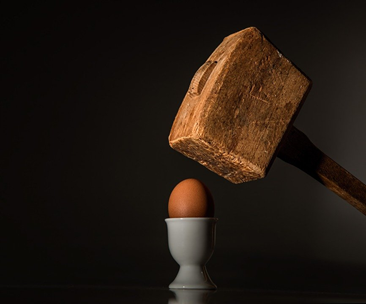
I’m not normally inclined to try 7 different ways to scramble an egg, tie a shoe, mend a sock, mow a lawn, cut my hair, or compose a letter. Not if what I have is workable and gets the job done, thus leaving me with all that mental bandwidth for things I don’t already know how to do.
I love learning which is why I reject what doesn’t provide me with education, enlightenment or entertainment.
While this might explain what I do and how I react to How To articles or Listicles that endlessly make their way along the Medium platform, it doesn’t explain why people often seek other people’s opinions on every conceivable subject known to man.
Why are we so hungry for what others think we should do with our lives?
Over time we all develop little “cheats” to help us get through life. Short cuts or ways of looking at something that save time, keep us nimble and allow us to think more freely with knowledge that is truly ours already.
For me, they naturally fit into three neat questions I ask myself when in learning mode.
DOES THE INFORMATION PROVIDE ME WITH SOMETHING I DON’T KNOW OR KNOW TOO LITTLE OF TO DO IT RIGHT?
I love “How To” YouTube videos and watch them when I need to learn how to patch drywall, change a filter for my A/C, rid myself of moles — in the garden, not on my person — or anything else I am having trouble with. They provide education on subjects I am deficient in.
I’ll watch videos on FoodWishes.Com because I love to cook and to eat new things. Plus, they are entertaining.
This effort is all about new information in, that literally answers question like: How do I change a tire?
DOES THE INFORMATION HELP ME UTILIZE ALL THE KNOWLEDGE I ALREADY HAVE; DOES IT PUT IT IN A LIGHT THAT NOW CLEARLY SHOWS ME THE WAY TO IMPROVE SOMETHING?
I know something about a great many subjects. But I am an expert in just a few of them. Thus, I am always trying to improve. I endure and tolerate this little obsession of mine because it keeps me busy and happy and out of trouble. There are worse things to be addicted to.
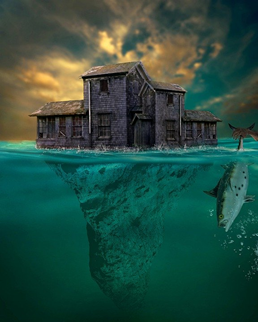
When I find myself staring at 20 pieces of a “puzzle”, laid out in random order, I often have no idea what I am looking at — not a clue. Even though there are 20 pieces right in front of me, they simply are not coming together into a usable form. It could be a face, a mountain, a solution to retirement or nagging problem that started yesterday.
So, I start looking for outside help. Something to help align these 20 pieces. A helpful viewpoint. An easy and entertaining way of explaining a complex subject. Anything that helps tie it all together so that I now am able to use the knowledge I already possess.
Why is this so important?
Knowledge that ages with us over time, takes on characteristics that match and evolve along with us. The first time we sorted out an upset by ourselves at age 7, sticks with us. We remember exactly what we did and hold onto everything that worked and continue to use it as we get older. That is priceless data right there. Knowledge that’s already been vetted, polished, time-tested and now ready to tap into whenever we need it.
Newly acquired information, with their fresh perspectives are important too. In many cases, because it helps to rid us of hidden doubts and hesitations picked up over the years. Life is challenging and brutal at times. We are left bruised and fearful. Filled with false impressions, wrong ideas and overly critical assessments of what we can or can’t do.
Over the years I have read and listened to great writers and thinkers like, Alan Watts, Lao Tzu, Martin Luther King, Eleanor Roosevelt, Maya Angelou, Shakespeare, Confucius and many others. There were many moments when I was delightfully entertained and felt the warm glow of connection to great minds coursing through me. But in the end, I took in and used only a small fraction of what was there.
I used only what I needed to help align what I already knew to be right. I cannot understate how incredible it feels to have words like these validate something that you’ve known in your heart and mind to be correct. This, is what knowledge is all about.
DOES THE INFORMATION REQUIRE THAT I BECOME SOMEONE ELSE IN ORDER TO USE IT?
If we study the ten best predators from the animal kingdom, we are likely to see, ten completely different approaches to getting the prey.

Unlikely, the Hawk will learn anything from the Great White Shark. Air versus water and all that. And if the Hawk was intent on writing a bestseller about her skills and abilities, she may have to decide who her audience was and what they might be able to learn from her.
Telling the shark to ride the warm air currents above the prey and how to dive at 240 MPH, may be a non-starter. But what about patience? Or focusing, not on the hunger but on the prey?
We can all learn something from someone else, as long as it doesn’t require us changing who we are, every time we read something new.
How To articles will always find an audience. Will always have something interesting to say, even if not relevant to everyone.
The key to using these articles is assuming the perspective of:
a) I never made a pizza before and this video gives me exactly what I need, or
b) this new data helps to align what I already know, making it more empowering and useful to me. And
c) does not require me to change who I am or be like someone else in order for it to work.
At the end of the day, we are tasked with making changes in our lives. We may accept suggestions or learn amazing things from others, but we distill it all down to things we can adapt to who we are and how we want to live our lives.
I hope this helps.
Paul Myers MBA, Sherry McGuinn, P.G. Barnett, George J. Ziogas
Joe Luca is writer and editor for ILLUMINATION and a published author and writer of children’s stories, short fiction, non-fiction articles, screenplays and poetry. Publications include Child’s Life, Children’s Playmate and others. There are some other articles below — have a read. And thank you for stopping by.