avatarVritant Kumar

Free AI web copilot to create summaries, insights and extended knowledge, download it at here

912

Abstract

u more space for <i>persuasion</i> rather than <i>making excuses.</i></p><p id="0c42"><b><i>Plus, it sounds sexy. (This is not from the book btw)</i></b></p><blockquote id="9ffe"><p>With this accountability and responsibility I mean that of ‘your’ actions. When apologizing, try to focus your words more on ‘what you did wrong’ rather than focusing on ‘what happened that made you do this’ or any other external factors.</p></blockquote><p id="bd57">Can’t we call them excuses?</p><p id="976b" type="7">Use ‘I’ sentences in order to make yourself sound more accountable.</p><p id="7264">According to the author, instead of saying:</p><p id="3a66"><b><i>‘I’m sorry that your feelings were hurt.’</i></b></p><p id="65c3">Say:</p><p id="a820"><b><i>‘I’m sorry that I hurt your feelings.’</i></b></p><p id="21b1">I like this because of its straight-forwardness—JUST TAKE THE RESPONSIBILITY WHILE YOU APOLOGIZE. You’l

Options

l have better chances of being forgived.</p><p id="8ec0">One more thing the author went on to say was:</p><p id="3915" type="7">Avoid ‘but’ sentences</p><p id="c258">It has happened to a lot of us that when someone comes to us for an apology and inserts ‘but’ in the sentence, our likelihood of forgiving them decreases drastically.</p><p id="c4e4">Because we want to <i>“listen the truth”</i> and they want to <i>“explain the truth,”</i> and only in explanation can ‘but’ come in the sentence.</p><p id="82c3">So when apologizing, it’s best to tell the truth and save the explanation part for later. It’s the best option for both of you.</p><p id="e008">Hope this small account helps.</p><p id="7fb8">I’d love to hear what you’ve got to say on this topic. Do write in comment section. I hope you like this article; you can read more here: <a href="">VRITANT</a>. Until next time, bye! ❤️👋😊</p></article></body>

How To Apologize Correctly

You may need to rephrase your apologies a lil bit.
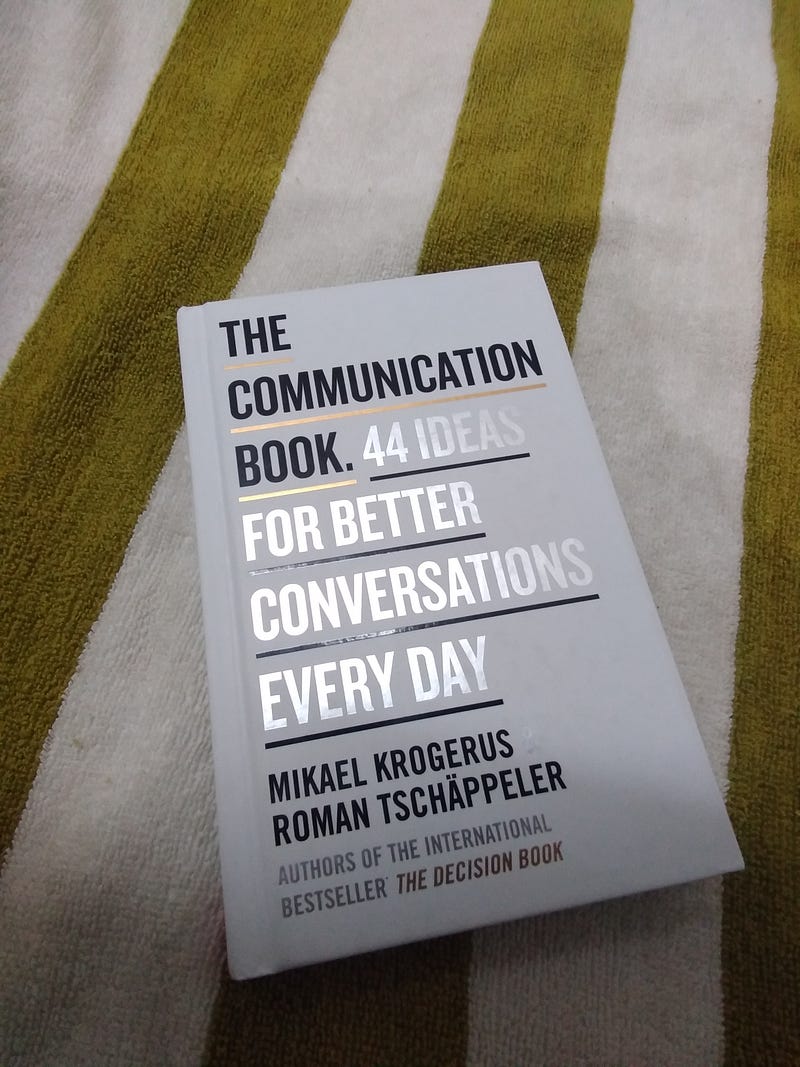
The Communication Book. Phote by author

Recently I completed the book “The Communication Book: 44 Ideas For Better Conversations Everyday” by Mikael Krogerus and Roman Tschäppeler, and in those 44 ideas, one was about how to apologize correctly.

It is not something life-altering, but yet, I think most of us can implement it in our daily lives.

How to apologize properly so that the other person forgives

First, take full responsibility. Period.

Taking full responsibility while apologizing doesn’t only make it easy to do so but also gives you more space for persuasion rather than making excuses.

Plus, it sounds sexy. (This is not from the book btw)

With this accountability and responsibility I mean that of ‘your’ actions. When apologizing, try to focus your words more on ‘what you did wrong’ rather than focusing on ‘what happened that made you do this’ or any other external factors.

Can’t we call them excuses?

Use ‘I’ sentences in order to make yourself sound more accountable.

According to the author, instead of saying:

‘I’m sorry that your feelings were hurt.’

Say:

‘I’m sorry that I hurt your feelings.’

I like this because of its straight-forwardness—JUST TAKE THE RESPONSIBILITY WHILE YOU APOLOGIZE. You’ll have better chances of being forgived.

One more thing the author went on to say was:

Avoid ‘but’ sentences

It has happened to a lot of us that when someone comes to us for an apology and inserts ‘but’ in the sentence, our likelihood of forgiving them decreases drastically.

Because we want to “listen the truth” and they want to “explain the truth,” and only in explanation can ‘but’ come in the sentence.

So when apologizing, it’s best to tell the truth and save the explanation part for later. It’s the best option for both of you.

Hope this small account helps.

I’d love to hear what you’ve got to say on this topic. Do write in comment section. I hope you like this article; you can read more here: VRITANT. Until next time, bye! ❤️👋😊

Communication
Speaking
Creativity
Books
Advice
Recommended from ReadMedium